What a Conveyor Rubber Lagged Pulley Does
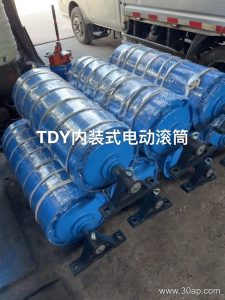
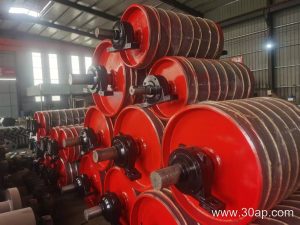
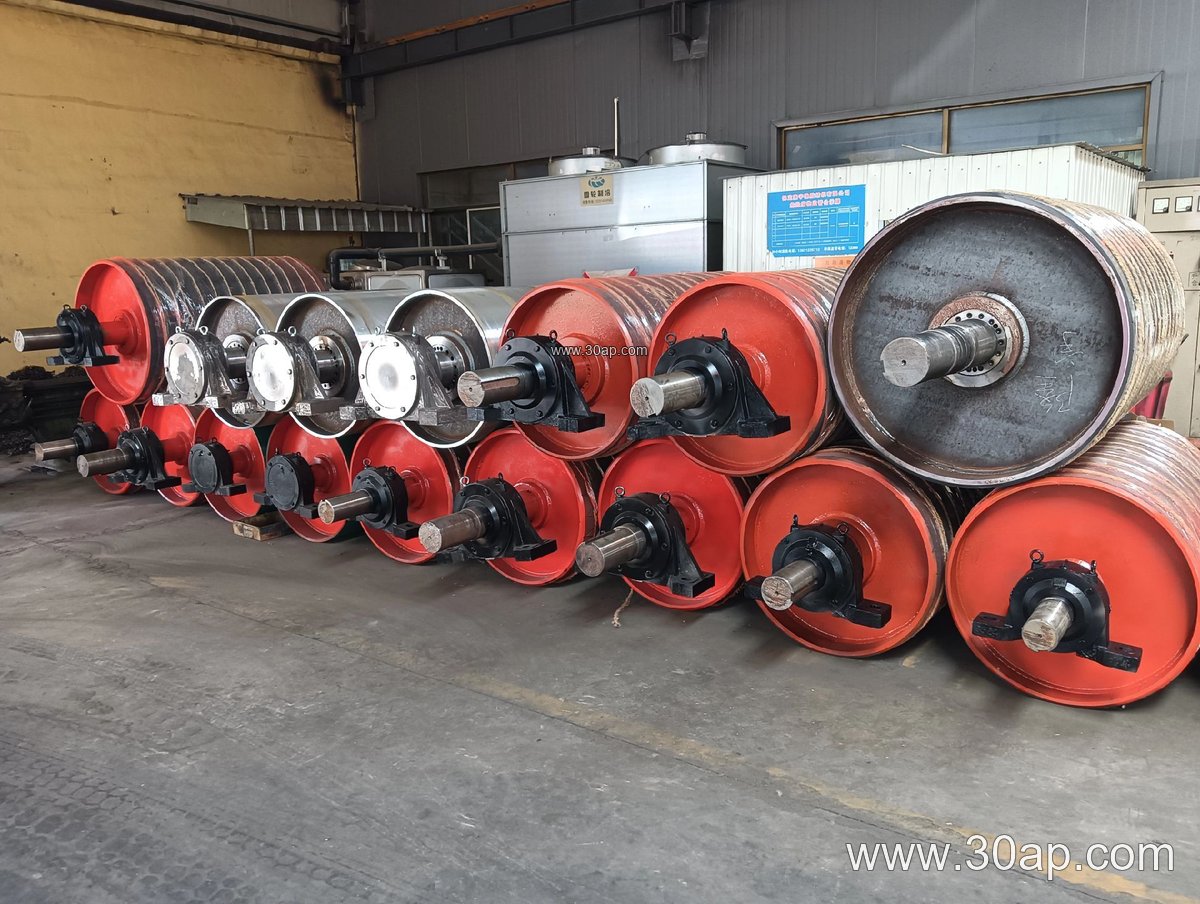
A conveyor rubber lagged pulley is a conveyor pulley whose shell is covered with a rubber layer to improve grip between the drum and the belt. In a belt conveyor system, the pulley transmits motion to the conveyor belt, and the lagging raises the friction coefficient so that the drive can pull the belt without excessive slip. The same product is also called a rubber-lagged conveyor drum or rubber-coated pulley, and the name describes the surface treatment rather than the pulley’s position in the conveyor.
This distinction matters. A drive pulley, a tail pulley and a bend pulley are not interchangeable names, even when all three carry lagging. A drive pulley is the powered drum at the head or intermediate drive; a tail pulley sits at the return end; a bend pulley only changes belt direction. Rubber lagging is most often specified on the drive pulley, but it can appear on other positions when tracking or wear protection calls for it.
Construction of the Lagged Shell
The base is a steel drum with a machined shell, welded end discs and a shaft sized by torque and load. The rubber layer is applied in several ways:
- Hot-vulcanized rubber, bonded to the shell under heat and pressure for a durable, uniform cover
- Cold-bonded rubber sheet, often chosen for field repair or quick replacement
- Cast rubber, formed directly on the drum surface
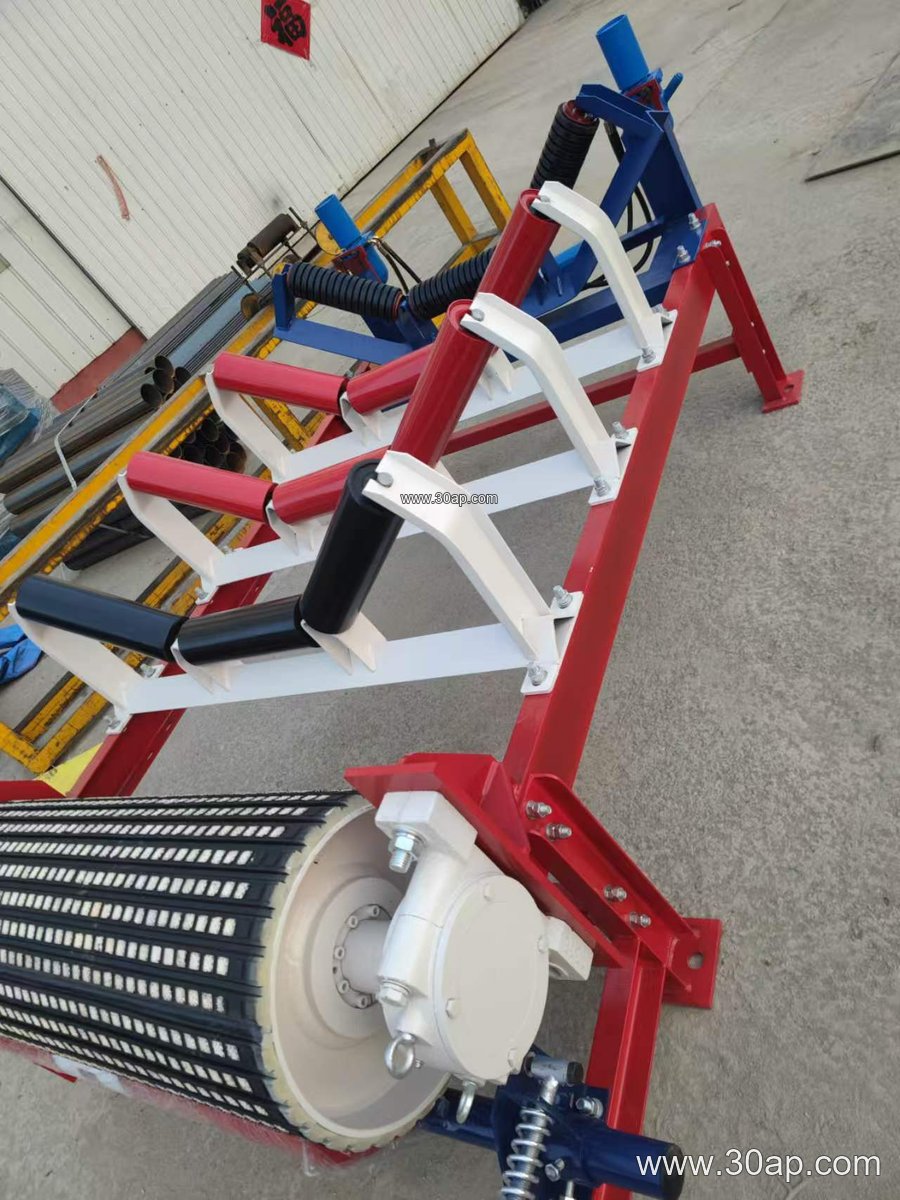
- Ceramic or diamond-pattern lagging, used where extra grip or wear resistance is needed
Common lagging thicknesses are 8, 10, 12, 15 and 20 mm, and the surface may be plain, diamond grooved or herringbone grooved. Grooved patterns help evacuate water and fines, which is useful in wet or dusty service. The pulley shell width is normally a little wider than the belt; for example, a B800 belt usually runs on a shell of about 950 mm, while a B1200 belt matches a shell around 1400 mm. Diameter and shaft size are selected from belt tension, torque and bearing load, not from belt width alone.
Typical Dimensions and Combinations
The table below lists common reference values. They are starting points for discussion, not fixed rules or a supply promise.
| Belt width | Typical shell width | Common pulley diameter | Common shaft diameter |
|---|---|---|---|
| B500 | about 600 mm | Ø250 – Ø400 | Ø60 – Ø80 |
| B650 | about 750 mm | Ø315 – Ø500 | Ø70 – Ø100 |
| B800 | about 950 mm | Ø400 – Ø630 | Ø80 – Ø120 |
| B1000 | about 1150 mm | Ø500 – Ø800 | Ø90 – Ø140 |
| B1200 | about 1400 mm | Ø630 – Ø1000 | Ø100 – Ø160 |
| B1400 | about 1600 mm | Ø800 – Ø1250 | Ø120 – Ø180 |
| B1600 | about 1800 mm | Ø1000 – Ø1400 | Ø140 – Ø200 |
Useful combinations such as B800 × Ø500 or B1200 × Ø1000 appear in real projects, but a given belt width can accept more than one drum diameter depending on the conveyor layout.
Where It Fits in the Plant
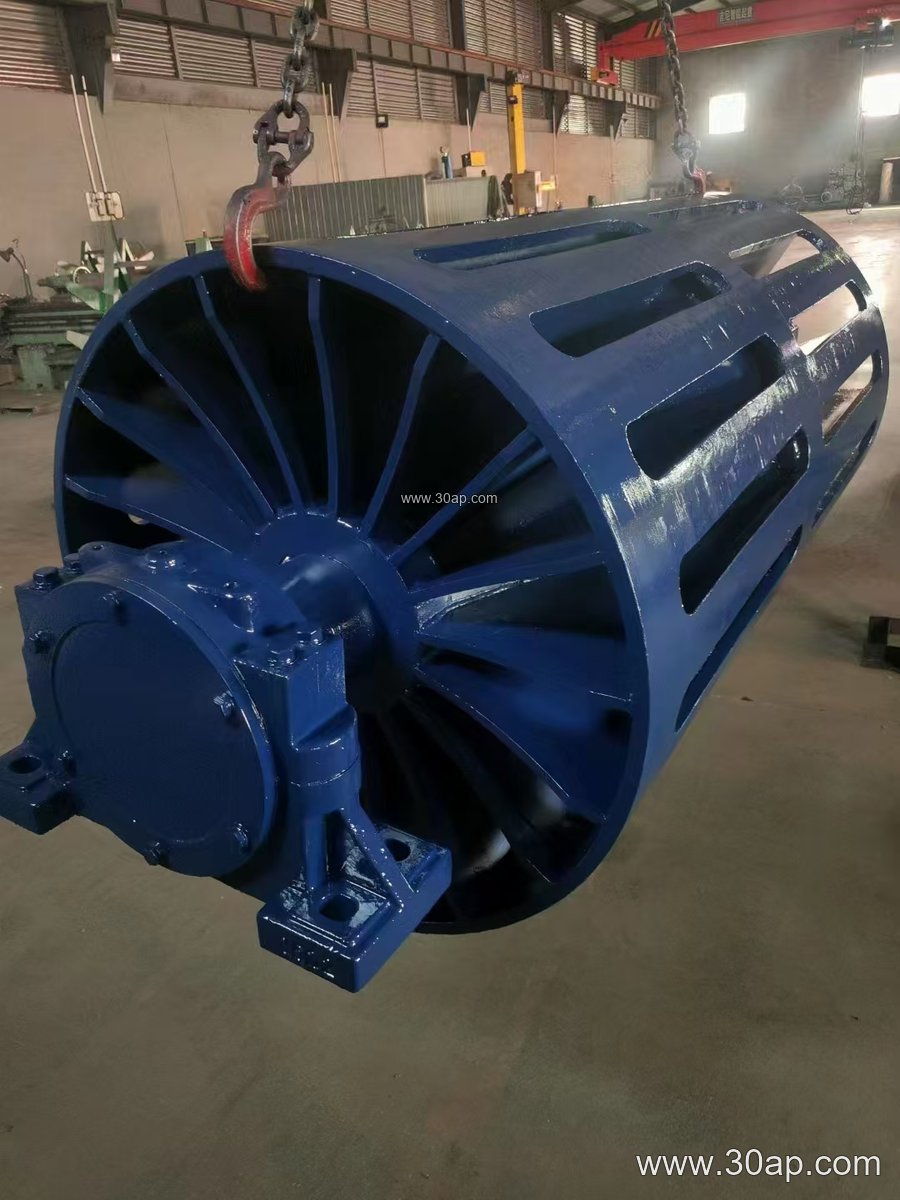
Rubber lagging is common in bulk handling where the belt is long, the load is heavy or the environment is wet. A quarry conveyor belt and an aggregate conveyor belt often rely on lagged drive drums to keep traction on inclined sections. In a coal mining conveyor belt or an underground coal mining conveyor belt, flame retardant conveyor belt grades are paired with lagging that resists abrasion and fines. Cement plants, power plant coal handling and port ship loading systems also use lagged drums where slip would stop production.
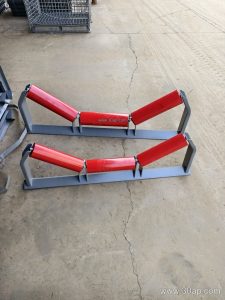
The lagging works together with the belt cover. A steel cord conveyor belt or a heavy-duty mining conveyor belt carries high tension, so the drive drum must match that load. In other positions, a fabric core conveyor belt or an EP conveyor belt may run over a tail or bend pulley with plain or lightly lagged surfaces. The conveyor bracket, idler roller and conveyor pulley frame all need to align with the drum so the belt trains correctly.
Buyer Checklist
- Confirm the pulley position: drive, tail, bend, take-up or snub. Each has different lagging needs.
- State belt width, belt type and belt tension so the drum diameter and shaft can be checked.
- Choose lagging thickness and pattern for the material: plain for clean dry service, grooved for wet or dusty conditions.
- Check the shaft diameter against torque and bearing load rather than copying a value from a belt width table.
- Match the drum face width to the belt, allowing for belt wander.
- Ask how the rubber is bonded, since hot-vulcanized and cold-bonded covers behave differently in service.
For a quotation, a buyer can send the belt specification, the pulley drawing and the operating environment. That information lets the supplier size the conveyor rubber lagged pulley correctly instead of guessing from one dimension.