What an Industrial Conveyor Idler Does on the Line
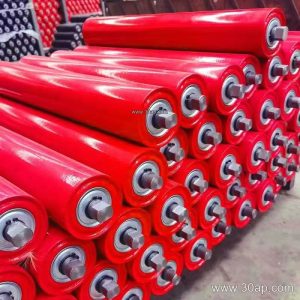
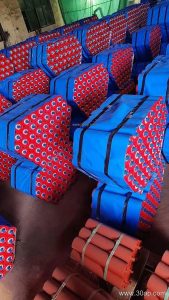
An industrial conveyor idler is the rotating roller assembly that supports the loaded conveyor belt and keeps it tracking along the structure. In a typical aggregate or ore handling line, dozens of these units carry the belt between the head and tail, absorbing the weight of rock, clinker or coal while allowing the belt to move with low friction. The idler roller itself is only one part of the assembly; the shaft, bearing housing, seals and frame all determine how long the unit survives in a dusty, abrasive environment.
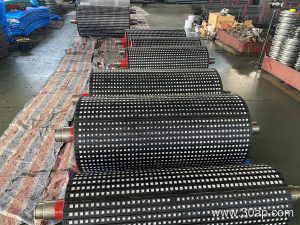
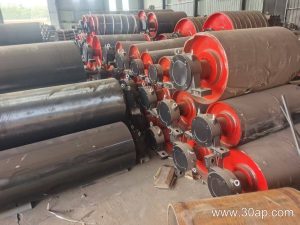
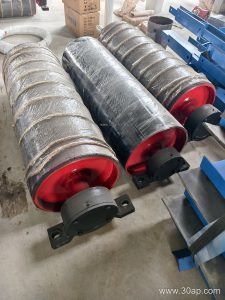
Because the belt is the most expensive wear item on the conveyor, the condition of the idlers directly affects belt life. A seized or misaligned roller can scuff the bottom cover, while a worn shell edge can cut into the belt. For this reason, maintenance teams in a quarry, a cement plant or a power station coal yard treat idler inspection as part of routine belt care, alongside checking the conveyor pulley lagging and skirt rubber.
Construction Details That Matter
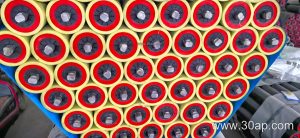
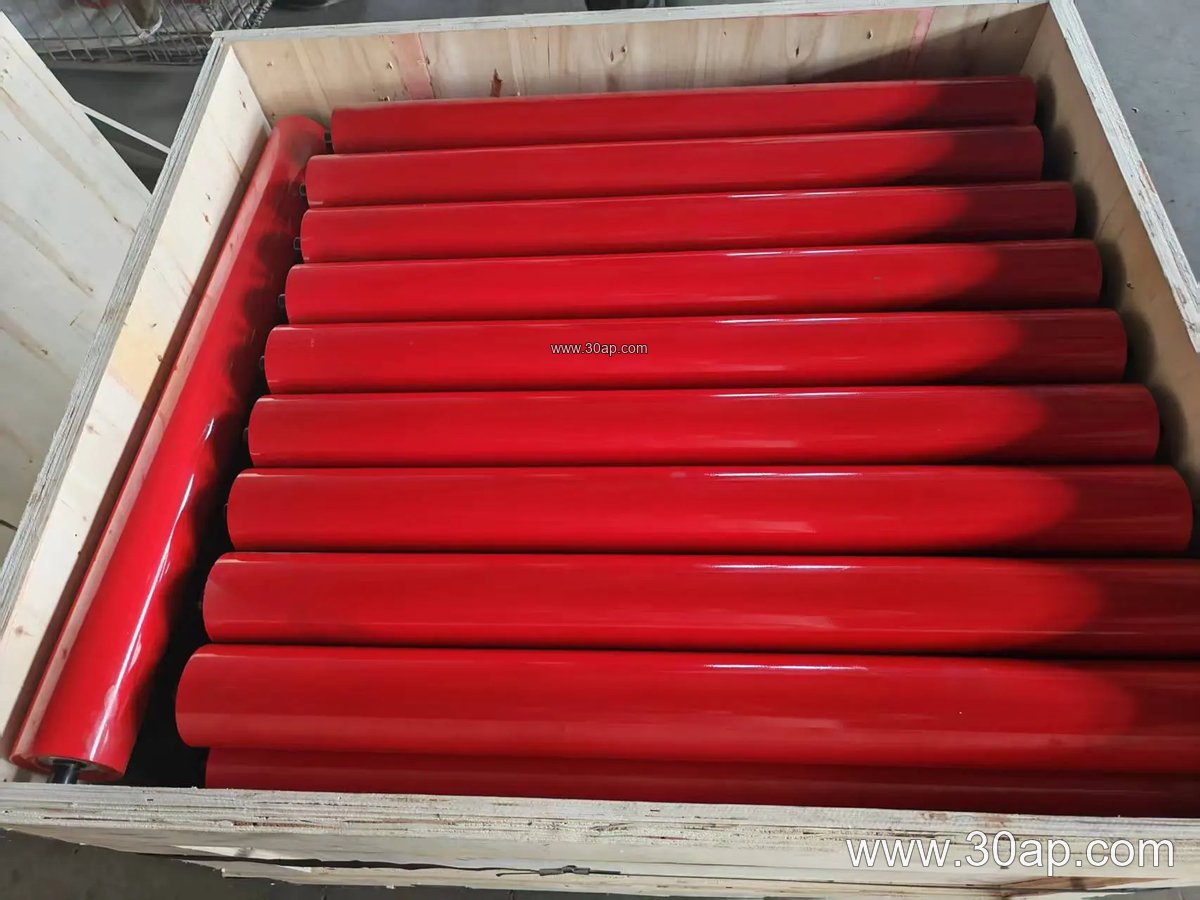
Most industrial idlers share a common architecture: a steel tube shell, a through shaft, stamped or cast bearing housings at each end, and a sealing arrangement. The shell is often machined for concentricity, and the bearing seats are pressed and welded or crimped to keep alignment. Common roller diameters include Ø63, Ø76, Ø89, Ø102, Ø108, Ø127, Ø133, Ø159, Ø178, Ø194 and Ø219 mm, chosen according to load, belt width and speed rather than a single fixed rule.
Bearings are usually deep-groove ball bearings such as 6204, 6205, 6305, 6306, 6308 or 6310, and the same bearing size can serve more than one roller diameter. Seals range from simple labyrinth types to multi-stage contact seals with grease retention. In wet or fine-dust service, seal quality often decides service life more than shell thickness.
Common Shell and Surface Options
- Steel tube shell for general bulk handling
- Rubber ring or rubber disc surface for impact zones
- Nylon or polymer shell for lighter, quieter runs
- Ceramic or coated surfaces where sticking is a problem
Troughing, Return and Transition Positions
The carrying run usually uses three-roll troughing sets with trough angles of 20, 30, 35 or 45 degrees. A three-roll set on a B800 belt commonly uses roll lengths near 315 mm, while a B1200 set may use around 465 mm and a B1600 set around 600 mm; these are typical examples, and side rolls can differ from the centre roll. Belt widths themselves range from B400 and B500 up to B2000, B2200 and B2400 in wide installations.
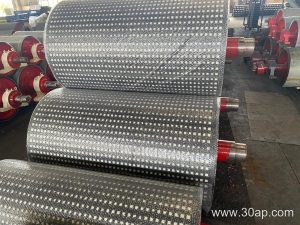
The return run is a different duty. Flat return idlers, V-return idlers and spiral or disc return rollers handle the empty belt and shed carryback. Impact idlers with rubber rings sit under the loading point to cushion falling material, while self-aligning idlers with a slight forward tilt of about 1.5 to 2 degrees help correct mistracking. Transition idlers ease the belt from flat to trough near the pulleys, reducing edge stress.
Where These Units Are Used
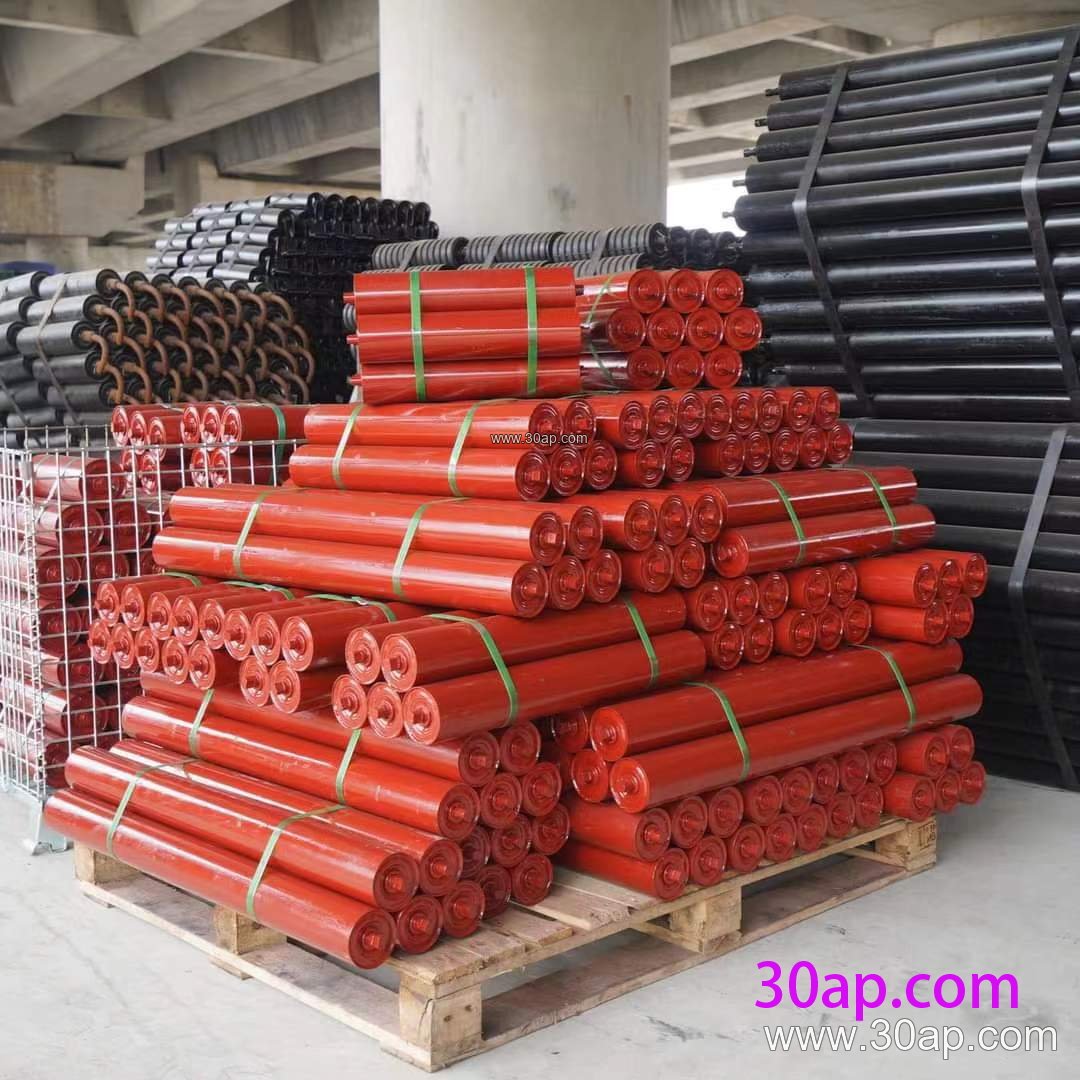
Industrial idlers appear wherever bulk material moves continuously. In a limestone quarry or sand and gravel plant, troughing idlers support abrasive rock on a heavy-duty mining conveyor belt. In a coal washing plant or power station coal yard, flame retardant and anti-static belt grades are common, and idler seals must cope with fine coal dust. Cement plants use idlers on clinker and raw meal lines, while port and ship loading systems rely on wide belts with closely spaced rollers.
The belt and the idler work as a system. A thick EP conveyor belt or steel cord conveyor belt carries tension, but the idler spacing and roller concentricity control how smoothly that tension is transferred. Matching idler quality to belt speed and load is more useful than selecting by price alone.
Buyer Checklist Before Ordering
Start with the belt width, trough angle and roll configuration, then confirm shaft diameter from the frame design rather than assuming it from belt width. Check the bearing size, seal type and shell thickness for the duty, and ask how the roller is balanced. For impact zones, specify rubber-ring or cushion idlers; for sticky material, consider spiral or disc returns. Confirm mounting dimensions against the existing conveyor bracket and frame pitch.
Also review the environment: temperature, moisture, dust and chemical exposure all influence seal and grease choice. Spare parts planning should include a mix of carrying, return and impact idlers, because each position wears differently. A practical stock policy keeps the line running while avoiding an oversized inventory of one roller size.