What an NN400 Conveyor Belt Is
An NN400 Conveyor Belt is a multi-ply fabric core belt built on nylon (NN) warp and weft cords. The number 400 refers to the nominal tensile strength class of the carcass, commonly expressed in N/mm. In practice, this makes it a mid-to-high strength fabric belt for main haulage lines that carry heavy bulk loads over long distances but do not justify a steel cord construction. Because both warp and weft are nylon, the carcass offers high strength, good fatigue resistance, and excellent elastic recovery under repeated flexing around pulleys.
Buyers often meet this belt under the name nylon conveyor belt or NN fabric core conveyor belt. Those are accurate equivalents for the same product. NN400 belongs to the same family as NN100 Conveyor Belt, NN200 Conveyor Belt, and NN300 Conveyor Belt, but sits above them in strength. It is not a replacement for an EP Conveyor Belt: EP carcasses use polyester warp and nylon weft, and the two behave differently in elongation and troughability.
How the Carcass and Covers Are Built
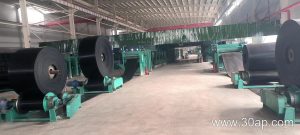
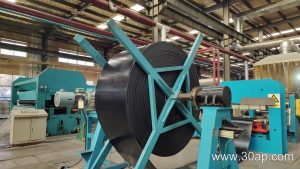
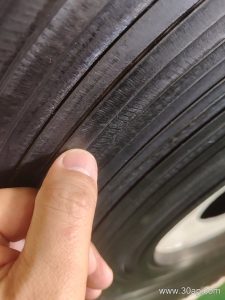
The belt is usually assembled from two to six plies of nylon fabric, bonded with rubber skim compound and protected by top and bottom cover rubber. Cover thickness is quoted as a pair, for example 4+2 mm, 5+2 mm, 6+2 mm, or 8+3 mm. The top cover takes the abrasion and impact; the bottom cover protects the pulley side. A thicker cover generally suits sharp rock, coarse ore, and high-drop loading points, while a thinner cover may be enough for screened or lighter material.
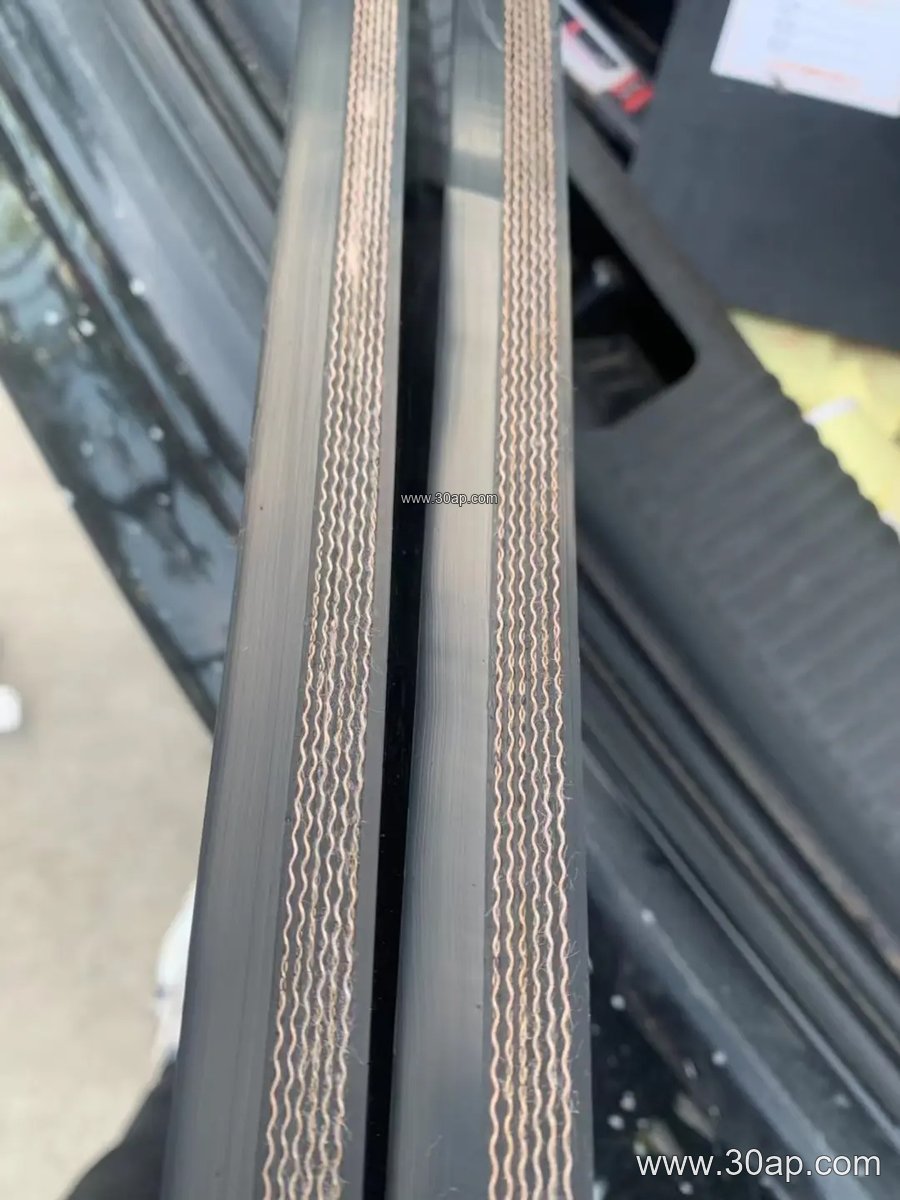
Edge construction matters as much as ply count. Cut edges are common for general service, while moulded edges resist fraying and water ingress in wet tunnels. The carcass, cover grade, and edge type should be specified together; strength class alone does not define a belt.
Typical Duty in Mining, Cement, and Power Plants
This strength class appears in quarry and aggregate lines, cement plant raw material handling, power plant coal yards, and ore transport in metal mines. It also fits sand and gravel plants feeding crushers, and bulk terminals where a fabric belt is preferred over a steel cord conveyor belt for easier splicing. In underground coal mining, flame retardant and anti-static grades are usually required, so the compound specification changes even though the NN400 designation stays the same.
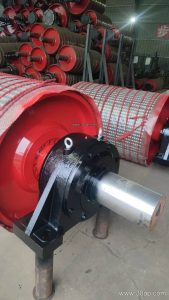
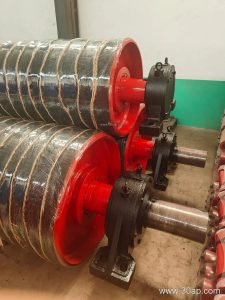
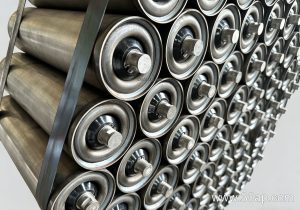
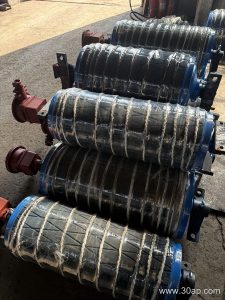
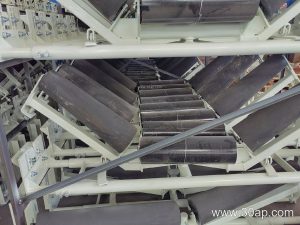
The belt works with conveyor pulley assemblies, idler roller sets, and conveyor bracket frames along the whole route. Drive, tail, and bend pulleys each perform a different function, and none of them can be swapped for another. Loading conditions, pulley diameters, and transition distances all influence how the NN400 belt tracks and flexes.
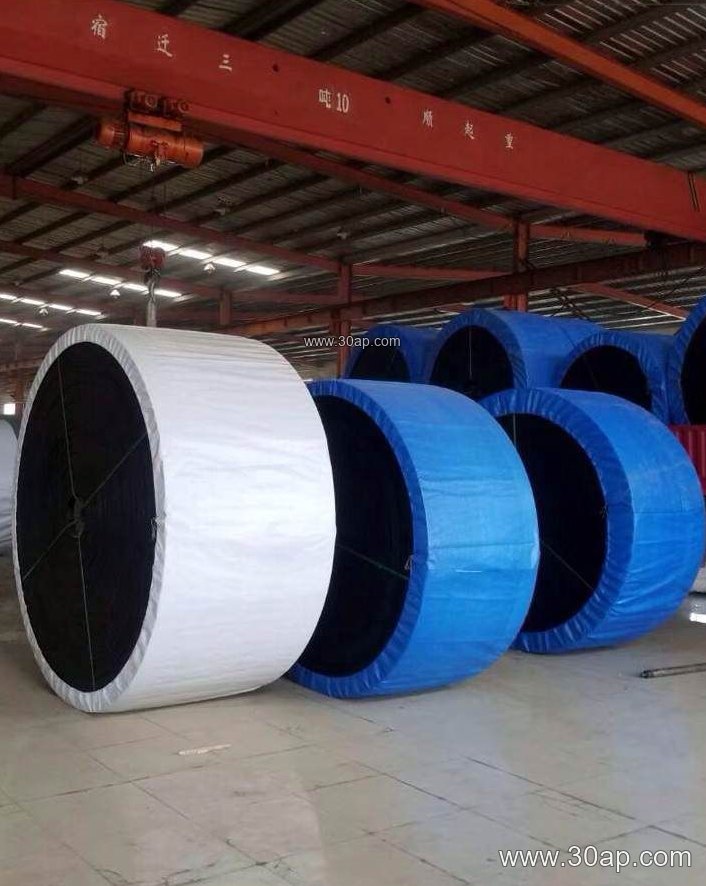
Common Reference Dimensions
Values below are typical reference ranges, not a fixed supply list. Actual width, ply count, and cover thickness are confirmed per project and may differ between manufacturers.
| Parameter | Common reference values |
|---|---|
| Strength class | NN400 (nominal 400 N/mm carcass) |
| Belt width | B500, B650, B800, B1000, B1200, B1400, B1600, B1800 |
| Ply count | 2 to 6 plies, depending on design |
| Cover thickness | 3+1.5, 4+2, 5+2, 6+2, 8+3 mm |
| Cover grades | Abrasion resistant, heat resistant, oil resistant, flame retardant, anti-static, cold resistant |
Width is selected from the material size and tonnage, not matched one-to-one with pulley diameter. A 1000mm or 1200mm belt may run on several pulley sizes, and shaft diameter is determined by the conveyor design rather than by belt width alone.
Selection and Maintenance Notes
- Check the actual tensile demand, including starting and surge loads, before choosing NN400 rather than a lower or higher class.
- Match cover grade to the environment: abrasion resistant for rock and ore, heat resistant near clinker or sinter, oil resistant for oily scrap, flame retardant for coal handling.
- Confirm minimum pulley diameters with the belt supplier, since a thick carcass needs larger pulleys to avoid ply fatigue.
- Use vulcanized splicing where possible; mechanical fasteners reduce belt life at high tension.
- Inspect idler roller rotation and pulley lagging regularly to prevent edge damage and mistracking.
For long overland routes or very high tensions, an EP Conveyor Belt or a steel cord conveyor belt may be the better comparison. For most mid-range haulage in mines, cement works, and power plants, the NN400 Conveyor Belt remains a practical fabric core choice when the carcass, covers, and splicing are specified together.