What a Discharge Pulley Does
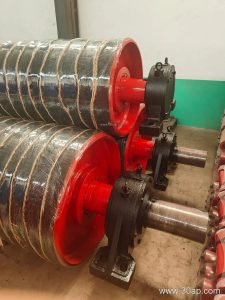
A discharge pulley, also called a head pulley or delivery pulley, is the drum at the discharge end of a belt conveyor. It rotates the conveyor belt, discharges material into the chute or stockpile, and sets the belt path for the return run. Unlike a tail pulley or bend pulley, the discharge pulley transmits the main drive torque in most systems, so its design must handle both the belt tension and the material flow.
Construction and Surface Options
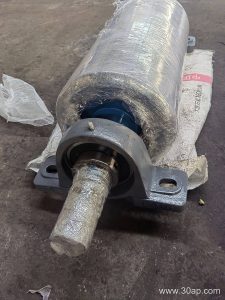
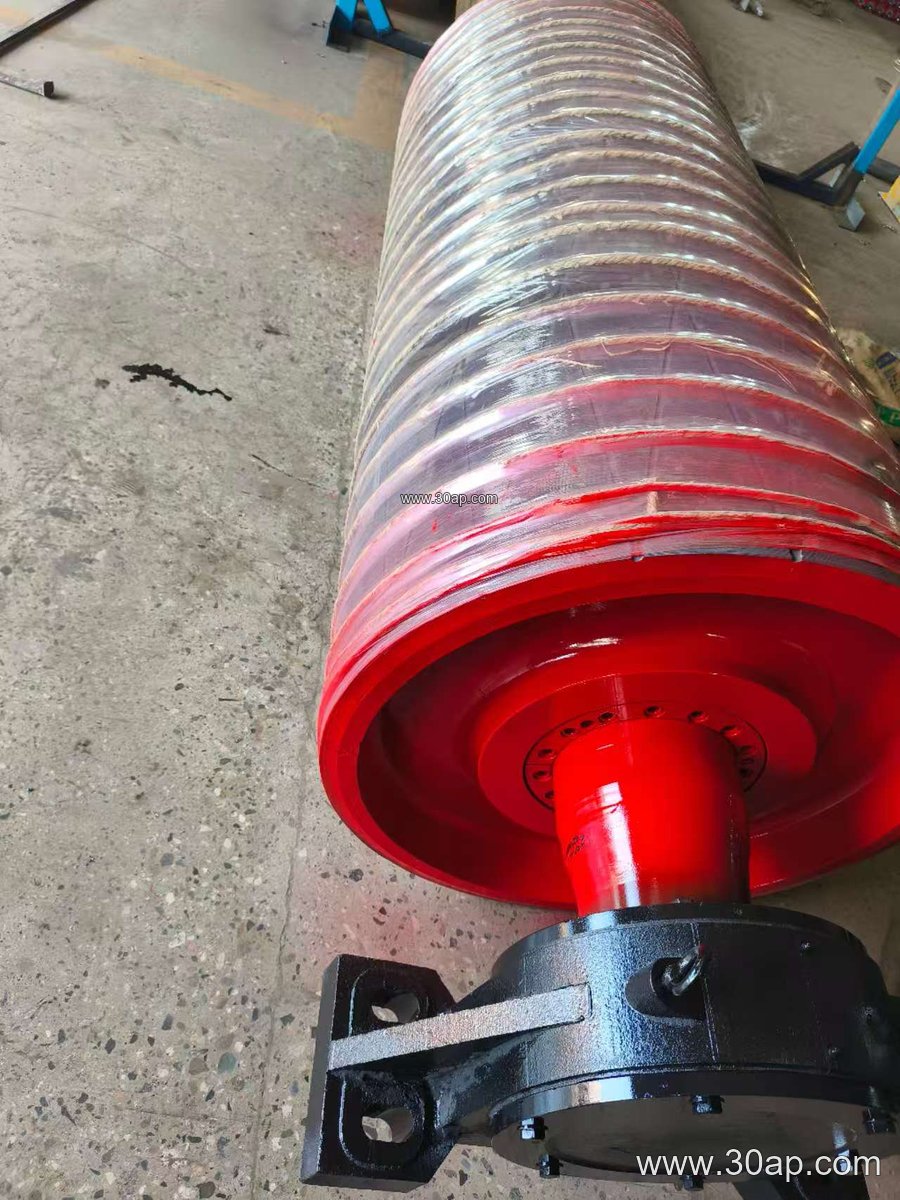
Discharge pulleys are built with a steel shell, shaft, hubs, and bearing housings. The shell diameter and face width are matched to the conveyor belt width and the required wrap angle. Common surface finishes include plain, rubber lagging, and ceramic lagging. Lagging thickness is often 8, 10, 12, 15, or 20 mm. Rubber lagging improves grip and reduces belt slip, while ceramic lagging suits high-abrasion conditions such as those found in a quarry or cement plant.
Typical combinations include B800 × Ø500, B1200 × Ø1000, and B1400 × Ø800. These are reference examples, not fixed rules. The shaft diameter is determined by torque and load, with common sizes such as Ø80, Ø100, Ø120, and Ø160. A discharge pulley for a 1200mm wide conveyor belt may use a shell face width of about 1400 mm, but the final dimensions depend on the conveyor design.
Where It Fits in the System
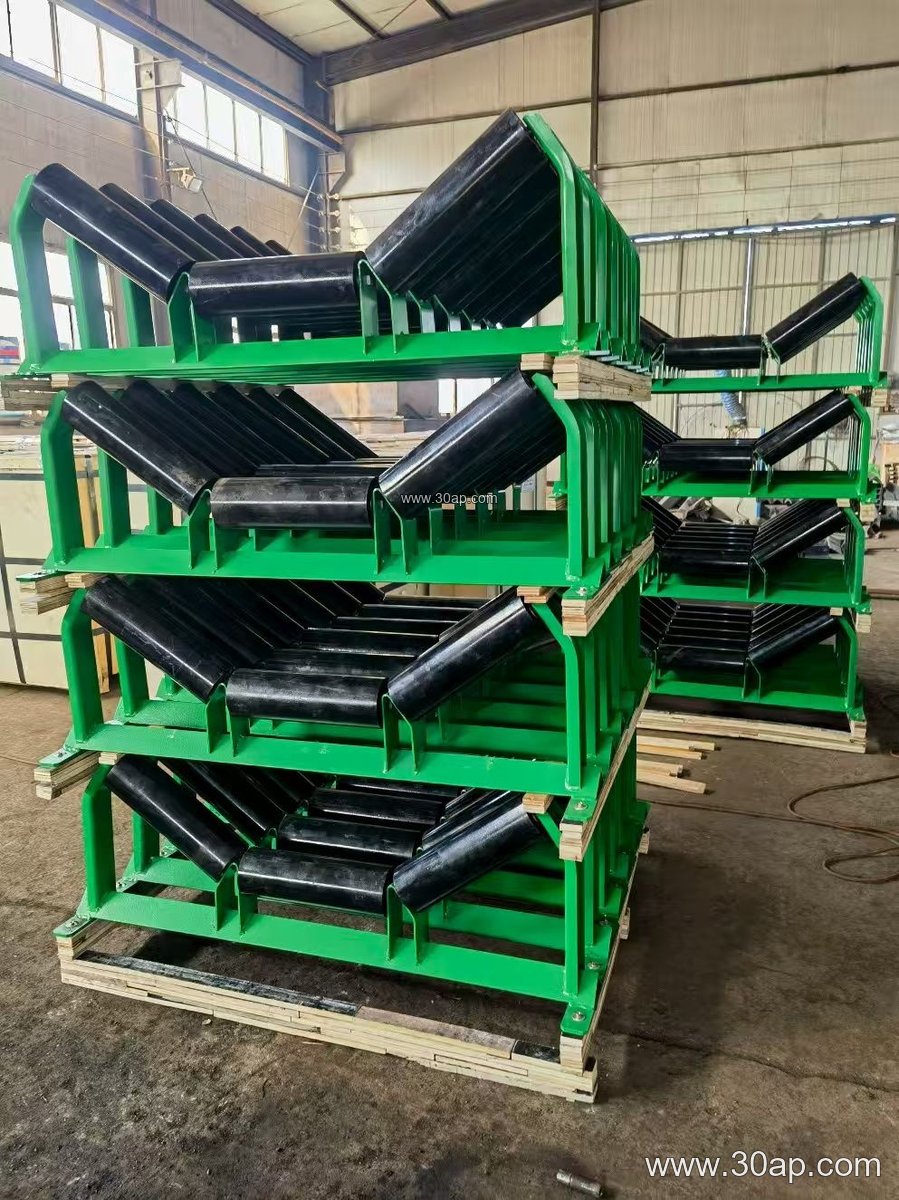
You will find discharge pulleys in coal mining conveyors, power plant coal handling, port bulk terminals, and aggregate crushing lines. In a coal mining conveyor belt system, the discharge pulley often works with a flame retardant conveyor belt and a series of idler rollers. In a cement plant, it may handle hot clinker with a heat resistant conveyor belt. The discharge pulley is not a tail pulley or a bend pulley; each has a different role, and they should not be swapped without a redesign.
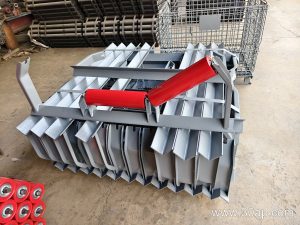
Related equipment such as conveyor brackets and idler rollers must be aligned with the discharge pulley to keep the belt tracking correctly. A misaligned discharge pulley can cause belt edge damage and material spillage.
Selection and Maintenance Notes
When choosing a discharge pulley, consider belt width, belt type, and the material being conveyed. For example, an EP conveyor belt or a steel cord conveyor belt may require different lagging and shell thickness than a fabric core conveyor belt. The discharge pulley should be sized for the maximum belt tension and the required diameter to avoid excessive belt stress.
Maintenance focuses on bearing lubrication, lagging wear, and shell alignment. Inspect the lagging for cracks or glazing, and check that the pulley rotates smoothly. In dusty environments such as a limestone mine or a sand and gravel line, keep the area around the discharge pulley clean to prevent material build-up.
Common Reference Data
| Belt Width | Typical Pulley Face Width | Example Diameter |
|---|---|---|
| B500 | 600 mm | Ø400 |
| B800 | 950 mm | Ø500 |
| B1000 | 1150 mm | Ø630 |
| B1200 | 1400 mm | Ø1000 |
| B1400 | 1600 mm | Ø800 |
| B1600 | 1800 mm | Ø1000 |
These values are for reference only. The actual discharge pulley size must be confirmed by the conveyor designer based on load, speed, and belt specifications.