What a Heavy-Duty Ceramic Lagged Pulley Does
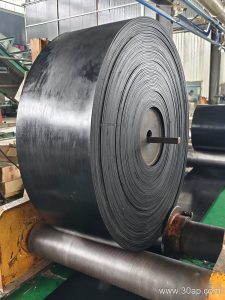
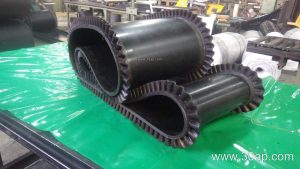
In a quarry, a cement clinker line, or a coal preparation plant, the conveyor pulley rarely fails because it is too weak. It fails because the belt slips, the lagging wears through, or the shell cannot hold its grip once the surface is wet and gritty. A heavy-duty ceramic lagged pulley addresses that problem by bonding ceramic tiles into a rubber or polymer backing on the pulley face, giving the drive pulley a hard, textured surface that bites into the belt cover without relying on soft rubber alone. It is a conveyor pulley built for the head or drive position where torque transfer matters most, and it is often specified alongside a heavy-duty conveyor belt carrying ore, aggregate, or clinker.
How the Ceramic Lagging Is Built
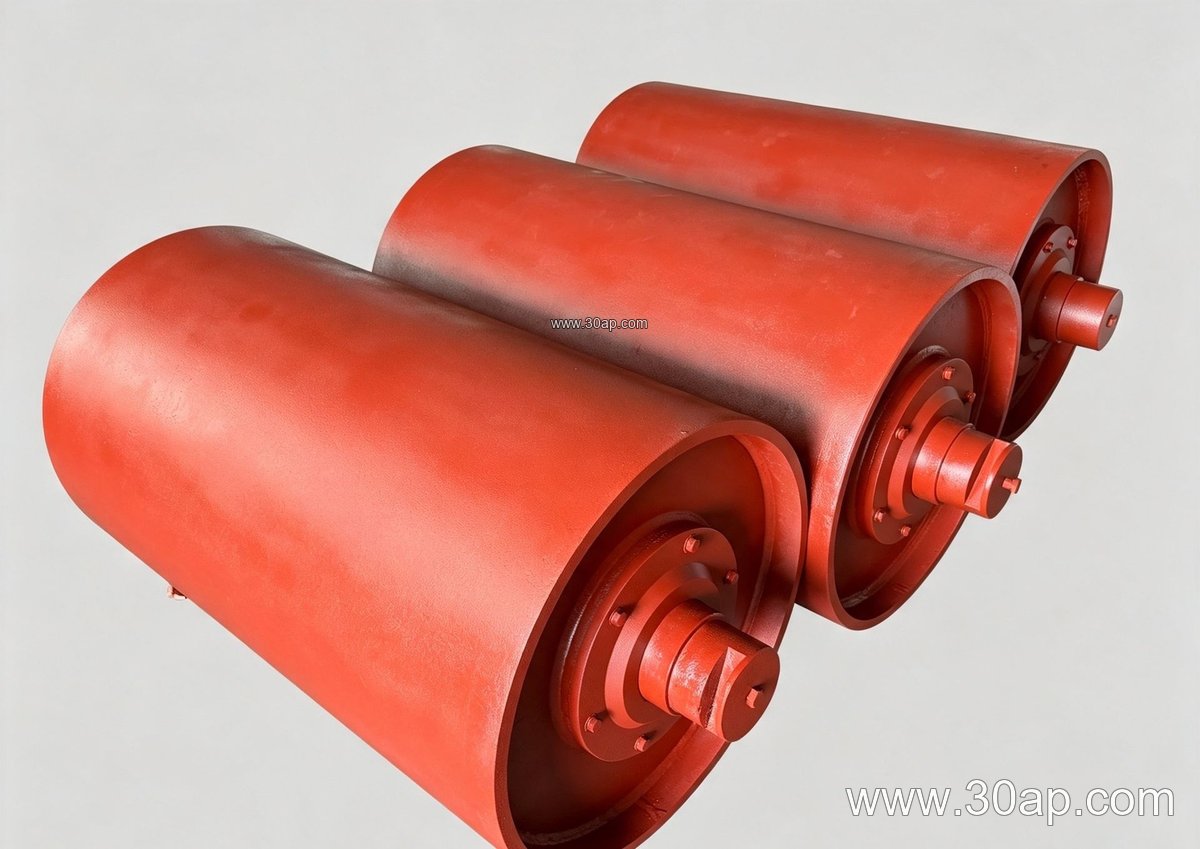
The shell is typically a rolled steel cylinder with welded end discs and a machined face. Ceramic lagging is applied in one of two ways: tiles embedded in a vulcanized rubber sheet that is bonded to the shell, or tiles set into a castable polymer layer. The tiles usually carry a raised diamond or studded pattern, and the gaps between them let water, fines, and slurry escape so the belt does not hydroplane. Bonding quality is the real difference between a long-lived pulley and a short-lived one, so buyers should ask how the lagging is attached and how the tile pattern is laid out across the face.
- Tile pattern and gap design affect grip and drainage
- Rubber or polymer backing absorbs impact from lumpy material
- Lagging thickness commonly ranges from 8 mm to 20 mm
- Shell, shaft, and bearing housing are sized for the drive torque
Where It Belongs on the Conveyor
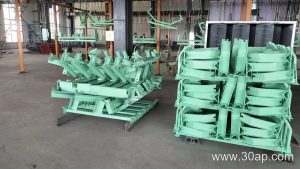
Ceramic lagging is most useful at the drive pulley, where the belt must transmit full motor torque with minimal wrap loss. It also appears at bend pulleys and tension pulleys in dusty, wet circuits, but the drive position is where the investment pays back fastest. A tail pulley in a primary crusher discharge may see more impact than slip, so a plain or rubber-lagged tail pulley can be a better match. These positions are not interchangeable: a drive pulley, a tail pulley, and a bend pulley each carry different loads and need different surface treatment.
Typical duty points include:
- Iron ore and copper ore transfer conveyors
- Limestone and aggregate crushing and screening lines
- Cement plant clinker and raw meal conveyors
- Coal handling and wash plant feed belts
- Power plant coal yards and port bulk terminals
Matching Pulley Size to the Belt
There is no single rule that ties one belt width to one pulley diameter. A B800 belt may run on a Ø500 drive pulley in a short, low-tension conveyor and on a Ø800 pulley in a long, high-tension one. The shell face is usually wider than the belt, for example about 950 mm for B800 and about 1400 mm for B1200, so the belt has room to track. Shaft diameter follows torque and bearing load, not belt width alone; common shaft sizes run from Ø50 up to Ø200 depending on the design.
| Belt width | Typical shell face | Common pulley diameter | Lagging thickness |
|---|---|---|---|
| B650 | About 750 mm | Ø400 to Ø630 | 10 to 15 mm |
| B800 | About 950 mm | Ø500 to Ø800 | 10 to 15 mm |
| B1000 | About 1150 mm | Ø630 to Ø1000 | 12 to 20 mm |
| B1200 | About 1400 mm | Ø800 to Ø1250 | 12 to 20 mm |
| B1400 | About 1600 mm | Ø800 to Ø1400 | 15 to 20 mm |
These are reference ranges only. Final sizing depends on belt tension, wrap angle, motor power, and the conveyor profile.
What to Check Before Ordering
Ask for the lagging bond method, tile hardness, and the surface pattern drawing. Confirm the shaft diameter and keyway against the actual torque, and check that the bearing housings fit the conveyor bracket on site. On abrasive duty, a high abrasion resistant conveyor belt paired with ceramic lagging usually lasts longer than soft rubber lagging alone, because the ceramic resists polishing and glazing. For coal or underground work, pair the pulley with a flame retardant conveyor belt or a PVG conveyor belt to keep the whole system consistent with site safety requirements. Where oil or heat is present, an oil resistant conveyor belt or heat resistant conveyor belt may be needed to protect the belt cover that the lagging grips.
Finally, keep spare ceramic lagging sheets and a torque check in the maintenance plan. Ceramic tiles can chip if the belt is misaligned or if tramp metal reaches the pulley, and early replacement of a few tiles is far cheaper than resurfacing a whole shell.