What an EP Rubber Conveyor Belt Is
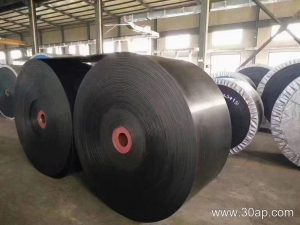
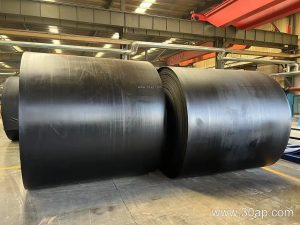
An EP rubber conveyor belt is a fabric-core belt built on polyester (E) and nylon (P) warp and weft yarns, finished with rubber covers on both faces. The carcass gives the belt its tensile strength and troughing flexibility, while the rubber covers protect the fabric from abrasion, impact, moisture and heat. In day-to-day purchasing, the same product is often called an EP conveyor belt, an EP fabric core belt, or a polyester-nylon conveyor belt. It has become a workhorse in mines, cement plants, power stations, quarries and sand and gravel yards, where long runs and steady loads are normal.
Compared with an NN conveyor belt, which uses nylon in both directions, the EP version usually offers lower elongation under load and better dimensional stability, so it needs less take-up travel and holds a steadier line on long inclined routes. That is why so many bulk material conveyor systems on beltconveyorsystem.com projects start with an EP carcass unless the duty calls for something else.
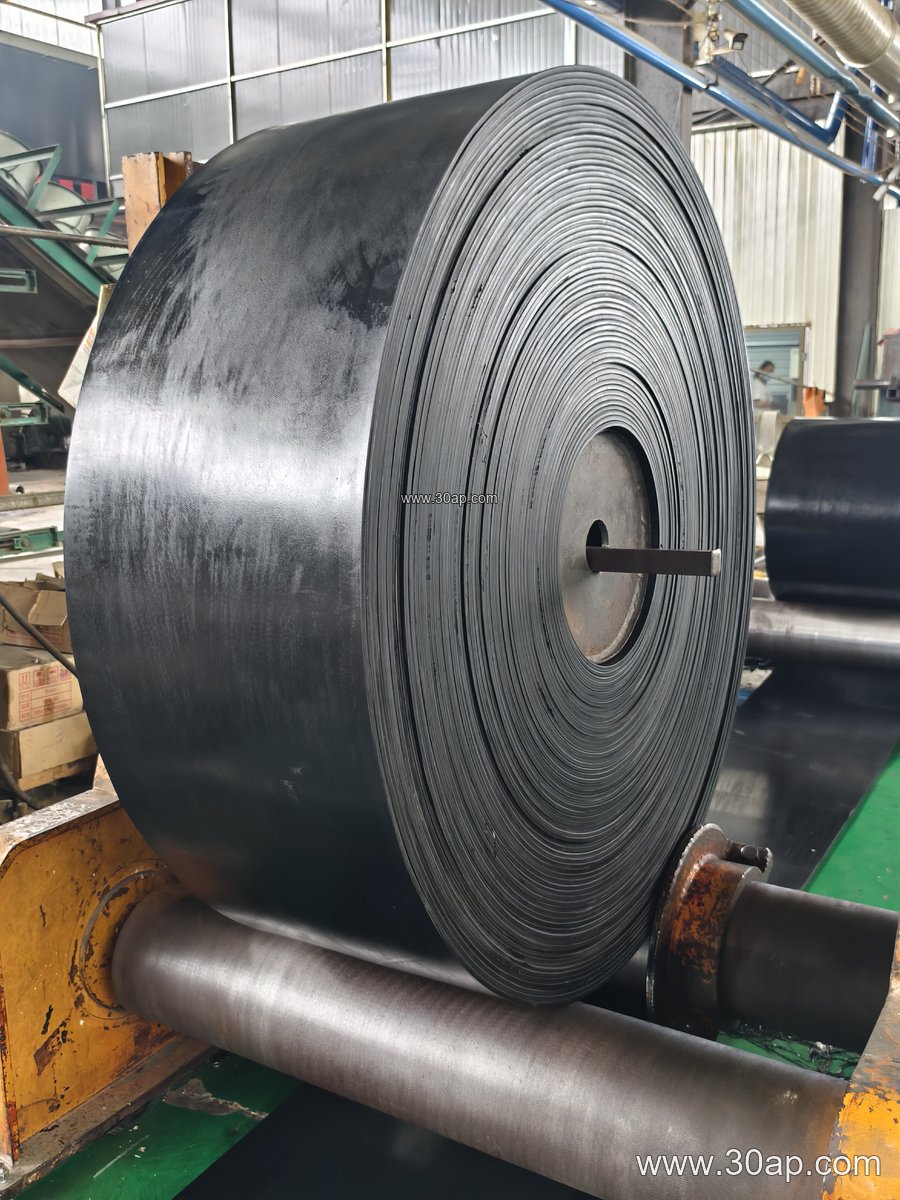
How the Belt Is Built
The carcass is made from two to six plies of EP fabric, bonded with rubber friction and skim coats, then covered with top and bottom rubber. Cover thickness is quoted as a pair, for example 4+2 mm or 6+2 mm, meaning top cover plus bottom cover. A thicker top cover suits sharp, abrasive rock; a thicker bottom cover helps where the belt runs over stub idlers or reverse bends.
Typical strength grades range from EP200 up to EP2000, and buyers will recognise designations such as EP400, EP630, EP1000 and EP1250. These numbers refer to the nominal tensile strength of the carcass, not to the belt width. Width and strength are chosen separately, so a 1000 mm wide belt may be supplied in several different grades depending on the load and the conveyor geometry.
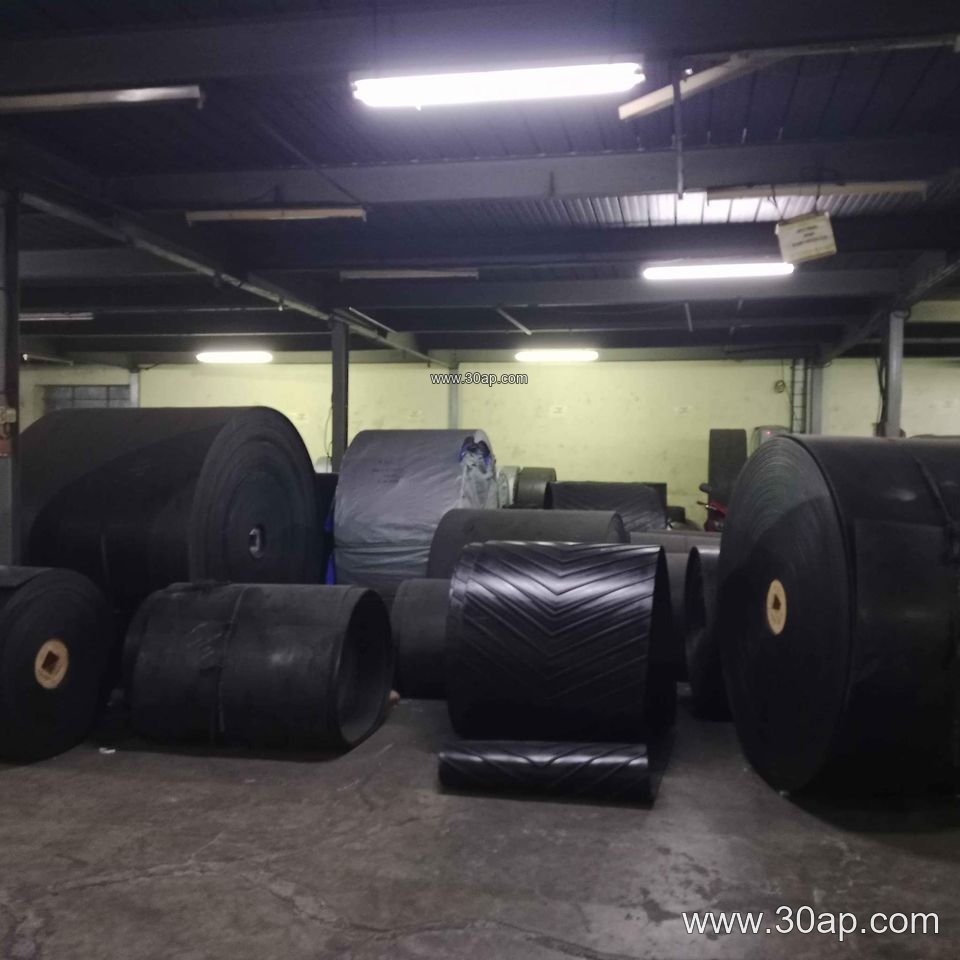
Common reference data
| Item | Typical range |
|---|---|
| Strength grade | EP200, EP315, EP400, EP500, EP630, EP800, EP1000, EP1250, EP1600, EP2000 |
| Belt width | B500, B650, B800, B1000, B1200, B1400, B1600, B1800, B2000 |
| Cover thickness | 3+1.5, 4+2, 5+2, 6+2, 8+3 mm |
| Carcass plies | 2 to 6 plies, by design |
Values above are reference figures only. Actual construction is confirmed against the conveyor design, and different manufacturers may differ.
Where It Fits on the Conveyor
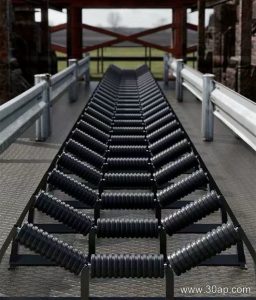
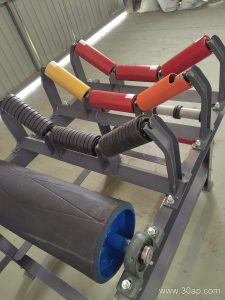
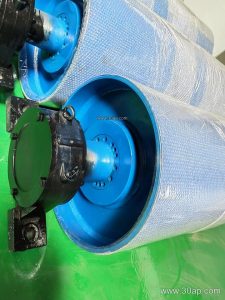
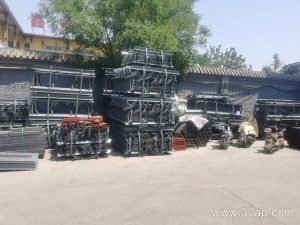
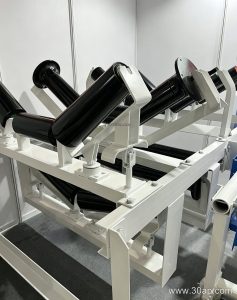
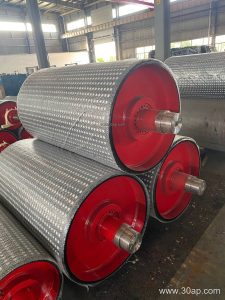
The belt is only one part of the machine. It runs over a drive pulley that transmits power, a tail pulley that returns the belt, and bend pulleys that guide it through transitions. These three are not interchangeable: the drive pulley carries the highest torque and usually has a lagged surface, the tail pulley is often smaller and may be self-cleaning, and bend pulleys simply redirect the belt path. Carrying idler rollers support the loaded strand, return idlers hold the empty side, and conveyor brackets keep the whole frame aligned.
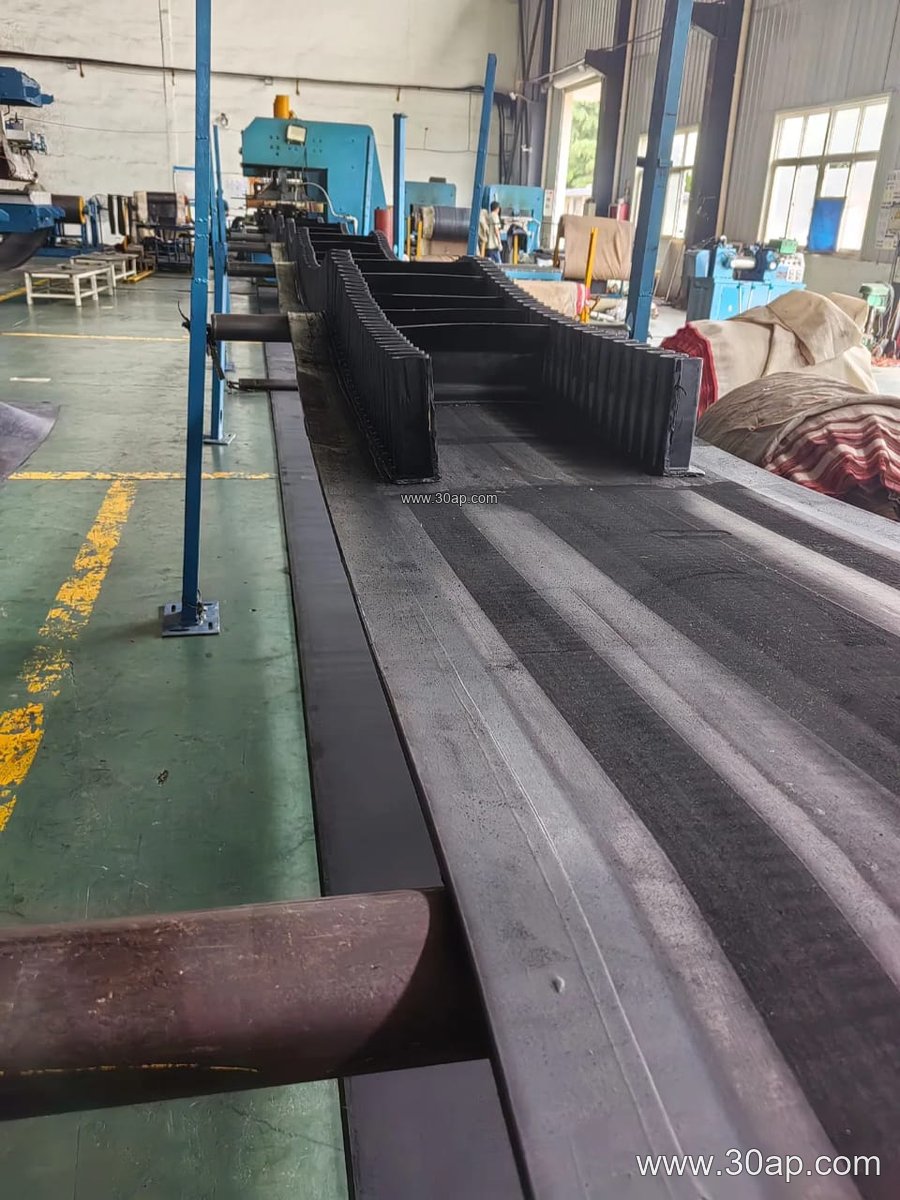
Applications are broad. A quarry conveyor belt moving blasted rock needs high abrasion resistance; a coal mining conveyor belt underground usually needs flame retardant and anti-static properties; a cement plant handles hot clinker with a heat resistant conveyor belt; a power plant may prefer a fire resistant grade around coal stockpiles. In ports and ship loading lines, wide belts of 1400 mm to 2000 mm are common to move large tonnages per hour. Recycling and construction sites often use a chevron conveyor belt or a corrugated sidewall belt where the incline is too steep for a smooth surface.
Selection Points for Buyers
- Load and incline: match the strength grade to the maximum tension, and check the elongation behaviour on long or steep routes.
- Material: sharp, hot, oily or chemically active cargo changes the cover compound. A standard abrasion resistant belt is not a substitute for an oil resistant or heat resistant one.
- Environment: cold climates call for a cold resistant compound; underground coal work generally calls for flame retardant and anti-static covers.
- Pulley and idler geometry: belt width, pulley diameters and trough angle are designed together. A given width does not lock the belt to one pulley diameter, and shaft size is never derived from width alone.
- Splicing: an endless conveyor belt made with a vulcanised splice runs more smoothly than a mechanically fastened joint, but it needs the right site conditions and skill.
Maintenance matters as much as the original choice. Keep idler rollers turning freely, check pulley lagging for wear, keep the belt tracking centred, and inspect the carcass at the splice for ply separation. A small amount of attention to the conveyor pulley and idler roller condition prevents most edge damage and cover gouging, and it extends the working life of the EP belt considerably.
For anyone specifying a fabric core conveyor belt, the practical rule is simple: state the material, tonnage, incline, ambient and belt width, then let the strength grade and cover compound follow. That approach keeps an EP rubber conveyor belt matched to its duty instead of over- or under-specified.