What a Conveyor System Idler Does
A conveyor system idler is the rotating support that carries the conveyor belt along its route. It is often called an idler roller, and it does two jobs at once: it holds the belt in a stable profile and it reduces friction so the drive can move the loaded belt with less power. In a quarry, a cement plant, or a coal handling line, dozens or hundreds of these rollers keep the belt tracking smoothly between the head and tail ends of the structure.
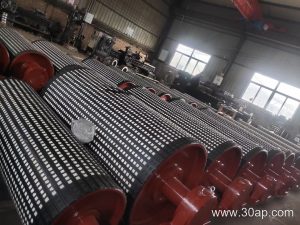
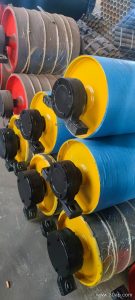
The idler is not a pulley. Drive, tail and bend pulleys transmit power or change belt direction; they are separate components with their own shafts and lagging. An idler simply supports the belt between those points, which is why the two should never be treated as interchangeable parts in a bill of materials.
How an Idler Roller Is Built
Most units share a common structure: a steel tube shell, a shaft, bearing housings at both ends, and a sealing arrangement to keep dust and water out. The roller surface may be plain steel, nylon, ceramic, or fitted with rubber rings for impact absorption. Bearing sizes are matched to load and speed rather than to a single roller diameter, and common bearings include 6204, 6205, 6305, 6306, 6308 and 6310.
Sealing quality matters more than many buyers expect. In a stone crushing line or a power plant coal yard, fine abrasive dust works into the bearing cavity and shortens service life. Labyrinth seals and multi-stage dust guards are typical on units intended for heavy-duty mining conveyor service.
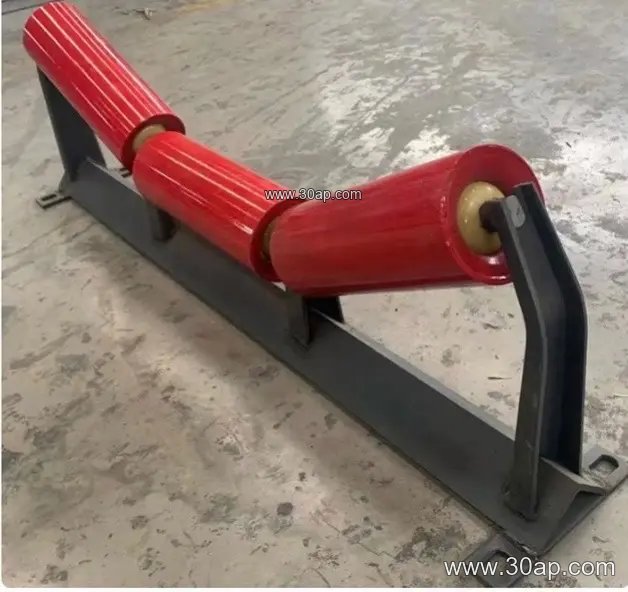
Common Idler Arrangements
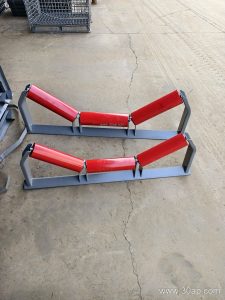
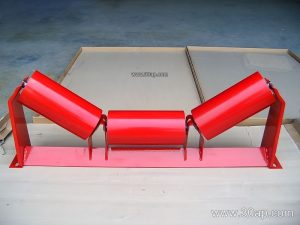
The troughing idler set is the most familiar form, usually built as a single roller, a two-roll set, or a three-roll troughing set. The trough angle is commonly 20, 30, 35 or 45 degrees, and a small forward tilt of about 1.5 to 2 degrees is sometimes used to help center the belt. Return side support is handled by flat return rollers or V-return idlers, while impact idlers with rubber rings sit under loading points to cushion falling material.
Self-aligning types, including friction and tapered aligning idlers, correct minor belt drift. Spiral rollers are used where sticky material tends to build up on the shell. These are different tools for different problems, and a well-planned conveyor may use several of them along one route.
Matching Roller Diameter and Belt Width
Roller diameter and belt width are related through the conveyor design, not through a fixed rule. Common roller diameters include 63, 76, 89, 102, 108, 127, 133, 159, 178, 194 and 219 mm, and belt widths range from B400 up to B2400. A wider belt does not automatically dictate one particular roller diameter, and no single shaft size should be assumed from belt width alone.
Roller length changes with belt width, trough angle and the number of rolls in the set. As a rough reference, a three-roll troughing set might use a roll length near 315 mm on a B800 belt or near 530 mm on a B1400 belt, but side rolls and center rolls can differ and final values are set by the conveyor designer.
Where These Rollers Are Used
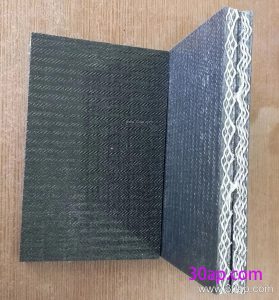
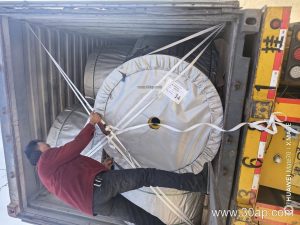
You will find idlers in limestone mines feeding a crusher, in cement plant clinker transport, and in power station coal conveying. They also appear in port ship loading systems and in aggregate plants handling sand and gravel. The belt itself may be an EP conveyor belt, an NN conveyor belt, or a steel cord conveyor belt, and in dusty or wet conditions a flame retardant conveyor belt or abrasion resistant conveyor belt is often specified to suit the environment.
Heavy-duty mining conveyor belt installations place higher loads on every roller, so bearing selection and shell thickness deserve extra attention there. In food or chemical handling, the roller materials and seals should match the cleanliness and corrosion requirements of the process.
Buyer Checklist
- Confirm belt width, trough angle and whether the station is single, two-roll or three-roll.
- State the duty: carrying, return, impact, or self-aligning.
- Specify roller diameter and bearing size as design inputs, not as guesswork.
- Describe the environment, including dust, moisture, temperature and material stickiness.
- Ask about seal type and shell material for the expected service life.
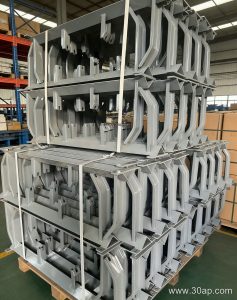
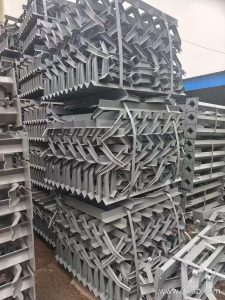
Supporting components such as the conveyor bracket and the conveyor pulley should be reviewed together with the idler layout, because a mismatched frame or pulley height can spoil belt tracking even when the rollers themselves are correct. Buyers who treat the idler as part of a complete conveyor system, rather than as a commodity item, usually get smoother running and fewer stoppages.