What a Carrying Trough Idler Does
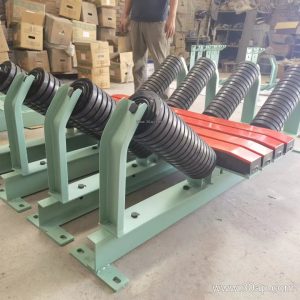
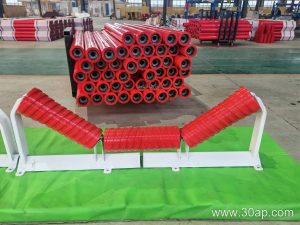
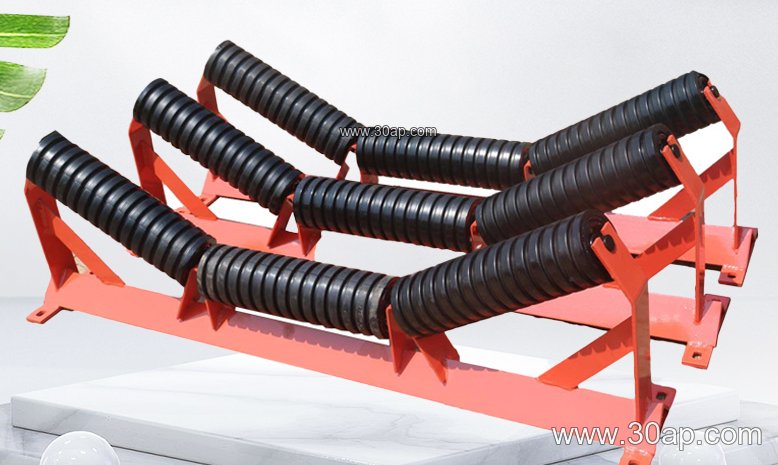
A carrying trough idler is the roller assembly that supports the loaded run of a conveyor belt and shapes it into a trough. You will also see it called a troughing idler or carrying idler, and those names refer to the same component. Its job is to hold the belt in a stable curve so bulk material stays centered instead of spilling over the edges. The trough angle is usually 20, 30, 35 or 45 degrees, and the assembly may use a single roller, two rollers or the common three-roller arrangement.
On a quarry conveyor belt or a cement plant conveyor belt, the carrying trough idler is the part the material actually rides on. It is not a drive pulley, a tail pulley or a bend pulley; those parts transmit power or change belt direction. Keeping that distinction clear helps when you order spares or write a maintenance plan.
How the Assembly Is Built
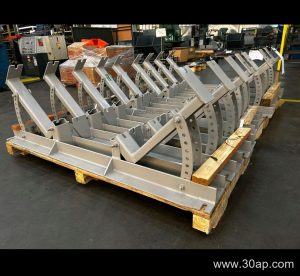
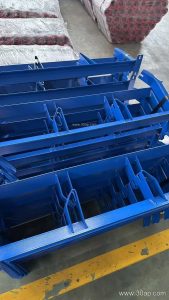
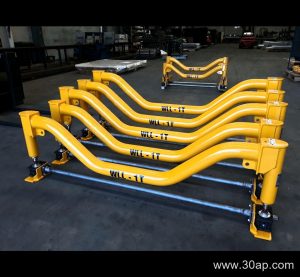
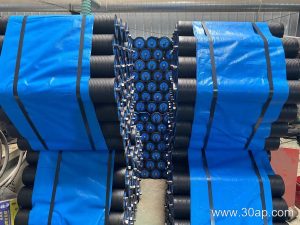
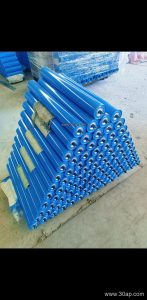
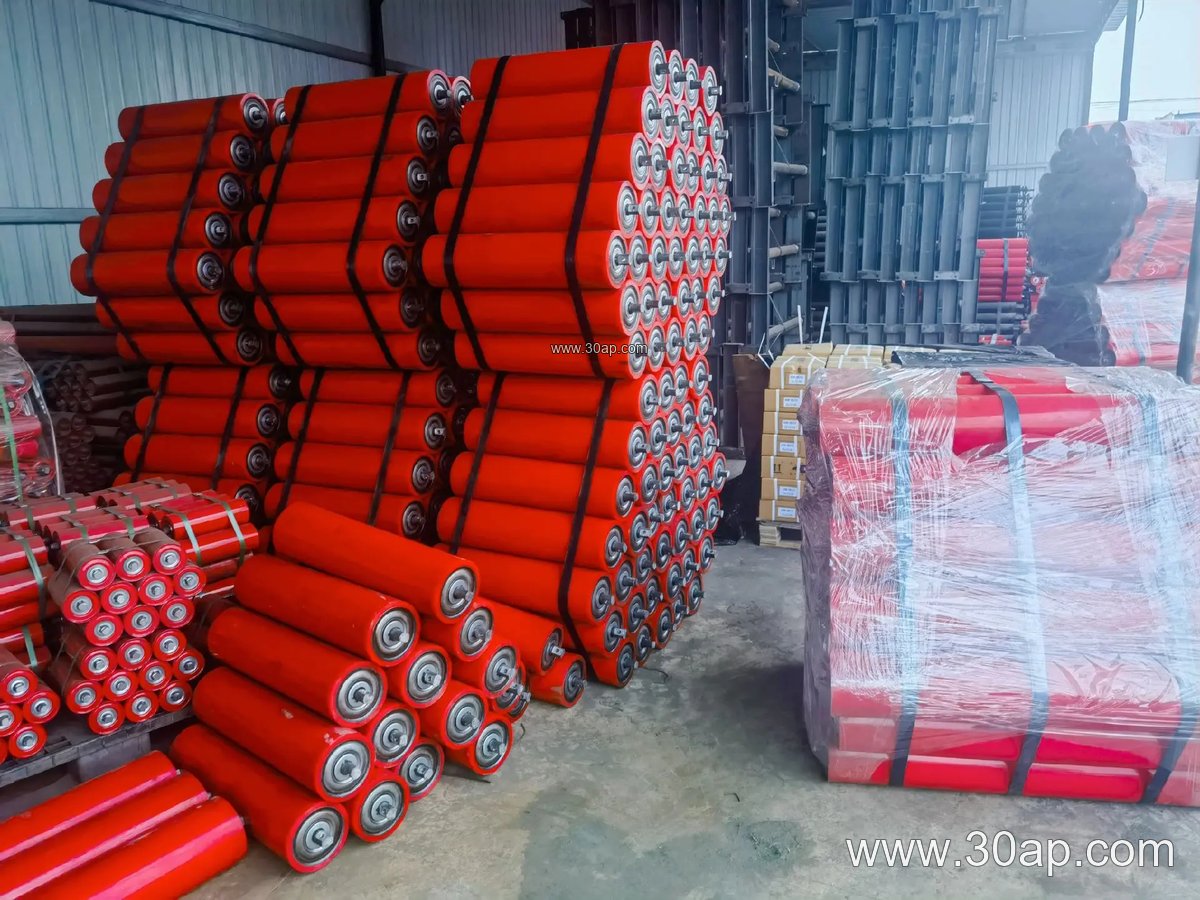
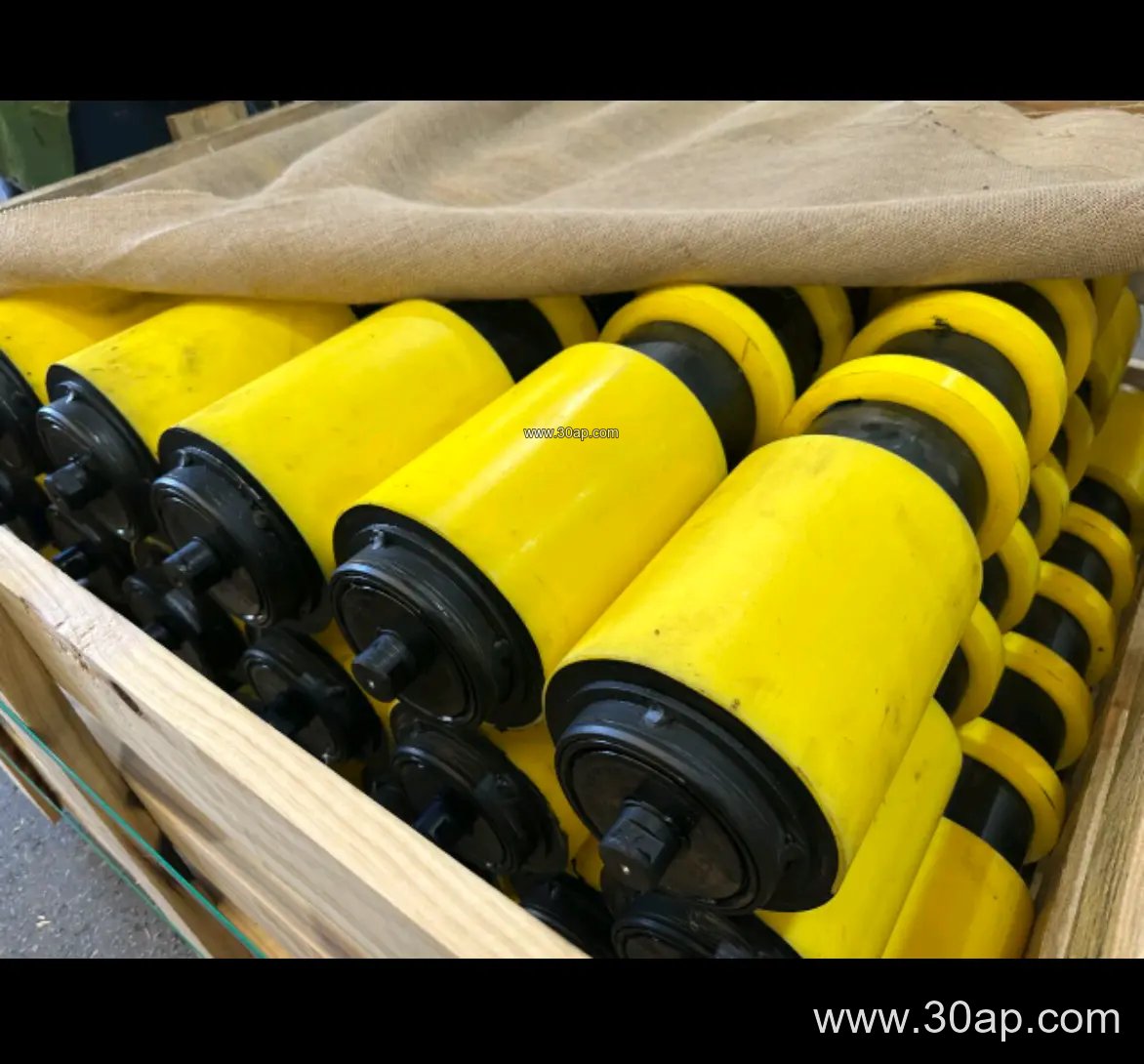
A typical unit combines steel or polymer rollers, a frame that sets the trough angle, and brackets that bolt to the conveyor stringer. Roller shells are often steel tube, and some designs use nylon, ceramic or rubber rings on the surface. The bearings are selected to suit the load and speed; common sizes include 6204, 6205, 6305, 6306, 6308 and 6310, but a given shaft diameter should be confirmed by the manufacturer rather than assumed from belt width.
Sealing matters as much as the bearing itself. Dust from a crusher conveyor belt or grit from an aggregate conveyor belt will shorten life if the labyrinth or contact seal is poor. A well-built carrying trough idler keeps grease in and fines out, and the roller should turn freely by hand before installation.
Where It Fits in the Conveyor
These idlers appear on the carrying side of a belt conveyor in mining, coal preparation, power plant coal handling, steel plants and port loading systems. In a limestone mine or a sand and gravel line, a three-roller trough set is common because it gives good material containment. A single-roller or two-roller set may appear on narrower belts or where the belt is stiff.
The same conveyor will also have return idlers underneath, and sometimes a V-type return idler to help belt tracking. A carrying trough idler is not a replacement for those return idlers, and it is not a substitute for a conveyor pulley at the head or tail. Each has its own place in the system.
Matching Roller Diameter and Belt Width
Roller diameter is chosen from belt speed, load and the space available. Common diameters range from about 63 mm to 219 mm, including 89, 102, 108, 127, 133, 159 and 178 mm. Belt widths run from B400 up to B2400. A 1000mm conveyor belt does not automatically require one particular roller diameter, and a 1200mm wide belt can be paired with several roller sizes depending on the design.
Roller length also varies with belt width, trough angle and the number of rollers in the set. For a three-roller trough set, examples often quoted are about 200 mm roller length for B500, 250 mm for B650, 315 mm for B800, 380 mm for B1000, 465 mm for B1200, 530 mm for B1400 and 600 mm for B1600. These are examples, not fixed rules, and the side rollers may differ from the center roller.
| Parameter | Common Range or Example | Note |
|---|---|---|
| Roller diameter | 63, 76, 89, 102, 108, 127, 133, 159, 178, 194, 219 mm | Selected by load and speed |
| Belt width | B400 to B2400 | Width alone does not fix roller size |
| Trough angle | 20, 30, 35, 45 degrees | Deeper trough for finer, flowable material |
| Bearing | 6204, 6205, 6305, 6306, 6308, 6310 | Confirm with supplier |
| Roller surface | Steel tube, nylon, ceramic, rubber ring | Rubber rings help with impact |
Buyer Checklist
- Confirm the belt width and the existing trough angle before ordering.
- Ask for the roller diameter and shaft size as a matched set, not as separate guesses.
- Check seal type for dusty service such as a crusher conveyor belt or ore conveyor belt.
- Confirm bracket hole spacing matches your conveyor bracket or stringer.
- For abrasive duty, consider a heavier roller shell; for wet or sticky material, check that the trough angle suits the flow.
A carrying trough idler is a small cost item with a large effect on belt life. When it is selected to match the belt, the load and the environment, the conveyor runs straighter and the belt lasts longer.