What a Port Conveyor Belt Does
A Port Conveyor Belt is the heavy-duty carrying element inside the continuous handling systems that move bulk cargo between ship loaders, stackers, reclaimers, storage yards and rail or truck loading points. In a port, the belt is expected to run for long shifts, resist coastal humidity, handle abrasive cargo such as iron ore, coal, fertilizer, grain, sand and cement clinker, and keep a steady flow from the quay to the yard. Because the same conveyor line may see different cargoes over its service life, the belt specification usually needs to balance abrasion resistance, tensile strength and environmental protection rather than optimize for a single material.
Construction and Main Components
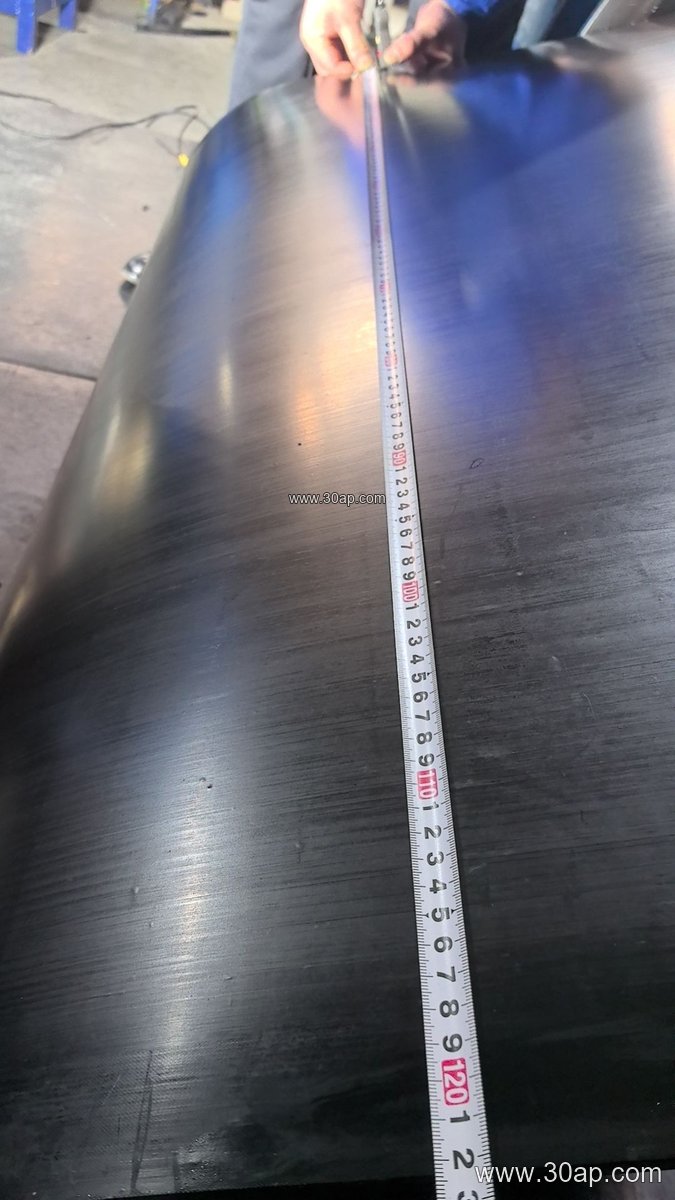
The belt body is normally a fabric core or steel cord carcass covered with rubber on both faces. A fabric core Port Conveyor Belt commonly uses EP or NN canvas, while long overland and high-tension port lines often use a Steel Cord Conveyor Belt. The top cover protects against cargo impact and cutting; the bottom cover runs against idler rollers and drive pulleys. Edge construction, splice design and cover thickness all influence how well the belt tracks on a long jetty conveyor.
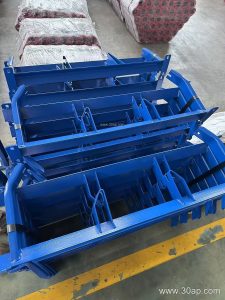
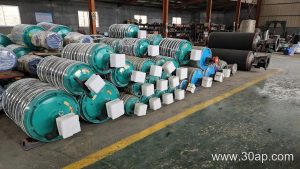
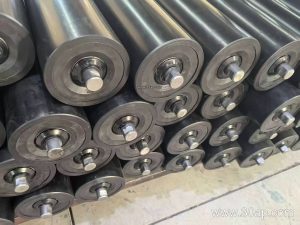
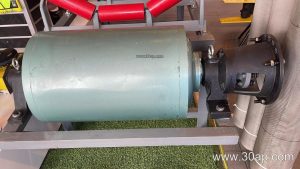
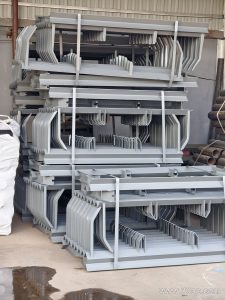
Around the belt, the system includes idler rollers, conveyor pulleys, conveyor brackets and the drive unit. Drive, tail and bend pulleys each have their own role and are not interchangeable, so belt tension and pulley lagging should be reviewed together with the belt rating. A well-matched set of idler rollers reduces bottom cover wear, while correct pulley alignment protects the splice.
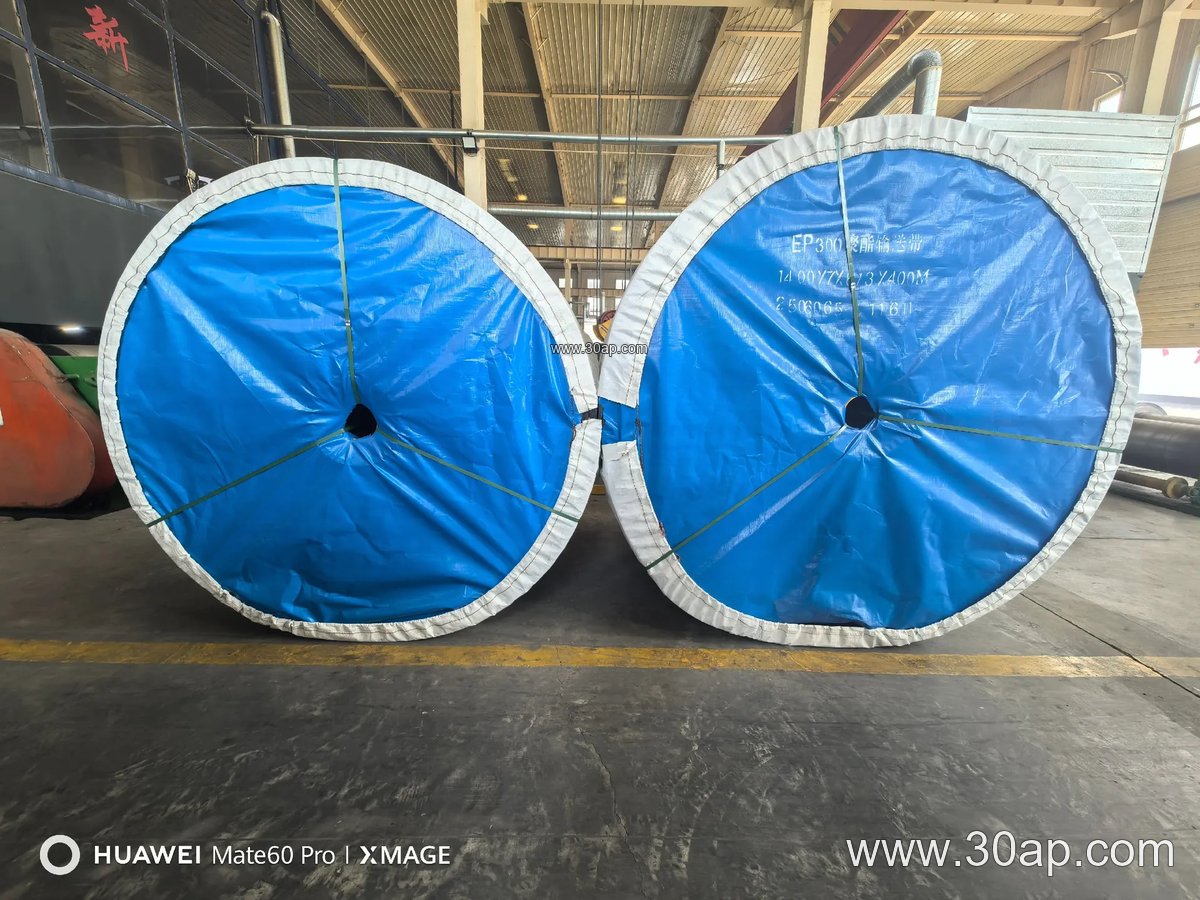
Common Belt Types for Port Service
Selection starts with the cargo and the environment. The table below shows typical constructions and where they are often considered; actual values are confirmed by design and by the belt manufacturer.
| Type | Typical Strength or Width Reference | Typical Port Use |
|---|---|---|
| EP Conveyor Belt / EP Rubber Conveyor Belt | EP200, EP400, EP630, EP1000, EP1250; B800 to B1800 | General bulk cargo, coal, grain, fertilizer |
| NN Conveyor Belt | NN100 to NN400; B650 to B1400 | Medium-duty yard and transfer conveyors |
| Steel Cord Conveyor Belt | ST1000, ST1600, ST2000, ST2500; B1000 to B2000 | Long jetty lines and high-capacity ship loading |
| Flame Retardant / Fire Resistant Conveyor Belt | Common in coal and enclosed galleries | Coal terminals and dusty transfer towers |
| Abrasion Resistant Conveyor Belt | Cover grades selected by cargo | Iron ore, copper ore, sinter, clinker |
| Heat Resistant Conveyor Belt | Cover compound matched to cargo temperature | Cement clinker, coke, hot pellets |
| Oil Resistant Conveyor Belt | Cover compound matched to oil exposure | Oilseed, recycled material, oily cargo |
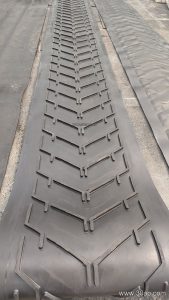
| Chevron Conveyor Belt | Patterned top cover | Inclined ship loading and yard ramps |
| Corrugated Sidewall Conveyor Belt | Sidewall and cleat design | Steep transfer with limited space |
| Pipe Conveyor Belt | Formed into a tube | Dust control and curved routes |
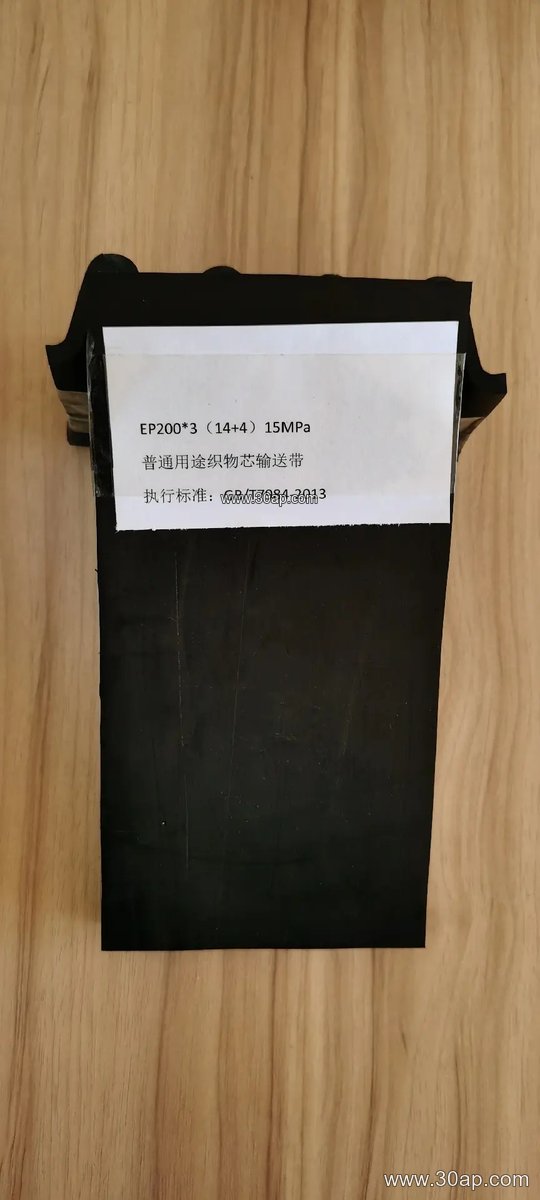
Cover thickness is often written as top plus bottom, for example 4+2 mm, 5+2 mm, 6+2 mm or 8+3 mm. Fabric carcass belts commonly use 2 to 6 plies. These are reference formats, not fixed rules; a 1200mm wide belt and a 1800mm wide belt may each be built with different carcass and cover combinations depending on tension and cargo.
Where Port Belts Are Used
Ports handle a wide mix of bulk materials, so the same terminal may need a Mining Conveyor Belt specification for ore, a Coal Mining Conveyor Belt or Flame Retardant Conveyor Belt for coal, and a Cement Conveyor Belt style for clinker and cement. Quarry Conveyor Belt and Aggregate Conveyor Belt constructions appear in sand and gravel wharves, while a Bulk Material Conveyor Belt with good abrasion resistance suits fertilizer and mineral cargo. Ship Loading Conveyor Belt lines often combine a Steel Cord Conveyor Belt with a Chevron Conveyor Belt on inclined sections. Related industries such as power plants, steel plants, stone crushing plants and recycling facilities use similar belt families, which is why buyers often compare EP Conveyor Belt, NN Conveyor Belt and steel cord options in one enquiry.
Buyer Checklist
- State the cargo, lump size, temperature and any oil or chemical exposure.
- Confirm the required tensile grade, such as EP630, EP1000 or ST1600, against the conveyor design.
- Give belt width and cover thickness, for example B1200 with 6+2 mm covers, rather than assuming a standard.
- Ask how the belt will be spliced and whether an Endless Conveyor Belt is preferred for the main line.
- Check compatibility with idler rollers, conveyor pulleys and conveyor brackets along the route.
- Review cold resistance, anti-static behavior and flame retardancy where the local climate or cargo demands it.
For port projects, send the conveyor layout, cargo list and required capacity so the belt, pulley and roller selections can be checked together. A practical Port Conveyor Belt choice is the one that matches the whole handling system, not only the headline strength figure.