What a Five-Roll Idler Bracket Does on a Conveying Line
A five-roll idler bracket is a support frame that carries five idler rollers under a conveyor belt, typically arranged as three troughing rolls on the carrying side and two lower rolls in a V or offset pattern on the return side, or as a five-roll troughing set on very wide belts. In a cement plant, a five-roll troughing bracket helps spread the load of a heavy clinker stream across more rollers, which reduces point pressure on the belt cover and keeps the belt profile stable between the head and tail pulleys.
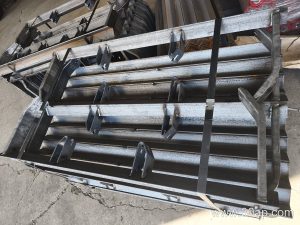
This support frame, also called a five-roll idler support, is a structural part rather than a rotating part. It positions and holds each idler roller at the designed trough angle, so the belt forms the correct cradle shape and material stays centered during transport.
Construction and Mounting Details
Most five-roll idler brackets are fabricated from angle steel, channel steel, or folded steel plate, then welded into a rigid crossbeam with mounting slots or bolt holes for each roller. The frame usually bolts to the conveyor stringer or to a base bracket fixed on the conveyor structure. Because the frame carries several rollers, the crossbeam length and hole spacing are determined by belt width, trough angle, and roller diameter together, not by one dimension alone.
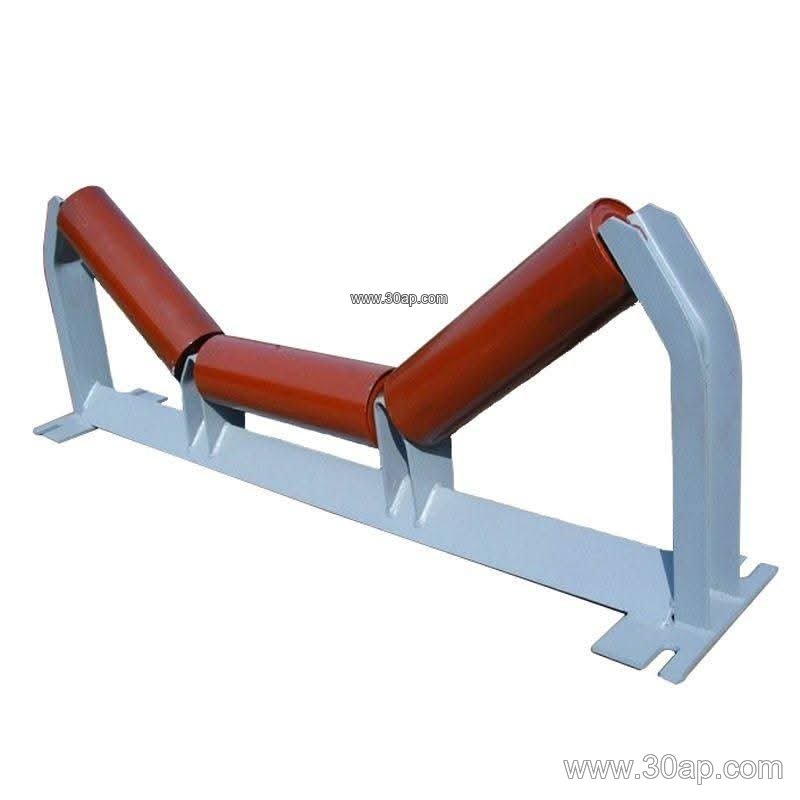
- Angles and channels are common base materials for medium and heavy duty frames.
- Folded plate versions are often chosen where a cleaner profile or higher stiffness is needed.
- Adjustable variants allow the trough angle to be set between positions such as 20, 30, 35, and 45 degrees.
- Fixed versions are welded or bolted at one preset angle for a stable belt profile.
Mounting height and bolt patterns should follow the conveyor design drawing. A bracket that fits a B800 frame will not automatically fit a B1400 structure, and roller shaft ends must match the bracket slots or clamps.
Where It Fits in Bulk Handling
Five-roll support frames appear where belt widths and material loads are large. In a coal washing plant, a five-roll idler bracket can support a flame retardant conveyor belt carrying washed coal; in a power plant coal yard, it helps keep a wide belt tracking through long transfer runs. Limestone quarries and iron ore terminals also use multi-roll support sets under heavy belts, especially where a steel cord conveyor belt carries high tension and the belt needs a smooth, well-supported trough.
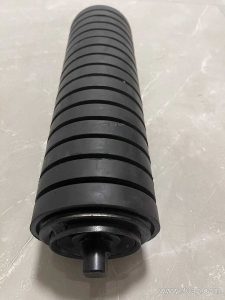
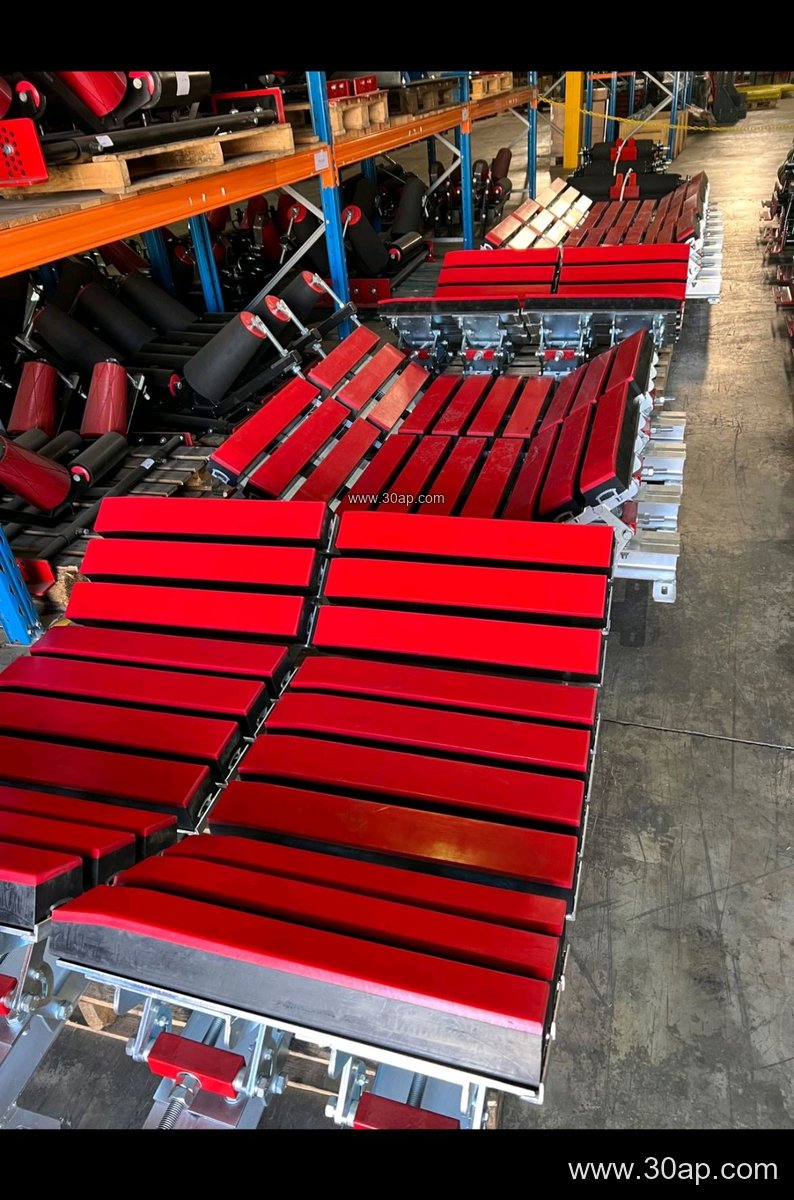
These frames are not a substitute for the drive pulley, tail pulley, or bend pulley. They work together with the conveyor pulley system: the pulleys transmit motion and change belt direction, while the bracket and its idler rollers support the belt between those points. A conveyor bracket of this type also differs from a return bracket or an impact bracket, which serve narrower support functions.
Matching Belt, Roller, and Bracket
Selection starts with the belt width and the expected load. Common bracket reference combinations include B800 with a 35 degree trough and Ø108 rollers, B1200 with a 45 degree trough and Ø133 rollers, and B650 with a 30 degree trough and Ø89 rollers. These are examples, not fixed rules; a designer may choose another angle or roller diameter for the same belt width depending on capacity, material lump size, and belt stiffness.
| Reference Item | Common Values |
|---|---|
| Belt width | B500, B650, B800, B1000, B1200, B1400, B1600, B1800, B2000 |
| Trough angle | 20, 30, 35, 45 degrees; adjustable frames cover several of these |
| Roller diameter | Ø89, Ø108, Ø133, Ø159, Ø194 |
| Frame material | Angle steel, channel steel, folded steel plate |
| Frame type | Fixed or adjustable; troughing or combined carrying and return |
On a quarry conveyor belt line, a five-roll frame should be checked against the idler roller shaft size, the belt speed, and the material impact zone. Where a crusher conveyor belt receives large lumps, impact brackets or cushioning rollers may be considered for that section, while the five-roll bracket supports the steady carrying run.
Buyer Checklist
- Confirm belt width and the required trough angle before ordering.
- State the roller diameter and shaft end shape so the bracket slots match.
- Ask whether the frame is fixed or adjustable, and confirm the adjustment range.
- Check the mounting hole spacing against the existing stringer or base bracket.
- Match the frame finish and material thickness to the site environment, such as dust, moisture, or heat.
- Confirm that the five-roll layout suits the belt type, whether an EP conveyor belt, an NN conveyor belt, or a steel cord belt is used.
For conveyor projects, a correctly matched five-roll idler bracket, together with suitable idler rollers and a well-chosen conveyor belt, keeps the belt centered and extends service life. Buyers can review conveyor bracket drawings at www.example.com/conveyor-bracket and compare roller options at www.example.com/idler-roller before finalizing the order.