What an EP300 Conveyor Belt Is
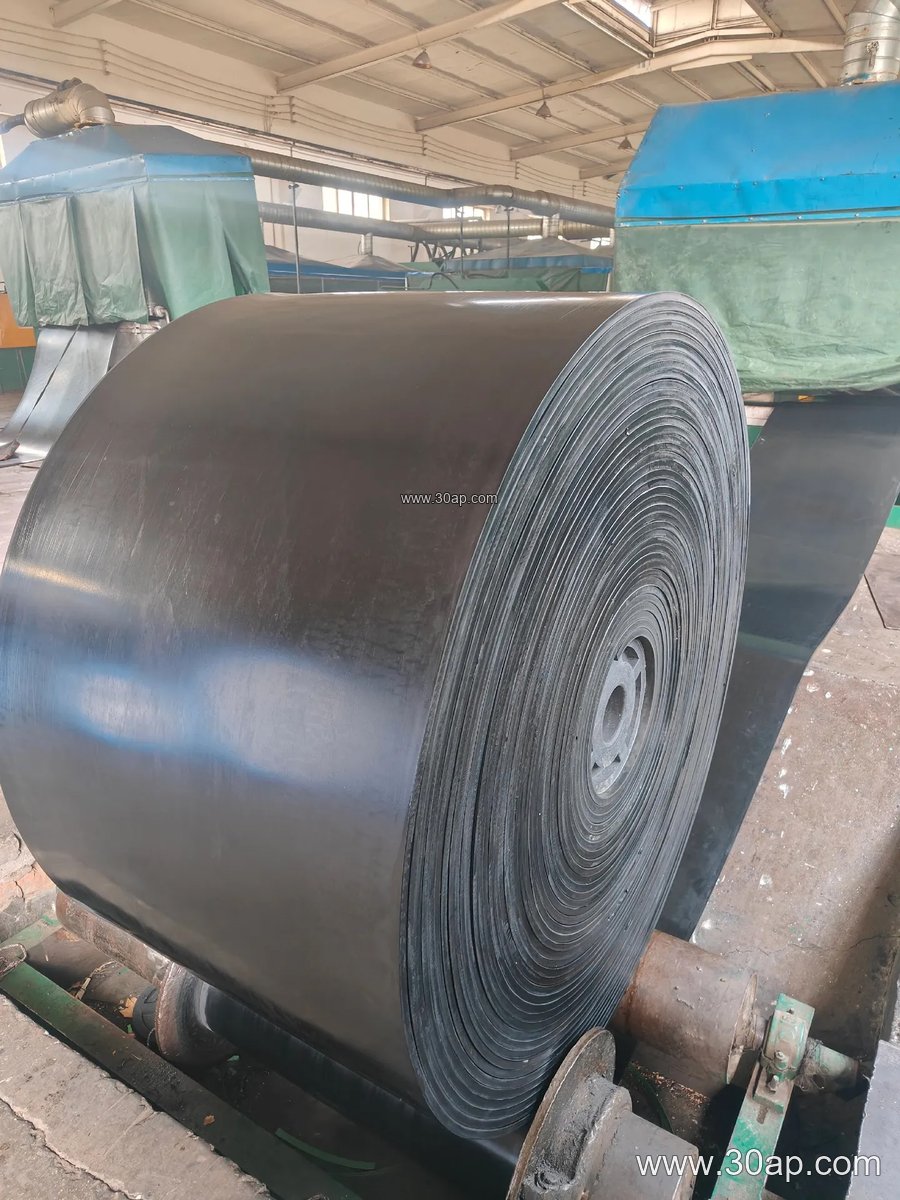
An EP300 conveyor belt is a multi-ply fabric core belt built around polyester warp and polyamide weft fabric. The EP designation refers to the carcass yarns, and the 300 figure indicates the nominal tensile strength class of the fabric plies, commonly expressed in newtons per millimeter. In practice, this places the belt in the medium-to-high strength band of fabric-reinforced belting, above general-purpose EP200 grades but below the heaviest EP400 or EP500 constructions. Buyers often describe it simply as an EP conveyor belt or an EP rubber conveyor belt, and these names point to the same product family.
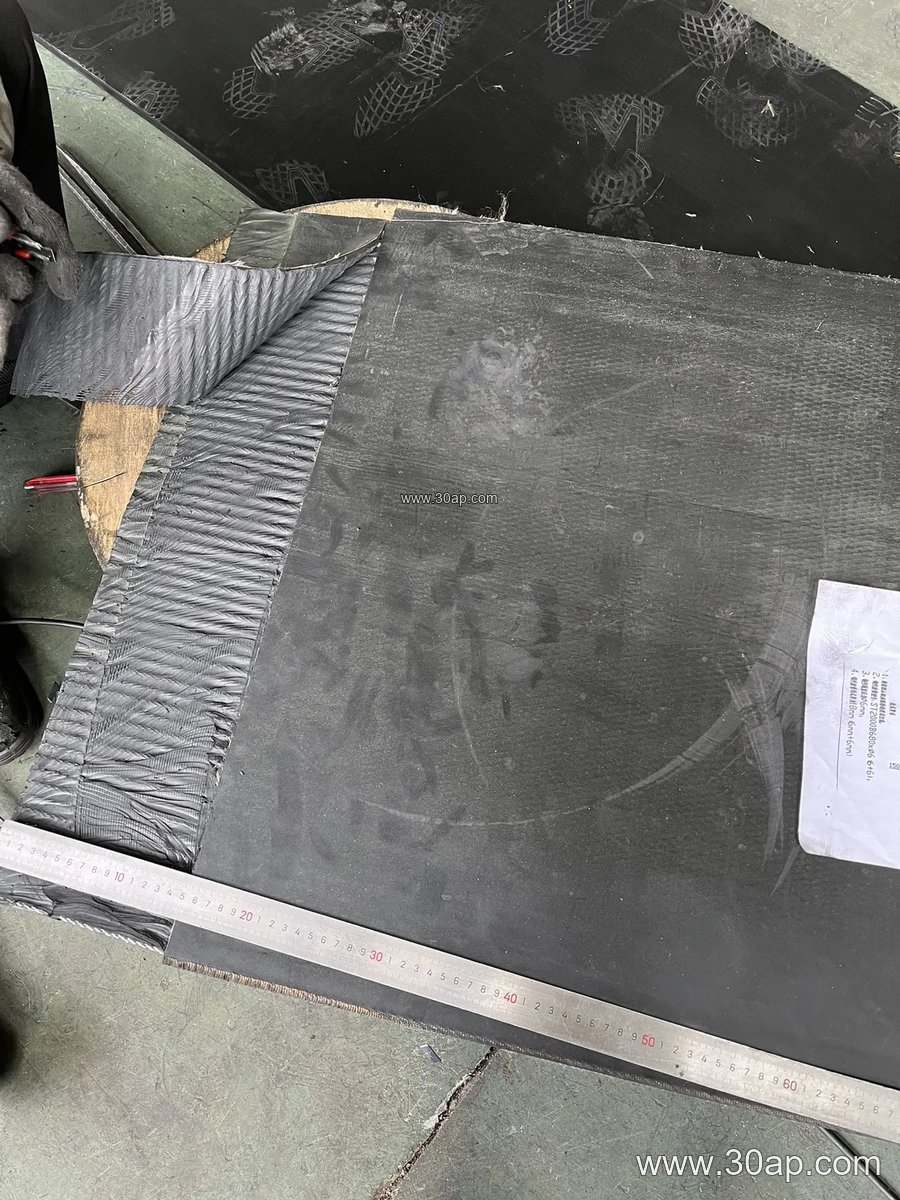
The carcass is the load-bearing part. Polyester provides low elongation under tension, while polyamide contributes flexibility and resistance to fatigue. Rubber covers on the top and bottom protect the fabric from abrasion, moisture, and impact. Because the belt is a fabric core conveyor belt rather than a steel cord design, it can be spliced with stepped or finger joints and handled without the specialized equipment that a steel cord conveyor belt requires.
Construction and Surface Options
A typical EP300 belt uses two to six fabric plies, depending on the required strength and the load profile of the conveyor. Cover rubber thickness is usually specified as a top and bottom pair, for example 4+2 mm, 5+2 mm, or 6+2 mm. Heavier covers are selected where sharp rock, ore, or clinker is loaded directly onto the belt.
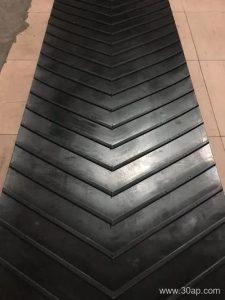
Surface form matters as much as strength. A plain surface suits horizontal runs and gentle inclines. For steep sections, a chevron conveyor belt or a corrugated sidewall belt may be the better answer, although those are different constructions and should not be treated as direct replacements for a flat EP300 belt. Heat resistant, oil resistant, abrasion resistant, and flame retardant cover compounds are available in the EP family, and each changes the rubber formulation rather than the carcass class.
Typical Duty and Industries
The EP300 class fits medium-length to long conveyors moving bulk material at moderate to high tonnage. Common settings include:
- Sand and gravel plants feeding crushers and screens
- Cement works transporting clinker, limestone, and raw meal
- Power plants handling coal on yard and boiler-feed conveyors
- Mining and quarry operations moving ore and waste rock
- Ports and ship loading systems transferring aggregate
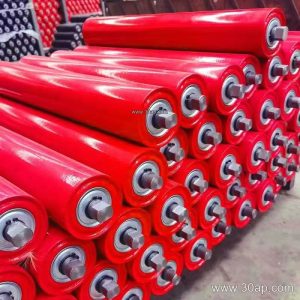
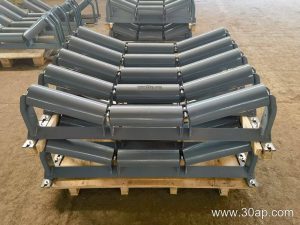
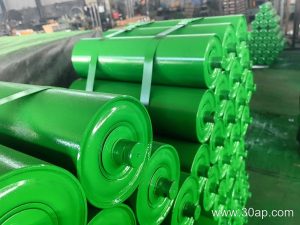
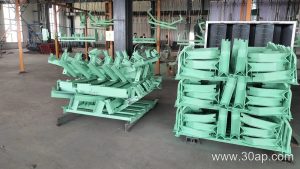
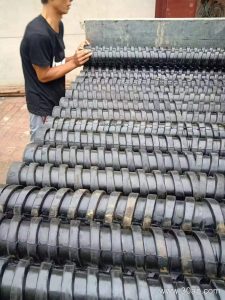
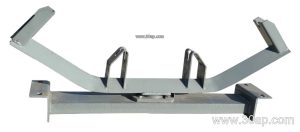
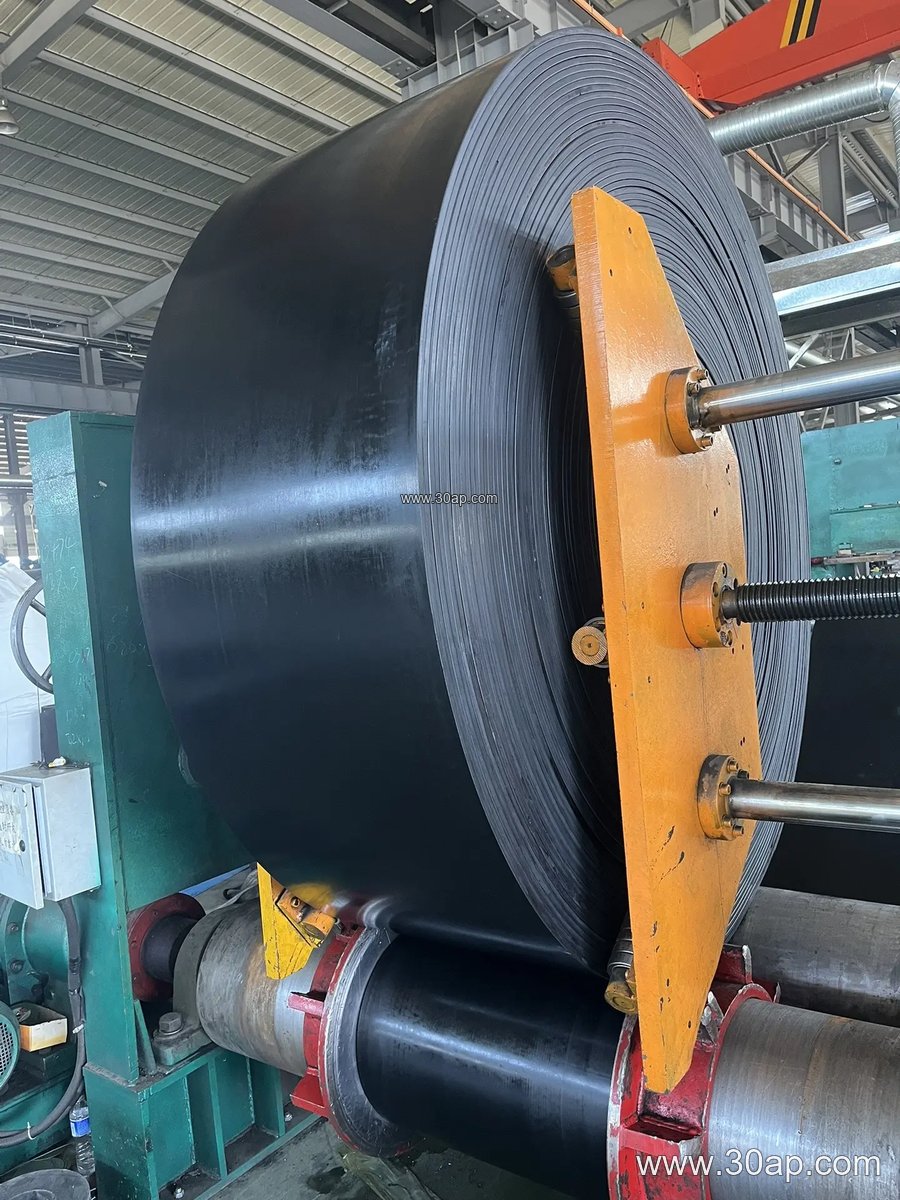
In these duties the belt runs over idler rollers and wraps drive, tail, and bend pulleys. Each pulley type has its own role in the conveyor layout, and they are not interchangeable. The belt also sits within a frame supported by conveyor brackets, so alignment of the whole structure affects belt life as much as the belt itself.
Reference Data for Preliminary Planning
The figures below are indicative only. Final specifications should be confirmed with the belt manufacturer and the conveyor designer.
| Parameter | Common reference values |
|---|---|
| Strength class | EP200, EP315, EP400, EP500, EP630, EP800, EP1000, EP1250, EP1600, EP2000 |
| Belt width | B500, B650, B800, B1000, B1200, B1400, B1600, B1800, B2000 |
| Cover thickness | 3+1.5 mm, 4+2 mm, 5+2 mm, 6+2 mm, 8+3 mm |
| Carcass plies | Usually 2 to 6 |
| Surface forms | Plain, chevron, corrugated sidewall |
Belt width and pulley diameter are separate design decisions. A wide belt does not automatically dictate a particular pulley size, and shaft diameter should be calculated from the actual belt tension and pulley load rather than guessed from width alone.
What to Check Before Ordering
Start with the material being carried: lump size, temperature, moisture, oil content, and abrasiveness. Then confirm the conveyor geometry, including incline angle, transition distances, and the number of pulleys. For underground coal work, flame retardant and anti-static properties are usually mandatory, and a PVC or PVG belt may be considered where regulations call for it. For hot sinter or cement clinker, a heat resistant cover is needed. For long overland runs with very high tension, a steel cord conveyor belt may be more suitable than any fabric construction.
Ask for the splice method, edge condition, and cover grade in writing. Inspect the delivered belt for ply separation, cover thickness, and dimensional tolerance. On site, keep idler rollers turning freely and check pulley lagging, since a seized roller can damage even a correctly specified EP300 belt within a short time.
For related components and further technical details, see www.beltone-industrial.com/EP300-Conveyor-Belt and www.beltone-industrial.com/conveyor-idler-roller.