What a Take-Up Device Pulley Does
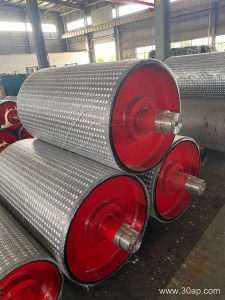
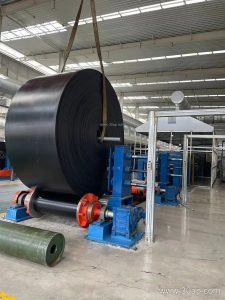
A take-up device pulley is the drum that carries the belt at the tensioning station of a conveyor. It is often called a tension pulley or take-up drum, and its job is to hold the belt under controlled tension while the take-up carriage or weight stack moves back and forth. Without this drum, a long overland or underground conveyor would sag, slip on the drive pulley, and spill material at transfer points.
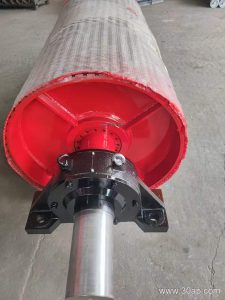
The tension pulley is not a drive pulley and it is not a tail pulley. It rotates freely and follows the belt, so its bearing arrangement and shell design differ from powered drums. In a typical gravity take-up, the drum sits in a movable frame; in a screw or hydraulic take-up, the pulley is pushed along a guided track. The frame is usually tied to a conveyor bracket or structural beam that absorbs the tension force.
Construction and Surface Options
A take-up device pulley is built around a welded or rolled steel shell, with hubs, a shaft, and bearing housings at both ends. Shaft diameter is determined by torque and load, not by belt width alone. Common shaft sizes include Ø80, Ø100, Ø120, Ø140, and Ø160 mm, while larger tension stations may use Ø180 or Ø200 mm. The shell face is usually wider than the belt: a B800 belt commonly runs on a pulley face of about 950 mm, and a B1200 belt on roughly 1400 mm. Diameter choices range from Ø315 or Ø400 mm on short units to Ø800 or Ø1000 mm where belt wrap and bending fatigue matter.
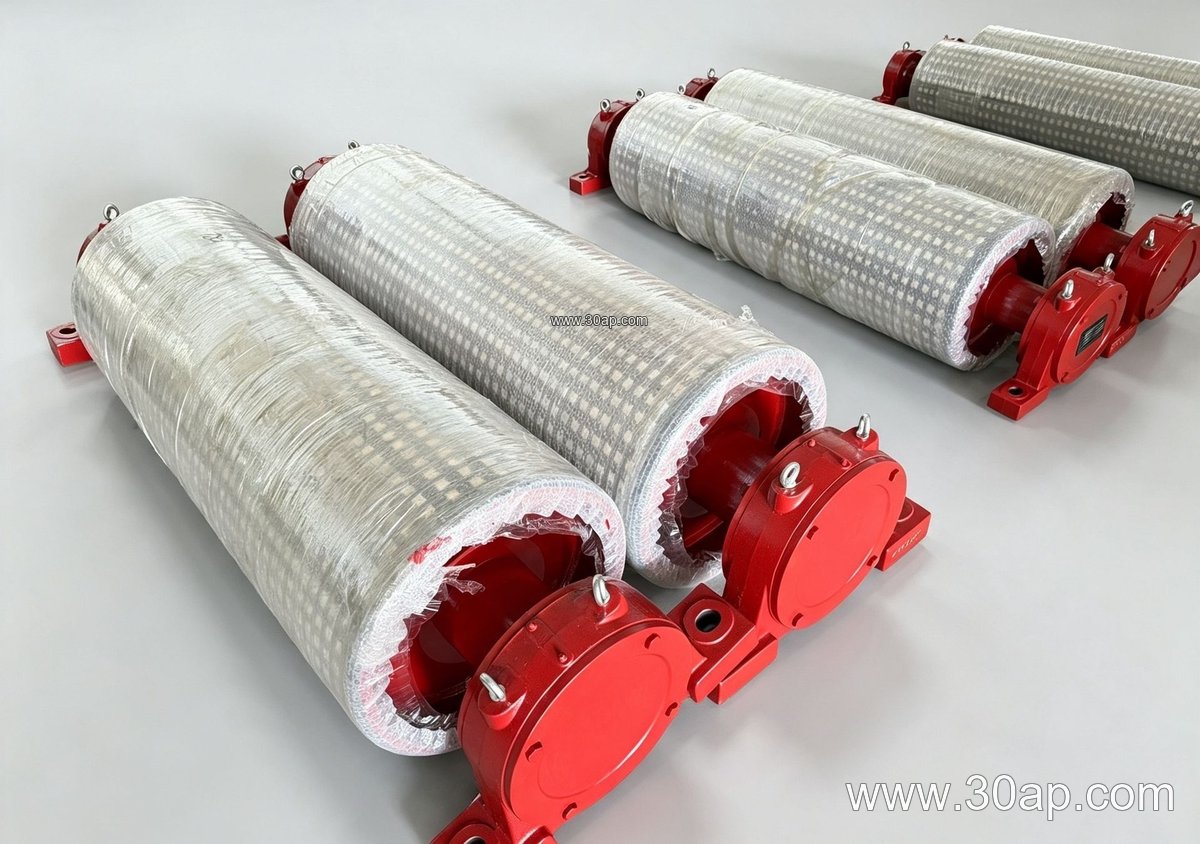
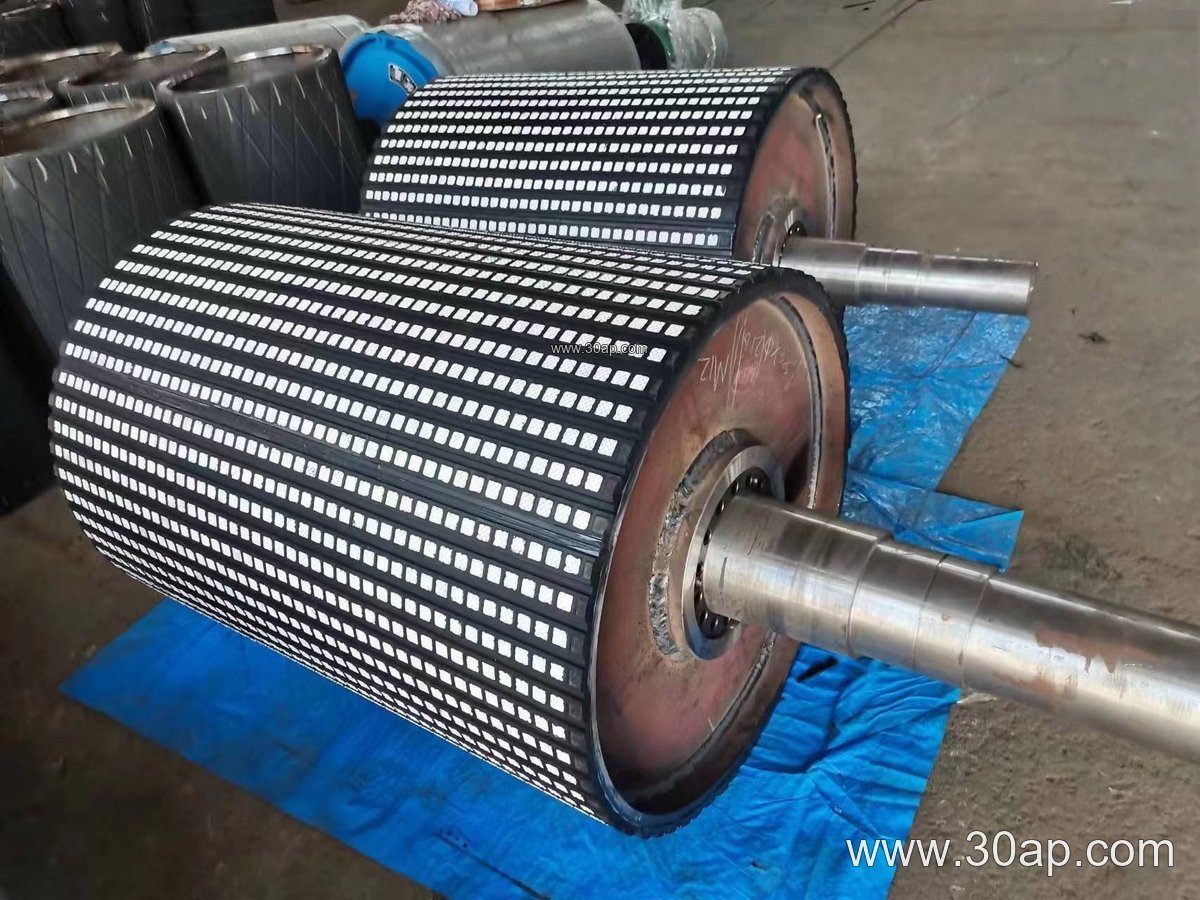
Surface treatment depends on the duty. Plain face is acceptable for light, clean service. Rubber lagging, either cold-bonded or hot-vulcanized, improves grip and protects the shell. Diamond or herringbone grooving helps shed water and fines. Ceramic lagging is used where abrasive slurry or wet ore is present. Lagging thickness is often 8, 10, 12, 15, or 20 mm, selected according to contact pressure and belt cover grade.
Where It Fits in the Plant
Tension pulleys appear in many bulk handling circuits. In a coal preparation plant, the take-up drum keeps a flame retardant conveyor belt tracking steadily through washing and dewatering sections. In a limestone quarry or aggregate line, the tension pulley on a crusher conveyor belt absorbs the surge loads created by primary crushing. Power plant coal yards use them on long inclined runs, and cement plants rely on them where clinker dust and heat shorten belt life. Port terminals handling iron ore or copper ore often combine a take-up device pulley with a heavy-duty conveyor pulley and a stable conveyor bracket to resist wind and tidal loading.
- Mining and underground coal mining conveyors
- Quarry, aggregate, and sand making lines
- Cement and steel plant bulk transport
- Port and ship loading systems
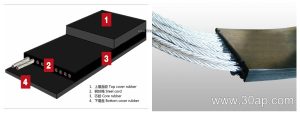
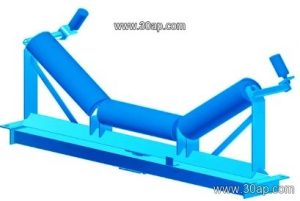
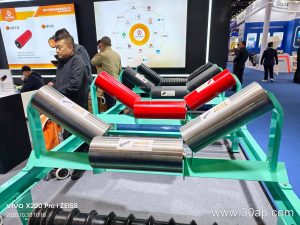
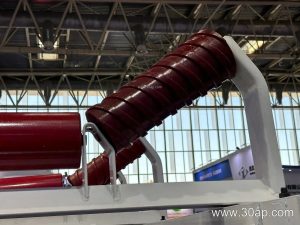
In these circuits, the tension drum works alongside idler rollers, a discharge pulley, and the belt itself. A properly sized take-up drum reduces edge damage on an abrasion resistant conveyor belt and helps an EP conveyor belt or steel cord conveyor belt run centered on the troughing idlers.
Buyer Checklist
Before ordering, confirm the belt width, the required take-up travel, and the tension load. Then check the pulley diameter against the belt construction: a thick, stiff steel cord belt usually needs a larger drum than a thin multi-ply fabric core belt. Confirm the shaft size and bearing type with the conveyor designer. Specify the lagging surface and thickness, and state whether the environment is wet, dusty, or oily. Ask for the face width, the bearing center distance, and the mounting interface so the drum aligns with the take-up carriage. A spare drum with matching lagging is a practical spare-part decision for remote sites.
Maintenance Notes
Inspect lagging wear at each shutdown. Worn grooves reduce grip and allow the belt to slip, which raises tension demand. Check bearing seals for grit ingress, especially in crushing and screening plants. Verify that the carriage moves freely and that the pulley remains square to the belt centerline. When replacing a tension pulley, keep the same diameter and face width unless the conveyor design has been recalculated, because changing drum size alters belt wrap and tension behavior.
For more conveyor components, see the belt and drum pages at conveyor-accessories.example and drum-selection.example. Matching the take-up device pulley to the belt, idler roller set, and frame is the surest way to keep a bulk material conveyor running quietly through every shift.