What a Conveyor Bracket Quotation Covers
A conveyor bracket is the steel support frame that holds the idlers in place along a belt conveyor. When a buyer asks for a conveyor bracket quotation, they are usually requesting a price for the fabricated frames that carry the carrying idlers and return idlers, not for the rollers themselves. The quotation should state the bracket type, the belt width it suits, the trough angle, the roller diameter it accepts, the material, and the surface treatment. Without these details, two quotations for the same line item can differ widely and cannot be compared fairly.
In bulk handling plants, the support frame is often treated as a minor item until a replacement is needed. In practice, it sets the belt profile, keeps the conveyor belt tracking correctly, and determines how easily idlers can be changed during maintenance. A clear quotation therefore protects both the buyer and the supplier.
How the Bracket Is Built
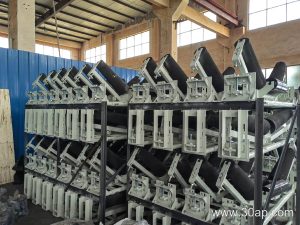
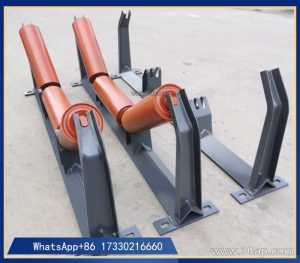
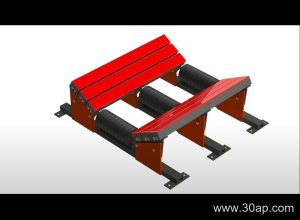
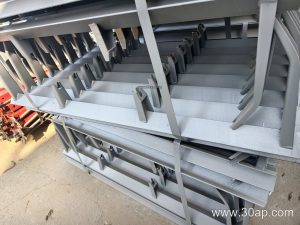
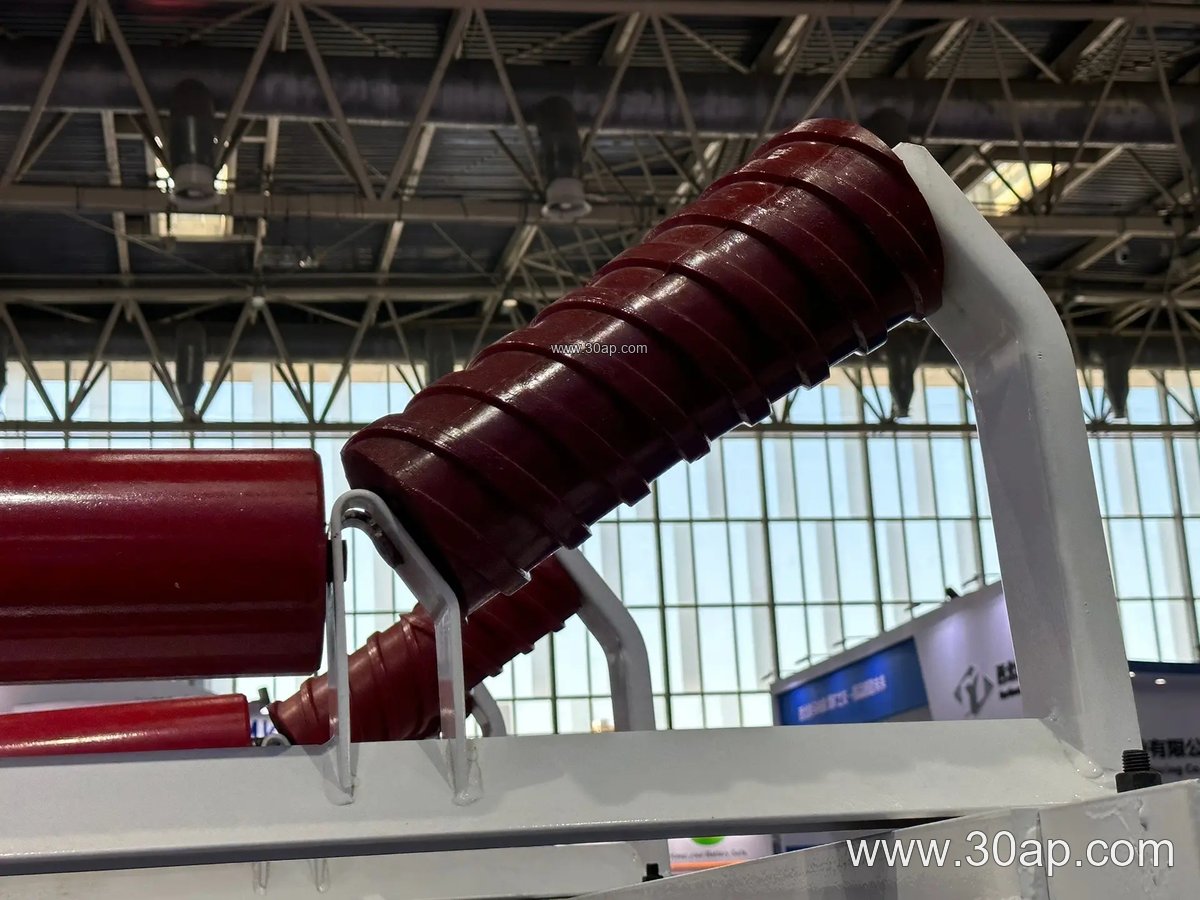
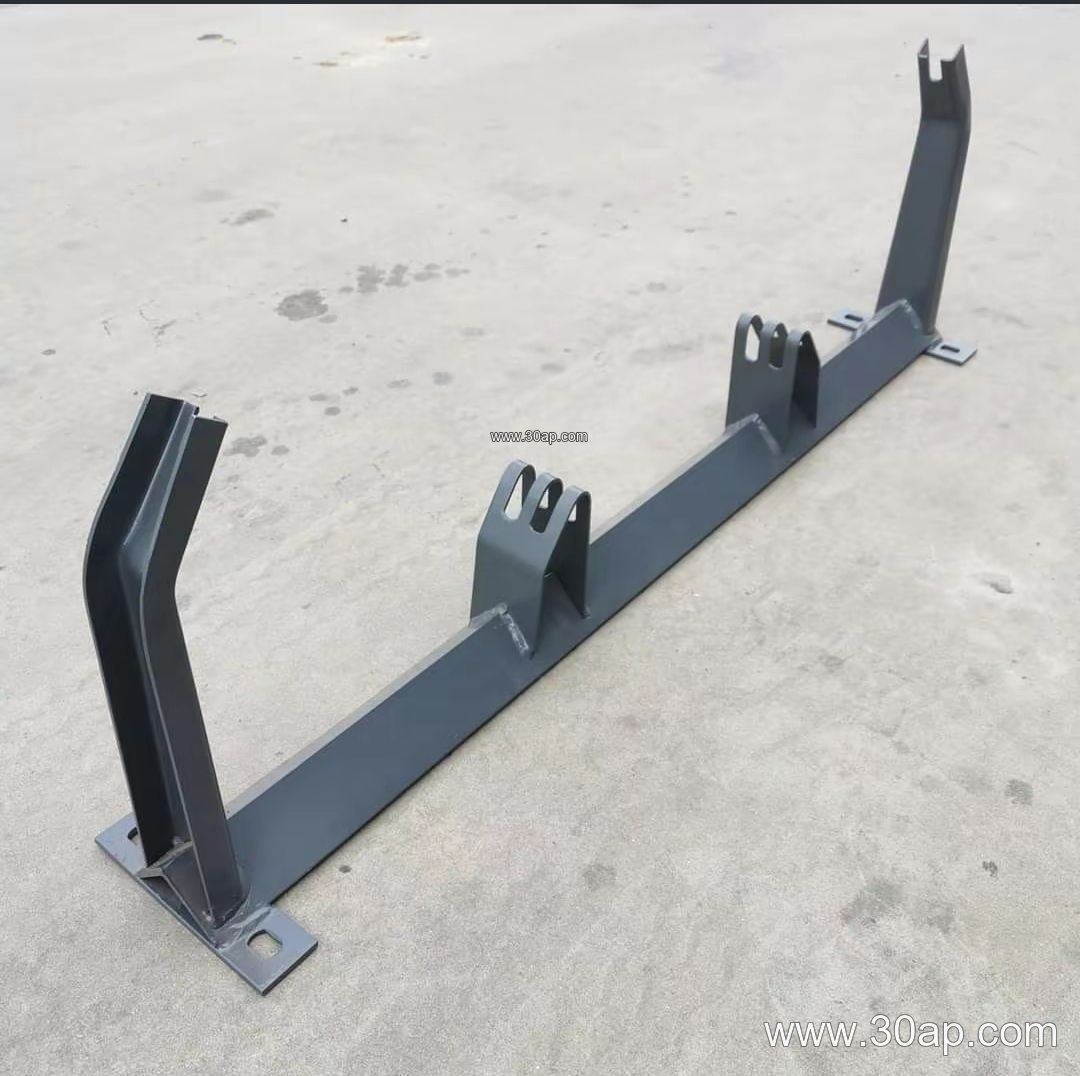
Most conveyor brackets are fabricated from angle steel, channel steel, or folded steel plate. The frame is welded or bolted into a shape that matches the required trough profile. Common forms include trough brackets for the carrying side, transition brackets near the pulleys, return brackets for the lower run, V-type return brackets, impact brackets under the loading point, self-aligning brackets, and suspended brackets for special structures.
Adjustable brackets allow the trough angle to be changed on site, which is useful when the same frame series is used across several conveyors. Fixed brackets are simpler and often preferred where the profile is already settled. The quotation should say which of the two is being offered, because they are not interchangeable in either price or installation.
Reference Dimensions Buyers Usually Confirm
The table below lists typical reference values. These are common ranges, not fixed rules, and the final figures are confirmed by design for each project.
| Item | Common Reference Values |
|---|---|
| Bracket type | Trough, transition, return, V-return, impact, self-aligning, suspended, adjustable |
| Belt width | B500, B650, B800, B1000, B1200, B1400, B1600, B1800, B2000, B2200 |
| Trough angle | 20°, 30°, 35°, 45°; forward tilt often about 1.5° to 2° |
| Idler diameter | Ø89, Ø108, Ø133, Ø159, Ø194 |
| Material | Angle steel, channel steel, folded steel plate |
A bracket may be described as B800, 35°, Ø108, or as B1200, 45°, Ø133. These combinations are examples only. A given belt width can accept more than one trough angle or roller diameter, and the mounting hole spacing and crossbeam length change with the design.
Where These Frames Are Used
Conveyor brackets appear wherever a belt conveyor runs. In a coal preparation plant they support the carrying idlers through the washing and screening sections. In a limestone quarry or aggregate line they sit under the crusher discharge and the transfer points, where impact brackets are often specified. Power plant coal handling systems, cement plants, and port loading conveyors all rely on the same family of frames, though the duty and the environment differ.
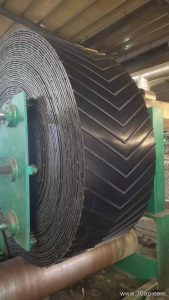
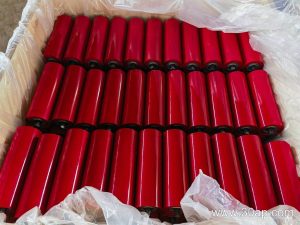
The surrounding equipment matters too. The conveyor pulley at the drive and tail ends sets the belt path, while the idler roller fits into the bracket and carries the load. On heavy-duty mining lines the belt itself may be a Steel Cord Conveyor Belt or a Flame Retardant Conveyor Belt, and the bracket must match the belt width and the roller series used on that conveyor.
What to Check Before Accepting a Price
- Confirm the bracket type and whether it is fixed or adjustable.
- State the belt width, trough angle, and roller diameter together, not separately.
- Ask for the material and the surface treatment, since painted and galvanized frames are priced differently.
- Check that the mounting hole spacing matches the existing structure or the new design.
- Confirm the delivery scope: frame only, or frame with bolts and fittings.
- For impact or transition positions, confirm the bracket is intended for that duty.
A quotation that lists only a belt width is incomplete. The same width can carry different roller diameters and different trough angles, and the frame that fits one arrangement will not fit another. Buyers comparing offers should place the type, width, angle, and roller diameter side by side before deciding.
Keeping the Quotation Useful After Delivery
Record the bracket type and reference dimensions in the maintenance file. When a frame is damaged, the replacement can then be ordered without re-measuring the whole conveyor. On long lines, keeping one spare trough bracket and one return bracket of each main size is often practical. The quotation is the first step in that record, so it should be written clearly enough to be used again later.