What a Bend Rubber Lagged Pulley Does
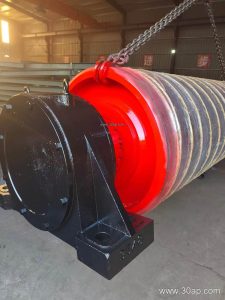
A bend rubber lagged pulley is a direction-changing drum placed where the conveyor belt needs to change course, typically between the head and tail of the system. Unlike a drive pulley that transmits torque or a tail pulley that returns the belt, a bend pulley mainly guides the belt along a new line. The rubber lagging on its shell is there to protect both surfaces: it raises friction between the drum and the belt, limits belt slip on the return run, and shields the steel shell from abrasive dust and moisture. On a quarry conveyor or a coal handling line, that extra grip and wear protection often makes the difference between a smooth run and constant belt tracking problems.
How the Drum Is Built
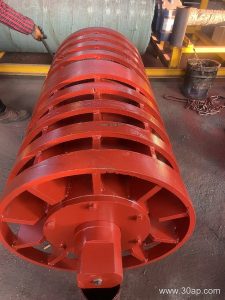
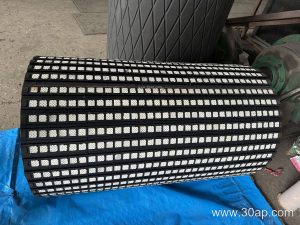
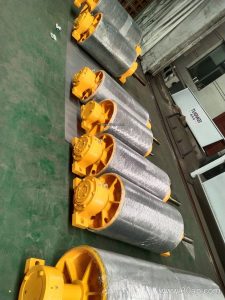
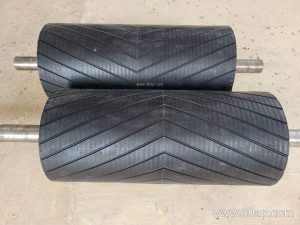
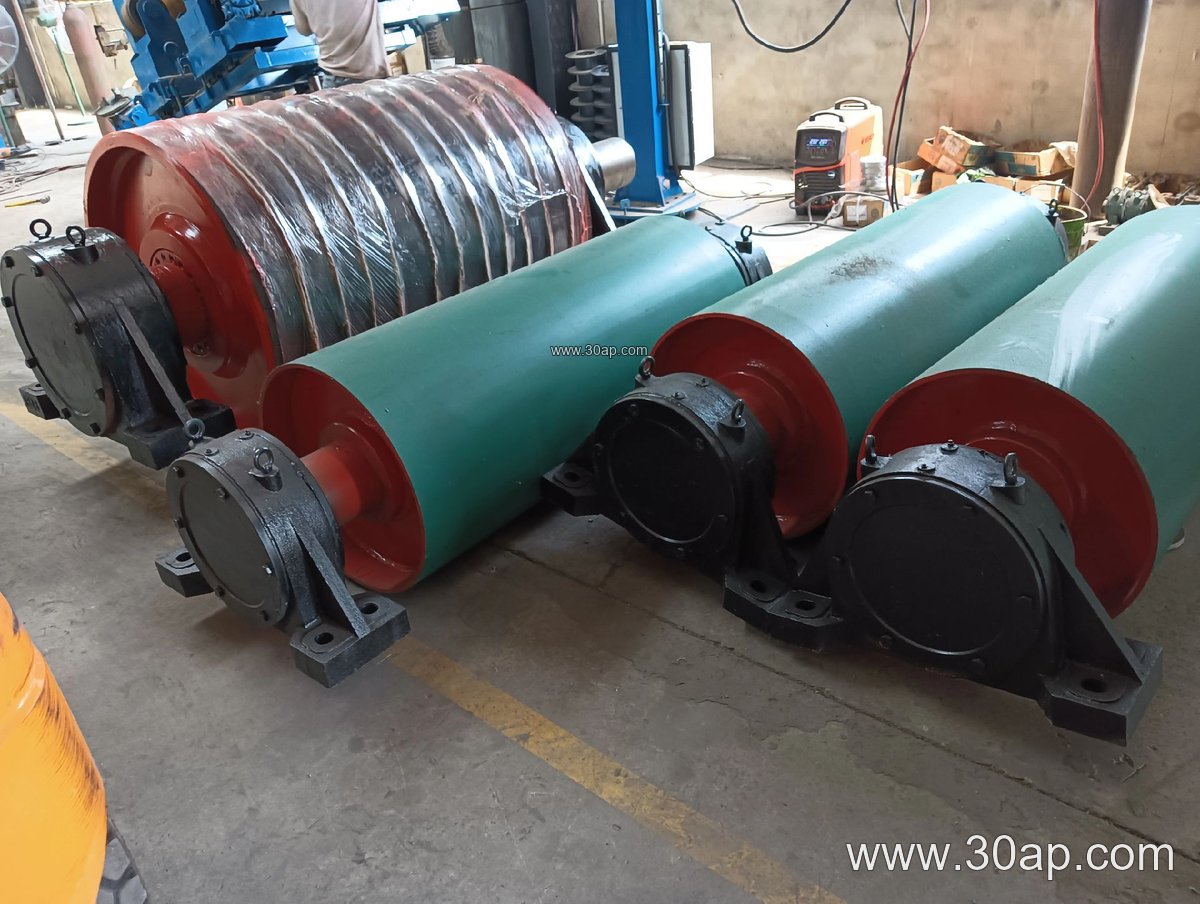
The core is a welded steel shell with end discs and a through shaft, machined so the face runs true. Lagging is applied in one of several ways. Cold-bonded rubber sheets are common for general duty, while hot-vulcanized rubber offers a stronger bond for high-tension systems. Diamond and herringbone patterns improve water shedding and grip in wet conditions, and plane rubber is chosen where a smooth contact face is preferred. Lagging thickness on a bend pulley often falls in the 8 to 15 mm range, with heavier builds available for harsh service.
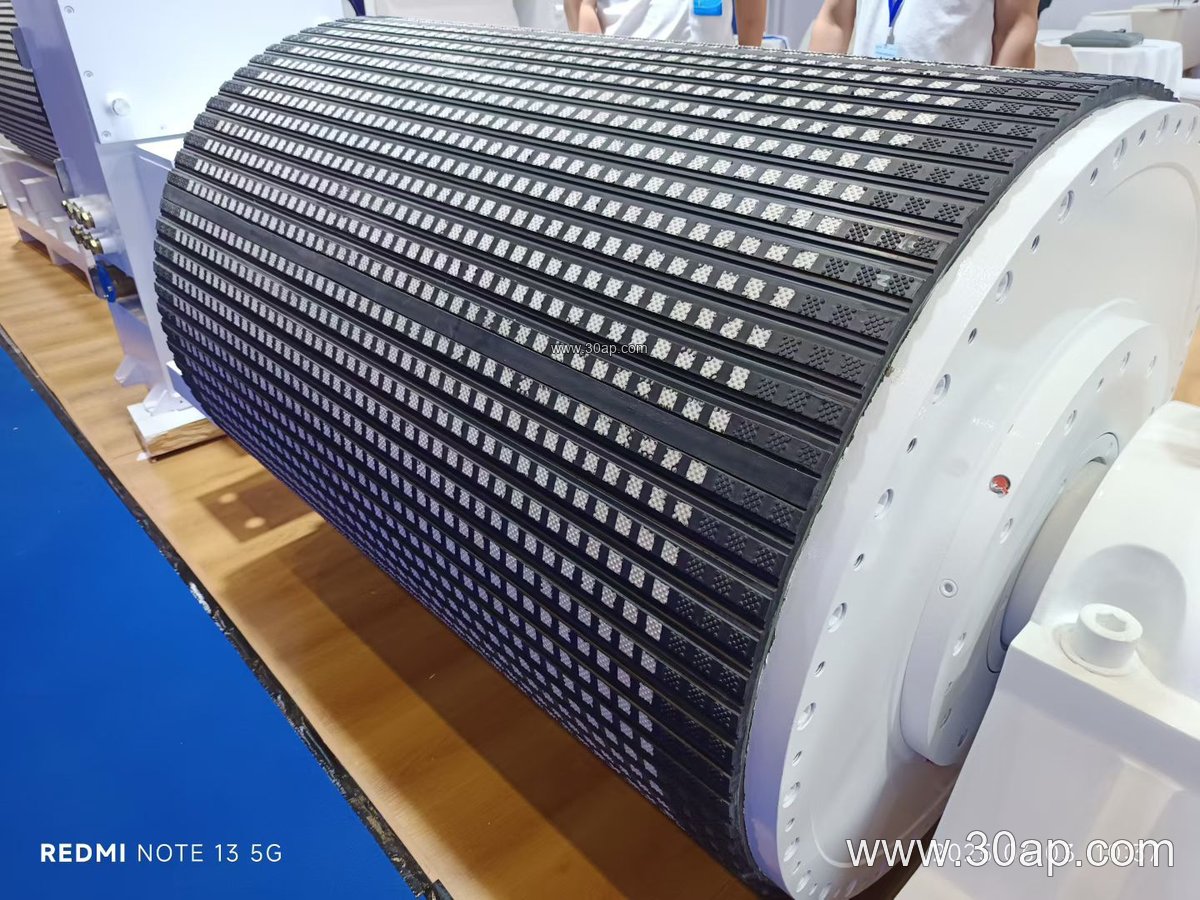
Bearing housings, seals and the shaft diameter are selected from the actual radial load and torque of the installation, not from belt width alone. A B800 drum and a B1400 drum can share a similar shell design yet carry very different shafts and bearings. Common face widths are slightly wider than the belt, for example about 950 mm for B800 and about 1600 mm for B1400, so the belt stays supported across its full width.
Where It Fits in the Conveyor
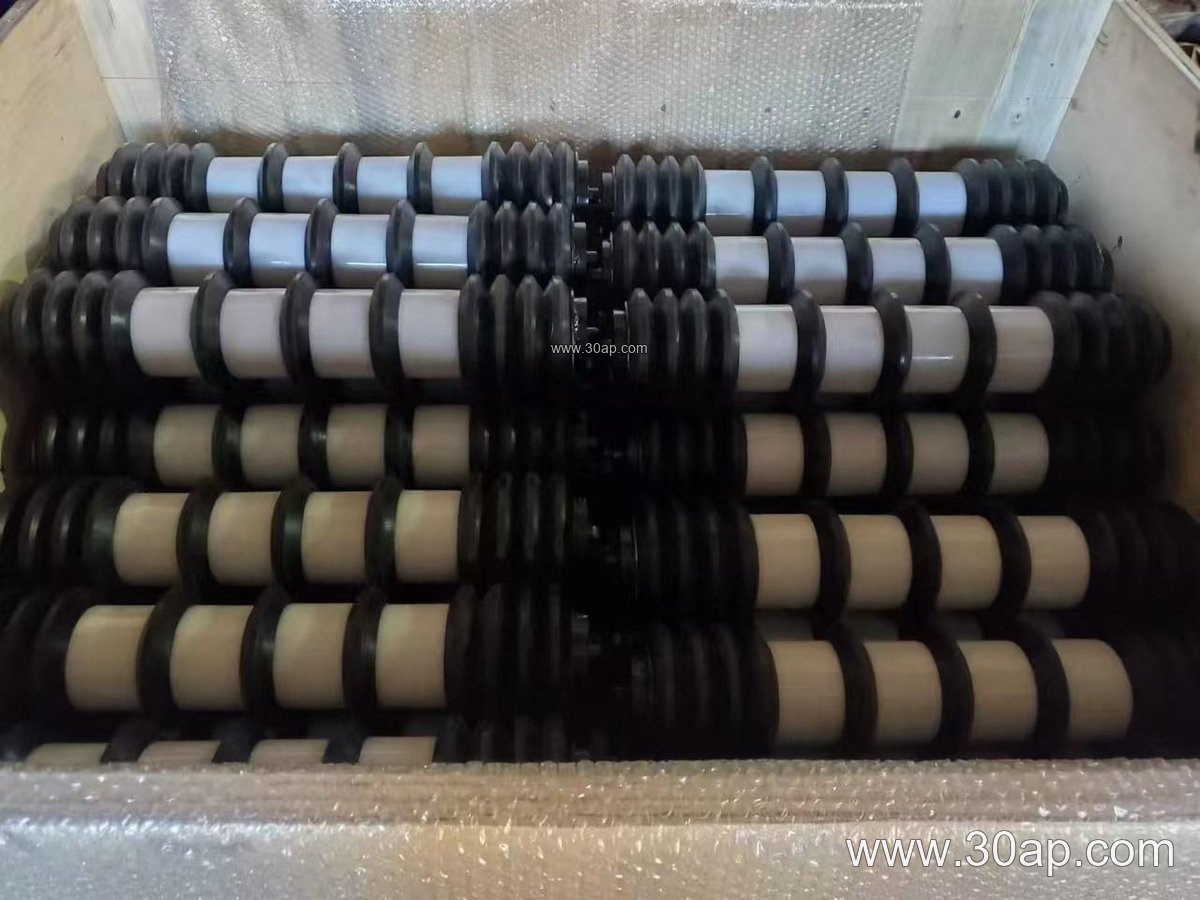
Bend pulleys appear wherever the belt path needs a controlled turn: before a transfer point, after a discharge chute, or in a tensioning zone. In a cement plant clinker line, one may guide the return belt around an obstacle; in a power plant coal yard, another may sit ahead of a tripper. They are also used together with an idler roller set and conveyor bracket assemblies to keep the belt aligned through a curve. Note that a bend pulley is not a substitute for a drive pulley or a tail pulley. Each position has its own load case, and confusing them usually leads to premature lagging wear.
Typical Reference Dimensions
The table below shows indicative combinations, not fixed rules. Final sizes depend on belt tension, wrap angle and the pulley’s position in the system.
| Belt width | Approx. face width | Example diameter | Lagging |
|---|---|---|---|
| B500 | 600 mm | Ø315 mm | 8–10 mm plane or diamond |
| B800 | 950 mm | Ø500 mm | 10 mm diamond |
| B1000 | 1150 mm | Ø630 mm | 10–12 mm diamond |
| B1200 | 1400 mm | Ø1000 mm | 12–15 mm herringbone |
| B1400 | 1600 mm | Ø800 mm | 12–15 mm diamond |
| B1800 | 2000 mm | Ø1250 mm | 15 mm hot-vulcanized |
Shaft sizes commonly range from Ø80 to Ø180 for these duties, but the value must follow the calculated load. A bend pulley working with a heavy-duty mining conveyor belt under high tension will need a larger shaft than the same diameter used on a light aggregate line.
Choosing the Right Surface
Diamond lagging is a good default for dusty or damp service because the grooves channel water away. Herringbone patterns suit higher wrap angles and help centre the belt. For very abrasive ore or sinter, ceramic lagging may be considered, though it is a separate product from rubber lagging. When the belt itself carries sticky material, a plane rubber face can reduce build-up. Buyers should also confirm the belt type in use: an abrasion resistant conveyor belt and a heat resistant conveyor belt place different demands on the drum surface, and a flame retardant conveyor belt in an underground coal mine may require lagging with matching fire performance.
Buyer Checklist
- Confirm the pulley position and wrap angle, then state the duty clearly.
- Match lagging pattern and thickness to the material and moisture level.
- Check that the face width covers the belt, allowing a small margin each side.
- Specify shaft and bearing size from load calculations, not from belt width.
- Ask how the lagging is bonded and how it can be replaced on site.
- Plan periodic inspection of lagging wear, especially on quarry and crusher duty.
A bend rubber lagged pulley is a small part of the conveyor but a frequent cause of stoppages when chosen casually. Get the pattern, thickness and shaft sizing right, and it will quietly keep the belt on track through years of service. See more conveyor component guidance at www.bendpulley.com for belt, roller and pulley references.