What a Conveyor Pulley Assembly Does
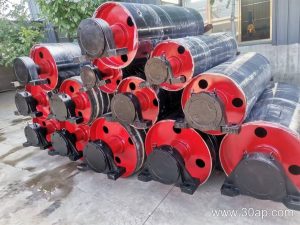
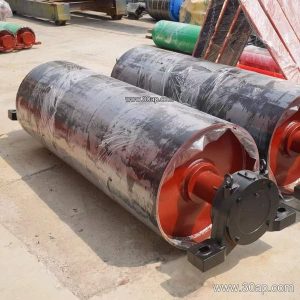
A conveyor pulley assembly is the complete rotating unit that guides, drives, tensions, or redirects the belt on a bulk handling conveyor. It is more than a bare drum: the assembly typically combines the shell, end discs, hub, shaft, bearing housings, locking elements, and the lagging or surface treatment that grips the belt. In a quarry, cement plant, or power station coal yard, a well-built assembly keeps the conveyor belt tracking true and transmits torque without slipping.
The same unit is often called a conveyor pulley or belt conveyor pulley, and those terms describe the same finished component. When specifying or ordering, buyers should be clear about the position and duty, because a drive pulley, a tail pulley, and a bend pulley are not interchangeable in design or function.
How the Assembly Is Built
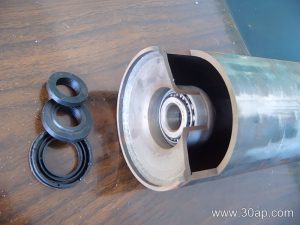
Most assemblies start with a welded steel shell machined to a consistent diameter. End discs are welded to the shell and connected to a hub, which is keyed or shrink-fitted to the shaft. Bearing housings sit at each end, and the whole unit is mounted to the conveyor frame through a conveyor bracket or a tensioning arrangement.
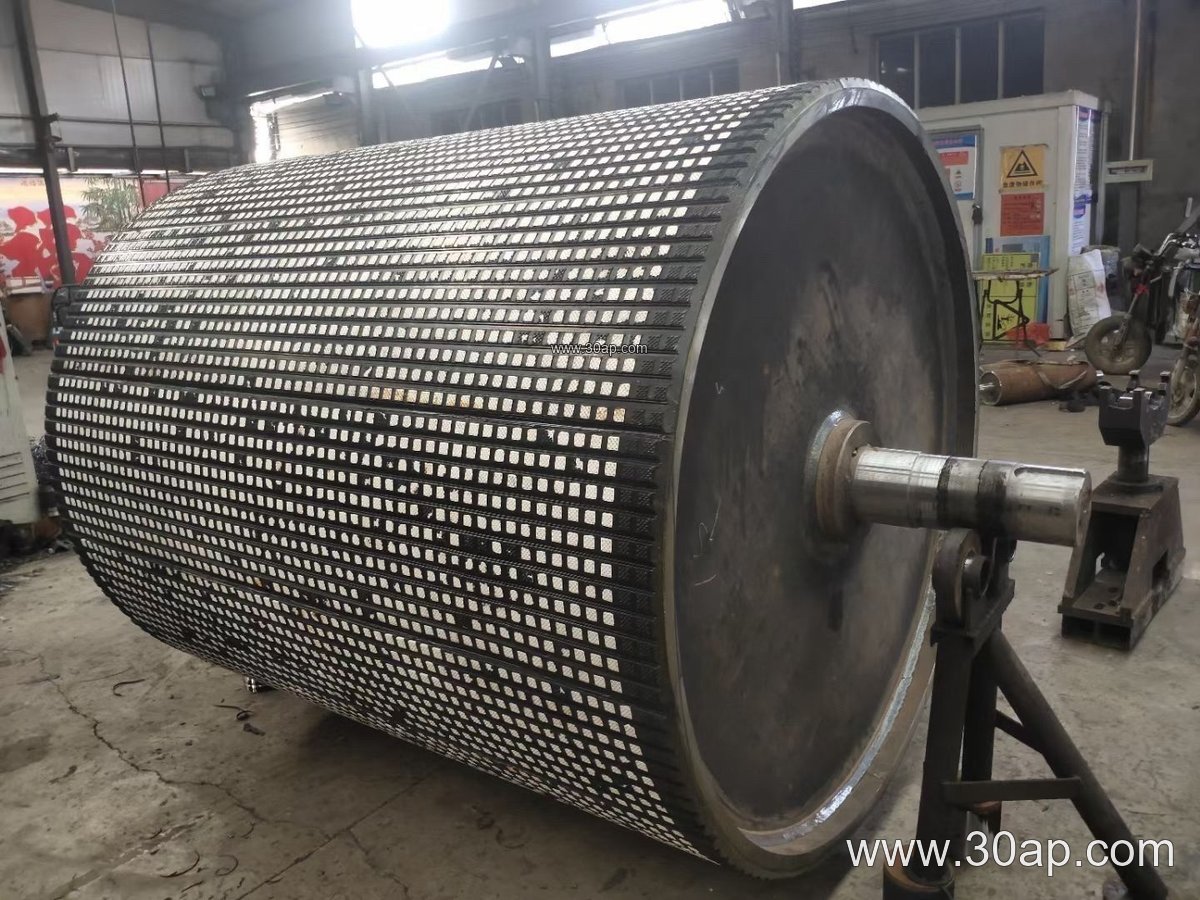
Surface treatment matters as much as the steel structure. Common options include plain finish, cast rubber, cold-bonded rubber, hot-vulcanized rubber, diamond grooving, herringbone grooving, and ceramic lagging. Lagging thickness is frequently 8, 10, 12, 15, or 20 mm depending on grip and wear requirements.
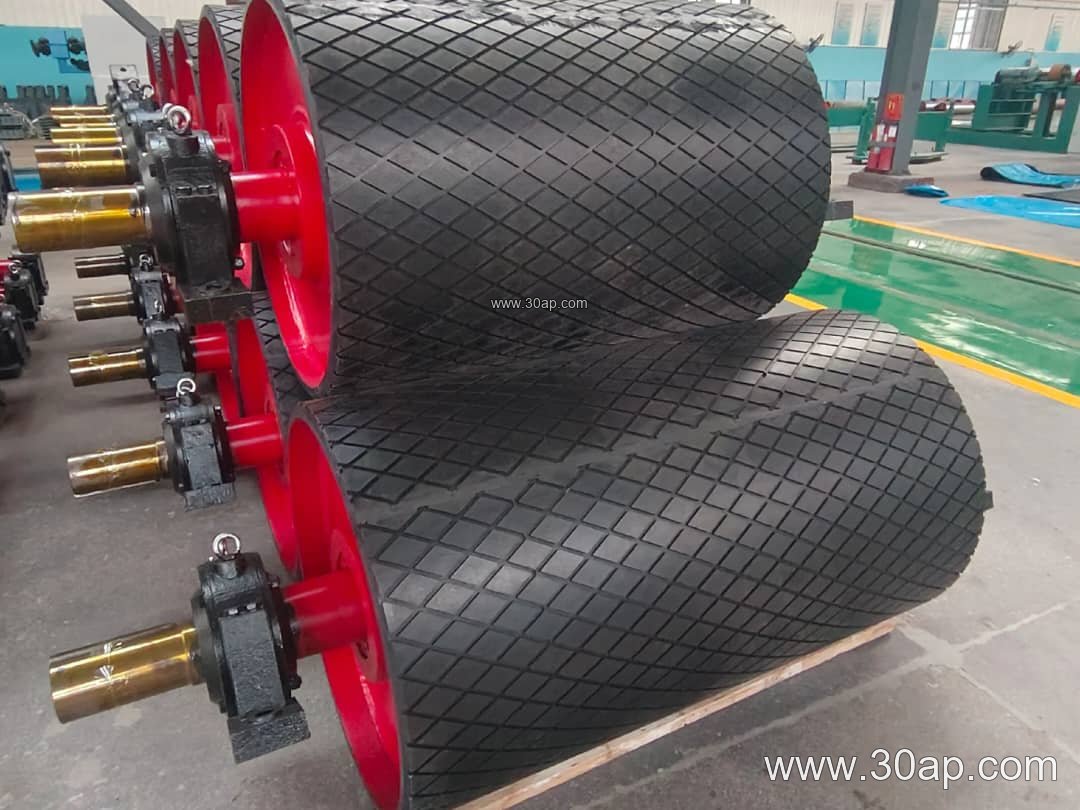
Typical reference dimensions are shown below. These are common design ranges, not fixed rules, and final values follow the conveyor duty.
| Parameter | Common reference values |
|---|---|
| Belt width | B400, B500, B650, B800, B1000, B1200, B1400, B1600, B1800, B2000, B2200, B2400 |
| Pulley diameter | Ø200, Ø250, Ø315, Ø320, Ø400, Ø500, Ø630, Ø800, Ø1000, Ø1250, Ø1400, Ø1600, Ø1800 |
| Shell face width | Usually wider than the belt, for example B800 about 950 mm, B1200 about 1400 mm, B1600 about 1800 mm |
| Shaft diameter | Ø50, Ø60, Ø70, Ø80, Ø90, Ø100, Ø120, Ø140, Ø160, Ø180, Ø200 |
| Lagging thickness | 8, 10, 12, 15, 20 mm |
Combinations such as B800 × Ø500, B1200 × Ø1000, or B1400 × Ø800 are common in project drawings, but belt width alone does not fix pulley diameter. Shaft size is determined by torque and load, not by belt width on its own.
Where These Assemblies Are Used
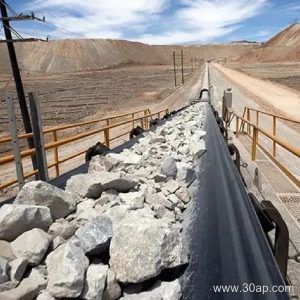
In a stone crushing and screening line, the head pulley discharges aggregate onto the next belt while the tail pulley keeps the return strand aligned. In a coal handling system at a power plant, flame retardant conveyor belt and anti-static conveyor belt are paired with robust pulley assemblies to reduce fire and static risk. Cement plants use them on clinker and raw material conveyors, where heat resistant conveyor belt may run alongside heat-tolerant lagging.
Heavy-duty mining conveyor belt in an iron ore or copper ore operation places high demands on the drive pulley. Abrasion resistant conveyor belt and impact resistant conveyor belt are common there, and the pulley surface must resist both slip and wear. In a port or ship loading facility, long overland conveyors rely on multiple bend and tension pulleys, and the tracking quality of each assembly affects the whole line.
Matching the Pulley to the Belt
The conveyor belt and the pulley assembly work as a pair. A steel cord conveyor belt needs a smooth, well-aligned shell to avoid edge damage, while a fabric core conveyor belt may tolerate slightly different crown and lagging profiles. EP conveyor belt and NN conveyor belt are widely used in aggregate and cement service, and multi-ply fabric core conveyor belt is common where flexibility and impact resistance matter.
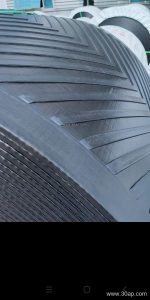
Specialty belts change the picture. Chevron conveyor belt, skirted conveyor belt, and corrugated sidewall conveyor belt need clearances and pulley faces that accommodate their profiles. Pipe conveyor belt and endless conveyor belt demand precise alignment, and oil resistant conveyor belt or cold resistant conveyor belt may call for compatible lagging compounds. In food or grain handling, food grade conveyor belt pairs with clean, non-marking pulley surfaces.
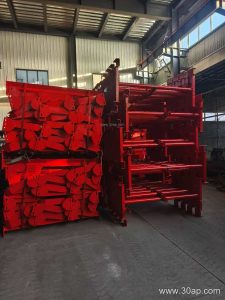
Related components such as the conveyor belt, idler roller, and conveyor bracket should be reviewed together. A pulley that is correct in isolation can still cause mistracking if the frame or idlers are out of line. For more on compatible belt and roller options, visit conveyorbeltpulley.com and review the belt and roller data before finalizing the assembly drawing.
Buyer Checklist
- Confirm the pulley position: drive, tail, bend, tension, or take-up. Each has a different duty.
- State belt width, belt type, and whether the belt is fabric core or steel cord.
- Provide the required diameter and face width, or the design torque and load if these are open.
- Choose the lagging: plain, rubber, diamond, herringbone, or ceramic, with thickness.
- Specify shaft diameter and bearing type from the actual torque calculation.
- Check balance, runout, and surface finish requirements for high-speed conveyors.
- Plan inspection of lagging wear, bearing condition, and bolt tightness at regular intervals.
A conveyor pulley assembly is a long-life investment when the shell, shaft, bearings, and lagging are selected for the real duty. Whether the plant handles limestone, coal, clinker, or iron ore, matching the assembly to the belt and the conveyor layout prevents slip, mistracking, and unplanned downtime.