What the ST1600 Conveyor Belt Is
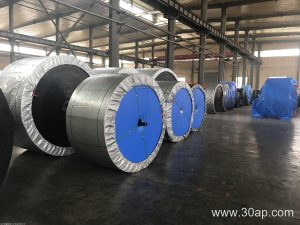
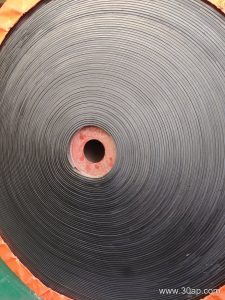
The ST1600 Conveyor Belt is a steel cord conveyor belt with a nominal tensile strength of 1600 N/mm. It belongs to the steel cord family of heavy-duty belts, where the load-bearing skeleton is made from steel cords instead of woven fabric plies. That construction gives the ST1600 its character: very low elongation under load, high tensile capacity in a relatively thin belt body, and stable tracking on long, heavily loaded conveyor lines. In plant language it is often simply called an ST1600 steel cord belt, and buyers may also see it described as a high strength conveyor belt for main haulage duties.
It is not a fabric belt with a different label. The ST1600 sits alongside ST1000, ST1250, ST2000, ST2500 and ST3150 in the steel cord range, and each number refers to the belt’s rated breaking strength. Where an EP conveyor belt or NN conveyor belt relies on multi-ply fabric core construction, the ST1600 relies on longitudinal steel cords embedded in rubber.
How the Belt Is Built
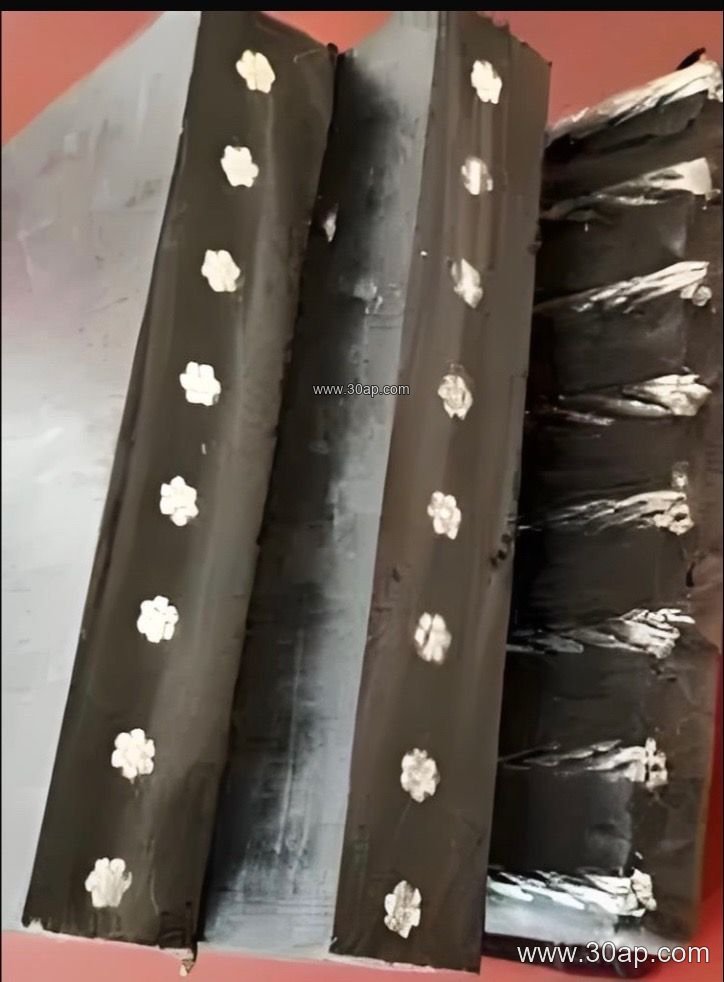
A typical ST1600 conveyor belt has four functional layers. The top cover rubber protects the carcass from abrasion, impact and whatever the material throws at it. The steel cord layer carries the tension. The bottom cover rubber runs against the idler roller and drive pulley. Adhesion rubber bonds cords and covers into one body.
- Cover compound: selected for the duty, such as abrasion resistant, heat resistant, oil resistant, flame retardant or cold resistant rubber.
- Cord layer: high-carbon steel cords arranged at a defined pitch, with the cord diameter and pitch set by the belt designer.
- Cover thickness: commonly expressed as top plus bottom, for example 6+2 mm or 8+3 mm on heavy-duty mining belts.
- Edge construction: cut edges or moulded edges, depending on the manufacturer and the application.
Because there is no fabric weave to stretch, an ST1600 belt takes up less on the take-up than a fabric belt of similar rating. That is one reason steel cord belts dominate long overland and main trunk conveyors.
Where ST1600 Belts Are Used
The ST1600 is a workhorse grade for mainline conveying in mines, coal preparation plants, cement works, power stations, steel plants, ports and large quarries. It suits high-tonnage bulk material conveyor belt duties where the belt must run for long distances and carry sharp, dense or hot loads.
Typical service conditions include:
- Primary crushed ore and rock transport in an iron ore, copper ore or gold mining operation.
- Coal Mining Conveyor Belt duties, including Underground Coal Mining Conveyor Belt lines where flame retardant and anti-static properties are specified.
- Cement plant raw meal and clinker lines, often with heat resistant conveyor belt covers.
- Port and ship loading conveyors moving aggregate, coal or ore at high capacity.
- Crusher conveyor belt and quarry conveyor belt circuits handling abrasive stone.
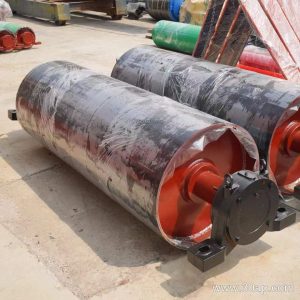
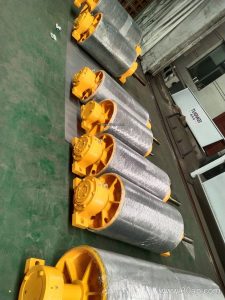
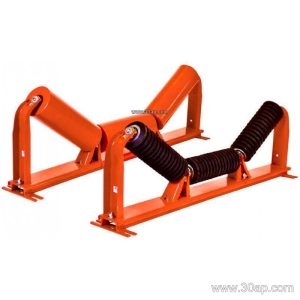
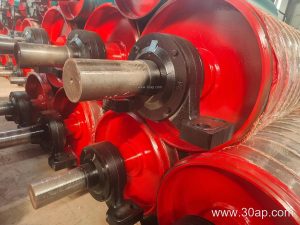
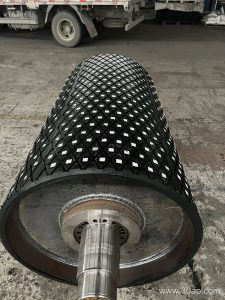
On these lines the belt works with conveyor pulleys, idler rollers and conveyor brackets, and the whole system must be matched. A drive pulley, a tail pulley and a bend pulley each do a different job, and none of them can be swapped for another by name alone.
Specifications a Buyer Should Confirm
The following table shows reference values that are commonly discussed for this belt class. They are not universal specifications, and final values are set by the belt design and the conveyor calculation.
| Parameter | Common reference |
|---|---|
| Belt type | Steel cord conveyor belt |
| Strength grade | ST1600, nominal 1600 N/mm |
| Belt width | B800, B1000, B1200, B1400, B1600, B1800, B2000 |
| Cover thickness | 4+2, 5+2, 6+2, 8+3 mm |
| Cover grade | Abrasion resistant, heat resistant, flame retardant, oil resistant, anti-static |
| Edge type | Cut edge or moulded edge |
| Joint | Vulcanised splice, usually stepped |
Belt width and pulley diameter are related through the conveyor design, not through a fixed rule. A wider belt does not automatically mean a larger shaft diameter, and the shaft size must come from the conveyor engineer’s torque and load calculation.
Selection and Application Notes
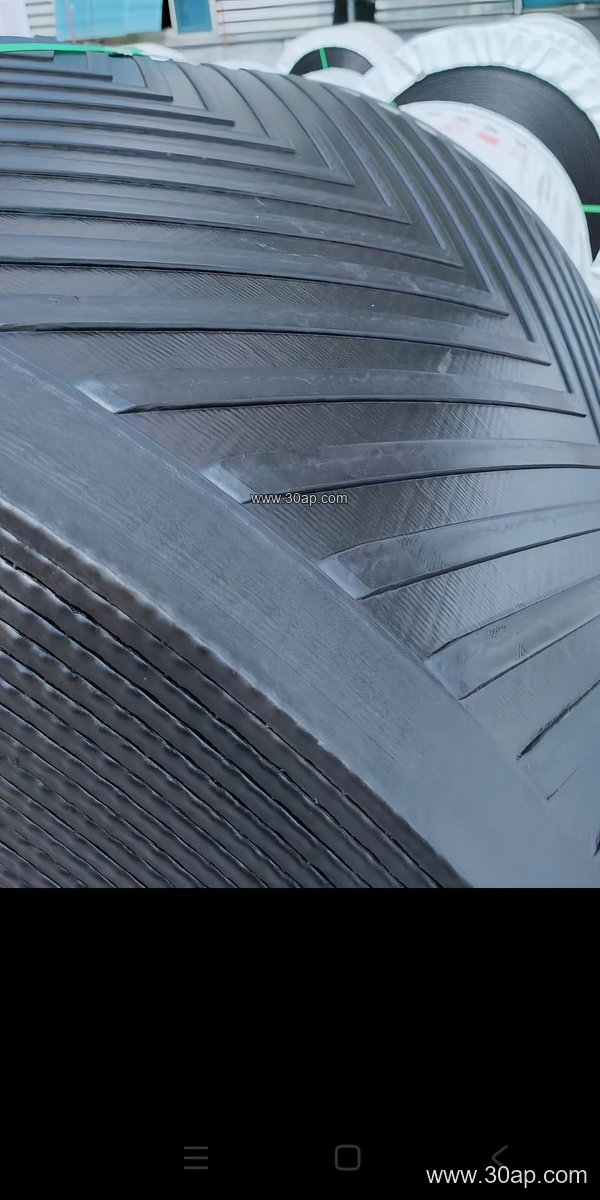
Choosing an ST1600 belt starts with the duty. Confirm the material, lump size, tonnage per hour, incline and the distance between centres. Then check whether the cover needs to be abrasion resistant for sharp rock, heat resistant for clinker, oil resistant for oily cargo, or flame retardant and anti-static for underground coal work. For steep inclines, a chevron conveyor belt or a corrugated sidewall conveyor belt may be a better fit than a smooth steel cord belt, but those are separate designs and should be evaluated as such.
Splice quality matters as much as belt grade. A stepped vulcanised joint on a steel cord belt needs the correct cord spacing, good rubber adhesion and proper cure. Poor splicing shortens belt life faster than most operating issues. During operation, keep the idler roller and conveyor pulley surfaces clean, check belt tracking, and watch for exposed cords at the edges. Store spare belts on a dry surface, away from ozone sources and direct sunlight.
For a mainline conveyor in a mine, quarry or cement plant, the ST1600 Conveyor Belt offers a strong balance between tensile capacity, low stretch and reasonable belt weight. Confirm the full specification with the belt manufacturer and match it to the conveyor design before ordering.