What a Custom Conveyor Bracket Does on a Belt Line
A custom conveyor bracket is a made-to-fit support component that positions idlers and holds the belt in the required profile. It is not a one-size-fits-all part: the bracket is built around the belt width, trough angle, roller diameter, and mounting arrangement of a specific conveyor. In a quarry, a cement plant, or a power plant coal yard, the same conveyor frame may need several bracket variants because the load, belt path, and maintenance access differ along the line.
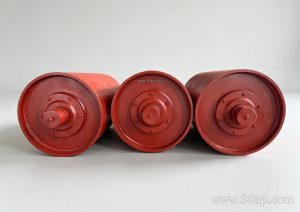
This article focuses on the custom conveyor bracket as the main subject. Drive, tail, and bend pulleys are separate assemblies and are not interchangeable with brackets. Where a comparison helps, other bracket types are mentioned only to explain a design choice.
How the Bracket Is Built
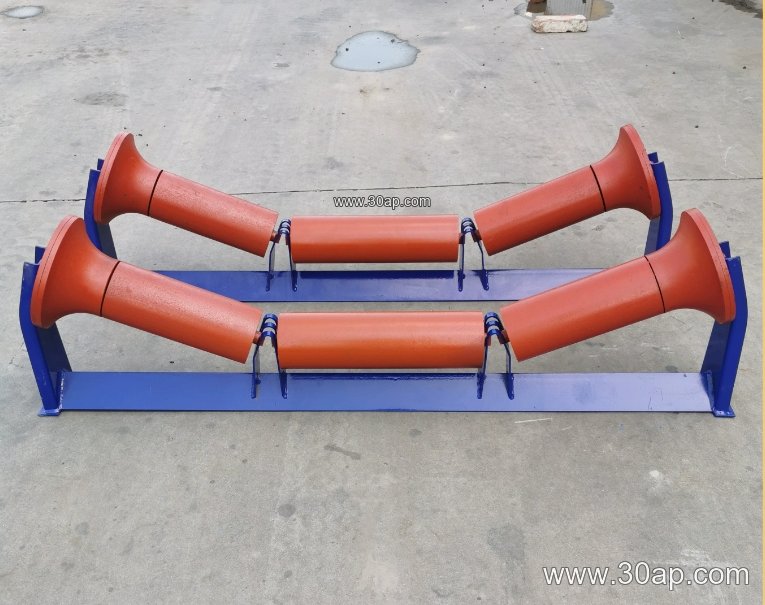
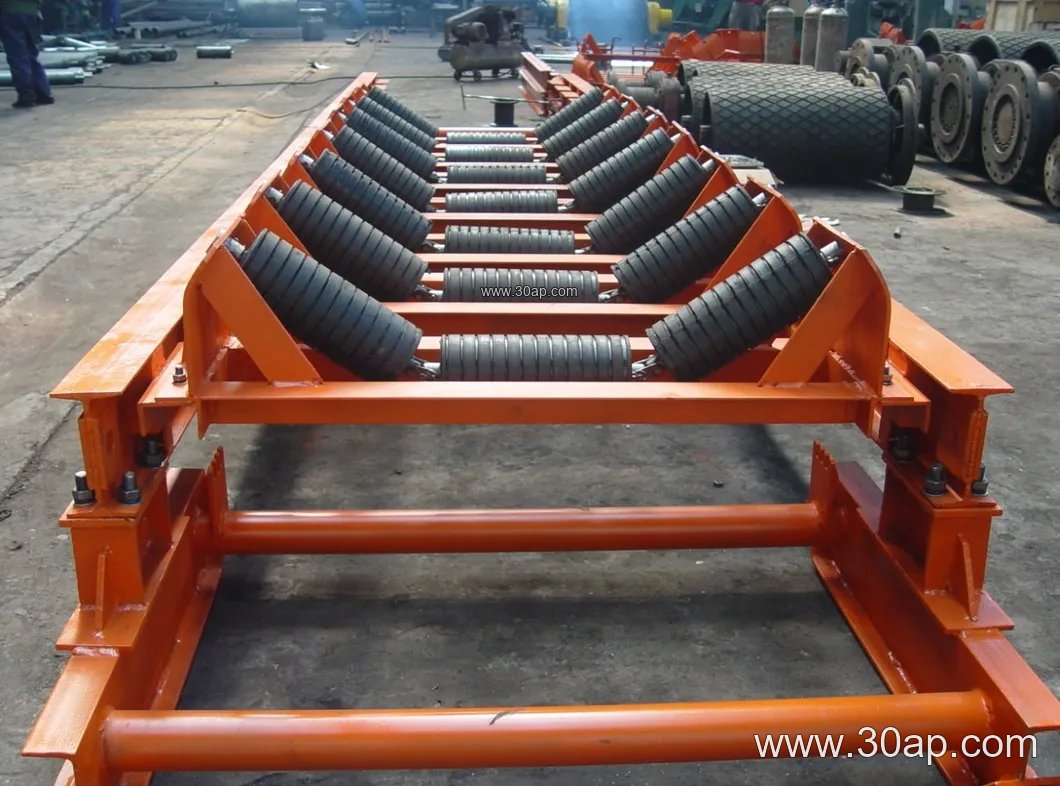
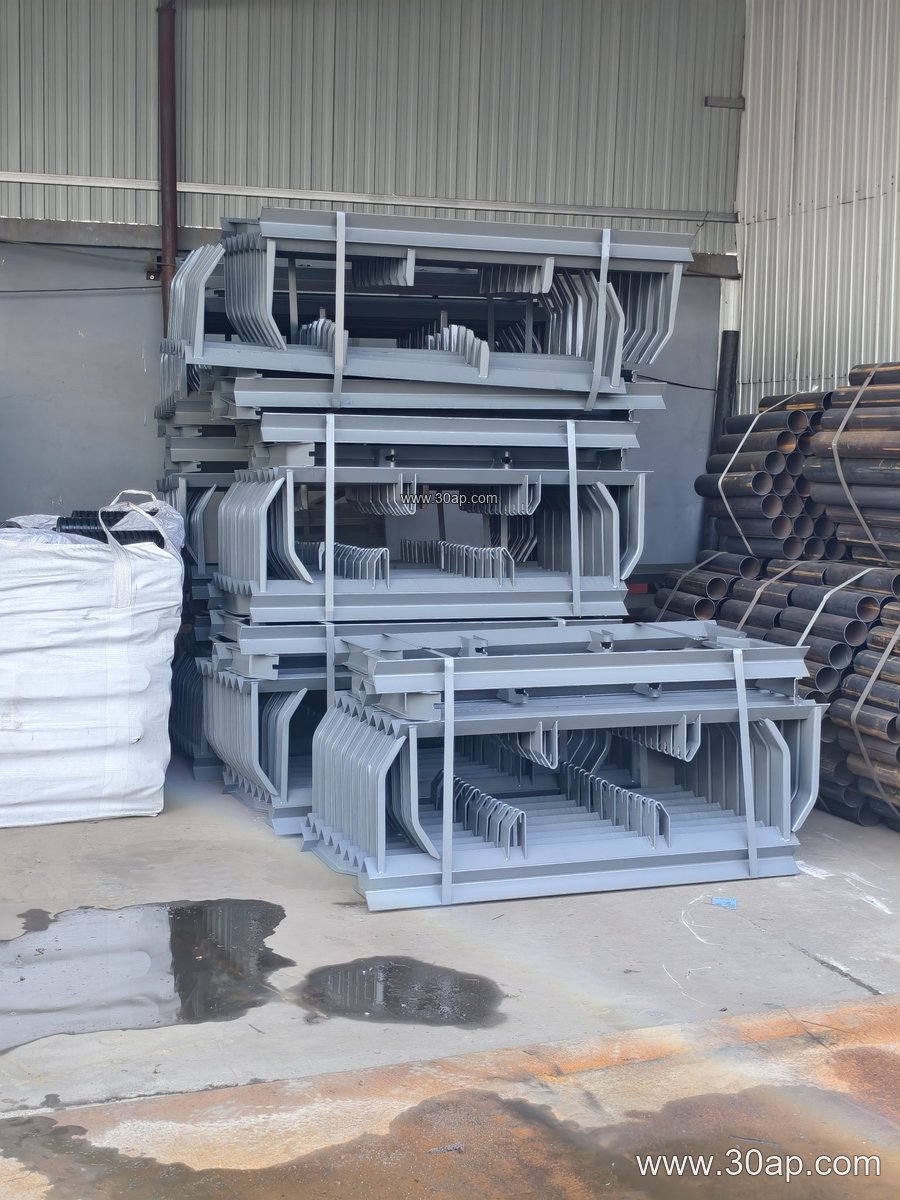
Most brackets are fabricated from angle steel, channel steel, or bent steel plate. The fabricator cuts, punches, and welds the frame so that the idler seats sit at the correct height and angle. A custom conveyor bracket usually includes mounting holes for the conveyor frame, seats for the idler shaft, and sometimes an adjustable slot that allows the trough angle to be set on site.
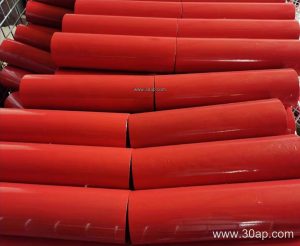
Because the bracket is custom, the hole spacing and crossbeam length are determined by the belt width and trough angle rather than by a fixed table. Common belt widths include B500, B650, B800, B1000, B1200, and B1400, with larger sizes such as B1600 and B1800 used on high-capacity lines. The bracket must match the selected idler roller diameter, which may be Ø89, Ø108, Ø133, Ø159, or Ø194 depending on load and belt speed.
Trough Angle and Bracket Type
Trough angle affects how the belt carries bulk material. Common trough angles are 20, 30, 35, and 45 degrees. A fixed bracket is welded or bolted at one angle, while an adjustable bracket allows the angle to be changed within a range. On a gravel line, a 35-degree trough may suit a 800mm belt with Ø108 idlers, but the same belt width could also be run at 30 degrees or 45 degrees depending on the material and the conveyor design. No single angle or roller size is mandatory for every belt width.
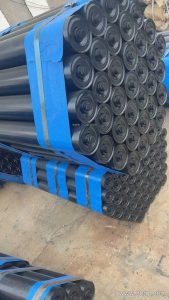
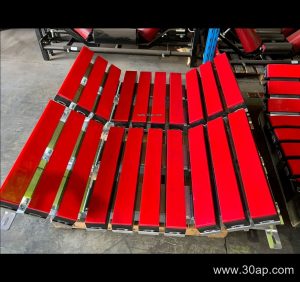
Bracket types also include transition brackets near the head and tail, return brackets for the lower strand, V-return brackets, impact brackets under loading points, and self-aligning brackets that help keep the belt centered. A self-aligning bracket is not a replacement for a trough bracket; it addresses belt tracking rather than carrying profile. Forward-leaning brackets, often set at about 1.5 to 2 degrees, are another option for tracking control.
Where Custom Brackets Are Used
Custom conveyor brackets appear wherever a standard bracket does not fit the frame or the duty. In a limestone mine, they support troughing idlers on a conveyor that carries abrasive rock. In a coal-fired power plant, they position idlers under a flame retardant conveyor belt on the coal handling system. In a cement plant, brackets on the clinker line must tolerate heat and dust. In a sand and aggregate plant, brackets on a crusher conveyor are often built for impact and heavy load.
The bracket works together with the conveyor belt, the idler roller, and the conveyor pulley. A misaligned bracket can cause belt edge wear even when the belt itself is in good condition, so bracket geometry matters as much as belt quality. On a long overland line carrying iron ore or copper ore, small bracket errors accumulate over many idlers.
What Buyers Should Confirm Before Ordering
Before a fabricator builds a custom conveyor bracket, the buyer should provide the belt width, the intended trough angle, the idler roller diameter, the mounting hole pattern, and the frame dimensions. It also helps to state the environment: a wash-down area, a dusty coal yard, or a hot clinker line may call for different steel thickness and surface treatment. The bracket should be checked against the actual conveyor pulley and frame, not against a catalog drawing alone.
Buyers should ask for a drawing showing the bracket orientation, hole spacing, and load path. If the bracket is adjustable, the range of trough angles should be stated. If it is a transition bracket, the distance from the pulley should be defined by the conveyor design. Fabrication tolerances and weld quality should be agreed in writing.
Specification Reference
The following values are common reference points, not fixed rules. Final dimensions are determined by the conveyor design.
- Belt width: B500, B650, B800, B1000, B1200, B1400, B1600, B1800
- Trough angle: 20°, 30°, 35°, 45°
- Idler roller diameter: Ø89, Ø108, Ø133, Ø159, Ø194
- Material: angle steel, channel steel, bent steel plate
- Bracket types: trough bracket, transition bracket, return bracket, V-return bracket, impact bracket, self-aligning bracket, adjustable bracket
Example combinations such as B800 with 35° and Ø108, or B1200 with 45° and Ø133, are common in practice, but they are not the only valid matches. A 650mm belt may use a 30° bracket with Ø89 idlers in one plant and a different arrangement in another.
Installation and Maintenance Notes
Install the bracket square to the conveyor centerline and tighten fasteners to the specified torque. Check that the idler roller sits fully in its seat and that the belt runs centered after installation. On adjustable brackets, record the set angle so that it can be restored after maintenance. Inspect welds and mounting holes during scheduled shutdowns, especially on heavy-duty mining conveyor lines where vibration and impact are constant.
A custom conveyor bracket is a small part of the conveyor, but it controls belt shape, idler life, and tracking. Matching it to the belt width, trough angle, and roller size is the practical way to keep a belt line running straight.