What a Ceramic Lagged Pulley Does
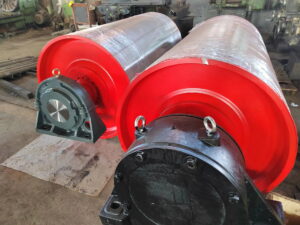
A ceramic lagged pulley is a conveyor pulley whose shell is covered with embedded ceramic tiles instead of plain rubber. The ceramic layer raises the coefficient of friction between the pulley face and the belt, so the drive can transmit more torque before slip occurs. In a stone crushing line, a cement plant clinker circuit, or a power plant coal handling system, this matters most at the head pulley, where the full belt tension and drive load meet.
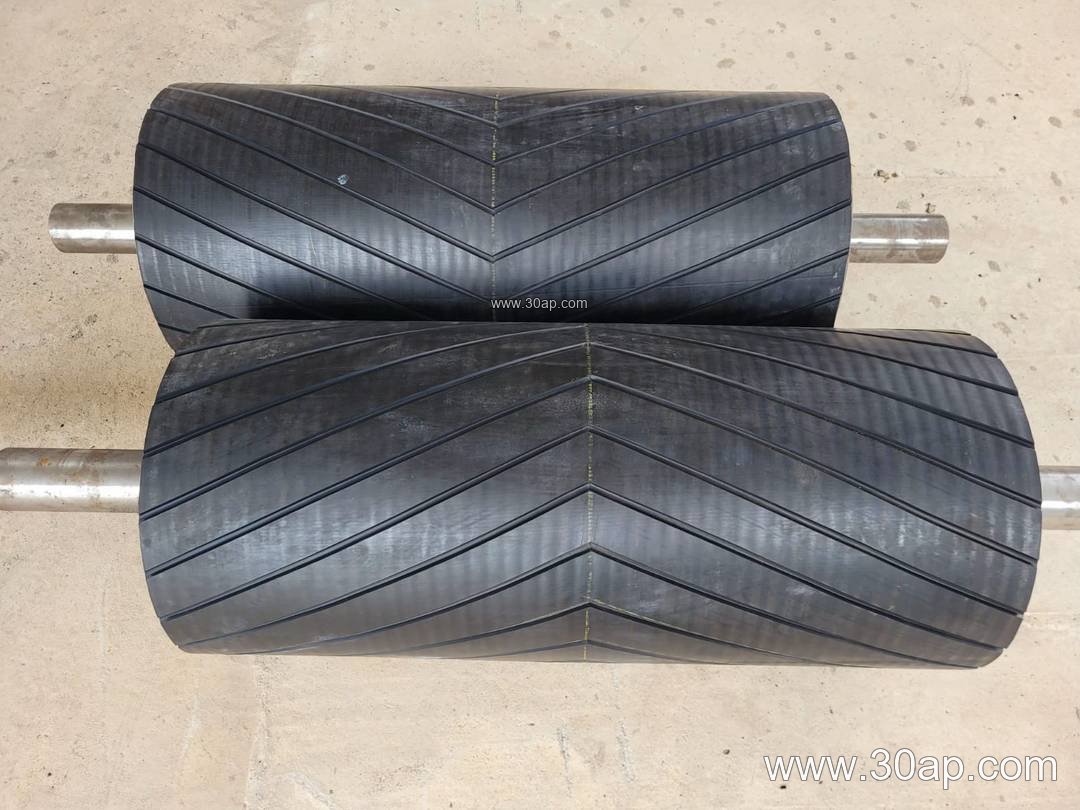
The pulley itself is a fabricated or cast steel drum with shaft, hubs, and end discs. The lagging is bonded to the shell, and the ceramic tiles are set in a rubber or polymer matrix so that the hard ceramic studs protrude slightly above the surface. That pattern gives two benefits at once: grip on the belt underside and a wear surface that resists abrasive carryback.
How the Ceramic Surface Is Built
Most designs use small alumina tiles, often square or hexagonal, set in rows with gaps between them. The gaps let water and fine dust escape, which helps the pulley run cleaner in wet or muddy conditions. Bonding methods vary, and a buyer should confirm whether the tiles are vulcanized into a rubber layer or set in a cold-bonded polymer. Thickness commonly ranges from 8 mm to 20 mm, with 10 mm, 12 mm, and 15 mm being frequent choices for heavy-duty drives.
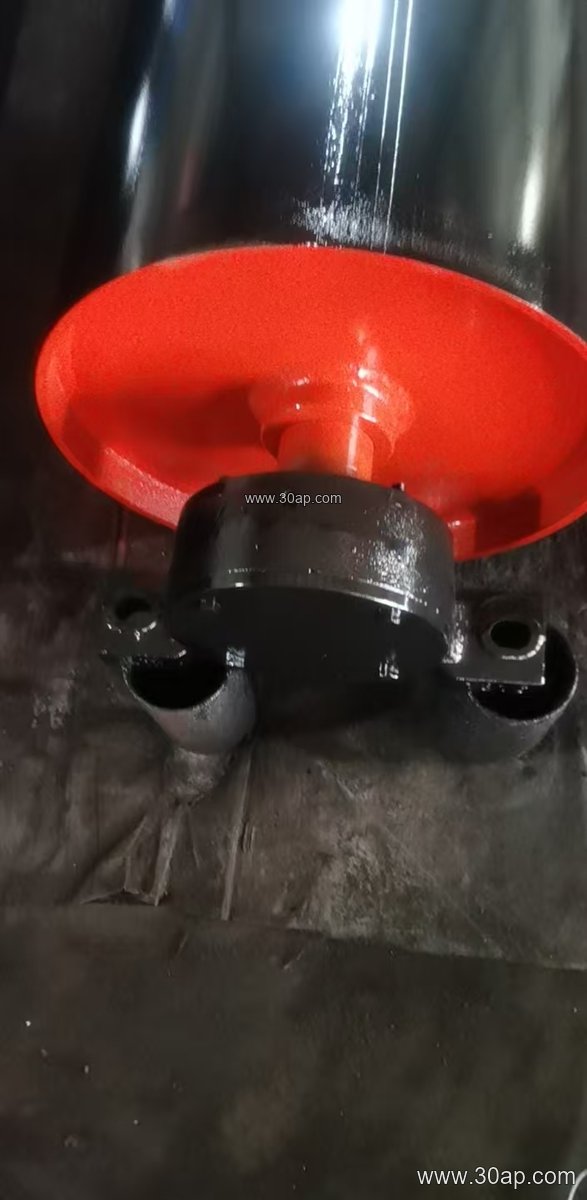
Because the ceramic is harder than the belt cover, the lagging is usually recommended where slip and abrasion are both problems. It is not a universal answer: on a tail pulley or a bend pulley, a plain or rubber lagged surface may be enough, and a ceramic face is mainly a drive-side decision. Tail pulleys and bend pulleys are separate positions, and their surface choice should follow their own duty.
Where It Fits in the Conveyor
The main home for this pulley is the drive position: head pulley, single drive pulley, or tandem drive in long overland and plant conveyors. Typical duties include:
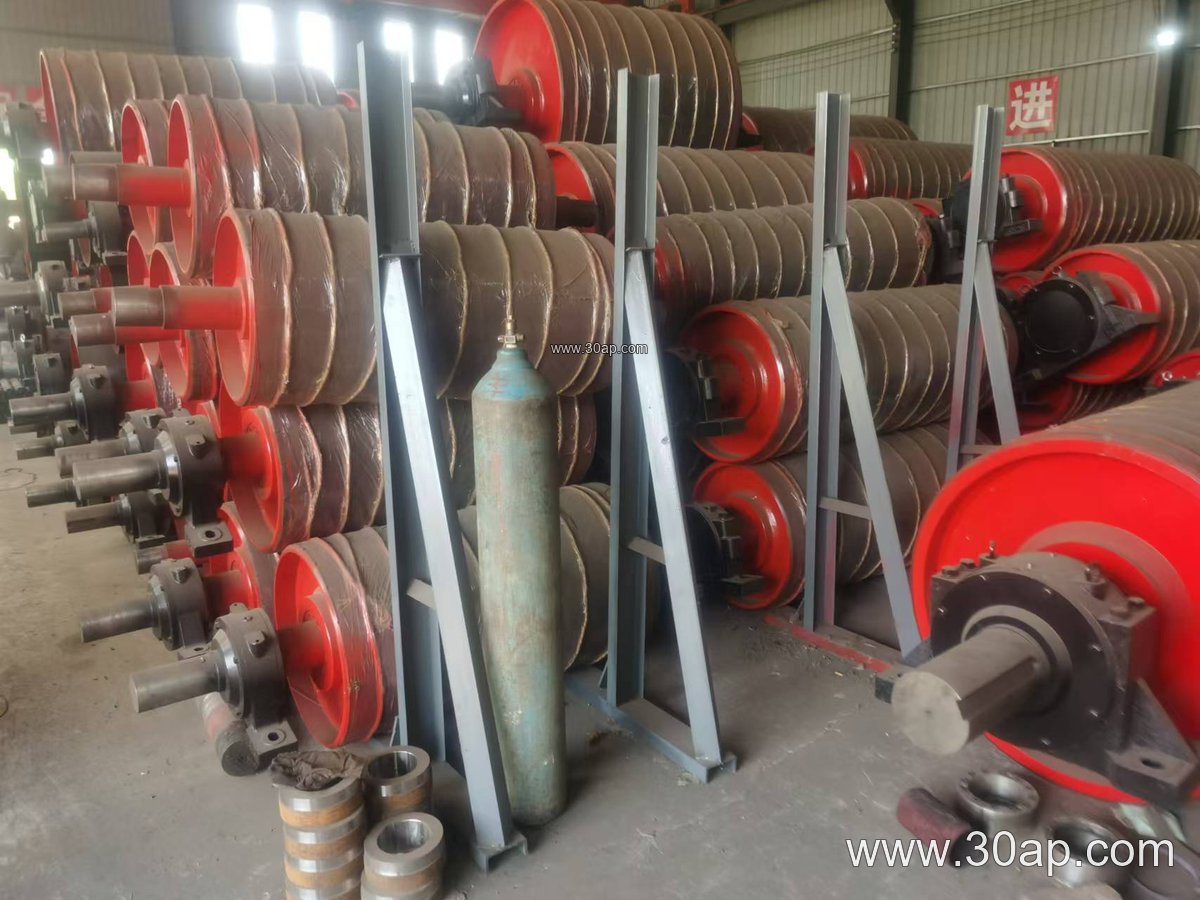
- Primary crushing and screening plants handling quarry rock and aggregate
- Coal mining and underground coal mining conveyors with wet, gritty belts
- Cement plant raw meal and clinker transport
- Iron ore and copper ore handling in concentrators and ports
- Bulk material terminals loading ships and stockpiling
On these lines, a high abrasion resistant conveyor belt and a ceramic lagged drive pulley work as a pair. The belt supplies the tensile strength through an EP conveyor belt or steel cord conveyor belt carcass, while the pulley supplies the grip. Where the belt is a flame retardant conveyor belt for underground service, the pulley lagging should also be checked for compatibility with the belt cover compound.
Sizes and Common Combinations
Pulley dimensions follow belt width, belt tension, and shaft load rather than a single fixed rule. The table below shows common reference pairings; final values are determined by the conveyor design.
| Belt width | Typical pulley face width | Example diameter |
|---|---|---|
| B400 | about 500 mm | Ø200 to Ø315 |
| B650 | about 750 mm | Ø315 to Ø500 |
| B800 | about 950 mm | Ø400 to Ø630 |
| B1000 | about 1150 mm | Ø500 to Ø800 |
| B1200 | about 1400 mm | Ø630 to Ø1000 |
| B1400 | about 1600 mm | Ø800 to Ø1250 |
| B1600 | about 1800 mm | Ø1000 to Ø1400 |
Shaft diameter is set by torque and bearing load, not by belt width alone. Common shaft sizes include Ø80, Ø100, Ø120, Ø140, and Ø160, but a B1200 pulley may carry different shafts on different conveyors. A B1200 × Ø1000 ceramic lagged pulley and a B800 × Ø500 unit are both realistic, yet neither pairing is mandatory.
Buyer Checklist
Before ordering, confirm the pulley position, belt width, belt speed, and the belt type it will run against. A heavy-duty mining conveyor belt with a thick cover behaves differently from a thin food grade conveyor belt, and the lagging pattern should suit the actual contact pressure. Ask for the ceramic tile size, bond type, lagging thickness, and the surface pattern drawing. Check that the pulley face width exceeds the belt width and that the shaft, bearings, and conveyor bracket interface match the existing frame.
Also plan for maintenance. Ceramic tiles can chip if the belt wanders or if foreign metal enters the chute, so keep the belt tracking and the conveyor pulley alignment in good order. Spare lagging sheets and a documented bonding procedure help reduce downtime. For more conveyor components, see the pulley and roller range at conveyor pulley and the belt options at EP conveyor belt.
Used well, a ceramic lagged pulley extends drive reliability in abrasive, wet, and high-torque service without turning every pulley on the line into a ceramic one.