What a Trough Idler Bracket Does on a Conveyor
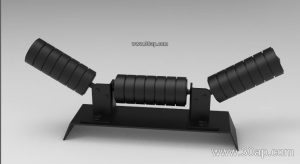
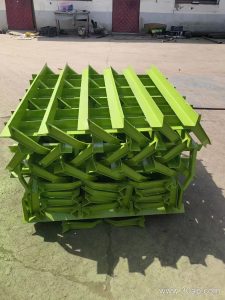
A trough idler bracket is the supporting frame that holds the angled idler rollers in the carrying run of a belt conveyor. It sets the trough angle, keeps the rollers at the correct spacing, and transfers the load of the belt and material into the conveyor stringer or frame. On a quarry conveyor belt or a cement plant feed line, this small structural part quietly decides how well the belt tracks and how long the rollers last. In many descriptions the same item is called a troughing idler bracket, troughing frame, or trough bracket; these are equivalent names for the same product.
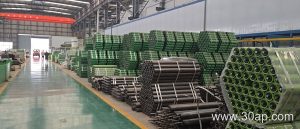
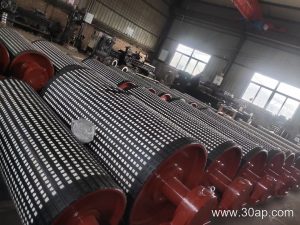
The bracket is not a roller and not a pulley. Drive pulleys, tail pulleys, and bend pulleys all do different work and are never interchangeable with it. A trough bracket only positions and supports idlers in the carrying side of the conveyor.
How the Bracket Is Built
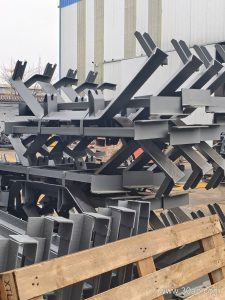
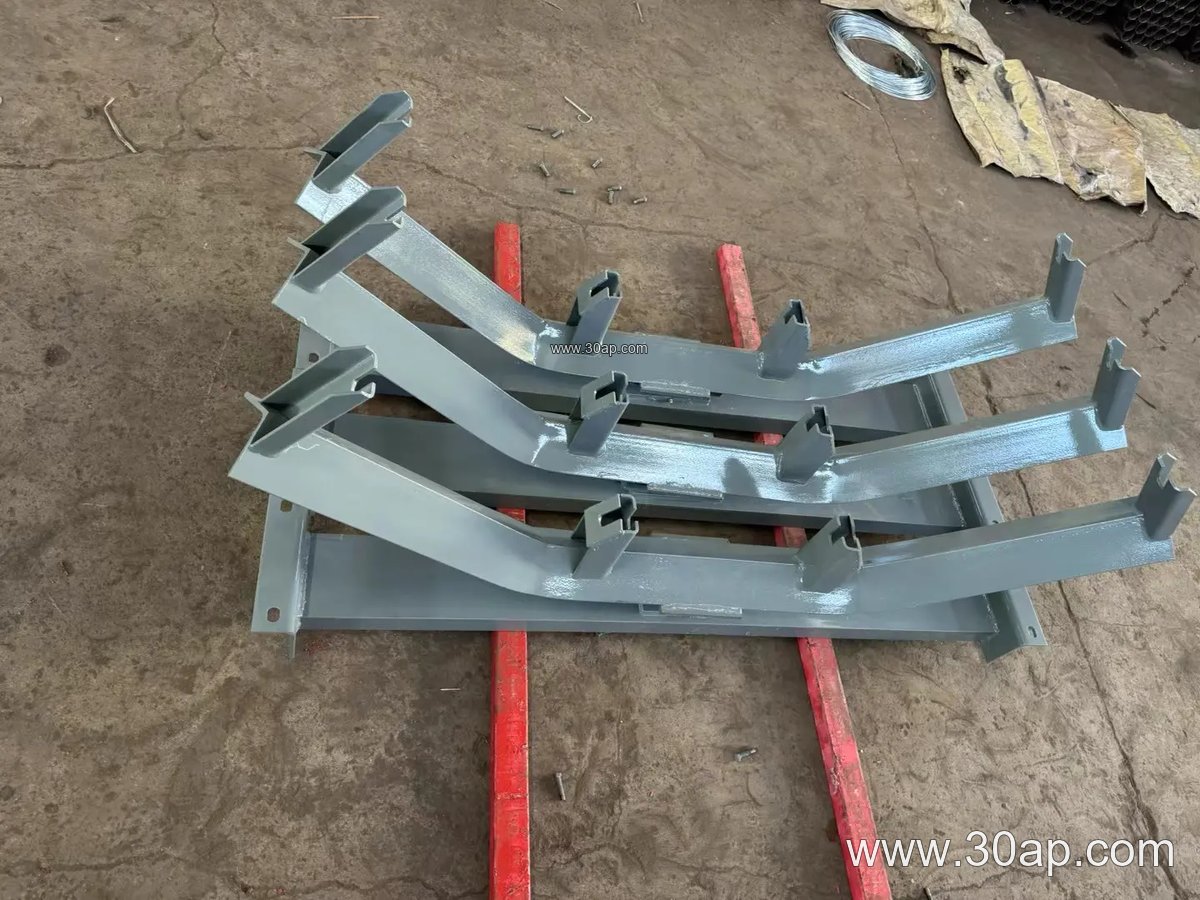
Most trough idler brackets are fabricated from angle steel, channel steel, or folded steel plate. The frame usually carries two or three roller seats: a central flat position and two inclined wings. The wings are set at the trough angle, and the seats may be slotted or drilled to accept a specific roller shaft. Welded gussets and a cross beam give the frame stiffness, while the mounting feet bolt to the conveyor stringer.
Common structural forms include fixed trough brackets, transition brackets near the head and tail, and adjustable brackets that allow the trough angle to be changed on site. A front-tilted version, often about 1.5 to 2 degrees, is used where belt training matters. These are variations of the same bracket family, chosen for position and duty rather than for a different function.
Trough Angle and Roller Diameter in Practice
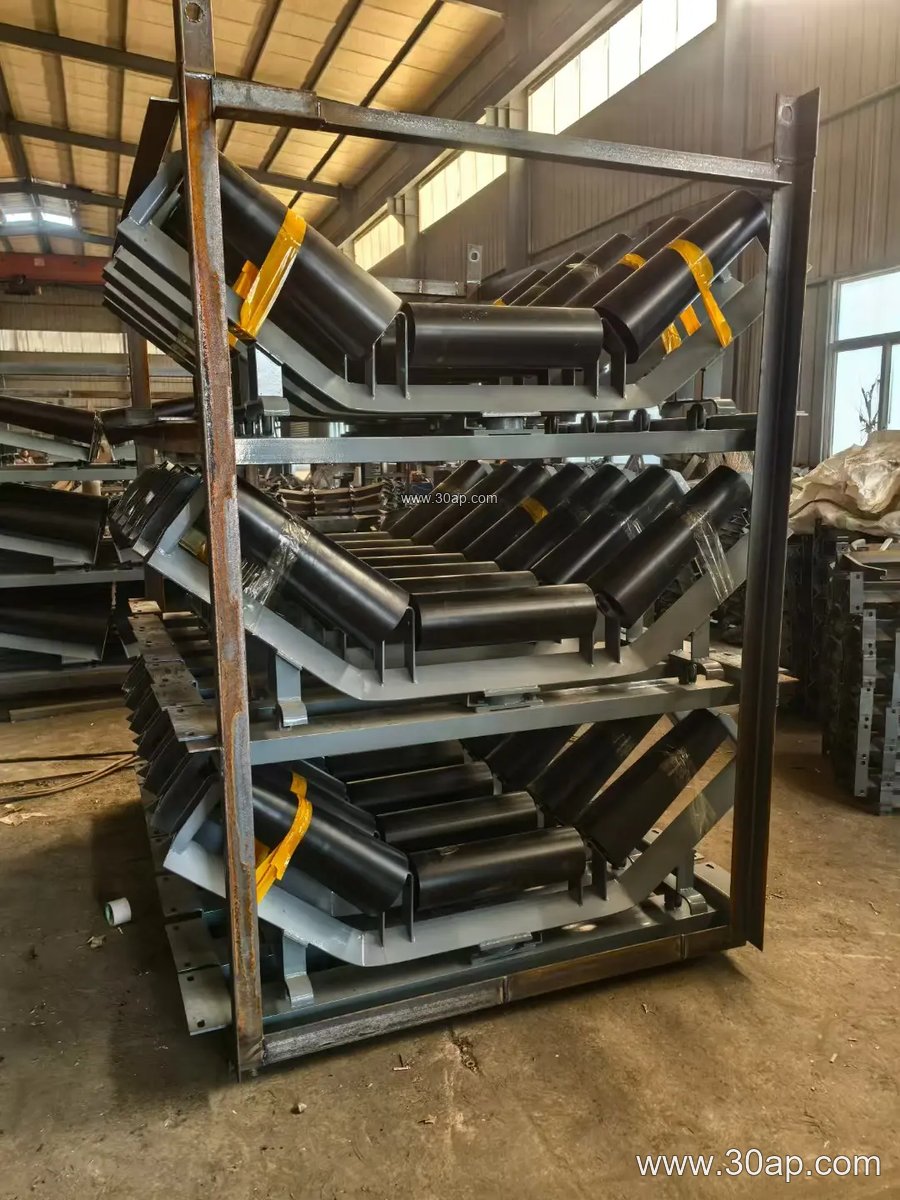
The trough angle and roller diameter are usually selected together with belt width and material characteristics. A narrow belt on a small aggregate line may run at 20 or 30 degrees, while a wide belt carrying heavy ore often uses 35 or 45 degrees. Roller diameters such as Ø89, Ø108, Ø133, Ø159, and Ø194 are common, and the bracket seat must match the chosen shaft and roller end. The table below shows typical reference combinations; they are examples, not fixed rules.
- B500 with 20–30 degrees and Ø89 rollers
- B650 with 30 degrees and Ø89 or Ø108 rollers
- B800 with 35 degrees and Ø108 rollers
- B1000 with 35–45 degrees and Ø108 or Ø133 rollers
- B1200 with 35–45 degrees and Ø133 rollers
- B1400 with 35–45 degrees and Ø133 or Ø159 rollers
- B1600 to B2000 with 35–45 degrees and Ø159 or Ø194 rollers
Installation hole spacing and cross beam length vary with belt width and trough angle, so they should be confirmed from the conveyor drawing rather than assumed. A wider belt does not automatically require one particular angle or roller size; the design load, belt tension, and material lump size all matter.
Where Trough Idler Brackets Are Used
These brackets appear wherever bulk material rides on a troughed belt. In a coal washing plant or a power plant coal yard, they support the carrying run through transfer points and long galleries. In a limestone quarry or a crushing and screening circuit, they sit under belts fed by a crusher conveyor belt and absorb steady impact and abrasion. A cement plant uses them on clinker and raw meal lines, while a port or ship loading system relies on them for high-capacity conveying.
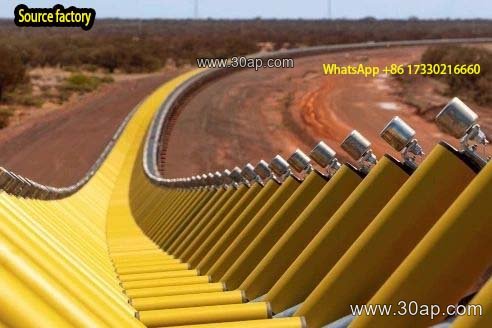
They work alongside the conveyor belt, idler roller, and conveyor pulley, but each part has its own role. The bracket does not tension the belt or drive it; it simply keeps the trough shape stable so the belt can carry material without spillage.
Buyer Checklist Before Ordering
Before selecting a trough idler bracket, confirm the belt width, the required trough angle, the roller diameter and shaft end type, and the mounting method on the stringer. Ask whether a fixed or adjustable frame suits the application, and check whether a transition or impact position needs a different bracket variant. For abrasive duties such as iron ore or quarry rock, a robust folded plate or channel design is often preferred over a light angle frame.
Material compatibility also matters. A heat resistant conveyor belt in a cement kiln area, a flame retardant conveyor belt in an underground coal mine, or an oil resistant conveyor belt in a recycling line all place different demands on the surrounding structure. The bracket should be sized for the belt and roller it carries, not chosen by belt width alone.
Finally, request drawings showing hole spacing, overall height, and roller seat details. Small dimensional differences can delay installation, and a bracket that does not match the idler shaft or stringer holes will not perform as intended. Matching the bracket to the actual conveyor design is the surest way to keep the trough stable and the belt running true.