What a Long-Distance Conveyor Idler Does
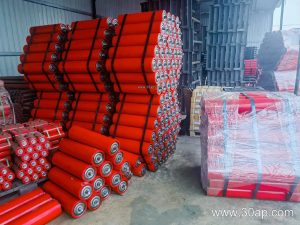
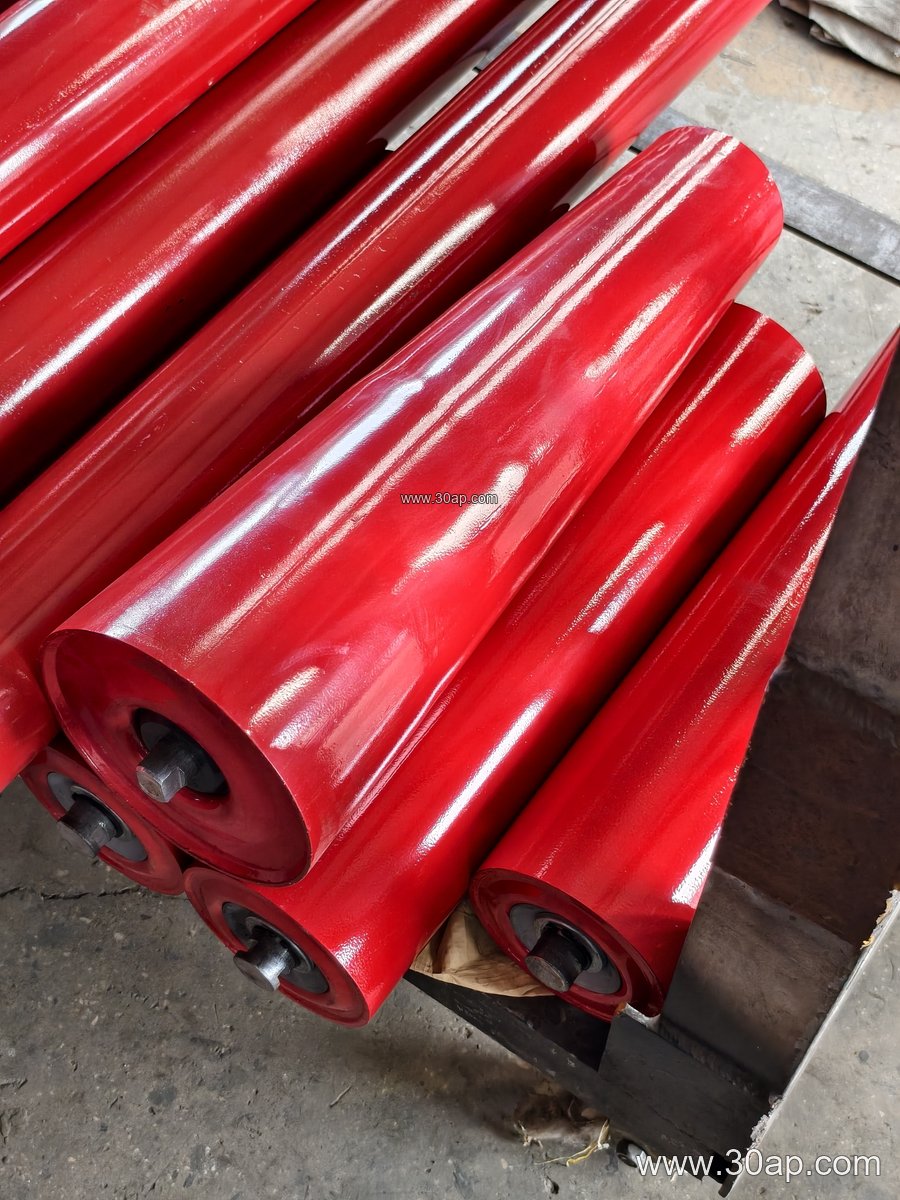
A long-distance conveyor idler is the rotating support that carries the belt and material over extended routes. Unlike short transfer points, these idlers must keep friction low, alignment stable, and maintenance intervals long. In a typical overland system, thousands of idlers work together, so small differences in roll quality add up quickly. The idler roller itself is usually a steel tube with sealed bearings, but the demands of a long route change how it is specified. At granite quarries and cement plants, for example, the same idler may need to resist dust, heat, and continuous load for years.
Construction Details That Matter
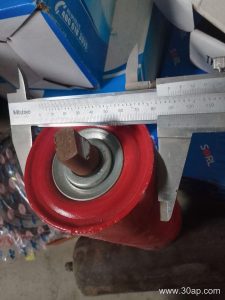
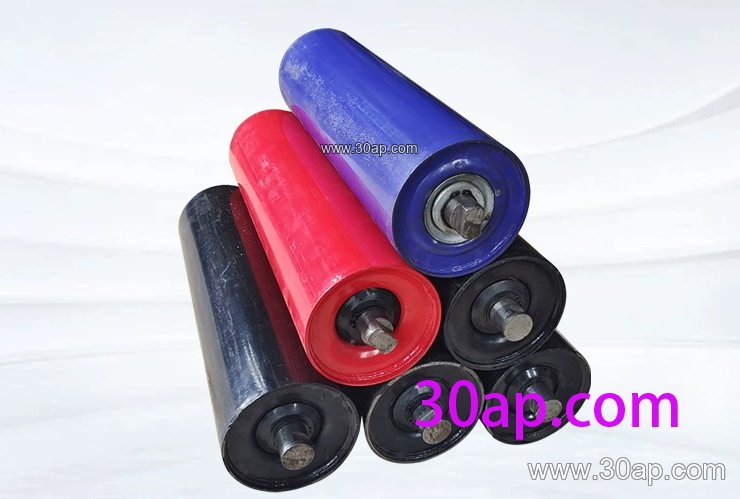
The core of a long-distance conveyor idler is the roller shell, the shaft, and the bearing housing. Shells are commonly made from steel tube, while nylon, ceramic, or rubber rings are chosen for specific wear or impact conditions. Bearing selection follows load and speed, not belt width alone. Common bearing sizes include 6204, 6205, 6305, 6306, 6308, and 6310, but the same bearing can appear in different roller diameters. Sealing is critical on long routes where re-greasing is difficult. A well-sealed idler roller reduces drag and protects the bearing from fine dust. The conveyor bracket that holds the idler also affects change-out time and alignment.
Common Configurations and Dimensions
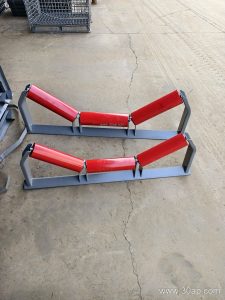
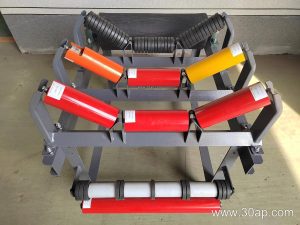
Long-distance conveyors typically use three-roll troughing sets on the carrying side and return idlers underneath. Roll diameter ranges from Ø63 to Ø219, with Ø102, Ø108, Ø127, and Ø133 being common in bulk handling. Trough angles of 20, 30, 35, and 45 degrees appear depending on material and belt width. The table below shows typical examples, not fixed rules.
| Belt Width | Typical Roller Diameter | Common Trough Angle | Example Roll Length (three-roll set) |
|---|---|---|---|
| B500 | Ø89–Ø102 | 30°–35° | about 200 mm |
| B650 | Ø89–Ø108 | 30°–35° | about 250 mm |
| B800 | Ø102–Ø127 | 30°–35° | about 315 mm |
| B1000 | Ø108–Ø133 | 30°–35° | about 380 mm |
| B1200 | Ø127–Ø159 | 30°–35° | about 465 mm |
| B1400 | Ø133–Ø159 | 30°–45° | about 530 mm |
| B1600 | Ø133–Ø178 | 30°–45° | about 600 mm |
| B1800 | Ø159–Ø178 | 30°–45° | about 670 mm |
| B2000 | Ø159–Ø194 | 35°–45° | about 750 mm |
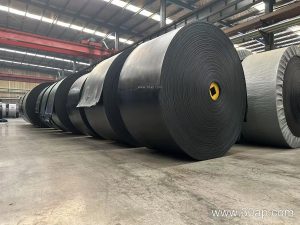
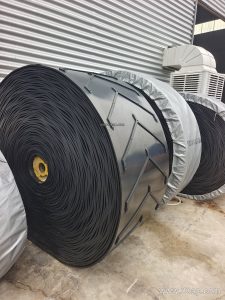
Side rolls and center rolls can differ in length, so the values above are only a starting point. For wider belts such as B2200 or B2400, idler sets are designed individually. The conveyor belt type also influences idler choice: a steel cord conveyor belt may tolerate higher tension with fewer supports, while a multi-ply fabric core conveyor belt may need closer spacing to avoid sag.
Where Long Routes Put Idlers to Work
Long-distance conveying is common in iron ore and copper ore transport, in power plant coal handling, and in limestone quarries feeding cement kilns. In these places, a single idler failure can stop the whole line. Return idlers and troughing idlers are the most numerous, but impact idlers are used at load points and transition idlers near pulleys. The conveyor pulley at the drive and tail ends remains a separate component; it is not an idler and cannot be swapped for one. Buyers should keep that distinction clear when ordering spares.
Buyer Checklist for Long-Distance Idlers
Before choosing a long-distance conveyor idler, confirm the belt width, the trough angle, the roll diameter, and the bearing size. Ask how the roller is sealed and whether the shell is steel, nylon, or rubber-covered. Check that the conveyor bracket matches the existing frame. For abrasive cargo, an abrasion resistant conveyor belt and wear-resistant idlers work together to extend service life. In cold climates, a cold resistant conveyor belt may be paired with low-drag idlers. For coal mining, a flame retardant conveyor belt is often required, and underground mining conveyor idlers should be selected with fire safety in mind. At stone crushing plants and aggregate yards, dust penetration is the main enemy, so seal quality matters more than a small price difference. Finally, confirm roller length and shaft diameter against the actual frame drawing, not just the belt width.