What a Dual Drive Pulley Does
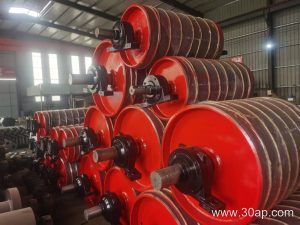
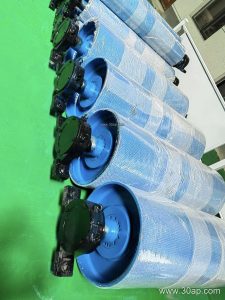
A dual drive pulley is a conveyor pulley that receives torque from two drive units, either mounted at both shaft ends or combined through a single shaft with a twin input arrangement. In heavy-duty conveying, one motor and gearbox sometimes cannot deliver enough traction without an oversized shell or excessive belt tension. Splitting the power across two drives lets the pulley pull a wider, heavier conveyor belt with better load sharing and a more compact drive station. This is common in quarry and limestone operations where long overland lines move crushed rock, and in power plant coal handling where starting torque is high.
The pulley is still a drive pulley, not a tail or bend pulley. Tail pulleys redirect the return side, bend pulleys change belt direction, and neither transmits drive torque. A dual drive pulley belongs at the head or at an intermediate drive position where the conveyor needs extra pull.
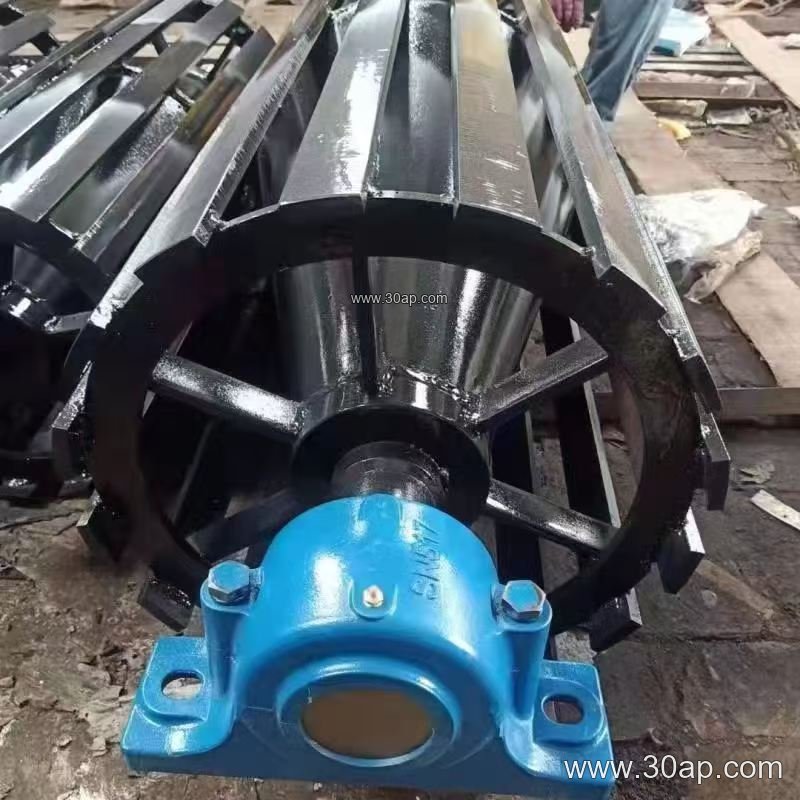
Construction and Power Transmission
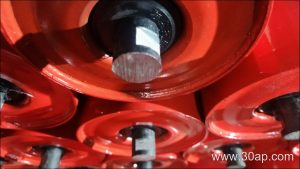
The core is usually a welded steel shell with machined end discs and a through shaft or stub shafts. Two planetary or helical gearboxes connect to the shaft, often with one drive on each side for balanced torque. Key components include:
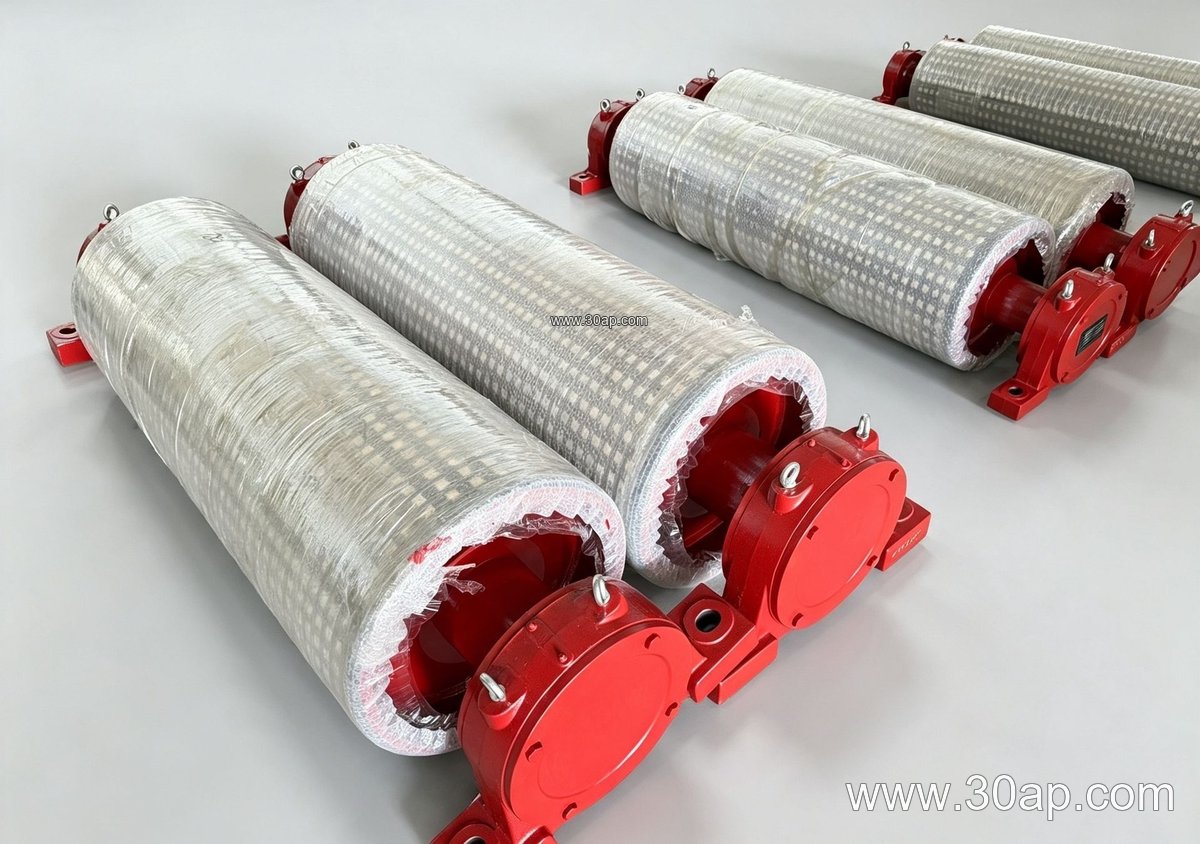
- Heavy shell with welded hubs and stress-relieved welds
- Machined shaft journals sized by torque and radial load, not by belt width alone
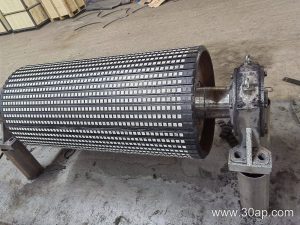
- Lagging applied as hot vulcanized rubber, cold-bonded rubber, diamond grooving, or ceramic tiles
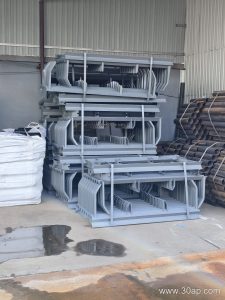
- Bearing housings and take-up brackets matched to the conveyor bracket layout
Torque sharing matters. If the two drives are not balanced, one gearbox carries more load and the lagging wears unevenly. Buyers should confirm the drive control method, whether mechanical load sharing, a fluid coupling, or variable frequency drives are used. Shaft diameter is typically decided from running torque, shock load, and bearing span; a B1200 pulley may use a larger shaft than a B1000 unit, but no single shaft size follows from belt width alone.
Where It Fits in the Plant
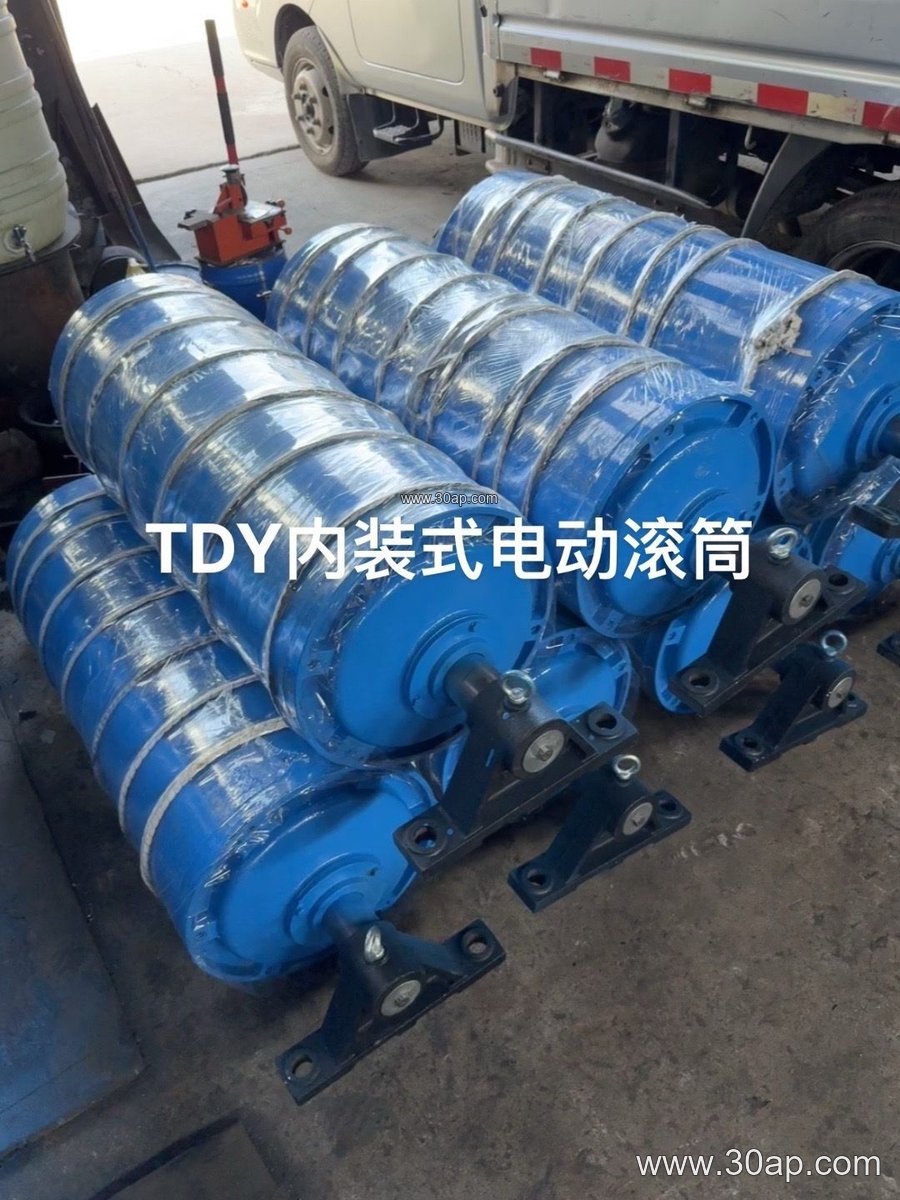
In a sand and aggregate line, a dual drive pulley at the head end can handle the discharge from a crusher conveyor belt without a very long drive platform. In cement plants, the same design suits clinker transport where the conveyor pulley must start under load. Port bulk terminals also use twin-drive head pulleys on ship loading conveyors when the belt carries material over long distances.
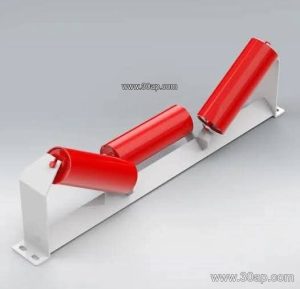
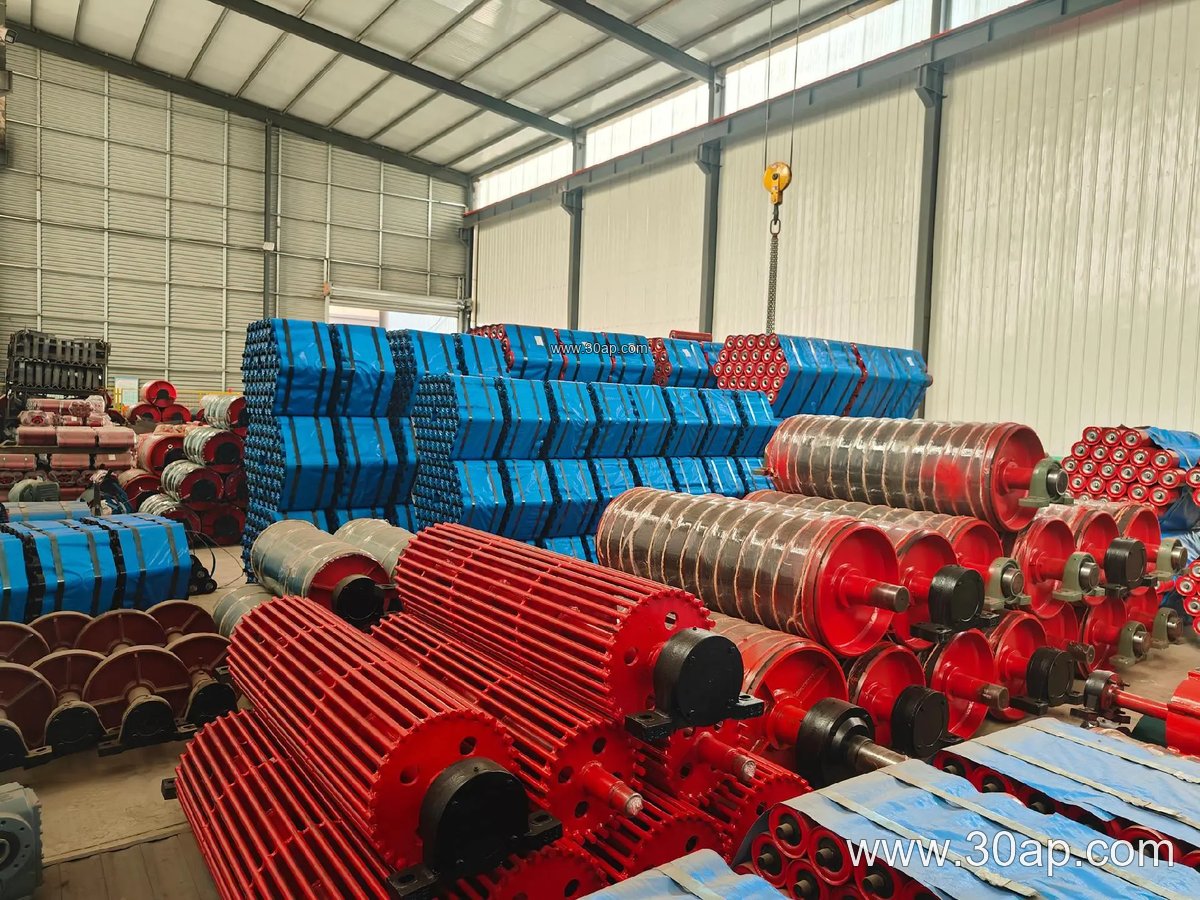
The pulley works with the conveyor belt, idler roller sets, and conveyor bracket assemblies. A chevron conveyor belt or corrugated sidewall belt may need different lagging and crown details, so the belt type should be declared at the enquiry stage. Abrasion resistant conveyor belt grades are common in quarry duty, while flame retardant conveyor belt grades appear in coal mining and underground mining conveyor systems.
Common Reference Dimensions
Values below are typical references for discussion, not fixed supply promises. Final sizes follow the conveyor design.
| Belt width | Typical pulley face width | Possible diameter range | Common lagging thickness |
|---|---|---|---|
| B650 | about 750 mm | Ø400 to Ø630 | 8 to 12 mm |
| B800 | about 950 mm | Ø500 to Ø800 | 10 to 15 mm |
| B1000 | about 1150 mm | Ø630 to Ø1000 | 10 to 15 mm |
| B1200 | about 1400 mm | Ø800 to Ø1250 | 12 to 20 mm |
| B1400 | about 1600 mm | Ø800 to Ø1400 | 12 to 20 mm |
| B1600 | about 1800 mm | Ø1000 to Ø1600 | 15 to 20 mm |
A B1200 x Ø1000 dual drive pulley and a B1400 x Ø800 unit are both plausible, but they suit different belt tensions and wrap angles. Shaft journals commonly fall in the Ø80 to Ø200 range for these sizes, again set by torque calculation.
Buyer Checklist
Before ordering, state the belt width, belt type, material carried, required traction, wrap angle, and drive arrangement. Confirm lagging form: plain, diamond, herringbone, or ceramic. Ask for the shaft material, bearing type, and whether the pulley is supplied with gearboxes or bare. For a conveyor pulley in a coal mining conveyor belt circuit, flame retardant and anti-static requirements should be written into the specification. For iron ore or copper ore duty, abrasion resistant lagging and a robust shell weld procedure deserve attention. Matching the pulley to the conveyor bracket and idler roller frame early avoids site rework, and reviewing the belt splice direction with the lagging groove pattern keeps traction predictable over the full belt life.