What an Iron Ore Conveyor Idler Does on the Line
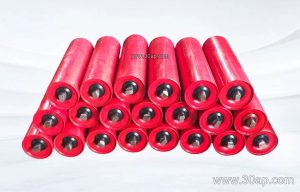
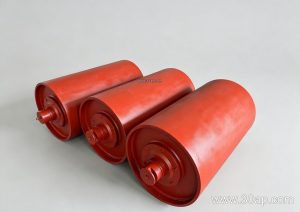
An iron ore conveyor idler is the rotating roller assembly that supports the belt and the load along the carrying and return runs. In a mine, a sinter plant or a port stockyard, the ore arrives as lump, fines and pellets with sharp edges and a lot of dust, so the idler has to keep the belt tracking, absorb impact and turn freely without letting grit into the bearing. The idler roller is a small component compared with the conveyor pulley at the head or tail, but there are many of them, and each one carries a share of the load every metre of the route.
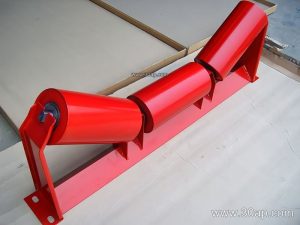
The work is not the same everywhere on the conveyor. Troughing idlers shape the belt into a channel on the carrying side, return rollers hold the empty belt up underneath, and impact idlers sit below the loading point where the ore drops onto the belt.
How the Roller Is Built
A typical unit is a steel tube with pressed bearing housings at each end, a through shaft, and a sealing arrangement that keeps fines out of the bearing. The shell may be plain steel, nylon-coated, ceramic-covered or fitted with rubber rings, depending on whether wear, build-up or impact is the main problem. Common bearing sizes include 6204, 6205, 6305, 6306, 6308 and 6310, though the correct bearing follows the shaft and load design rather than the belt width alone.
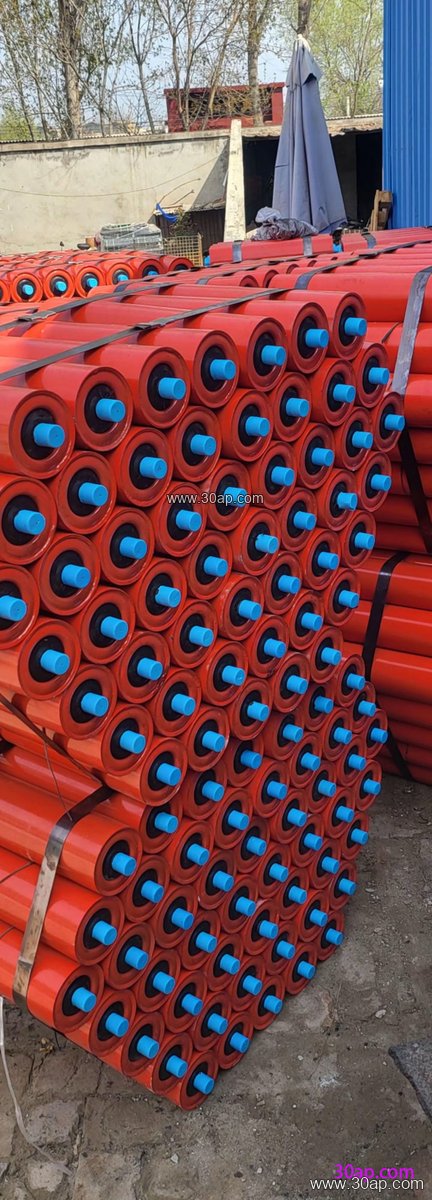
Sealing matters more in ore handling than in clean bulk duty. Fine hematite or magnetite dust that reaches the bearing turns into grinding paste, so labyrinth seals, felt seals and grease retention are worth checking when comparing suppliers. The shaft ends should fit the conveyor bracket cleanly, and the bracket itself should allow quick replacement without cutting the belt.
Where It Fits in the Plant
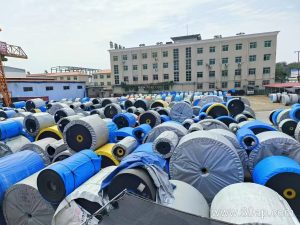
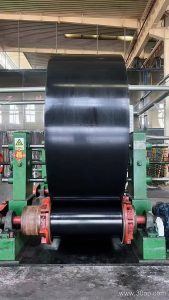
These rollers are used wherever an Iron Ore Conveyor Belt runs. That includes primary crushing circuits, screening plants, stockyard reclaim lines and ship loading systems. In a steel plant they appear on sinter and pellet feed conveyors; in a port they work on long export lines where dust and salt air both attack the bearing. The carrying run usually uses three-roll troughing sets with a 20, 30, 35 or 45 degree trough angle, while the return side may use a single flat roller or a V-return arrangement to keep the belt centred.
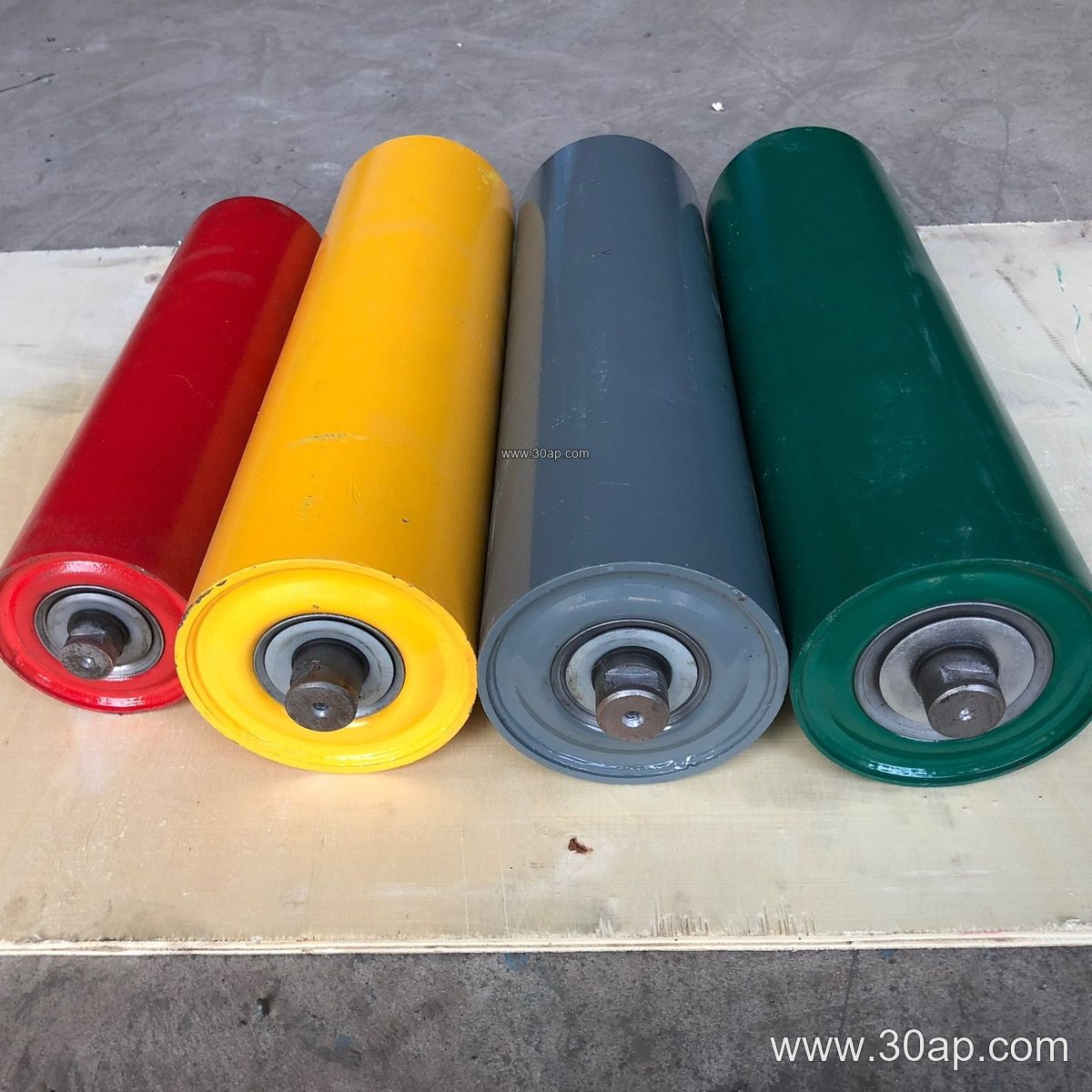
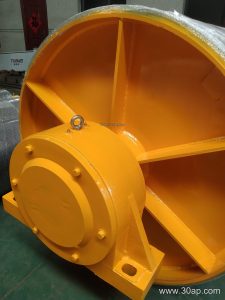
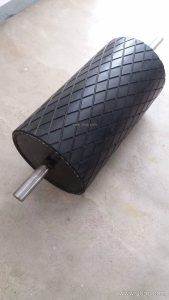
Elsewhere in the same circuit, a heavy-duty conveyor pulley at the drive and tail does the power transmission and belt tensioning work, while the idlers only support. It helps buyers to keep that distinction clear when writing a specification, because drive, tail and bend pulleys are separate items and are not interchangeable with rollers.
Common Reference Sizes
The figures below are typical reference values, not fixed combinations. Final roller length, diameter and bearing are set by the conveyor design, belt width, trough angle and load.
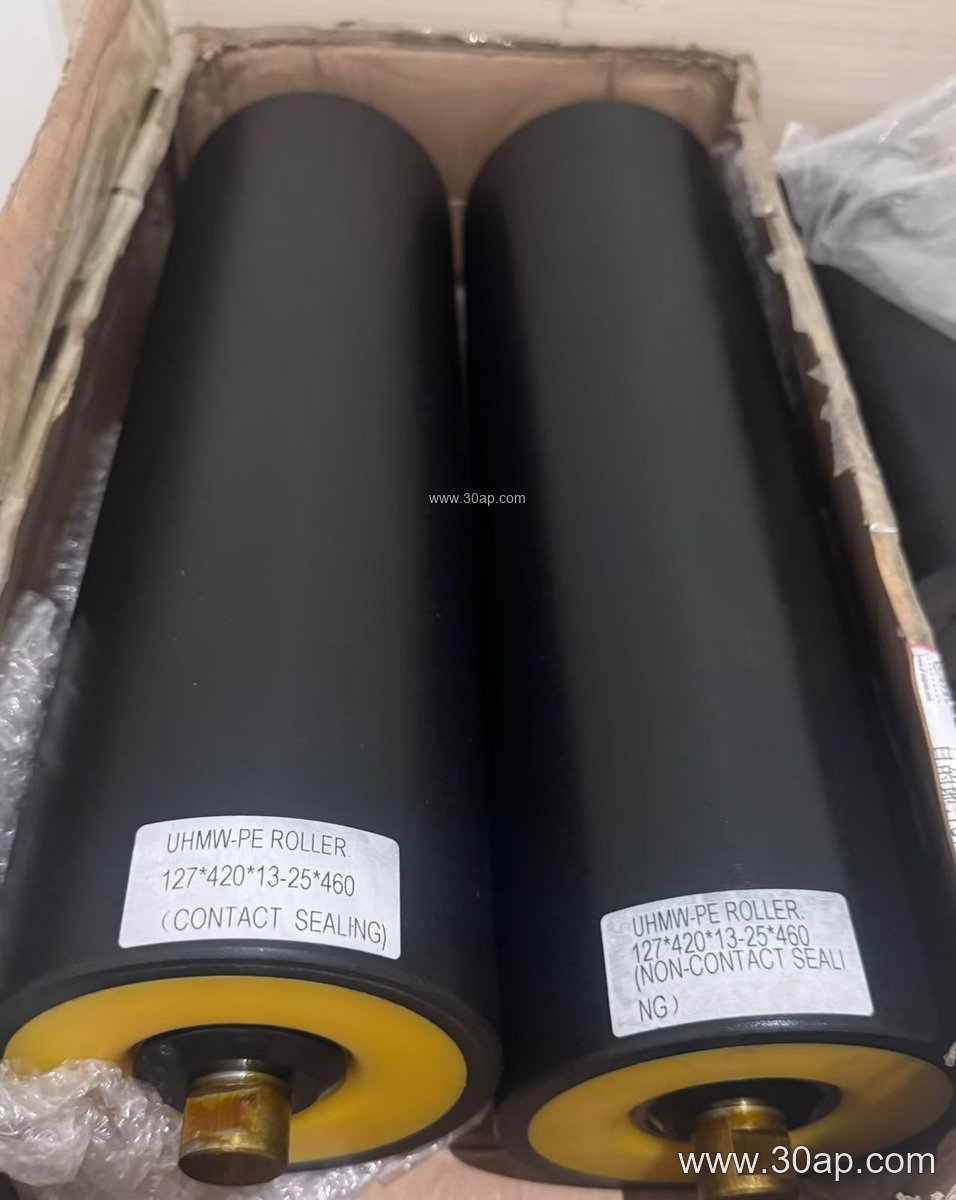
- Roller diameter: Ø63, Ø76, Ø89, Ø102, Ø108, Ø127, Ø133, Ø159, Ø178, Ø194, Ø219 mm
- Belt width: B400, B500, B650, B800, B1000, B1200, B1400, B1600, B1800, B2000 mm
- Trough angle: 20, 30, 35, 45 degrees; forward tilt about 1.5 to 2 degrees on training idlers
| Belt width | Typical roller length, three-roll trough | Typical trough angle |
|---|---|---|
| B500 | about 200 mm | 20–35 degrees |
| B650 | about 250 mm | 20–35 degrees |
| B800 | about 315 mm | 30–35 degrees |
| B1000 | about 380 mm | 30–35 degrees |
| B1200 | about 465 mm | 30–35 degrees |
| B1400 | about 530 mm | 35–45 degrees |
| B1600 | about 600 mm | 35–45 degrees |
Side rollers and centre rollers can differ in length, and a wide belt does not automatically mean one particular shaft diameter. Ask for the drawing rather than assuming a pairing.
Types That Suit Ore Duty
Troughing and transition idlers carry the load; impact idlers with rubber rings protect the belt at the transfer chute; training idlers, including friction and tapered types, correct misalignment on long runs; spiral and comb rollers help where sticky fines build up on the shell. Return rollers are often the first to fail in dusty service, so they deserve attention during inspections.
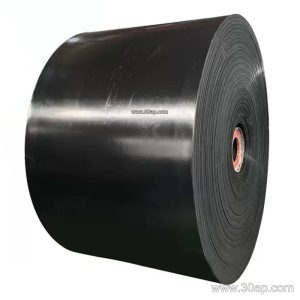
The belt choice and the roller choice work together. A high abrasion resistant conveyor belt may tolerate sharp lump ore, but a worn idler with a flat spot will still damage the carcass. Matching a steel cord conveyor belt or a multi-ply fabric core belt to the right roller spacing keeps sag under control.
What Buyers Should Check
- Wall thickness of the tube and the grade of steel, since ore duty wears shells quickly.
- Seal design and grease type, especially for dusty sinter or pellet service.
- Roller diameter against belt speed and load, and the bracket dimensions.
- Rotation test and runout before dispatch, plus a spare parts list for the whole line.
- Whether the supplier can supply the conveyor pulley and belt from the same drawing set.
Information on matching Iron Ore Conveyor Idler sets to your belt and structure is available at mmconveyor.com, together with details on idler roller, conveyor bracket and conveyor pulley options for mining and port projects.