What Conveyor Pulley Lagging Does
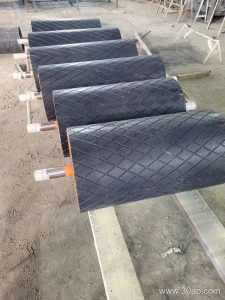
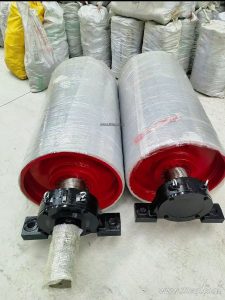
Conveyor pulley lagging is the rubber or ceramic layer bonded to the drum face of a conveyor pulley to improve grip on the belt. On a drive pulley, the lagging raises the friction coefficient between drum and belt so the belt can be driven without slip under load. On a tail or bend pulley it protects the shell from abrasion and build-up. In practice, lagging is one of the cheapest ways to extend pulley life and reduce belt tracking problems on a quarry conveyor or a power plant coal handling line.
The product is often called pulley lagging, drum lagging, or rubber pulley lagging. All three refer to the same item; the choice of wording does not change the function.
How the Lagging Is Built
Most lagging is supplied either as pre-formed rubber strips with a fabric backing or as a ceramic tile sheet set in a rubber matrix. The rubber grade is usually selected for abrasion resistance, and in underground coal mining conveyors a flame retardant grade may be specified. Thickness commonly ranges from 8 mm to 20 mm, with 10 mm and 12 mm being typical for medium-duty drive pulleys and 15 mm or 20 mm used where torque and belt tension are high.
Attachment methods fall into three groups:
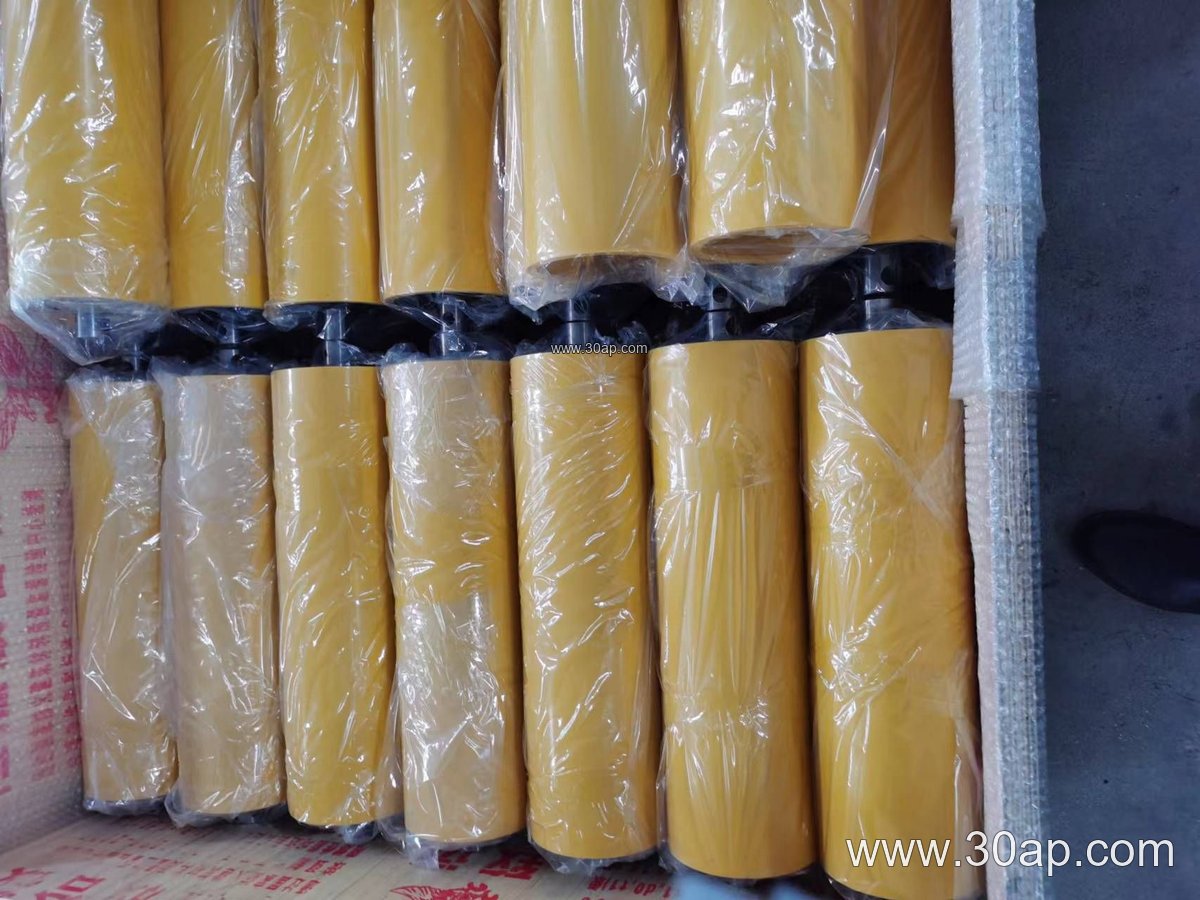
- Hot vulcanized lagging — cured onto the shell in a press, giving the strongest bond and suitable for high-tension drives.
- Cold bonded lagging — adhered with a two-part adhesive, convenient for field replacement.
- Replaceable strips or tiles — bolted or slid into grooves, useful where the pulley is hard to remove.
Surface forms include plain, diamond groove, herringbone, and ceramic. Diamond and herringbone patterns help water and fine dust escape from the contact zone, which matters on a conveyor handling wet sand or clay. Ceramic lagging is chosen where abrasive rock or ore causes rapid rubber wear.
Where Lagging Is Used
The most common positions are the head or drive pulley at the discharge end and the tail pulley at the loading end. A bend pulley or take-up pulley may also be lagged, but the requirements differ: a bend pulley sees lower torque, so a thinner plain rubber cover is often enough. Snub and press pulleys usually run with plain or lightly grooved lagging because their job is to increase wrap angle rather than transmit power.
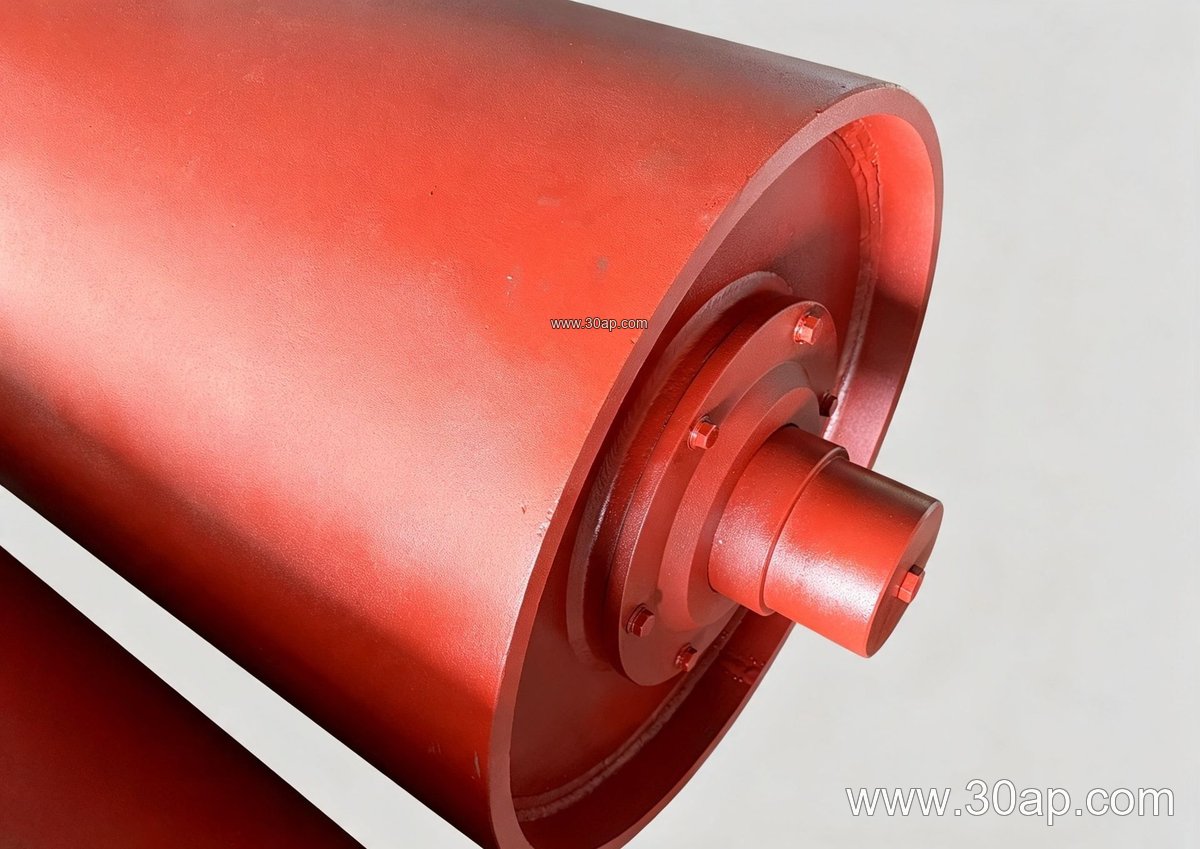
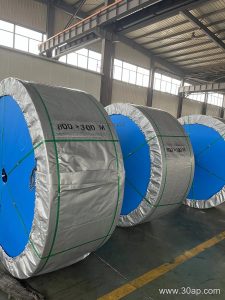
Typical industries include limestone and iron ore mines, aggregate crushing and screening plants, cement clinker lines, and port bulk terminals. A belt carrying abrasive rock on a quarry conveyor will wear a plain rubber surface quickly, while a coal yard conveyor may need a flame retardant cover. The belt itself matters too: a steel cord conveyor belt behaves differently from a multi-ply fabric core belt, and an EP conveyor belt or NN conveyor belt with a stiff carcass may need more friction at the drive to avoid slip during start-up.
Matching Lagging to Pulley and Belt
Lagging is specified together with pulley diameter, face width, and shaft size. The table below shows common reference combinations; these are examples, not fixed rules, and final values are set by the conveyor designer.
| Belt width | Typical pulley face width | Example pulley diameter | Common lagging thickness |
|---|---|---|---|
| B500 | about 600 mm | Ø315 to Ø400 | 8 to 10 mm |
| B800 | about 950 mm | Ø500 to Ø630 | 10 to 12 mm |
| B1000 | about 1150 mm | Ø630 to Ø800 | 12 to 15 mm |
| B1200 | about 1400 mm | Ø800 to Ø1000 | 12 to 15 mm |
| B1400 | about 1600 mm | Ø800 to Ø1250 | 15 mm |
| B1800 | about 2000 mm | Ø1000 to Ø1400 | 15 to 20 mm |
Shaft diameter is not derived from belt width alone. A Ø100 shaft and a Ø160 shaft can both appear on a B1200 pulley depending on torque, bearing span, and load. Buyers should confirm shaft size from the pulley drawing rather than assuming a pairing with belt width.
Buyer Checklist
- State the pulley position: drive, tail, bend, or take-up. These are not interchangeable, and the lagging thickness and pattern follow from the duty.
- Give the belt width, pulley diameter, face width, and shaft diameter from the drawing.
- Describe the material: wet, oily, hot, or highly abrasive. This drives the choice between plain, diamond, herringbone, and ceramic.
- Confirm the attachment method the maintenance team can support — hot vulcanizing needs a press, cold bonding needs clean conditions and cure time.
- Check clearance around the pulley, since added lagging thickness increases the effective drum diameter.
Lagging is a small part of a conveyor system, but it sits at the point where belt tension, torque, and abrasion all meet. Getting the surface form and thickness right keeps the belt running true, protects the pulley shell, and reduces downtime on lines where every hour of stoppage is expensive.