What Pulley Lagging Is and Why It Matters
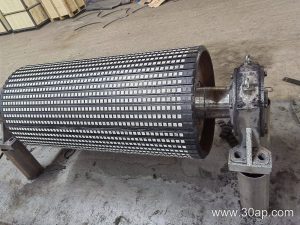
Pulley lagging is the rubber, ceramic or composite layer applied to the cylindrical shell of a conveyor pulley where the belt makes contact. Its job is simple to describe and important in practice: it raises friction between the pulley face and the conveyor belt, protects the steel shell from wear and slip, and helps keep the belt centred under load. In a quarry, a cement plant or a coal handling system, a drive pulley without lagging can lose grip the moment the belt gets damp, dusty or heavily loaded. That is why lagging is treated as a wear part with a defined service life rather than a permanent fixture.
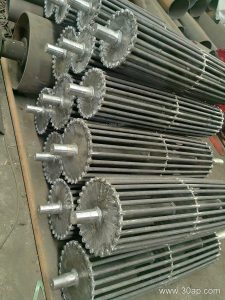
The product is also known as pulley rubber lagging or drum lagging, and the terms describe the same item. It should not be confused with the pulley itself. Drive, tail and bend pulleys serve different functions, and the lagging specification for each position follows that function.
How the Lagging Is Built
Most lagging is supplied either as sheets cut to the shell width or as pre-formed strips with moulded edges. Rubber grades are chosen for abrasion resistance, oil resistance or flame retardancy depending on the site, and a fabric or cord reinforcement may be embedded to limit stretch. Ceramic lagging uses embedded tiles set in a rubber matrix, which suits wet or oily conditions where plain rubber may polish and slip.
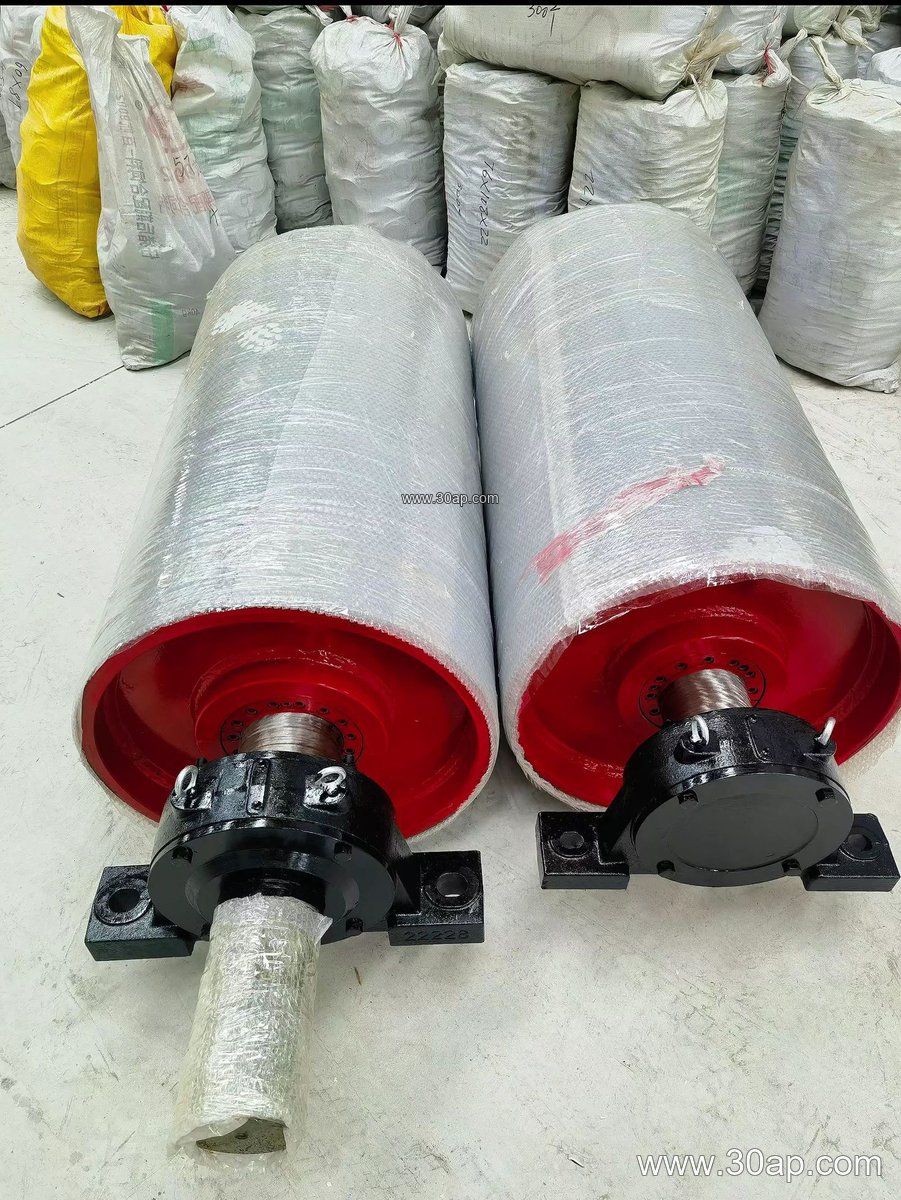
Attachment methods matter as much as the compound. Cold-bonded lagging is glued and rolled onto a prepared shell; hot-vulcanised lagging is cured under pressure for a stronger bond and is common on high-torque drive pulleys. Bolt-on strips are used where replacement in the field must be quick. A buyer should confirm the bonding method, the surface pattern and the thickness together, because these three choices decide how the pulley behaves in service.
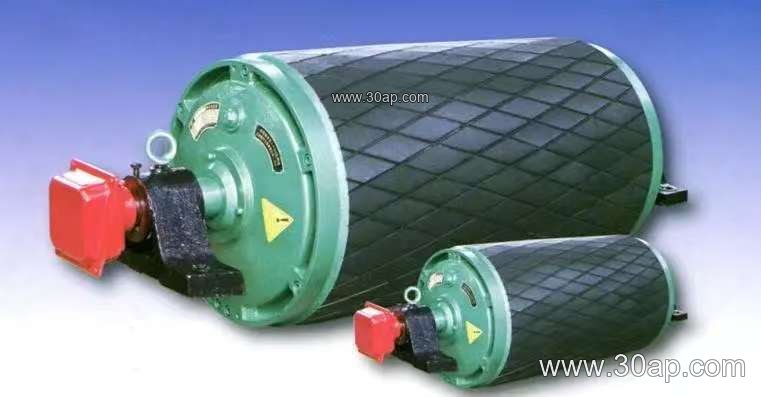
Surface Forms and Typical Thickness
Plain or smooth lagging gives uniform contact and is often used on tail and bend positions. Diamond and herringbone patterns channel water and fines away from the contact patch, improving grip on wet belts. Ceramic tiles are reserved for the most demanding drives. Common lagging thicknesses are 8, 10, 12, 15 and 20 mm; heavier drives generally move toward the thicker end, while bend pulleys usually take a thinner layer.
- Plain sheet: general contact, easy to trim
- Diamond pattern: wet or dusty belts
- Herringbone: higher grip on incline conveyors
- Ceramic: wet, oily or high-slip drives
Matching Lagging to Pulley Size
Lagging is ordered against the pulley shell, so the face width and diameter must be known before a quote. The shell face is normally wider than the belt it carries. Reference combinations such as B800 × Ø500 or B1200 × Ø1000 appear in project drawings, but they are design choices, not fixed rules. Shaft diameter is set by torque and load, never by belt width alone.
| Belt width | Typical shell face width | Common pulley diameters |
|---|---|---|
| B500 | about 600 mm | Ø250, Ø315, Ø400 |
| B650 | about 750 mm | Ø315, Ø400, Ø500 |
| B800 | about 950 mm | Ø400, Ø500, Ø630 |
| B1000 | about 1150 mm | Ø500, Ø630, Ø800 |
| B1200 | about 1400 mm | Ø630, Ø800, Ø1000 |
| B1400 | about 1600 mm | Ø800, Ø1000, Ø1250 |
These figures are reference data. Final dimensions are confirmed against the conveyor design, the belt tension and the available take-up travel.
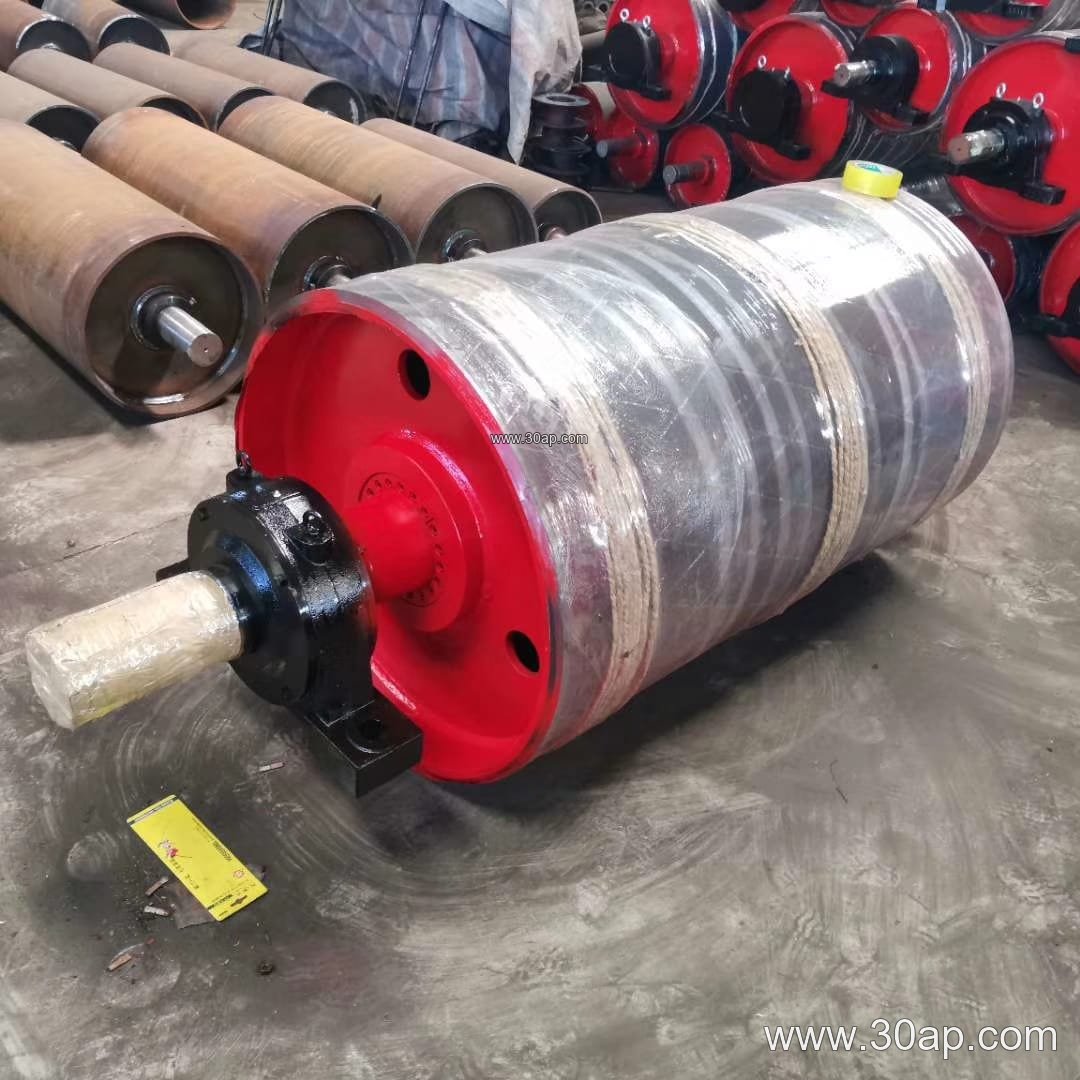
Where It Is Used
Lagging appears wherever a belt wraps a pulley under load. In a limestone quarry it protects the head pulley from sharp aggregate and keeps the belt tracking through the discharge zone. In a coal preparation plant or a power station coal yard, flame retardant grades are often requested alongside anti-static properties. Cement plants use abrasion resistant lagging on clinker and raw material conveyors, while port bulk terminals favour ceramic surfaces on wet ship-loading drives.
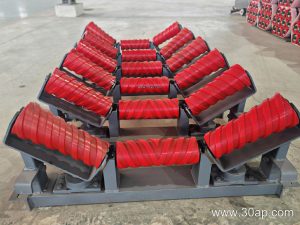
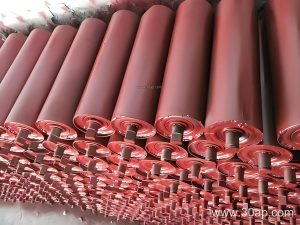
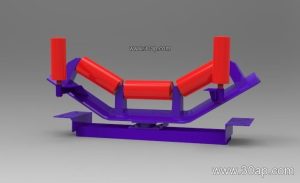
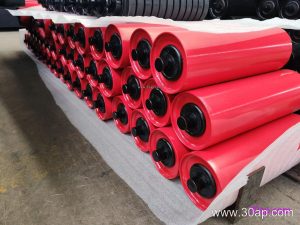
Lagging also works together with other components. A worn idler roller or a misaligned conveyor bracket can force the belt to run off-centre and load one edge of the lagging, so inspection should cover the whole line, not just the pulley. On long overland systems carrying heavy-duty mining conveyor belts, the drive pulley lagging and the belt cover grade are selected as a pair.
What a Buyer Should Check
- Pulley position: drive, tail, tension or bend, since each has different grip and wear requirements
- Shell diameter and face width, measured rather than assumed
- Bonding method suitable for the available workshop or field conditions
- Compound properties: abrasion, oil, heat or flame resistance as the site demands
- Thickness consistent with the expected belt tension and slip risk
Replacement planning is worth the effort. Lagging wears gradually, and a grooved or glazed surface is a warning sign. Keeping a spare set matched to the pulley drawing reduces downtime in a crushing circuit or a coal handling plant. Buyers comparing quotes should ask for the compound grade, the pattern, the thickness and the bonding method in writing, then check that the belt width and pulley dimensions on the drawing match the machine on site.