What a Construction Industry Conveyor Belt Has to Handle
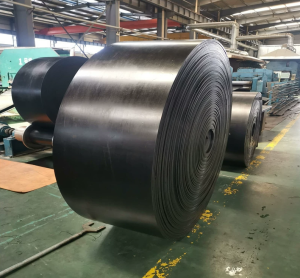
A construction industry conveyor belt rarely works under gentle conditions. At a quarry, sand and gravel plant, or cement terminal, the belt meets sharp crushed rock, abrasive dust, lumpy clinker, and frequent starts under load. The same belt may run outdoors in summer heat and winter cold, or under a roof where dust settles on every component. That mix of abrasion, impact, and weather is what separates a construction duty belt from a light material handling belt.
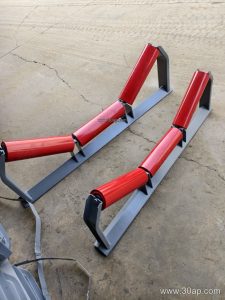
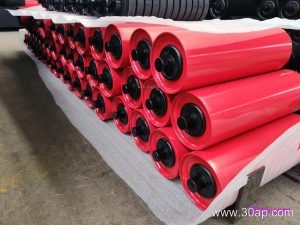
The product is a continuous loop of rubber or PVC-based material with a load-carrying cover, a pulley side cover, and a strength-bearing carcass. It sits on a frame supported by idler rollers and turns around head, tail, and bend pulleys. Each of those parts has its own job, and none of them should be treated as a substitute for another. A conveyor pulley redirects or drives the belt; an idler roller supports it. The belt itself is the subject here.
How the Belt Is Built
Most construction site belts use a fabric core or a steel cord core. Fabric core belts are built from multiple plies of EP (polyester-cotton) or NN (nylon) fabric, bonded between skim rubber layers and covered with top and bottom rubber covers. Steel cord belts use brass-plated steel wires running lengthwise instead of fabric plies, which suits very long runs and high tension.
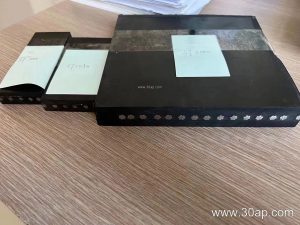
- Cover rubber protects the carcass and grips the load. Thickness is usually stated as top plus bottom, for example 4+2 mm or 6+2 mm.
- Carcass carries tension. EP and NN fabric cores are common in plant conveyors; steel cord is chosen when tension demand is high.
- Edge and splice quality decide how long the belt lasts at the joints.
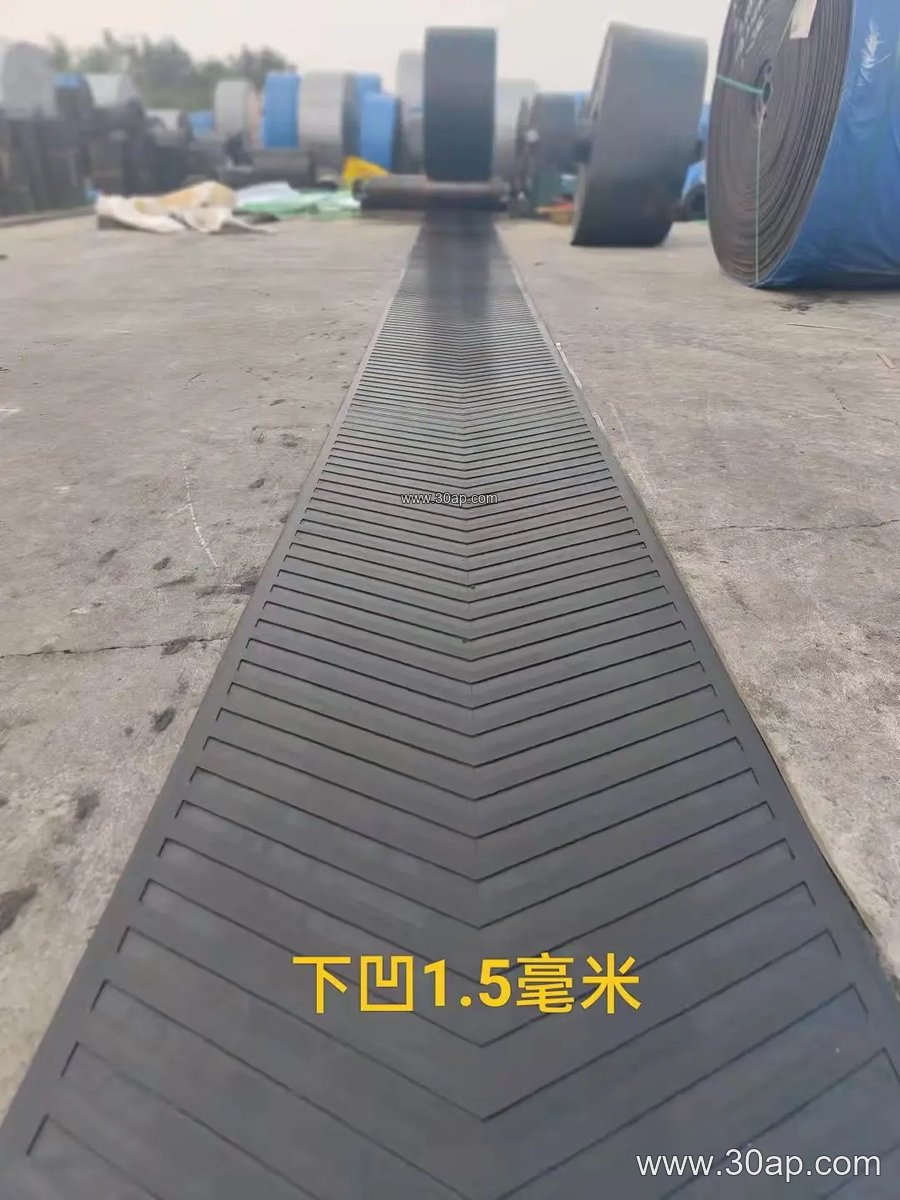
Surface forms vary with the job. A chevron conveyor belt uses raised ribs to hold material on an incline. A corrugated sidewall belt with cleats keeps bulk material from spilling on steep lifts. A skirted belt uses raised edges to contain the load. Pipe conveyor belts roll into a tube to keep dust inside and protect material from rain. For dusty cement or coal handling, a flame retardant or anti-static belt is often specified; for hot clinker or asphalt feed, a heat resistant conveyor belt is the practical choice.
Where These Belts Work
Construction material flows touch many industries. In a sand and gravel pit, an aggregate conveyor belt moves washed stone from the screen deck to the stockpile. At a stone crushing line, a crusher conveyor belt takes the discharge from the jaw or cone crusher, where impact resistance matters. A cement plant uses belts between the raw mill, kiln feed, clinker cooler, and packing area, where heat and abrasion appear together.
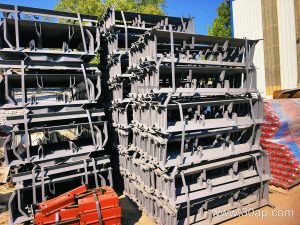
Power plants and steel plants also rely on these belts for coal, limestone, and slag. Underground coal mining conveyors need flame retardant and anti-static properties, often with a PVG solid woven construction. Ports and ship loading terminals use wide belts for high tonnage. Recycling plants handle mixed waste, so a belt with good tear resistance helps. In every case, the belt works with conveyor brackets, idlers, and pulleys, and the whole system must be matched.
Reading the Specification Sheet
Buyers see strength grades, widths, cover thickness, and carcass layers. The following table shows common reference ranges; final values are set by design and by the belt maker.
| Parameter | Common Reference Range |
|---|---|
| Fabric core grade | EP200, EP315, EP400, EP500, EP630, EP800, EP1000, EP1250, EP1600, EP2000 |
| Steel cord grade | ST1000, ST1250, ST1600, ST2000, ST2500, ST3150 |
| Belt width | B500, B650, B800, B1000, B1200, B1400, B1600, B1800, B2000 |
| Cover thickness | 3+1.5, 4+2, 5+2, 6+2, 8+3 mm |
| Carcass plies | Usually 2 to 6 layers for fabric core |
| Surface options | Smooth, chevron, corrugated sidewall, skirted, pipe |
A belt width does not fix one pulley diameter, and shaft size is not derived from width alone. Those choices come from tension, wrap angle, and the conveyor design. Treat the table as a starting point for discussion, not as a fixed match.
Selection Notes for Site Engineers
Start with the material: size, shape, moisture, temperature, and whether it is oily or chemically active. Then check the duty cycle, incline, and the longest unsupported span. A high abrasion resistant conveyor belt suits sharp crushed stone; a cold resistant belt helps in freezing yards; an oil resistant cover is useful where equipment leaks reach the belt line. For underground work, confirm flame retardant and anti-static requirements before ordering.
Ask about splice method, edge condition, and whether the belt is supplied endless or open length. On site, keep idlers turning freely and check pulley lagging, since a stuck idler or worn pulley can damage a good belt quickly. Track alignment and cover wear during routine inspections. A construction industry conveyor belt chosen for the real duty, installed with care, and maintained with attention to idlers, pulleys, and brackets will deliver steady service in the toughest yards.