What a Custom Conveyor Pulley Really Is
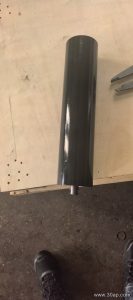
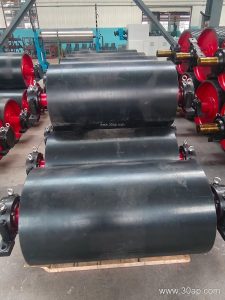
A custom conveyor pulley is a drum assembly built to the geometry and duty of one specific conveyor, rather than picked from a short list of stock sizes. It is the rotating cylindrical component that carries the conveyor belt, sets its path, and in driving positions transmits torque into the belt through friction. Because a conveyor is only as reliable as its weakest rotating part, matching diameter, face width, shaft, lagging and bearing arrangement to the actual load case matters more than buying the cheapest drum that fits.
In practice, a custom drum is defined by four decisions: the pulley’s role on the conveyor, its shell dimensions, its shaft and bearing assembly, and its surface treatment. Get those right and the belt tracks cleanly through years of service in a limestone quarry or a coal handling plant; get them wrong and you inherit belt wander, slip and premature belt edge wear.
Role Decides the Design
Position on the conveyor changes what the drum must do. A drive pulley, often the head or discharge drum, must grip the belt without slip, so lagging and sufficient arc of contact are central. A tail pulley at the loading end guides the belt back and is frequently specified with a slightly crowned or flat face. Bend and take-up pulleys redirect the belt and maintain tension; they carry lower torque but must still resist fatigue from repeated flexing.
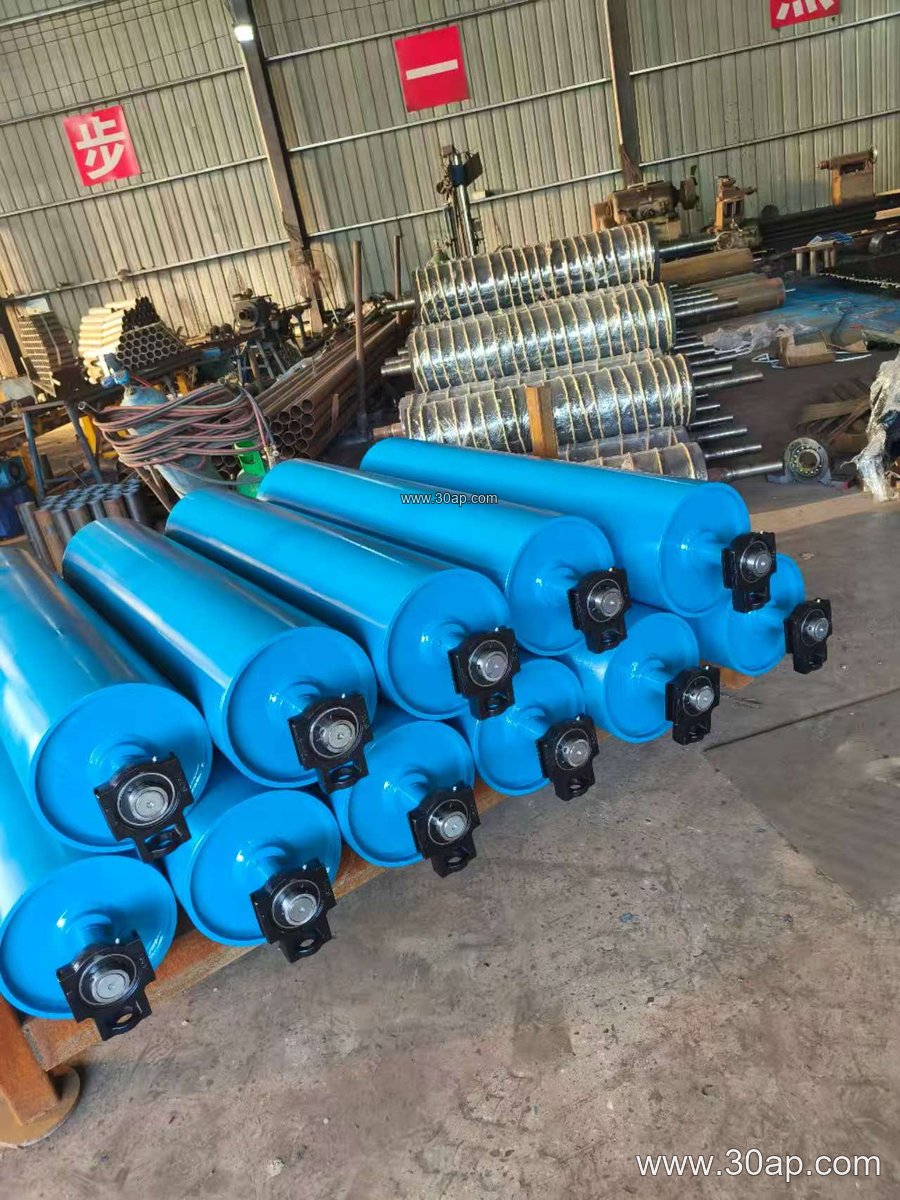
These roles are not interchangeable. A bend pulley cannot simply be swapped for a drive drum, and a tail drum is not a substitute for a snub or pressure pulley. When comparing options, it helps to think of a bend pulley as a path-control item and a drive pulley as a power-transmission item, even though both are drums on the same frame.
Construction Details That Matter
The shell is usually rolled steel, machined and then welded to end discs or hubs. Larger drums may use a fabricated hub-and-disc design to spread stress. The shaft is sized from torque and radial load, not from belt width. Common shaft diameters run from Ø50 up to Ø200, but the correct value is calculated from the drive duty and bearing reactions.
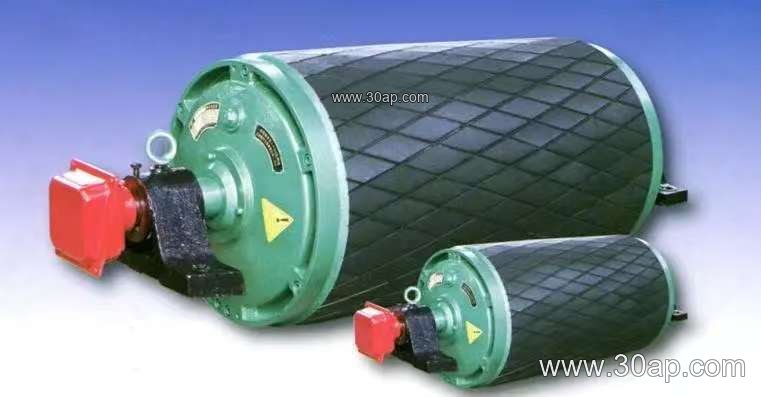
Bearings are typically self-aligning spherical roller types in pillow blocks or flange housings, mounted on conveyor bracket structures that allow adjustment. Sealing deserves attention in dusty service such as crushing and screening circuits, where fine grit destroys unprotected bearings quickly.
Typical reference dimensions
The figures below are common reference values, not universal specifications. Final sizes are set by the conveyor design.
- Belt width B400 to B2400, with face width usually slightly greater than belt width
- Diameter Ø200, Ø250, Ø315, Ø400, Ø500, Ø630, Ø800, Ø1000, Ø1250 and upward
- Lagging thickness commonly 8, 10, 12, 15 or 20 mm
- Shaft diameter Ø50 to Ø200 depending on torque and load
Useful combinations are often written as B1200 × Ø1000 or B800 × Ø500, but a given belt width does not fix a single diameter. A short, lightly loaded conveyor and a long inclined trunk conveyor can both run a 1200 mm belt with very different drum diameters.
Surface Forms and Where They Help
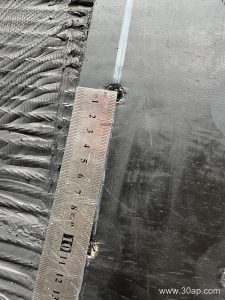
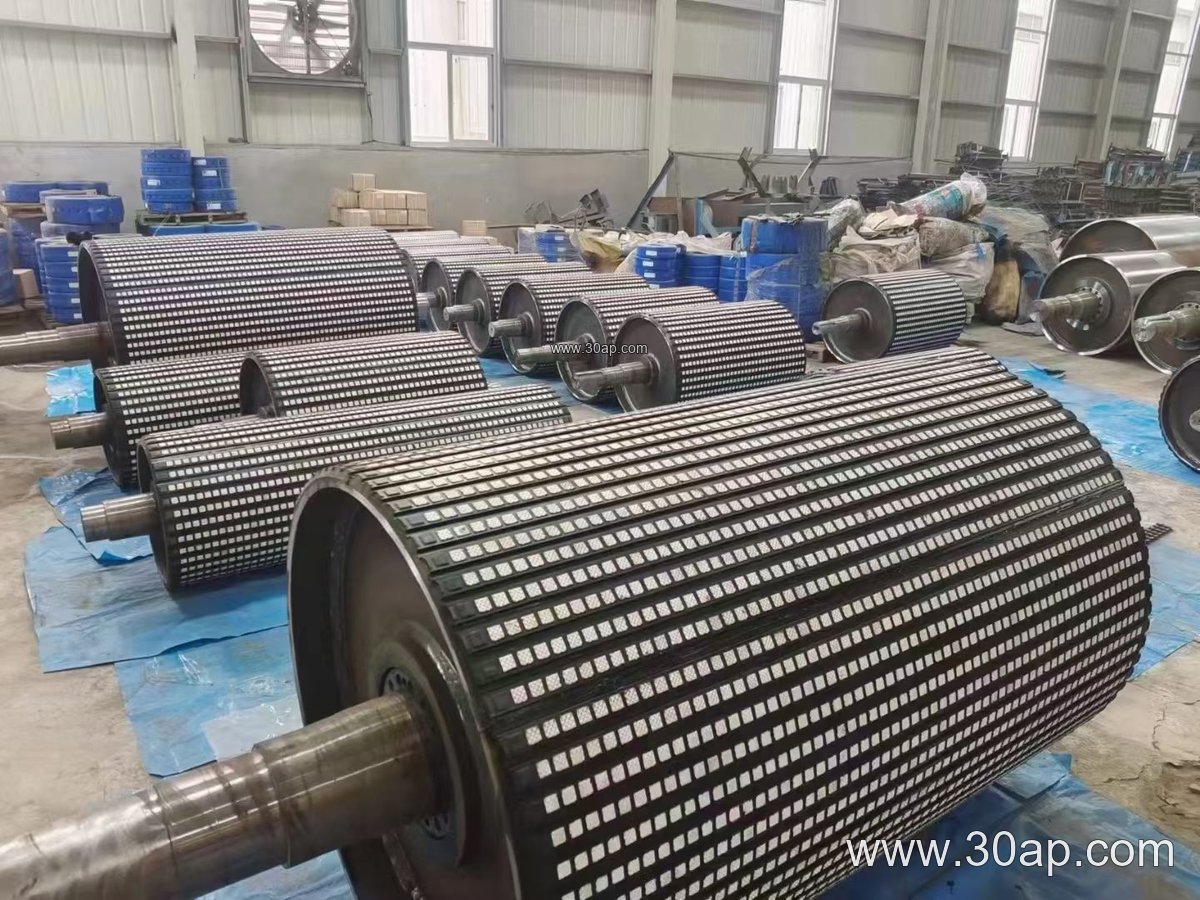
Plain faces suit many tail and bend positions. Rubber lagging, applied by cold bonding or hot vulcanizing, raises friction on drive drums. Diamond and herringbone patterns help shed water and fines, which is valuable in wash plants and in wet ore handling. Ceramic lagging is chosen where abrasive slip is a real risk. Thicker lagging is not automatically better; it changes the effective diameter and must be accounted for in belt tension calculations.
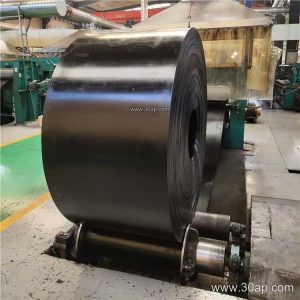
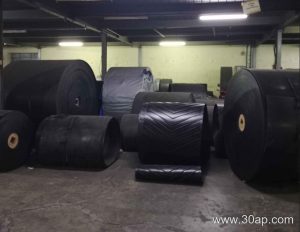
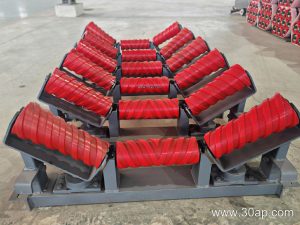
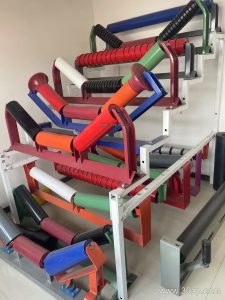
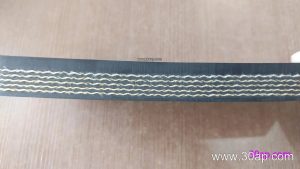
Drum selection rarely stands alone. A heavy-duty mining conveyor belt running over a large drive drum will behave differently from a thinner EP conveyor belt on a short aggregate line, and the drum’s lagging, crown and diameter should be discussed together with the belt specification and the idler roller spacing along the carry side.
Buyer Checklist Before Ordering
- Confirm the drum’s position and duty: drive, tail, bend, take-up or snub
- Provide belt width, belt type and belt tension data
- State the required face width, diameter and lagging pattern
- Give shaft size, keyway and bearing housing interface dimensions
- Describe the environment: dust, moisture, temperature, corrosion
- Check that mounting brackets and take-up travel match the new drum
In cement plants, power station coal yards and iron ore terminals, the cost of a stopped line usually dwarfs the price difference between an adequate drum and a well-matched one. A short technical conversation about load, belt and environment before fabrication is the cheapest reliability step available.