What a Turning Pulley Does on a Conveyor
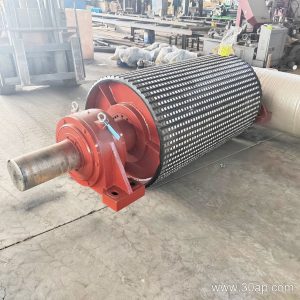
A turning pulley is a drum that changes the direction of the conveyor belt without driving it. In many layouts it sits at the tail end, at a tensioning station, or at an intermediate bend where the belt must be redirected before it returns to the head. Because it does no power transmission, its job is to guide the belt smoothly, keep tension stable, and protect the belt edges from rubbing or tracking off course.
People often call this component a bend pulley, and that name describes its function well. It is not a drive pulley and not a tail pulley in the strict sense, though a tail position can also act as a turning point. The distinction matters when you order spares, because a drive drum carries torque through a gearbox coupling, while a turning drum mainly carries radial load from belt tension.
Construction and Surface Options
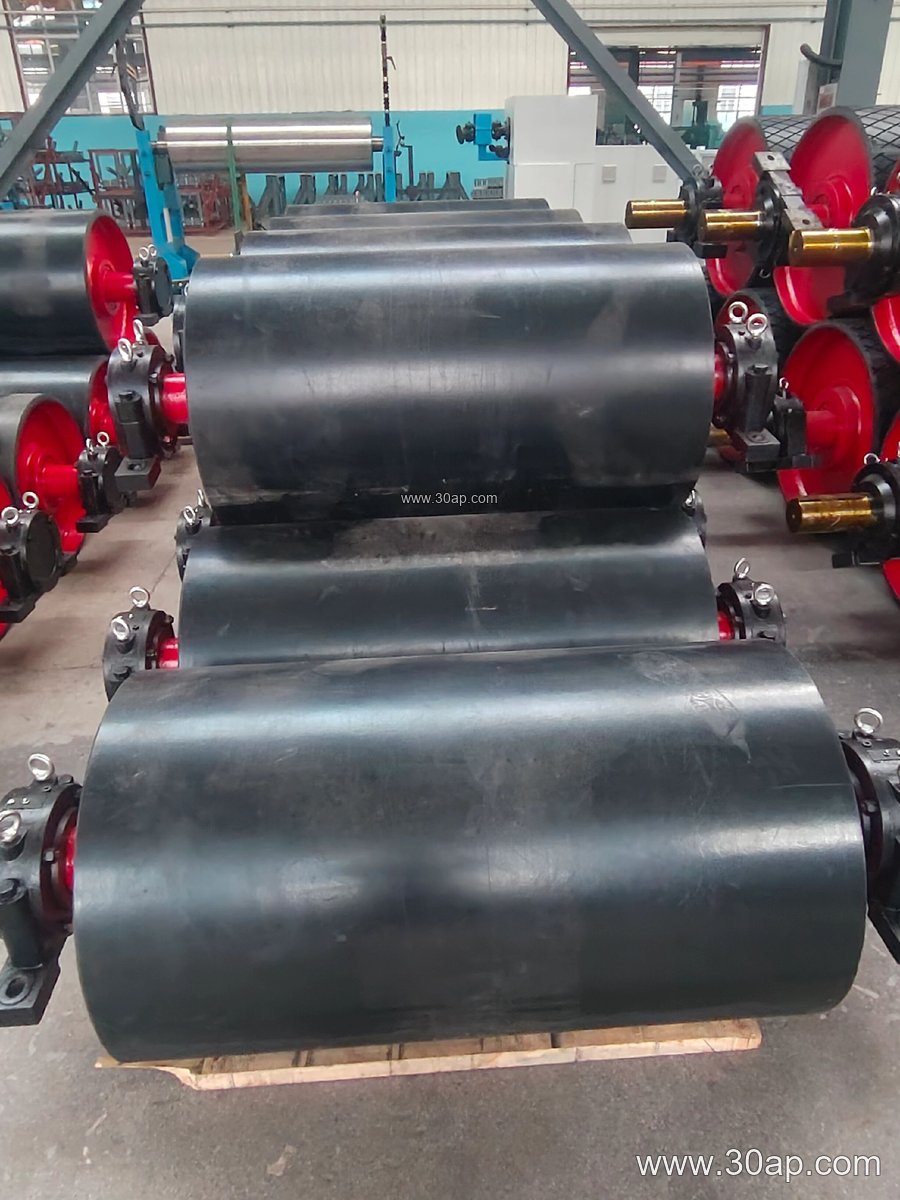
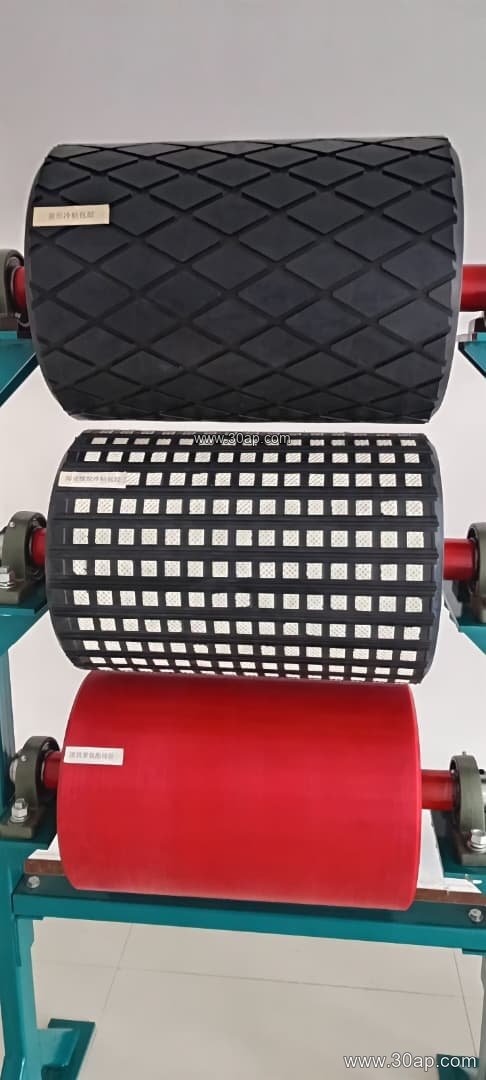
A typical turning pulley is built from a steel shell, welded end discs, a shaft, and bearing housings mounted on a sturdy frame. The shell is machined so the belt runs true, and the surface may be plain, rubber lagged, or ceramic lagged depending on grip and wear requirements. Lagging thickness commonly ranges from 8 mm to 20 mm, and diamond or herringbone patterns are used where extra traction or water shedding helps.
- Plain shell for clean, dry return runs
- Cold-bonded or hot-vulcanized rubber lagging for general grip
- Diamond lagging for wet or dusty conditions
- Ceramic lagging for high-wear zones near crushers and transfer points
The shaft diameter is determined by torque and bearing load, not by belt width alone. Common shaft sizes include Ø50, Ø80, Ø120, and Ø160, but a B1200 system may use different shafting depending on tension and pulley mass. Shell width usually exceeds belt width so the belt is supported across its full face; for example, a B800 belt often runs on a shell around 950 mm wide, while a B1400 belt may use a shell near 1600 mm.
Where It Fits in Bulk Handling
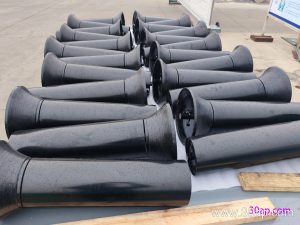
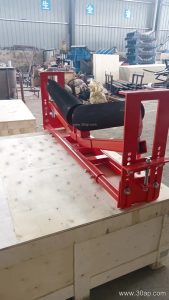
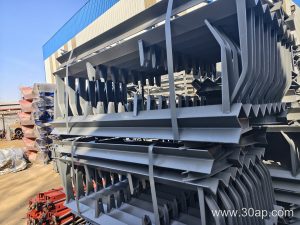
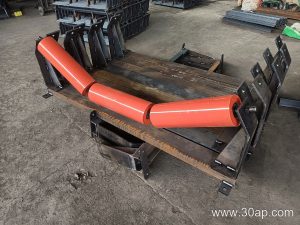
In a limestone quarry, a turning pulley at the tail of a secondary conveyor keeps the return strand aligned before it meets the tension take-up. In a coal preparation plant, the same drum may be positioned to route the belt around a transfer tower, working alongside conveyor idler rollers and a conveyor bracket that carries the bearing housings. Cement plants use these drums on clinker lines where dust is heavy, and power plant coal yards rely on them to keep long overland belts tracking through curves.
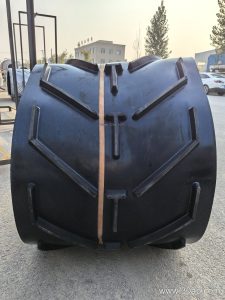
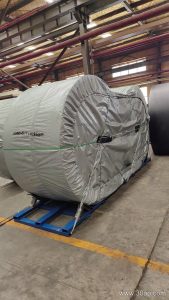
The belt itself influences the choice. A heavy-duty mining conveyor belt with a thick cover needs a larger diameter to limit bending stress, while a lighter EP conveyor belt may run on a more compact drum. Abrasion resistant conveyor belt grades are common in aggregate service, and flame retardant conveyor belt grades appear in underground coal mining conveyor systems where safety rules apply. Matching drum diameter to belt construction helps avoid ply separation and edge cracking.
Sizing Notes for Buyers
When specifying a turning pulley, share the belt width, belt type, maximum tension, and the wrap angle at the bend. A B650 conveyor belt running on a Ø400 drum behaves differently from a B1600 steel cord conveyor belt on a Ø1000 drum. The table below shows representative combinations, not fixed rules.
| Belt Width | Typical Shell Width | Example Diameter | Common Shaft Range |
|---|---|---|---|
| B500 | about 600 mm | Ø250 to Ø400 | Ø50 to Ø80 |
| B800 | about 950 mm | Ø400 to Ø630 | Ø80 to Ø120 |
| B1200 | about 1400 mm | Ø630 to Ø1000 | Ø120 to Ø160 |
| B1600 | about 1800 mm | Ø800 to Ø1250 | Ø140 to Ø200 |
Ask for the bearing type, sealing arrangement, and whether the drum is supplied with a conveyor bracket or base frame. For dusty sites such as a sand and gravel line or a fertilizer silo, good seals reduce downtime. For a port bulk terminal handling iron ore, a larger diameter and ceramic lagging may extend service life.
Installation and Maintenance Checks
Alignment is the first priority. A turning pulley that sits out of square with the belt centerline will cause mistracking no matter how well the drum is made. Check that the shaft is level, the bearings are free, and the lagging is clean before tensioning. During operation, listen for bearing noise and watch for belt wander at the bend. Replace worn lagging before the shell is exposed, and keep the area around the drum free of spilled material that can pack against the belt edge.
For buyers comparing suppliers, request a drawing showing shell width, diameter, shaft size, bearing centers, and lagging specification. A clear drawing prevents the common mistake of ordering a drum that fits the frame but not the belt. Whether the application is a copper mine, a tunnel muck line, or a grain terminal, the turning pulley remains a simple but critical part of keeping the belt on its path.