What a Heavy-Duty Conveyor Idler Does on a Tough Line
On a quarry face or a cement plant transfer point, the belt carries more than rock and dust. It carries impact, grit, and the cost of every stoppage. A heavy-duty conveyor idler is the rotating support under that belt, built with thicker walls, larger bearings, and stronger sealing than a light-duty roller so it can keep turning when conditions are far from clean. In a stockyard or a crushing circuit, a failed idler roller can slice a conveyor belt or start a fire, so the specification deserves real attention rather than a quick look at a catalogue.
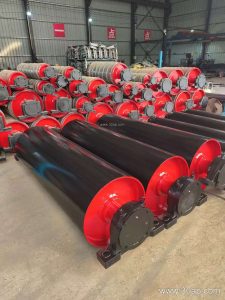
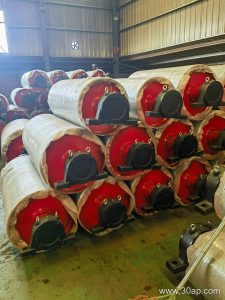
The same component is often called a heavy-duty belt idler or heavy-duty carrying roller. These are equivalent names for the same product; they are not interchangeable with the drive pulley, tail pulley, or bend pulley, which transmit or redirect belt tension rather than support the belt along its run.
How the Roller Is Put Together
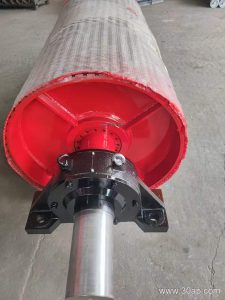
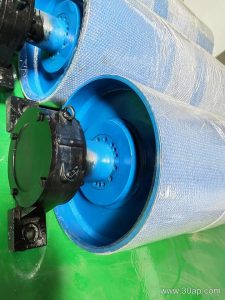
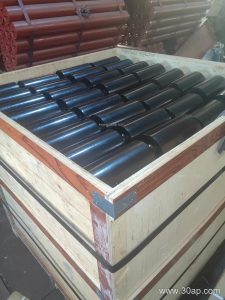
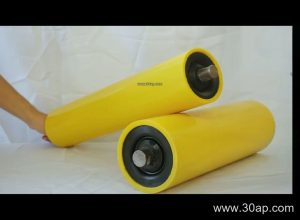
A typical heavy-duty conveyor idler combines a steel tube shell, pressed end caps, a shaft, and a sealed bearing housing. The shell may be plain steel, nylon-coated, ceramic-lined, or fitted with rubber rings where impact is severe. Bearing selection usually follows load and speed rather than belt width alone, and common sizes include 6205, 6305, 6306, 6308, and 6310. Sealing is the quiet hero: a labyrinth or multi-lip arrangement keeps fines and water away from the bearing cavity, which matters most in wash plants, tunnel spoil handling, and coastal ports.
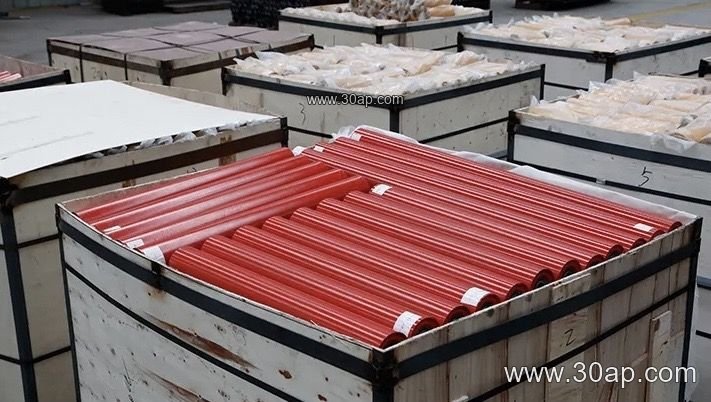
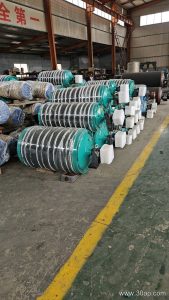
The idler sits in a conveyor bracket or frame, and the assembly form changes with duty. A three-roll troughing set carries the loaded strand, while a V-return or flat return roller supports the empty side. Impact idlers with rubber rings are common below a crusher discharge, and self-aligning types help where belt tracking drifts. Each of these is a subtype of the main product, chosen for a specific position on the conveyor.
Where These Idlers Earn Their Keep
Heavy-duty idlers appear wherever a conveyor moves abrasive bulk material at high tonnage. In an iron ore or copper ore operation, dust and lump size punish ordinary rollers. In a coal preparation plant, flame retardant conveyor belt and anti-static properties may be required alongside robust rollers. Power plant coal handling, sinter plants, aggregate lines, and fertilizer granulation buildings all place similar demands on the idler roller.
The belt itself influences idler choice. A steel cord conveyor belt or a high-strength EP conveyor belt may run at higher tension and speed, so roller balance and bearing quality matter more. A chevron conveyor belt or a corrugated sidewall belt changes the load pattern at the edges, and a pipe conveyor belt imposes different support geometry altogether. Matching the idler to the belt and the duty, rather than to a single number, is the practical approach.
Common Dimensions and Reference Data
The table below gives typical reference values, not fixed matches. Roller length varies with belt width, trough angle, and roll arrangement, and the side rolls of a three-roll set may differ from the centre roll.
| Parameter | Common Reference Values |
|---|---|
| Roller diameter | Ø89, Ø102, Ø108, Ø127, Ø133, Ø159, Ø178, Ø194, Ø219 mm |
| Belt width | B500, B650, B800, B1000, B1200, B1400, B1600, B1800, B2000 mm |
| Trough angle | 20°, 30°, 35°, 45° |
| Roller surface | Steel tube, nylon, ceramic, rubber rings |
| Bearing sizes | 6204, 6205, 6305, 6306, 6308, 6310 |
| Example roller length, three-roll troughing | About 200 mm at B500, 250 mm at B650, 315 mm at B800, 380 mm at B1000, 465 mm at B1200, 530 mm at B1400, 600 mm at B1600, 670 mm at B1800, 750 mm at B2000 |
These figures are examples only. A heavy-duty conveyor idler for a 1200 mm belt line may use a different diameter than one on a 650 mm belt, depending on load, speed, and frame design. No single belt width locks in one pulley diameter or shaft size.
What a Buyer Should Confirm Before Ordering
- Duty and load: State the material, lump size, belt speed, and tonnage so the roller diameter and bearing class can be checked.
- Position on the conveyor: Carrying, return, impact, or transition. Each position calls for a different subtype.
- Environment: Wet, dusty, corrosive, or hot conditions affect sealing, coating, and lubricant choice.
- Belt compatibility: Confirm the belt construction and any special requirements such as flame retardant or anti-static behaviour.
- Mounting: Shaft ends, bracket spacing, and frame type must match the existing conveyor bracket or new structure.
Good maintenance practice is simple: check for seized rollers, worn shells, and loose brackets during routine inspections, and replace failed units before they damage the belt. A well-chosen heavy-duty conveyor idler is a small part of the capital budget but a large part of the uptime story on any bulk handling line.