What a Carrying Trough Idler Does on the Load Side
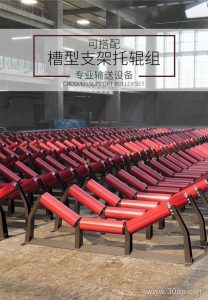
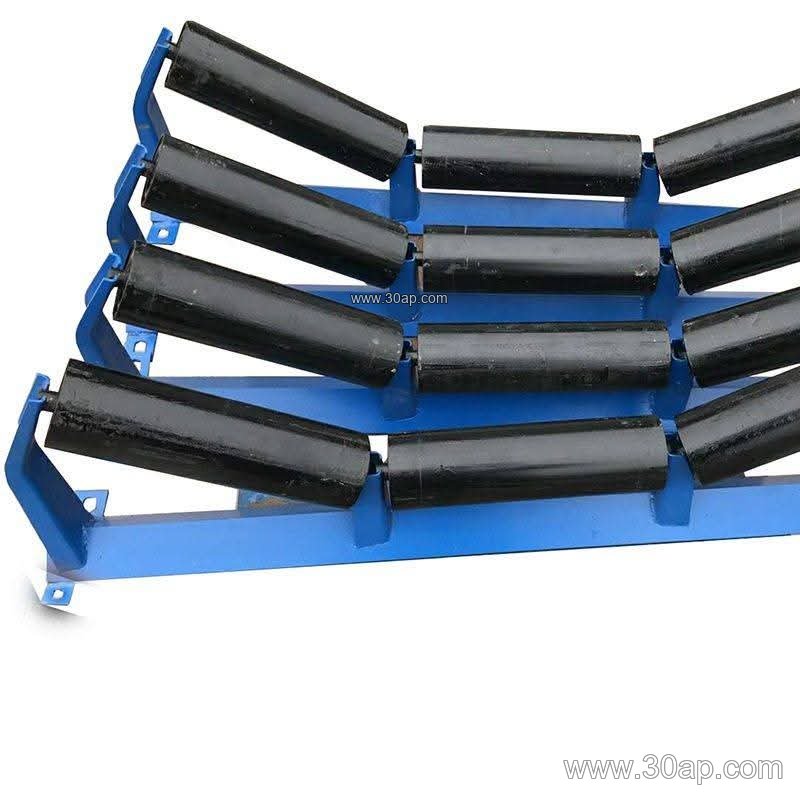
A carrying trough idler is the roll assembly that supports the loaded run of a conveyor belt and shapes it into a trough. In a typical three-roll arrangement, the two side rolls angle upward while the centre roll stays flat, so bulk material sits in a shallow U-shaped channel instead of spilling over the edges. This is the everyday upper idler set that most operators see when they walk along a conveyor, and it is the component that carries the weight of the belt plus the material between the loading point and the discharge pulley.
Because the trough angle controls how much material the belt can hold, the same belt width can run at a different capacity depending on whether the idlers are set at 20, 30, 35 or 45 degrees. Steeper angles contain the load better on high-capacity lines, while gentler angles suit wider, flatter loads or transition zones near a conveyor pulley.
How the Idler Set Is Built
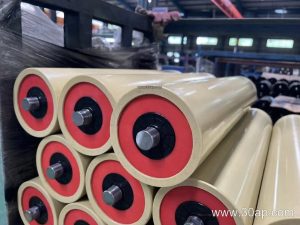
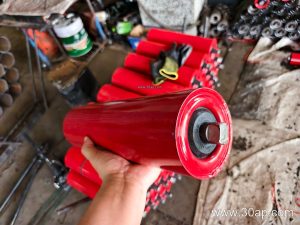
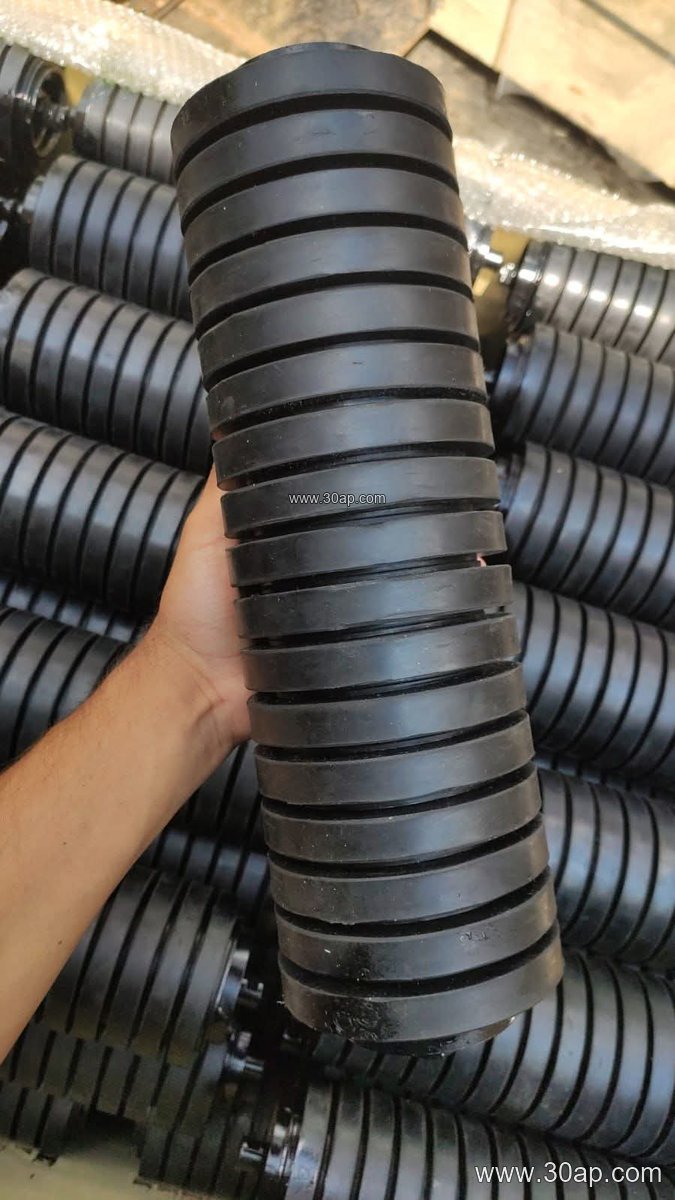
Each roll usually consists of a steel tube shell, a shaft, bearing housings, and a sealing arrangement at both ends. The shell may be plain steel, nylon-coated, ceramic-covered, or fitted with rubber rings for impact absorption. Common roll diameters include Ø63, Ø76, Ø89, Ø102, Ø108, Ø127, Ø133, Ø159 and larger sizes up to Ø219, with the choice driven by load, belt speed and frame design rather than by belt width alone.
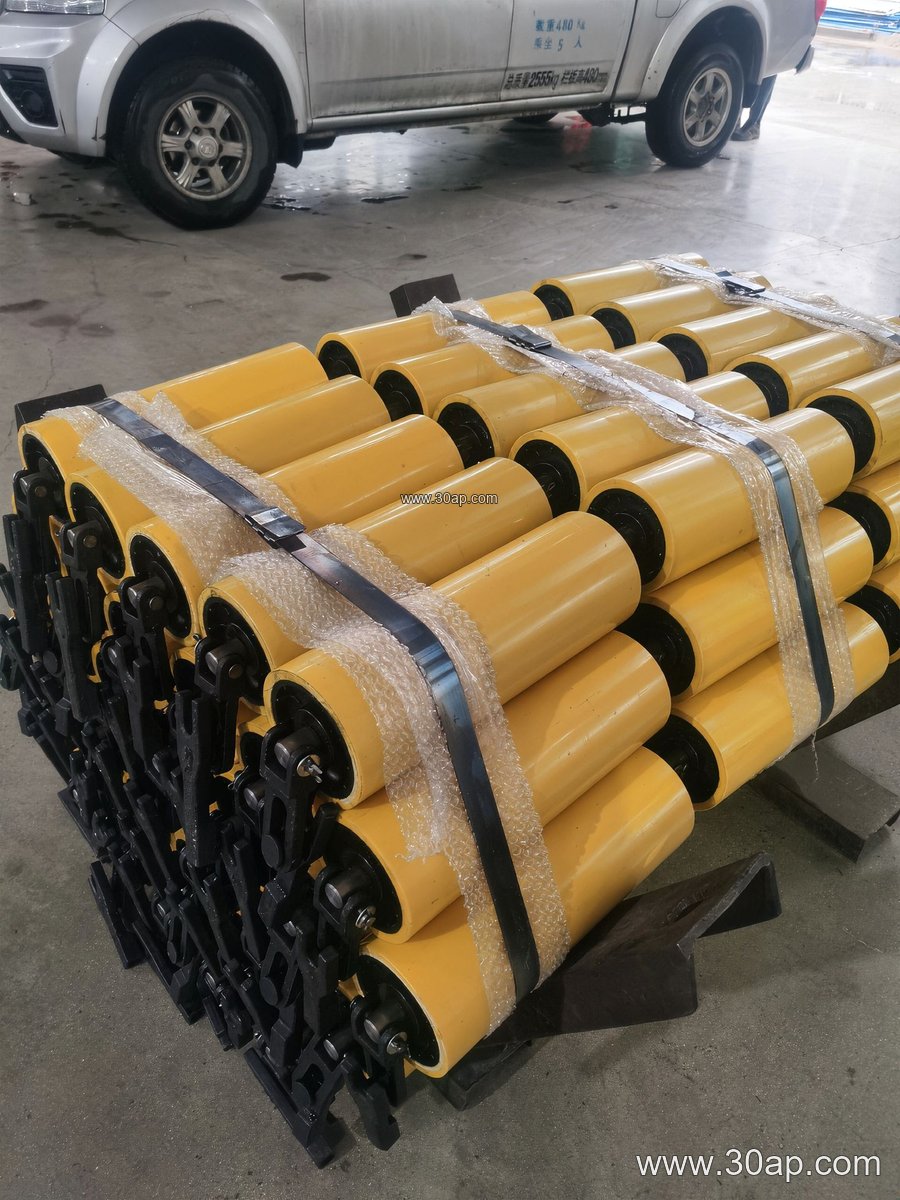
Bearings are typically deep-groove ball bearings such as 6204, 6205, 6305, 6306, 6308 or 6310, paired with labyrinth or contact seals to keep dust and water out. A well-sealed bearing matters most in dusty service, because grit that reaches the raceway will seize the roll and then wear through the belt cover.
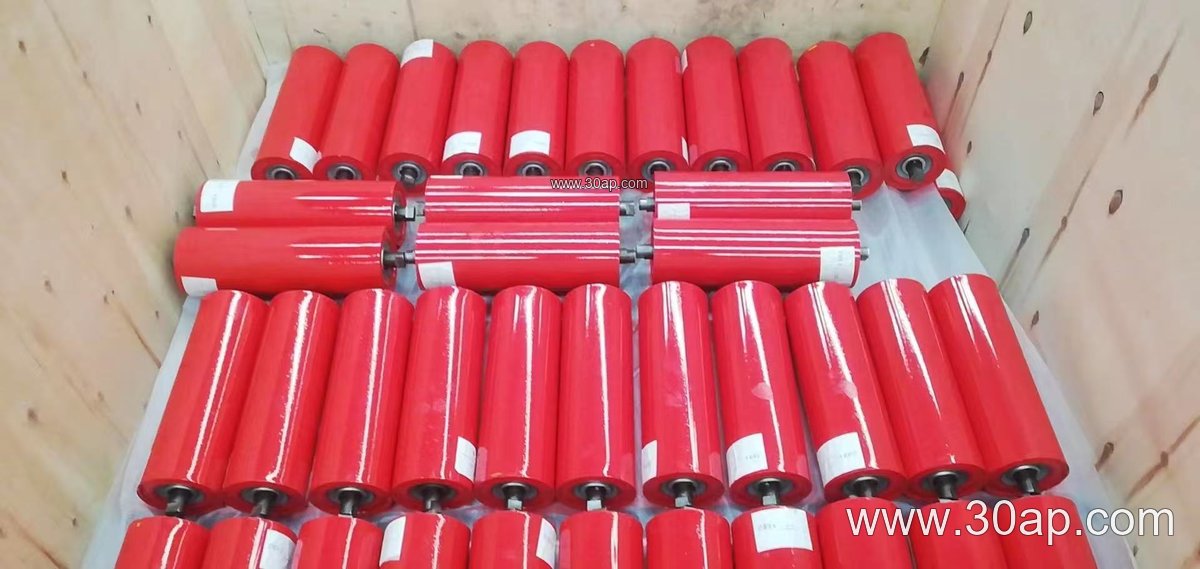
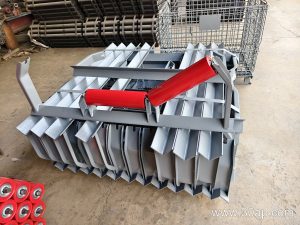
The rolls are mounted in a frame, often called a conveyor bracket or idler frame, which holds the trough angle and spacing. Frames are bolted to the conveyor stringer, and the whole set can be lifted out for replacement without dismantling the belt.
Common Roll Lengths by Belt Width
The roll length of a three-roll trough set changes with belt width, trough angle and frame type. The values below are common examples for reference, not fixed pairings; side rolls and centre rolls can differ, and the final length is set by the conveyor design.
- B500: about 200 mm roll length
- B650: about 250 mm
- B800: about 315 mm
- B1000: about 380 mm
- B1200: about 465 mm
- B1400: about 530 mm
- B1600: about 600 mm
- B1800: about 670 mm
- B2000: about 750 mm
These figures apply to the carrying side only. A return idler set uses a different arrangement, and its rolls should not be ordered from the trough idler table.
Where Carrying Trough Idlers Are Used
These idlers appear wherever a belt carries bulk material uphill, downhill or on the level. In a quarry or aggregate line they sit under a heavy-duty mining conveyor belt moving crushed stone from the crusher to the screening plant. In a coal mining conveyor system, flame retardant and anti-static belting runs over trough idlers that must resist coal dust and occasional wash-down. Cement plants use them on clinker and raw meal lines, while power plant coal handling and port ship loading conveyors rely on them for continuous duty.
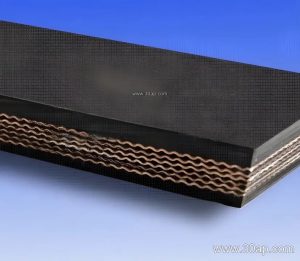
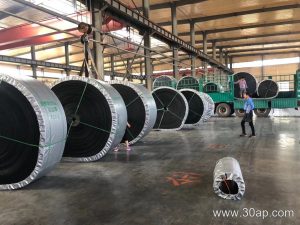
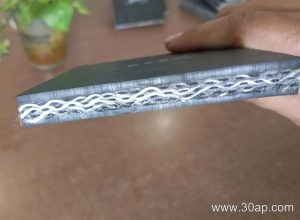
The belt itself may be an EP conveyor belt, an NN conveyor belt, a multi-ply fabric core conveyor belt or a steel cord conveyor belt. Each has a different transverse stiffness, and the trough angle and idler spacing should be chosen to match it. A stiff steel cord belt may need wider spacing between idler sets, while a flexible fabric belt can follow a tighter trough.
Choosing the Right Set
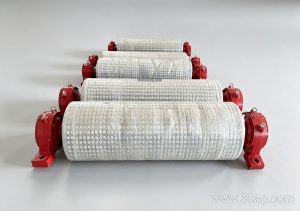
Buyers should confirm four things before ordering: the belt width, the trough angle, the roll diameter and the frame hole spacing. It also helps to know the material being carried, the belt speed and whether the line runs in a wet or dusty environment. For impact zones below a chute, impact idlers with rubber rings are a better fit than standard trough rolls. For long overland lines, self-aligning idlers can reduce belt wander.
Sealing quality and bearing clearance are worth checking on any quotation. A cheap roll that fails early will cost more in downtime than the price difference suggests. Ask for the tube wall thickness, the shaft material and the seal type, and confirm that the rolls are balanced for the intended belt speed.
Maintenance Notes
Walk the line regularly and listen for squealing or rumbling rolls. A seized idler will flat-spot the belt cover and can damage the splice. Check that the frame is square to the belt and that no roll is sitting lower than its neighbours, which causes the belt to sag between sets. Replace rolls in matched sets where possible so the belt runs on an even surface.
On lines carrying abrasive ore or quarry rock, wear on the shell is normal. Rotating the rolls or replacing them before the wall thickness drops too far protects the belt and keeps the trough shape intact.