What a Conveyor Bracket Does
A conveyor bracket is the structural interface between a conveyor belt and its supporting idler rollers. Often called an idler bracket or roller support bracket, it holds the rollers at the correct angle and spacing so the belt tracks smoothly under load. In a quarry, cement plant, or power station coal yard, these brackets are the quiet workhorses that keep bulk material moving. Without a properly aligned bracket, even a high-quality conveyor belt can mistrack, spill material, or wear prematurely.
Construction and Common Forms
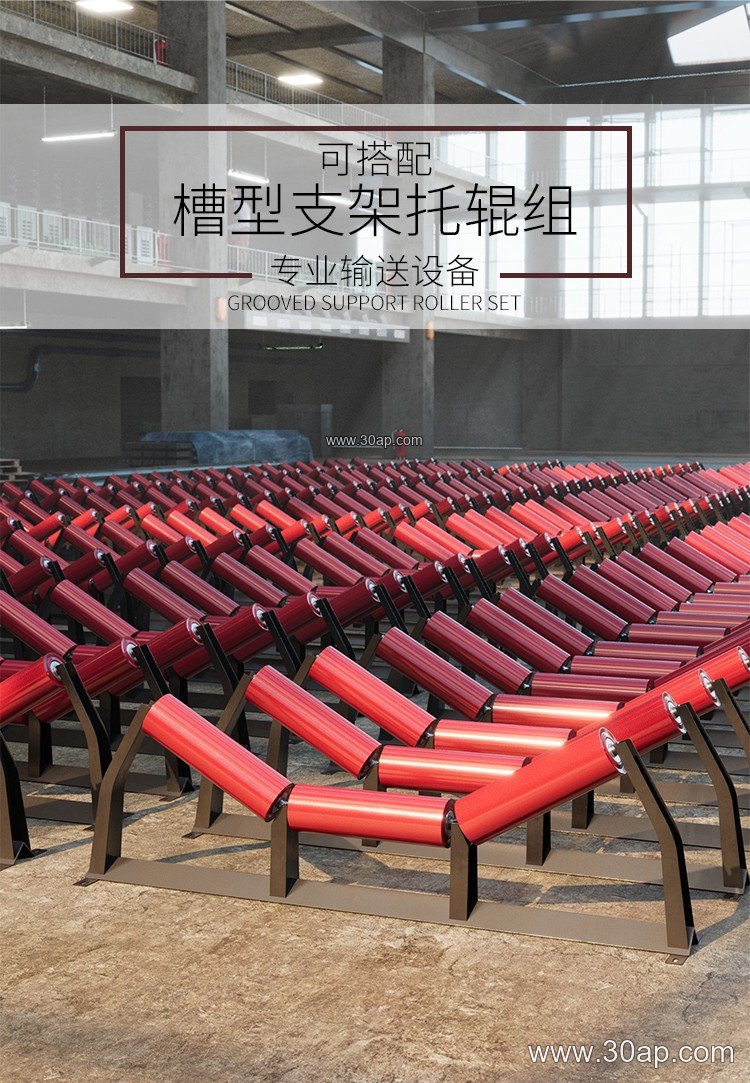
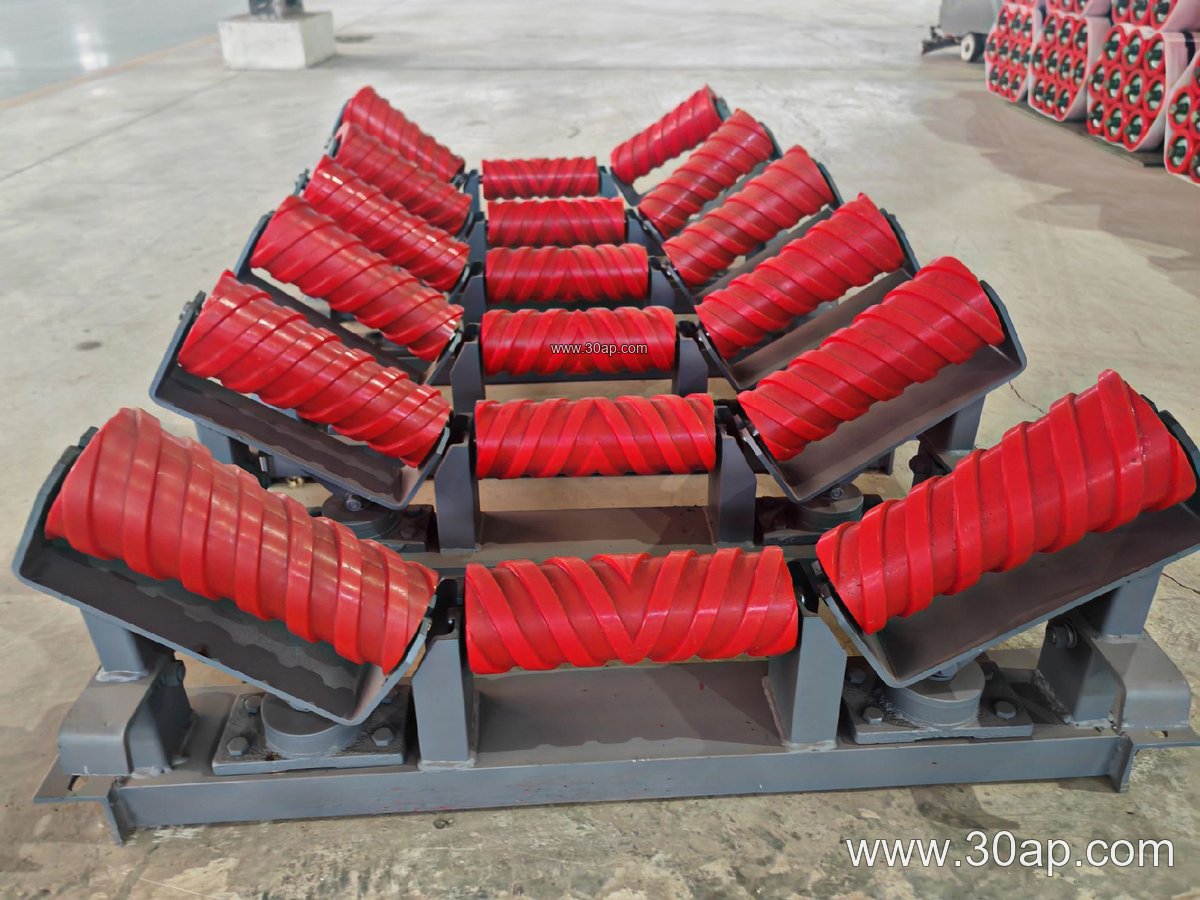
Most brackets are fabricated from angle steel, channel steel, or folded steel plate. The design varies with the duty: a troughing bracket sets the carry-side rollers at a trough angle, while a return bracket supports the belt on its way back. Adjustable brackets let maintenance crews fine-tune the trough angle between common settings such as 20, 30, 35, or 45 degrees. Forward-leaning brackets, typically about 1.5 to 2 degrees, help center the belt. Impact brackets near a crusher discharge use heavier construction and may pair with cushion rollers. Suspended brackets hang from a structure above, useful where floor space is tight.
Matching Bracket to Belt Width and Roller Diameter
Bracket selection starts with belt width and roller diameter, but there is no single fixed pairing. A B800 belt might run with 30-degree troughing and Ø108 rollers, while a B1200 system in an iron ore plant could use 45-degree troughs and Ø133 rollers. Installation hole spacing and crossbeam length change with belt width and trough angle, so buyers should confirm dimensions against the actual conveyor design rather than assume a universal fit. The table below shows common reference combinations, not mandatory specifications.
| Belt Width | Common Trough Angle | Typical Roller Diameter | Typical Bracket Material |
|---|---|---|---|
| B650 | 30 degrees | Ø89 | Angle steel |
| B800 | 35 degrees | Ø108 | Channel steel |
| B1000 | 35 degrees | Ø108 or Ø133 | Channel steel |
| B1200 | 45 degrees | Ø133 | Folded steel plate |
| B1400 | 45 degrees | Ø159 | Folded steel plate |
| B1600 | 45 degrees | Ø159 or Ø194 | Heavy channel steel |
These values are for orientation only. A B1200 conveyor may also use 35-degree troughs with Ø108 rollers depending on belt speed and material load. The bracket must match the roller end design and the conveyor frame, not just the belt width.
Where Brackets Matter Most
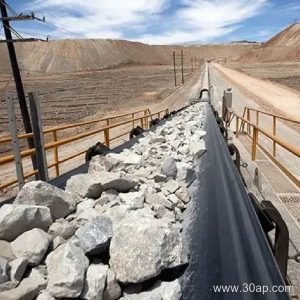
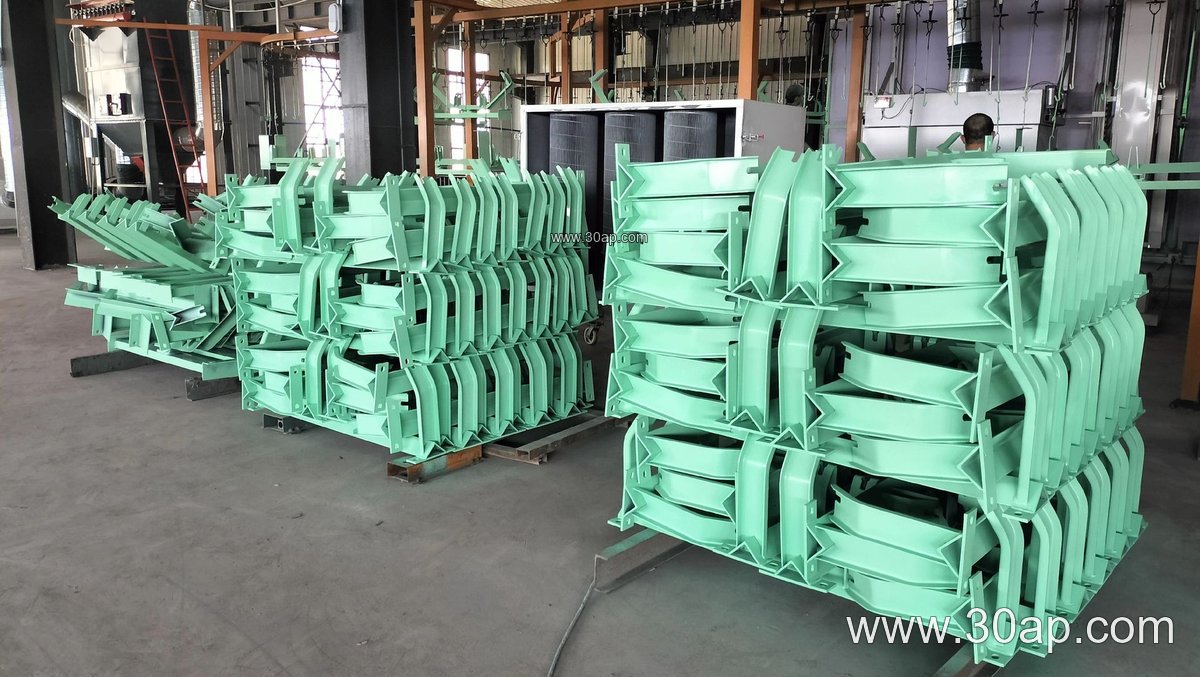
In a limestone quarry, troughing brackets on the primary conveyor absorb constant shock from large rock. At a coal-fired power plant, return brackets keep the belt aligned on long coal runs. In a cement plant, transition brackets guide the belt from flat pulleys into a troughed profile without stressing the edges. Sand and gravel operations often use V-return brackets to self-center the belt on the return strand. The same bracket family also appears in fertilizer handling, grain silos, and tunnel spoil conveyors.
Buyer Checklist
- Confirm belt width and actual roller diameter before ordering; do not assume one size fits all.
- Decide between fixed and adjustable trough angles based on material flow and belt training needs.
- Check material thickness and finish for the environment: dusty, wet, or corrosive locations may need heavier steel or coating.
- Verify hole spacing and crossbeam length against the existing conveyor frame.
- Match the bracket to the roller end type and to the overall conveyor pulley arrangement, not to the belt alone.
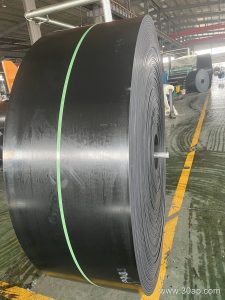
Whether the plant handles EP conveyor belt, steel cord conveyor belt, or a flame retardant conveyor belt, the bracket’s job stays the same: hold the idlers steady, keep the belt supported, and reduce maintenance downtime. For more on how brackets work with rollers and belts, visit www.example.com/conveyor-bracket.