What a Carrying Idler Does on a Conveying Line
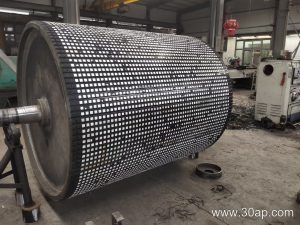
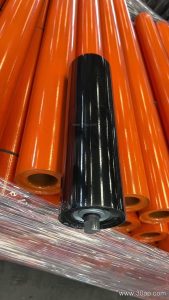
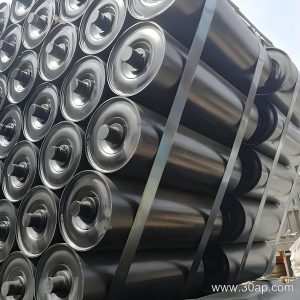
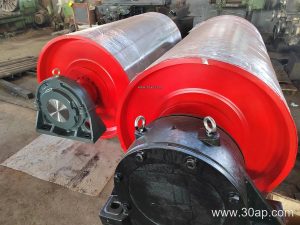
A carrying idler is the roller assembly that supports the loaded side of a conveyor belt and shapes it into a trough so bulk material stays centered. In a quarry, a coal preparation plant, or a cement kiln feed line, these rollers are the parts the belt touches most often, which makes their condition directly visible in belt wear, power draw, and spillage. The carrying idler is also called a troughing idler or simply an upper roller in daily plant speech, and both names describe the same component. It should not be confused with a conveyor pulley at the drive, tail, or bend position, which transmits or redirects belt tension rather than supporting the load.
How the Roller Is Put Together
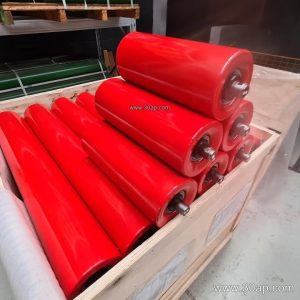
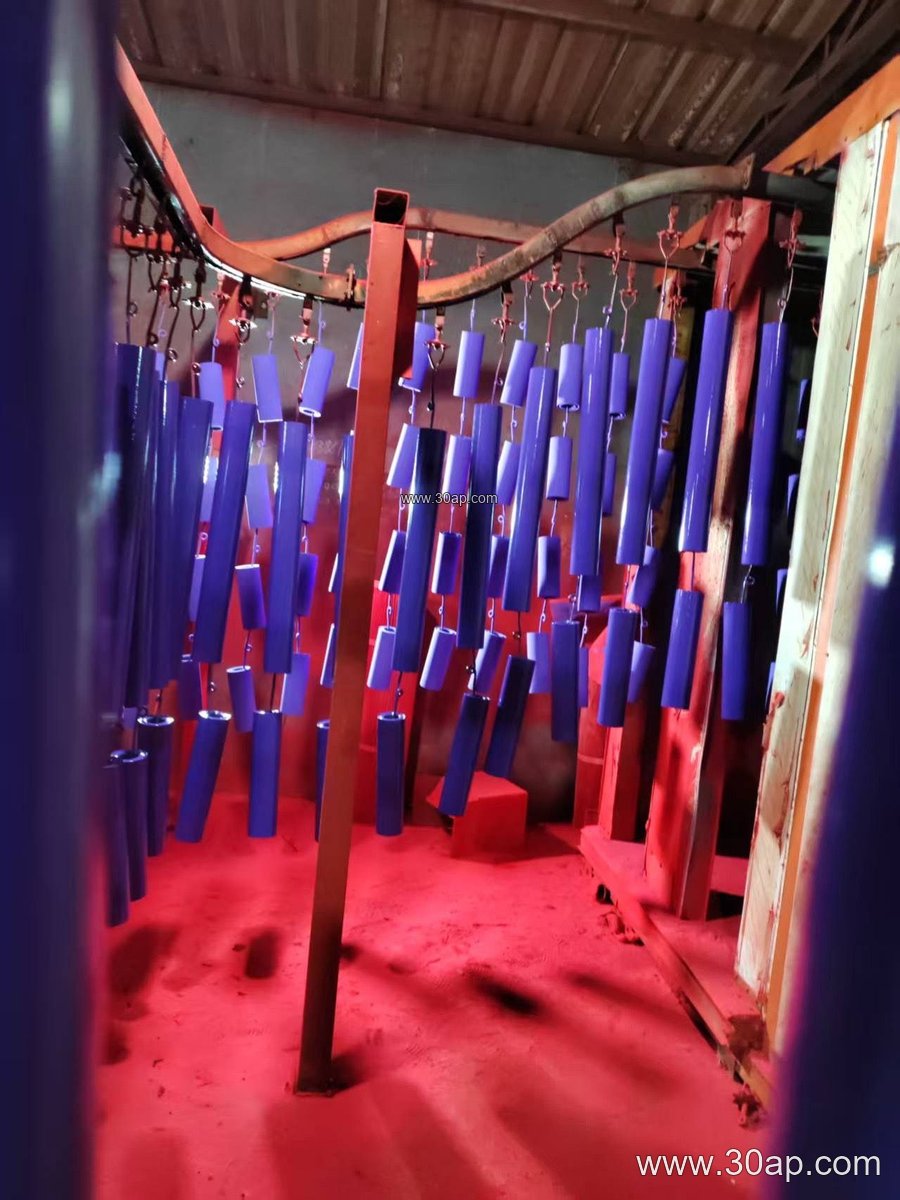
A typical unit combines a steel tube shell, a shaft, bearing housings, and a sealing arrangement. The shell may be plain steel, nylon-coated, ceramic-covered, or fitted with rubber rings where impact is heavy. Bearings such as 6204, 6205, 6305, 6306, 6308, or 6310 are common, but the bearing size must be matched to the calculated load and shaft design rather than to belt width alone. Sealing is the quiet deciding factor in dusty service: a labyrinth or multi-stage seal keeps fines away from the bearing cavity, and that is often what separates a long-running idler from one that seizes within a season.
Common Arrangements and Roll Diameters
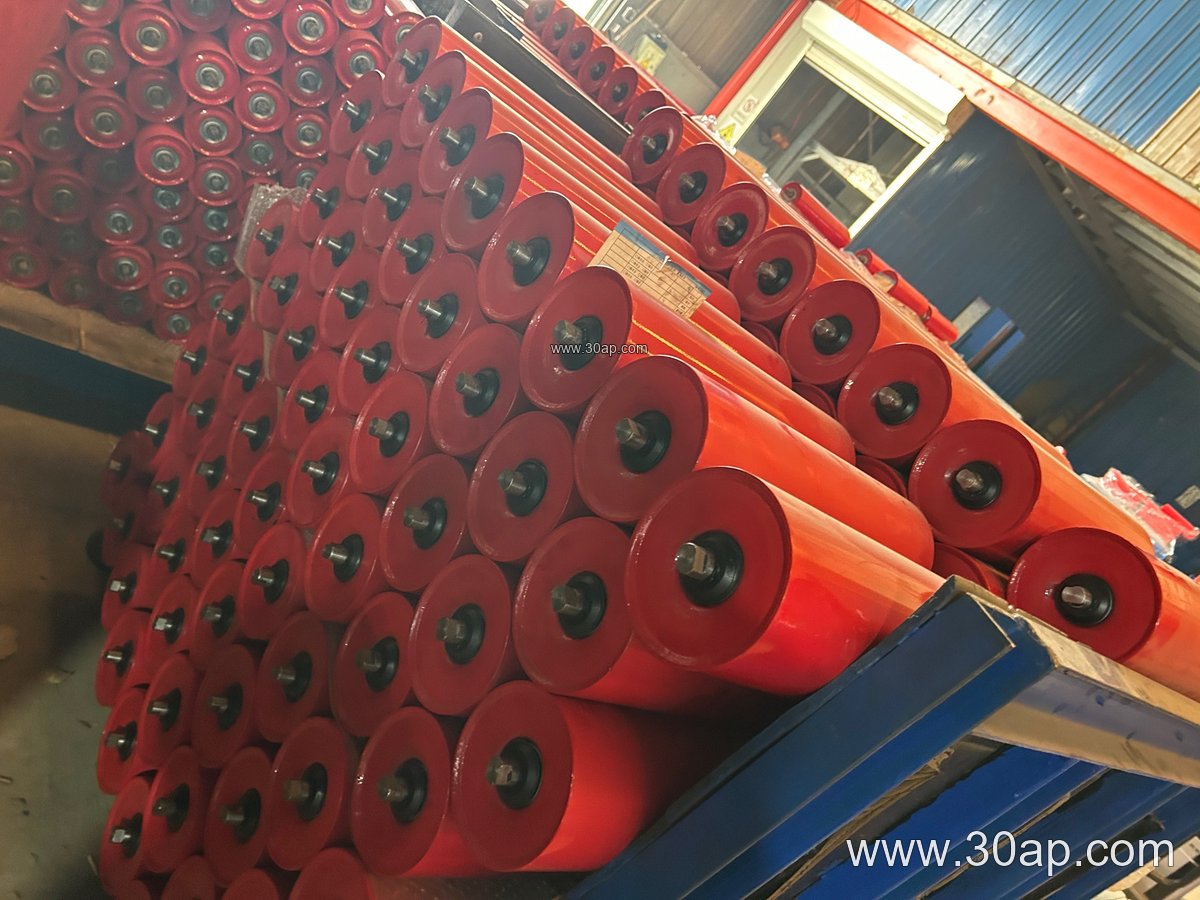
Carrying idlers are usually supplied as single-roll, two-roll, or three-roll troughing sets. The three-roll troughing set is the standard choice on high-capacity lines, with trough angles of 20, 30, 35, or 45 degrees; a steeper angle deepens the trough and helps contain a lively load. Roll diameters commonly range from Ø63 and Ø76 mm on light belts up to Ø159, Ø178, Ø194, or Ø219 mm on heavy-duty mining conveyors. Roll length follows belt width, trough angle, and frame form, so the values below are examples only and should be confirmed against the actual bracket and belt specification.
| Belt width | Typical roll length, three-roll troughing | Roll diameter examples |
|---|---|---|
| B500 | about 200 mm | Ø63 to Ø89 mm |
| B650 | about 250 mm | Ø76 to Ø108 mm |
| B800 | about 315 mm | Ø89 to Ø133 mm |
| B1000 | about 380 mm | Ø108 to Ø159 mm |
| B1200 | about 465 mm | Ø127 to Ø178 mm |
| B1400 | about 530 mm | Ø133 to Ø194 mm |
| B1600 | about 600 mm | Ø159 to Ø194 mm |
| B1800 | about 670 mm | Ø159 to Ø219 mm |
Side rolls and center rolls may differ in length, and a transition idler near the pulley usually has a shallower angle. Where belt wander is a problem, a self-aligning or friction-aligning carrying idler can be used at selected stations, while a rubber-disc impact idler is placed under the loading point rather than along the whole run.
Where These Rollers Are Used
The most demanding duty is usually in iron ore, copper ore, and coal handling, where a heavy-duty mining conveyor belt carries sharp, dense material at high tonnage. In a limestone quarry or an aggregate crushing circuit, a crusher conveyor belt and the transfer points around it rely on impact-resistant carrying idlers to absorb lump falls. Power plant coal yards, steel plant sinter lines, and port ship-loading conveyors also use troughing idlers extensively, often paired with a flame retardant conveyor belt or a heat resistant conveyor belt depending on the material temperature. In a fertilizer or grain facility, a food grade or oil resistant belt may run on the same style of idler, though sealing and cleanliness requirements differ.
What Buyers Should Check Before Ordering
- Belt and load data: belt width, belt type, material bulk density, lump size, and tonnes per hour determine the roll diameter and bearing class.
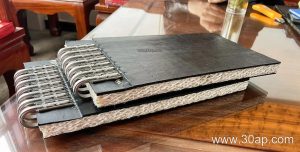
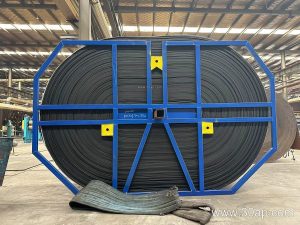
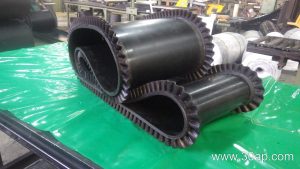
- Belt construction: a steel cord conveyor belt, an EP conveyor belt, or a multi-ply fabric core conveyor belt each behaves differently under troughing, so the transition and trough angle must suit the belt.
- Environment: wet wash plants, dusty coal yards, and hot sinter lines need different seals, finishes, and lubricant choices.
- Interface dimensions: shaft ends, flat or forged ends, bracket spacing, and frame hole patterns must match the existing conveyor bracket.
- Roll surface: plain steel is the default; nylon, ceramic, or rubber-ring surfaces are chosen for wear, build-up, or impact reasons.
Installation quality matters as much as the part. A misaligned frame or an over-tightened belt will shorten idler life regardless of bearing quality, so alignment and belt tracking should be checked at each station. Spare rollers should be stored dry and rotated periodically, and a planned replacement interval based on inspection is more reliable than replacing rollers only after failure. For conveyors handling abrasive rock or wet coal, the combination of a properly specified carrying idler and a matching abrasion resistant conveyor belt is what keeps the line running quietly.