What a Three-Roll Idler Bracket Does on a Conveyor
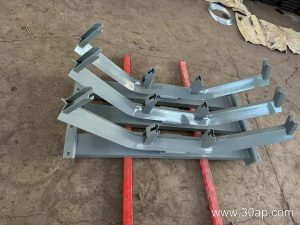
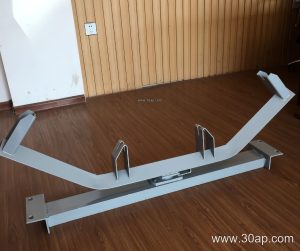
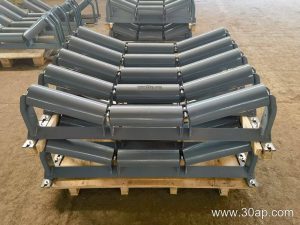
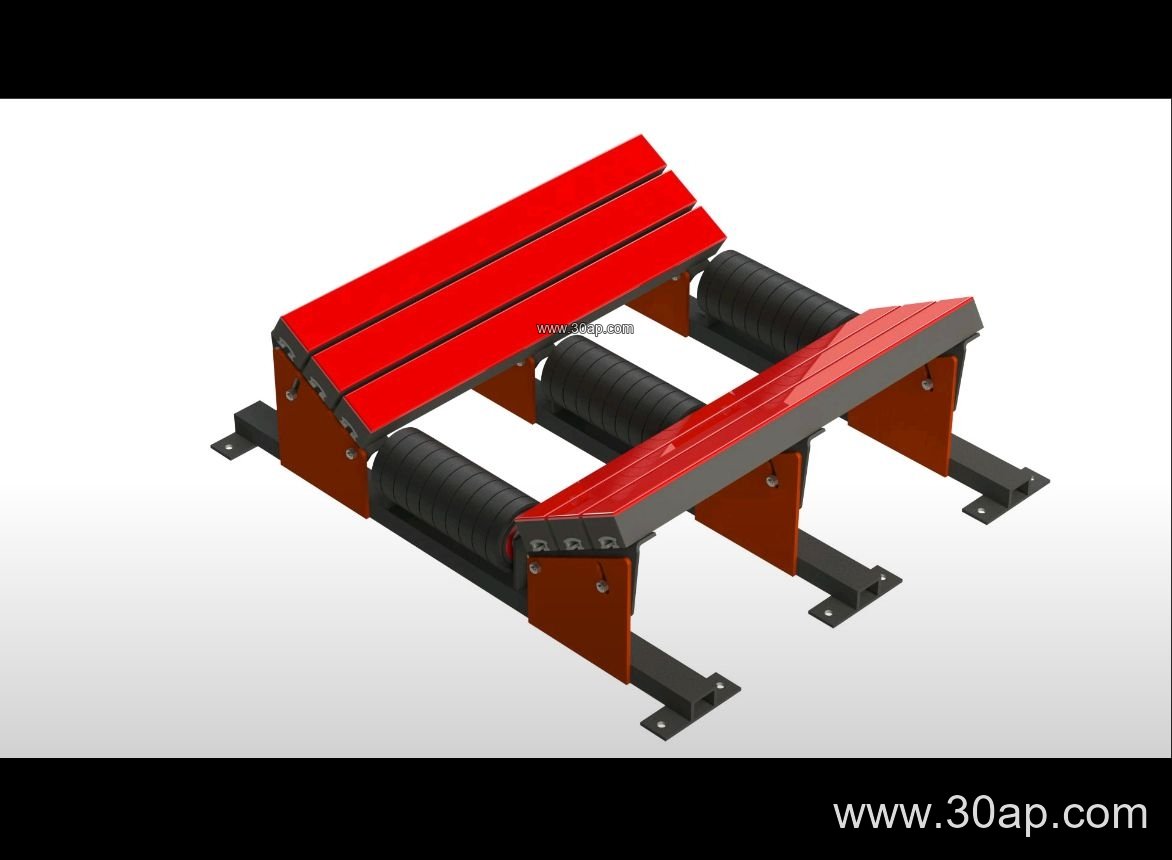
A three-roll idler bracket is the support frame that holds three idler rollers in a trough shape under the conveyor belt. It is also called a troughing idler bracket or troughing set frame. The bracket keeps the center roll horizontal and the two side rolls angled, so the belt forms a trough that holds bulk material during transport. This part is common in quarry conveyor belts, cement plant conveyor belts, and power plant conveyor belts, where steady belt support matters for continuous operation.
How the Bracket Is Built
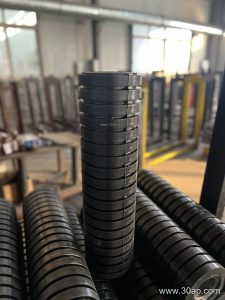
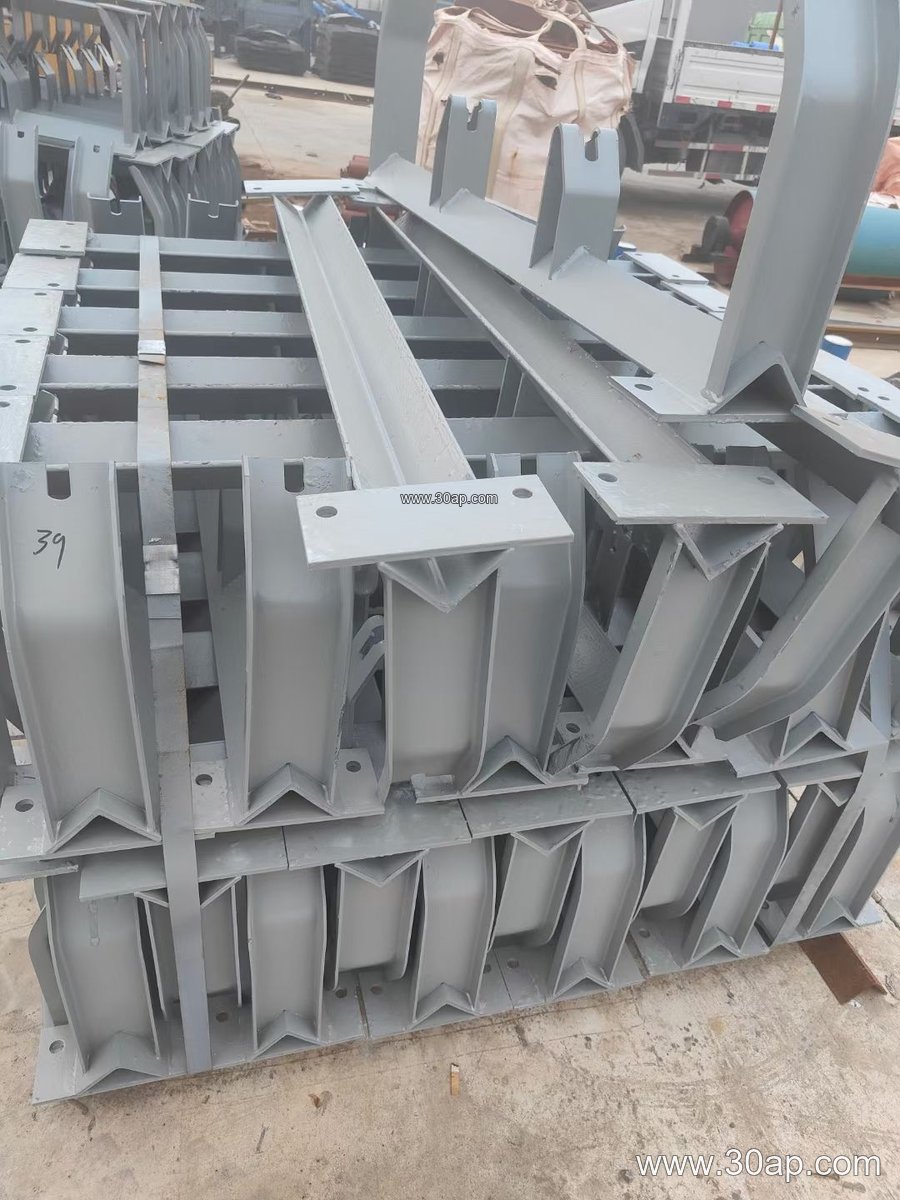
Most brackets are made from angle steel, channel steel, or folded steel plate. The frame has mounting slots or holes for each idler roller, and the side arms are set at a fixed or adjustable angle. Common trough angles are 20, 30, 35, and 45 degrees. A fixed bracket holds one angle, while an adjustable bracket can be set to different angles during installation. The bracket does not carry the belt directly; it positions the idler rollers that touch the belt. Installation hole spacing and beam length change with belt width and trough angle, so these are determined by design rather than a single universal figure.
Where It Fits in the Conveyor System
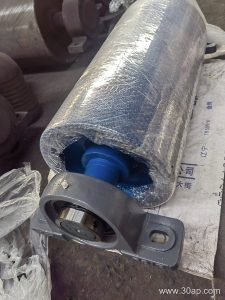
The three-roll idler bracket is used on the carrying side of a belt conveyor. It works together with the conveyor belt, idler roller, and conveyor pulley. The drive pulley, tail pulley, and bend pulley are separate components and are not interchangeable with this bracket. In a typical conveyor line, troughing brackets support the loaded belt, while return brackets support the empty return belt. In a coal mining conveyor belt system, proper bracket alignment helps reduce belt edge wear and material spillage. In a stone crushing conveyor belt line, the bracket must tolerate dust and impact from falling rock.
Common Sizes and Matching Points
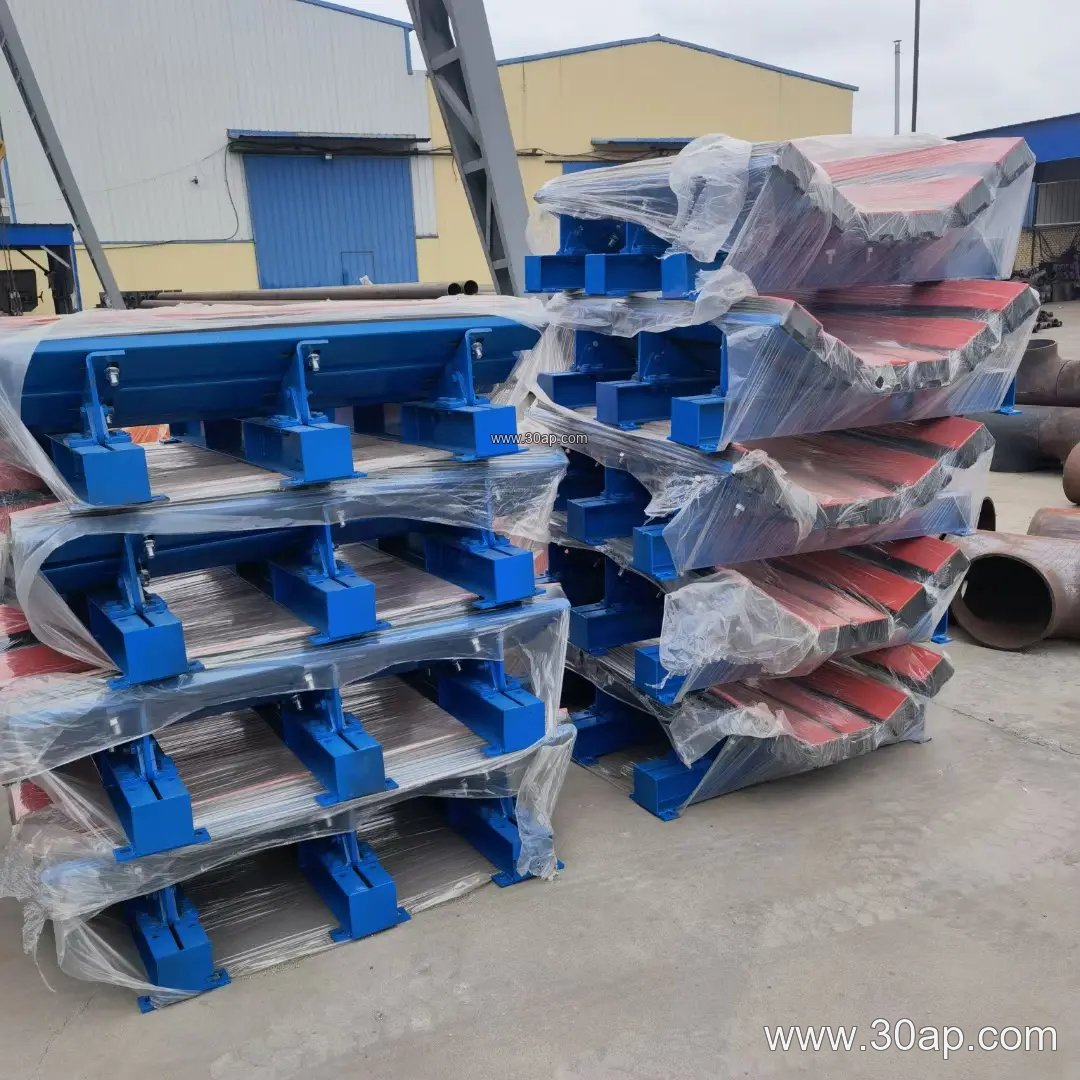
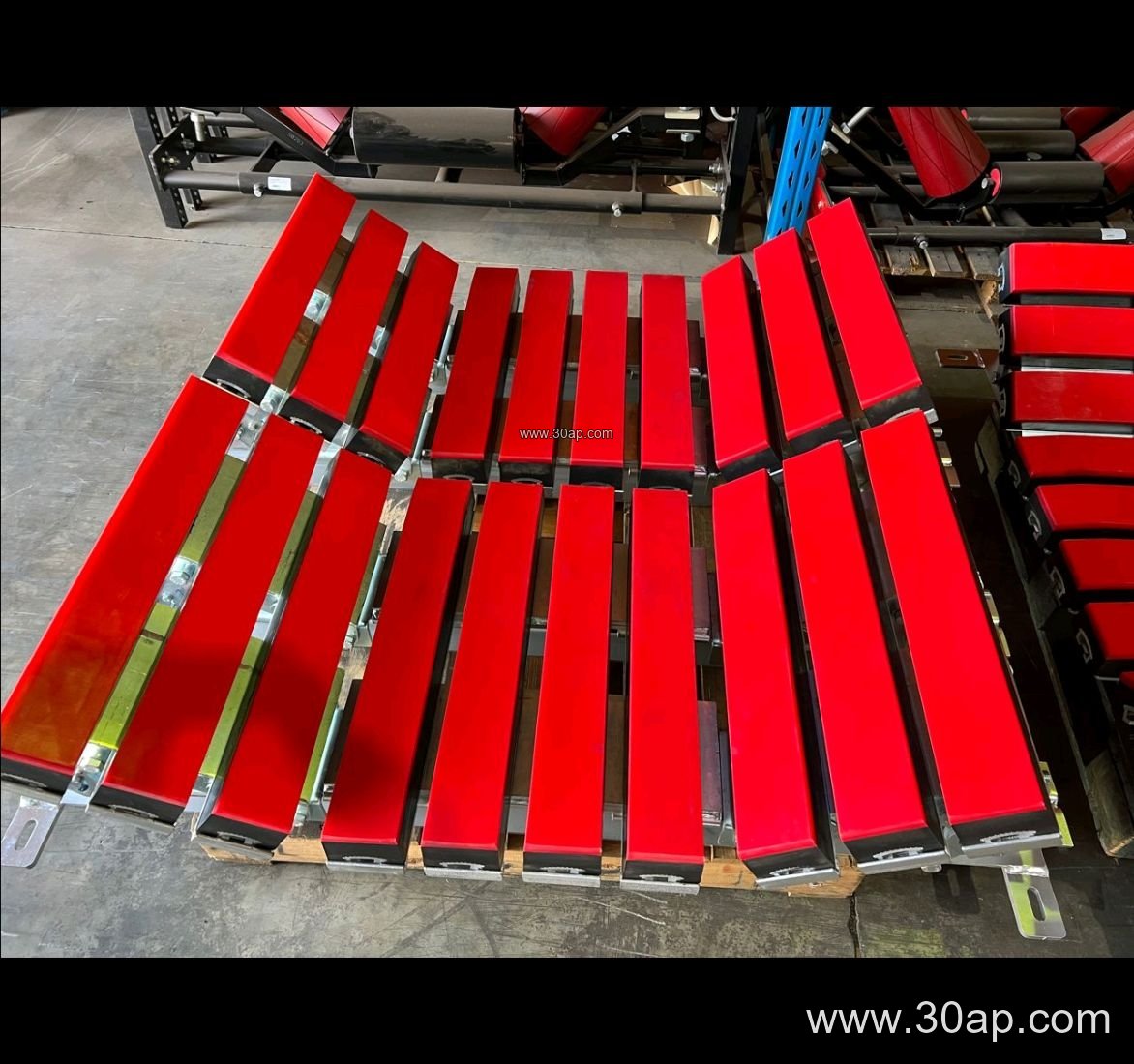
Brackets are often selected by belt width, trough angle, and roller diameter. The table below shows common reference combinations; these are examples, not fixed matches for every conveyor.
| Belt Width | Trough Angle | Roller Diameter | Typical Use |
|---|---|---|---|
| B500 | 20° | Ø89 | Small aggregate lines |
| B650 | 30° | Ø89 | Sand and gravel conveyors |
| B800 | 35° | Ø108 | Cement plant raw material |
| B1000 | 35° | Ø108 | Power plant coal handling |
| B1200 | 45° | Ø133 | Heavy ore transport |
| B1400 | 45° | Ø133 | Large quarry conveyor |
| B1600 | 35° | Ø159 | High capacity bulk material |
| B1800 | 45° | Ø159 | Mining conveyor belt systems |
| B2000 | 35° | Ø194 | Extra-wide conveyor belts |
Roller diameter should be chosen with belt speed, load, and belt stiffness in mind. A wider belt does not automatically require a specific trough angle, and a given belt width can work with more than one roller diameter. For a heavy-duty mining conveyor belt carrying iron ore or copper ore, a larger roller diameter and a 45-degree trough angle may help contain the load. For a food grade conveyor belt in a grain silo, a smaller trough angle may be enough.
Buyer Checklist
- Confirm belt width and the required trough angle before ordering.
- Check whether the bracket is fixed or adjustable; adjustable types allow angle changes on site.
- Match bracket mounting dimensions to the idler roller frame and conveyor stringer.
- Consider the working environment: abrasive dust in a quarry, heat in a cement kiln area, or flame retardant requirements in an underground coal mining conveyor belt system.
- Verify material thickness and finish for corrosion or impact resistance.
Maintenance and Selection Notes
Inspect brackets for bent arms, loose bolts, and worn mounting slots. A misaligned three-roll idler bracket can cause the conveyor belt to train poorly, which increases edge wear and may damage the idler roller. When replacing a bracket, keep the same trough angle and roller spacing unless the conveyor design is being changed. For an EP conveyor belt or steel cord conveyor belt running at high tension, bracket rigidity is important because the frame must hold the rolls steady under load. In a port conveyor belt or ship loading conveyor belt, salt air may call for a painted or galvanized finish. The three-roll idler bracket is a small part, but it affects belt life and material containment across many industries.