What the Conveyor Belt Support Frame Does
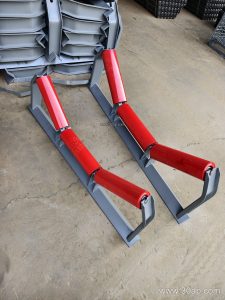
A conveyor belt support frame is the steel structure that holds the idler rollers in the correct position under and around the conveyor belt. It is not a single part but a family of frames: troughing frames on the carrying side, return frames underneath, transition frames near pulleys, and self-aligning or impact frames where the load demands them. The frame carries the roller load, keeps the belt profile stable, and transfers vibration and impact into the conveyor structure rather than into the belt itself.
In a quarry, a cement plant, or a coal handling system, the support frame is the quiet workhorse between the conveyor pulley at the head end and the tail pulley at the loading point. When frames are weak, misaligned, or spaced incorrectly, the belt starts to wander, edges fray, and rollers fail early.
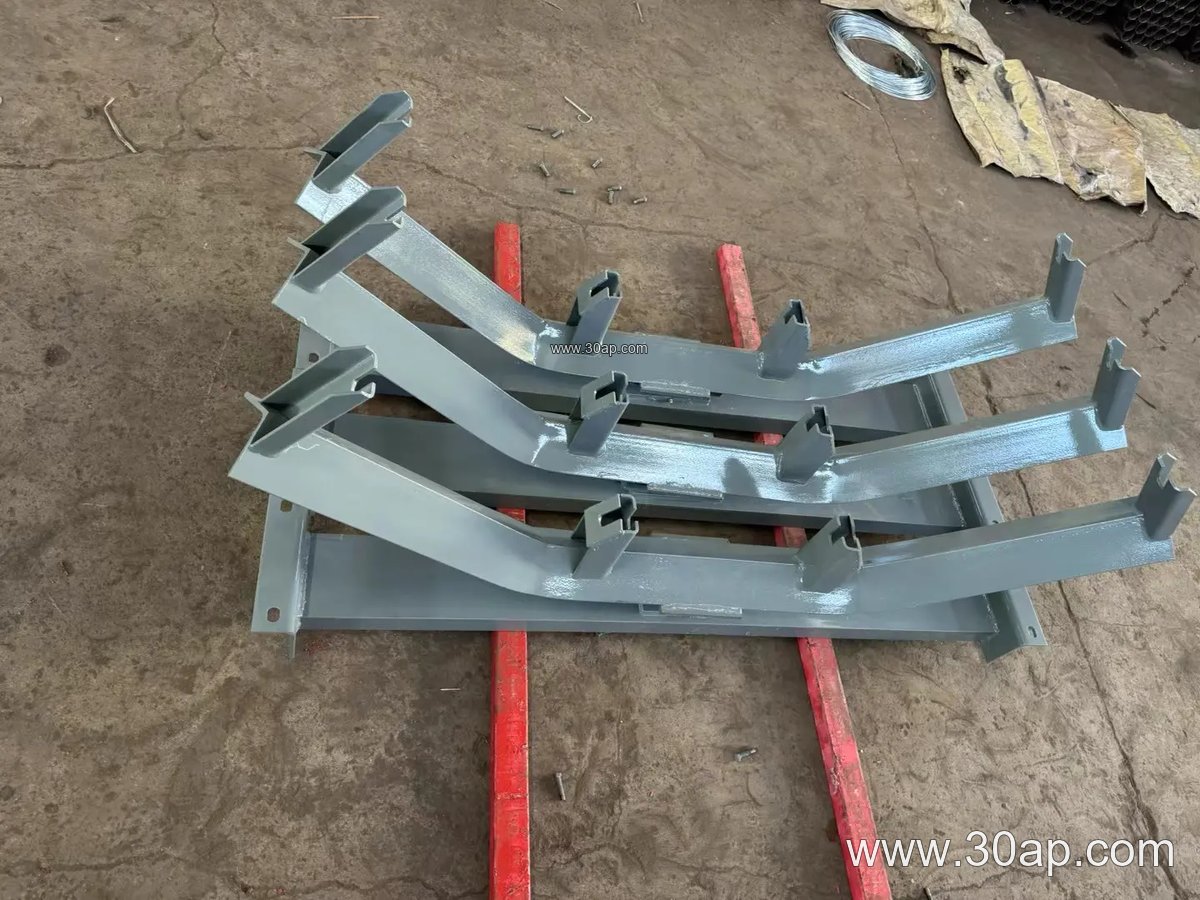
How the Frame Is Built
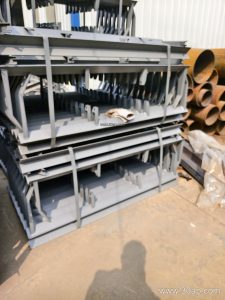
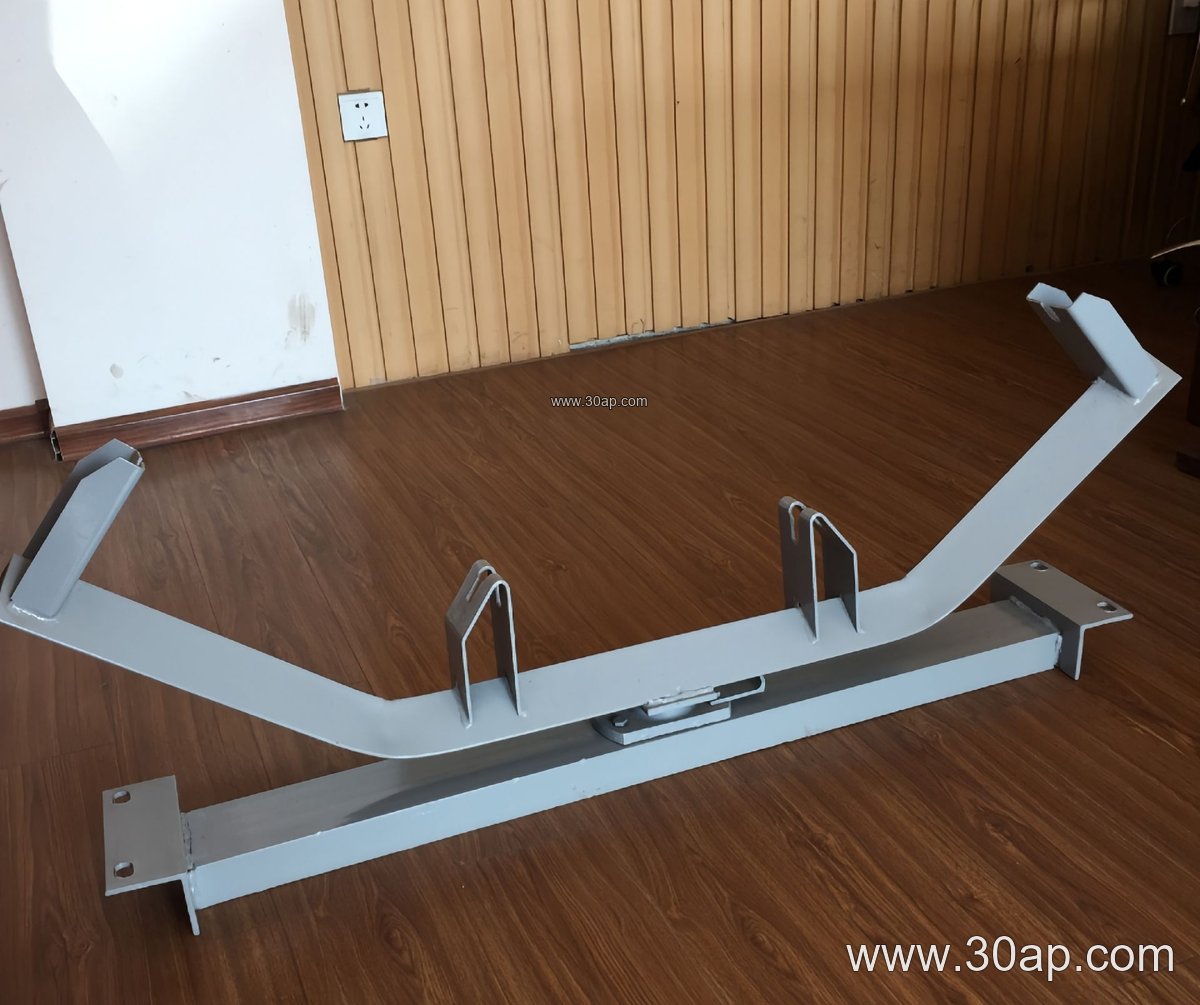
Most frames are fabricated from angle steel, channel steel, or folded steel plate. The cross beam carries the bracket seats, and the end plates bolt to the conveyor stringers. Slot holes are common so the frame can be adjusted during installation. A typical troughing frame has three roller positions set at a trough angle, while a return frame may be flat or V-shaped to support the empty belt.
| Frame type | Typical duty | Notes |
|---|---|---|
| Troughing frame | Carrying side | 20°, 30°, 35°, or 45° trough angle; adjustable versions allow angle changes on site |
| Transition frame | Near head and tail pulleys | Gradual change of belt profile to avoid edge stress |
| Return frame | Empty strand | Flat or V-shaped roller arrangement |
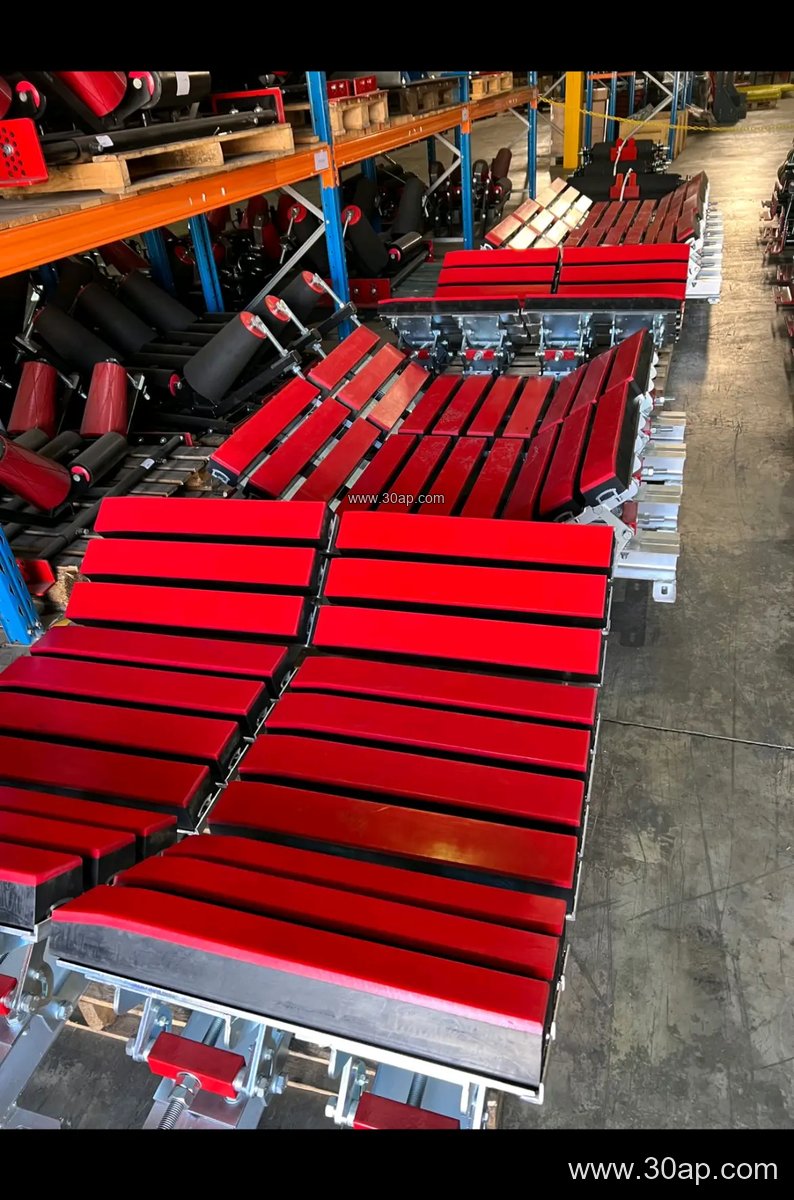
| Impact frame | Loading point | Extra rigidity with impact rollers for lump material |
| Self-aligning frame | Long runs | Helps correct belt tracking |
Common belt widths for these frames include B500, B650, B800, B1000, B1200, B1400, B1600, B1800, B2000, B2200. Roller diameters usually run from Ø89 to Ø194, and the frame seat dimensions follow the chosen roller and belt width. A frame for B800 with 35° troughing and Ø108 rollers is a common combination, but the same belt width can also be supplied with other roller diameters, so the frame drawing should always be confirmed against the roller and belt specification.
Where Support Frames Are Used
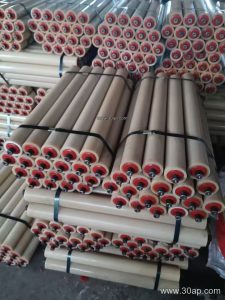
These frames appear wherever a conveyor belt runs over idler rollers. In a limestone mine or aggregate plant, troughing frames support a heavy-duty mining conveyor belt carrying crushed rock. In a power plant coal yard, flame retardant conveyor belt and abrasion resistant conveyor belt run over frames that must resist dust, vibration, and occasional impact. In a cement plant, heat resistant conveyor belt in clinker service needs frames that stay square under thermal cycling. In a port or ship loading line, wide conveyor belt such as 1800mm or 2000mm widths needs frames with long cross beams and careful alignment. A pipe conveyor belt or corrugated sidewall conveyor belt also relies on correctly positioned support frames, though the frame geometry differs from a standard trougher.
Matching Frame, Roller and Belt
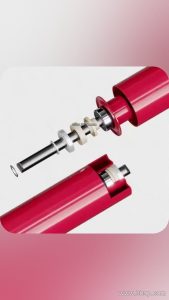
Buyers should treat the support frame, the conveyor roller, and the belt as one system. The trough angle affects the belt’s carrying capacity and its edge stress. The roller diameter affects the frame seat height and the clearance under the belt. The frame spacing affects sag between idlers. None of these values is fixed by belt width alone. A B1200 belt with 45° troughing and Ø133 rollers is one common arrangement, while a B650 belt with 30° troughing and Ø89 rollers is another; both are valid, and the final choice belongs to the conveyor designer.
- Confirm the belt width and the actual roller diameter before ordering frames.
- State the trough angle and whether adjustment is required on site.
- Check the stringer hole pattern and the frame mounting centers.
- Specify the environment: wet, dusty, corrosive, or high temperature.
- For impact zones, use a reinforced frame with impact rollers rather than adding rollers to a light frame.
Installation and Maintenance Notes
Align frames to a string line before tightening bolts. A frame that is square but offset from its neighbor will pull the belt sideways even if every roller is new. Check that the frame sits flat on the stringer and that the slot bolts are tight after the first week of running. Inspect the frame for bent cross beams after a jam or a large lump passing through. Replace deformed frames rather than straightening them repeatedly, because a bent frame changes the roller contact angle and shortens belt life.
For buyers comparing quotations, ask for the frame drawing, the material thickness, the surface treatment, and the roller seat dimensions. A support frame that matches the conveyor pulley layout and the belt specification will keep the whole line running smoothly.