What a Conveyor Leg Does on a Belt System
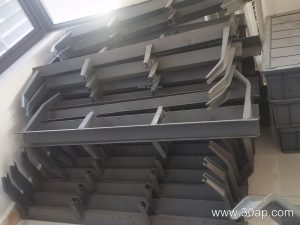
A conveyor leg is the vertical support that carries the idler frames, pulleys and belt load down to the floor or foundation. In many plants the leg is part of a fabricated support assembly, often called a conveyor support leg or belt conveyor stand, and it works together with the cross beam, the idler roller and the conveyor bracket to keep the belt line at the correct height and alignment. In a quarry, a cement plant or a power plant coal yard, the leg is the quiet component that decides whether the whole structure stays steady under a moving load.
The leg itself does not move the belt. Its job is to hold the carrying and return sides in position, absorb vibration, and keep the frame square so the belt tracks properly. When a conveyor support leg is weak or poorly anchored, the first symptoms usually appear as belt wander, noisy idlers and uneven wear on the conveyor belt.
How a Conveyor Leg Is Built
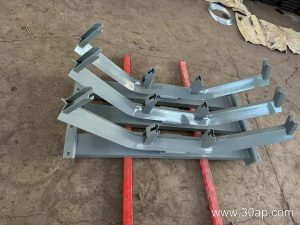
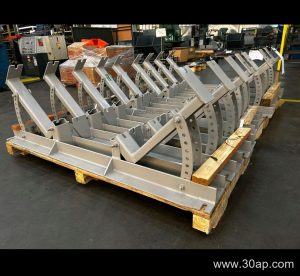
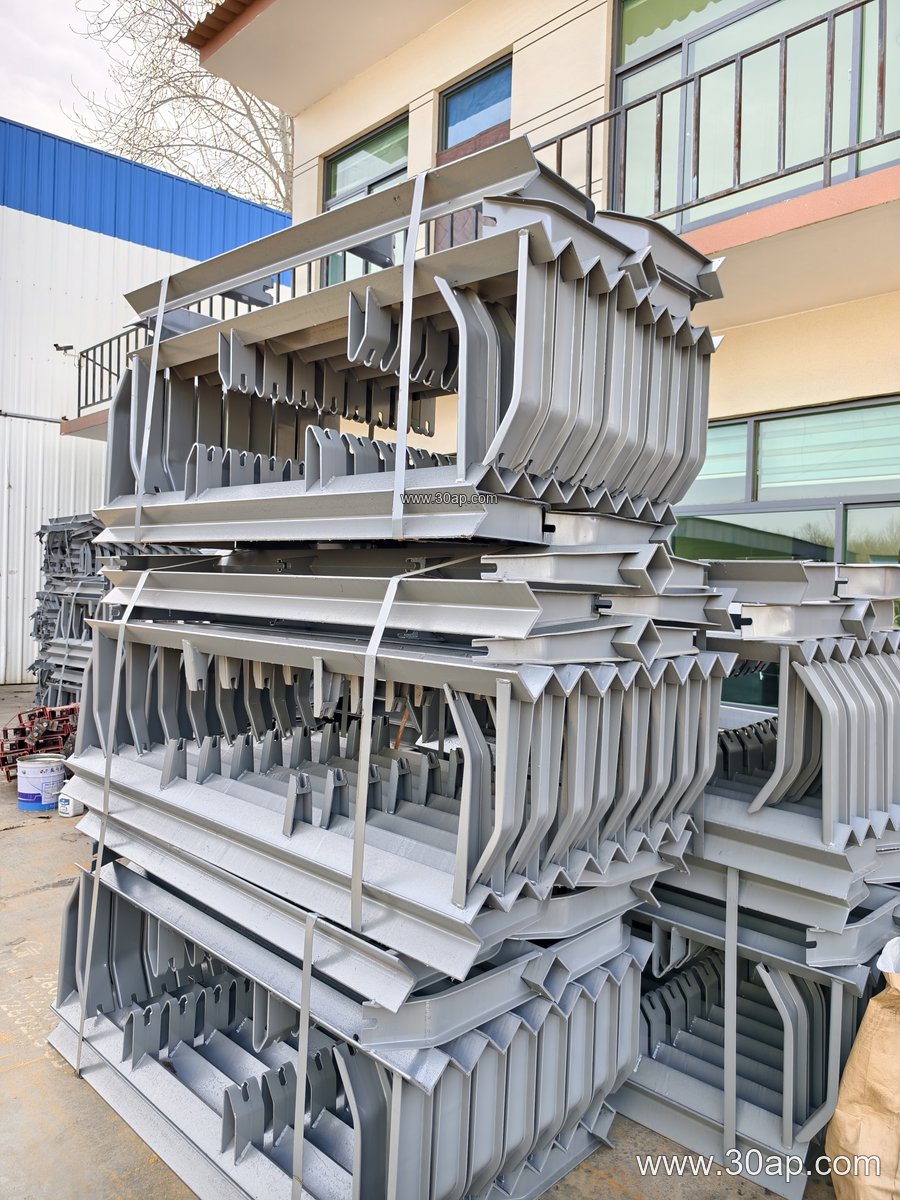
Most legs are made from angle steel, channel steel or folded steel plate. A fixed leg is cut and drilled to one height and one mounting pattern. An adjustable leg uses slotted holes, telescopic sections or shim packs so the frame height can be corrected after installation or during belt tensioning. The top of the leg usually carries a mounting plate or a bracket that accepts the cross beam and the idler frame.
Typical reference data for support assemblies looks like this:
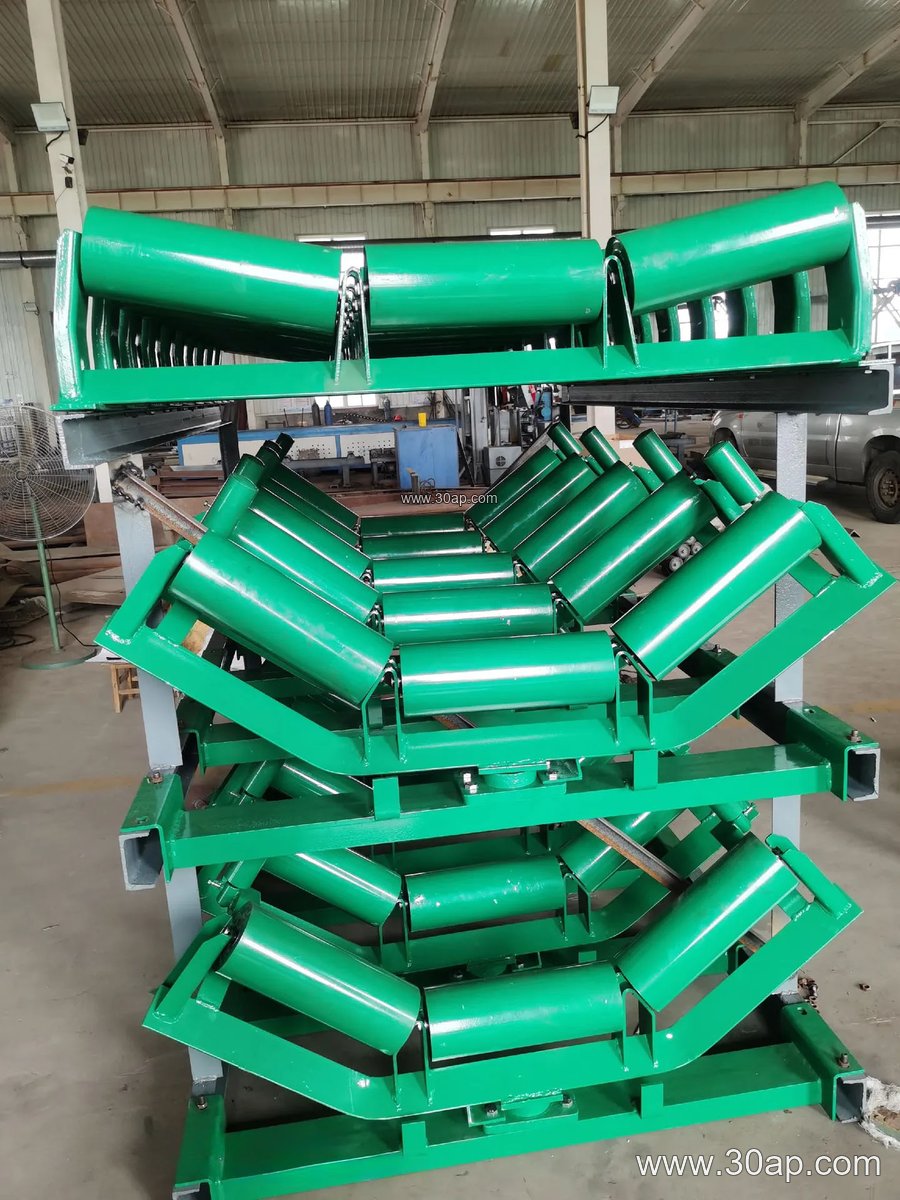
- Belt width range: B500, B650, B800, B1000, B1200, B1400, B1600, B1800, B2000, B2200
- Trough angle: 20 degrees, 30 degrees, 35 degrees, 45 degrees; adjustable frames can move between these angles
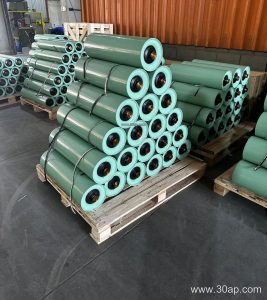
- Idler diameter: Ø89, Ø108, Ø133, Ø159, Ø194
- Material: angle steel, channel steel, folded steel plate
These values are common references, not a fixed rule. A B800 frame at 35 degrees with Ø108 idlers is a familiar combination, and a B1200 frame at 45 degrees with Ø133 idlers is also common, but the final choice depends on load, belt speed and structure design. Hole spacing and beam length change with belt width and trough angle, so they should be confirmed on the drawing rather than assumed.
Where Conveyor Legs Are Used
You will find these supports in stone crushing and screening lines, in cement plants feeding raw mills and clinker lines, and in power plant coal handling systems. In a sand and gravel yard, a conveyor leg often stands on a simple concrete pad; in a coal preparation plant or underground mining conveyor, the leg may be bolted to a steel structure or a floor beam. The same support logic applies on a ship loading conveyor at a port and on a tunnel spoil line, where space is tight and the frame must stay accessible for cleaning.
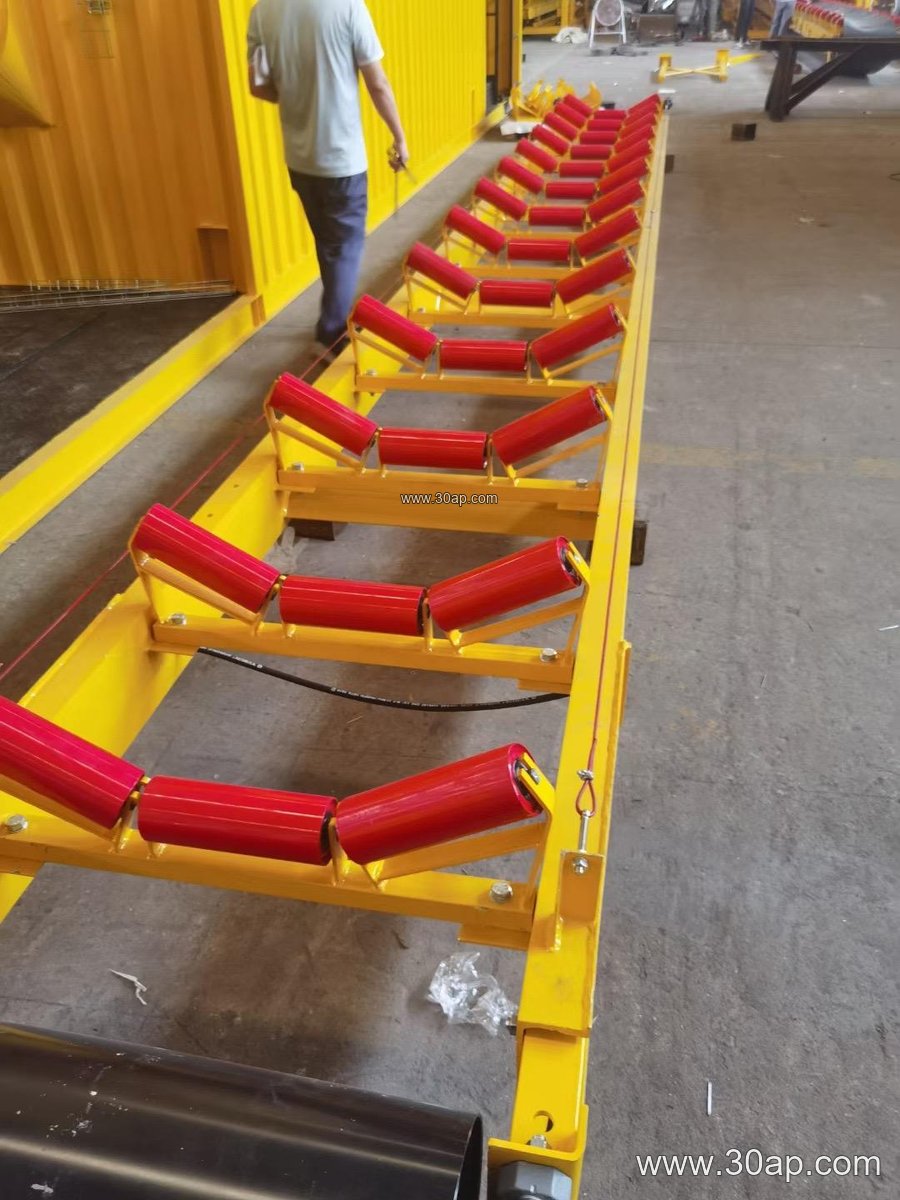
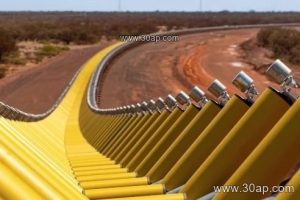
On a heavy-duty mining conveyor carrying abrasive ore, the legs and frames must resist vibration from large lumps. On a long overland line using a steel cord conveyor belt, the legs are spaced according to the belt sag and the load, and the design is usually checked together with the idler roller spacing.
Matching the Leg to the Belt and Idlers
The support leg is only one part of the frame, so selection should start from the belt and the idler set. A wide belt such as a 1200mm or 1500mm conveyor belt needs a longer cross beam and a stronger leg than a 650mm or 800mm line. Trough angle affects the load profile: a 20 degree frame is flatter, while a 45 degree frame centers the load more. The idler diameter, whether Ø89 or Ø159, changes the frame height and the clearance under the belt.
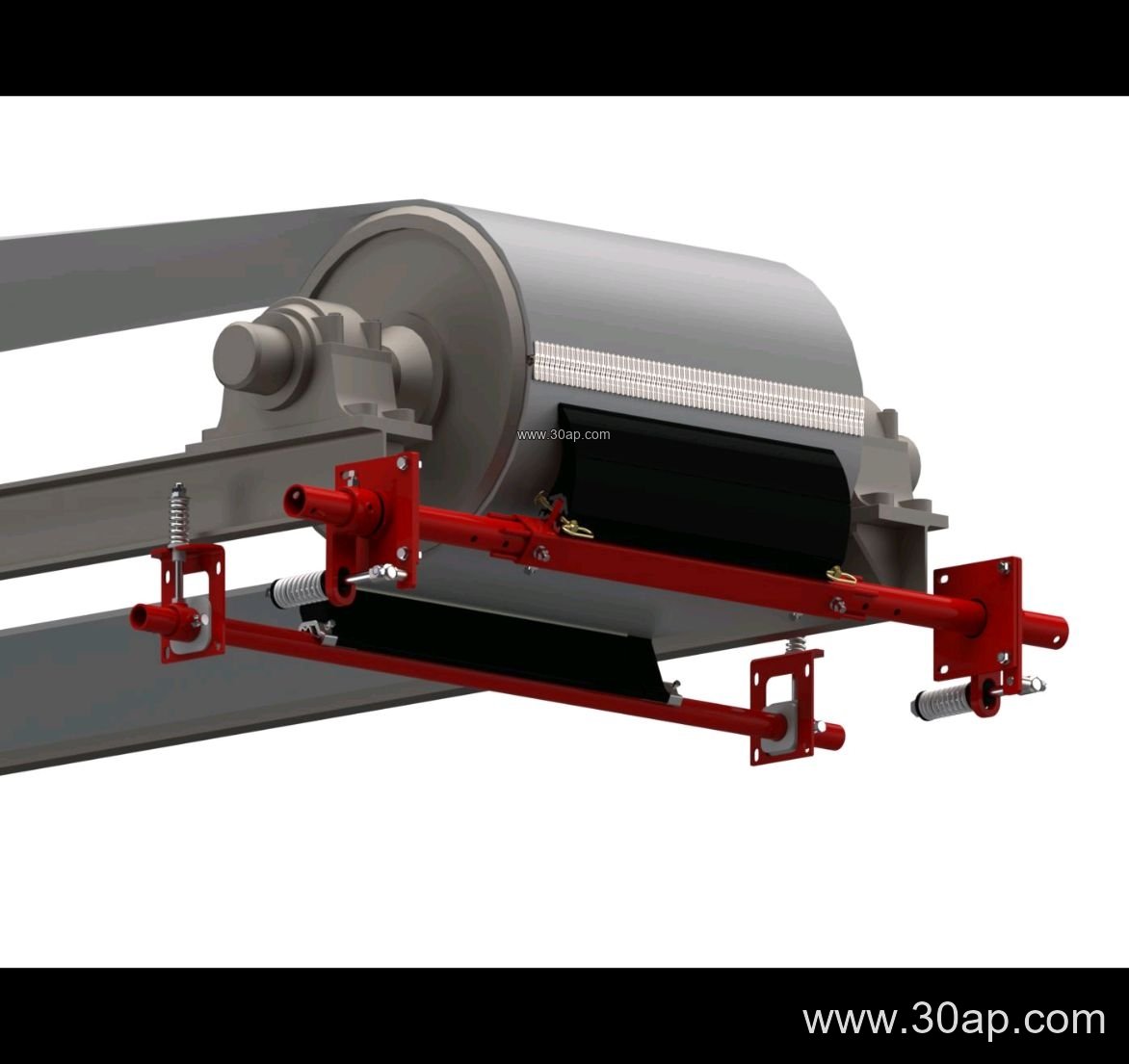
For comparison, a bend pulley or a drive pulley is a rotating drum that changes belt direction or transmits power, while a conveyor leg is a static structural support. They are not interchangeable, and a leg should never be selected as if it were a pulley support without checking the frame layout. A conveyor bracket, by contrast, is the small connection piece between the leg, the beam and the idler frame, and it is often the easiest part to adjust during alignment.
Buyer Checklist Before Ordering
- Confirm belt width, trough angle and idler diameter as a set, not as separate items.
- State whether the leg is fixed or adjustable, and give the required height range.
- Check the mounting hole pattern and beam length against the drawing.
- Confirm the surface treatment and the anchor method for the site.
- Ask how the leg connects to the conveyor bracket and the cross beam.
For a fabric core conveyor belt line or an EP conveyor belt installation, the support height often needs fine adjustment after the first belt run. Adjustable legs make that correction simpler than cutting and re-welding fixed legs. On a flame retardant conveyor belt system in a coal mine, keep the frame clear of spillage so heat and dust do not build up around the support points.
Finally, treat the leg as part of a system: belt, idler roller, pulley and frame all affect tracking. A well-built conveyor leg will not fix a misaligned pulley, but it will keep the belt line steady while the rest of the structure is set correctly.