What a Conveyor Bracket Quotation Covers
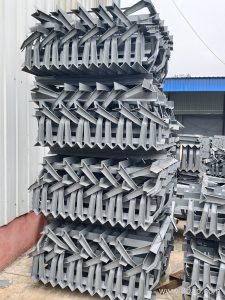
A conveyor bracket quotation is the priced offer a fabricator or component supplier issues for the steel frames that carry idler rollers and hold the conveyor belt in its trough shape. In many plants the item is simply called an idler bracket or a roller support frame, and a quotation for it should describe the frame type, the belt width it fits, the trough angle, the roller diameter it accepts, the material, and the surface treatment.
Because the bracket is a fabricated part rather than a catalog commodity, two quotations for the same belt width can differ substantially. A buyer comparing offers should look past the unit price and check whether the specification lines up with the conveyor design.
How the Frame Is Built
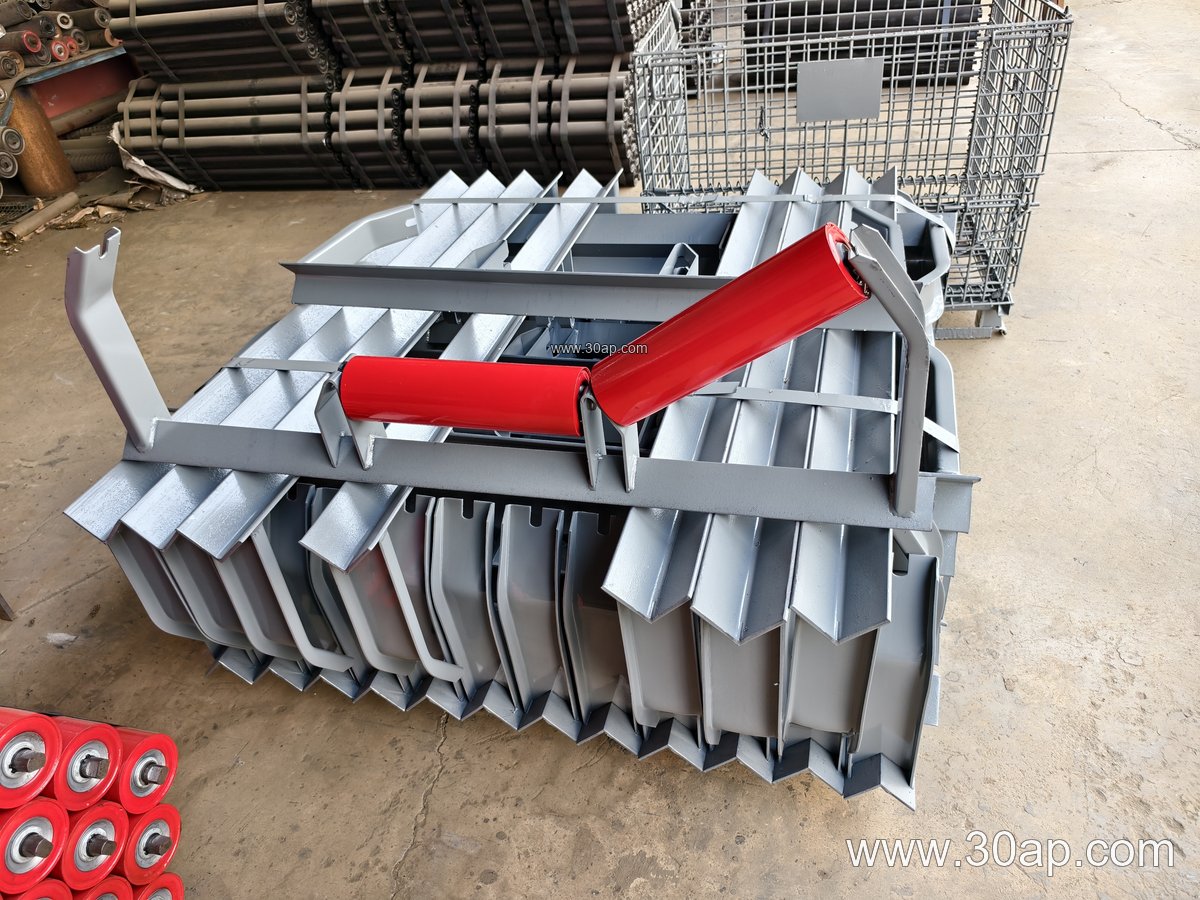
Most troughing brackets are made from angle steel, channel steel, or folded steel plate. The crossbeam carries the mounting slots or notches that locate the idler roller shafts, while the end plates bolt to the conveyor stringer. Welded gussets stiffen the corners where loads are highest.
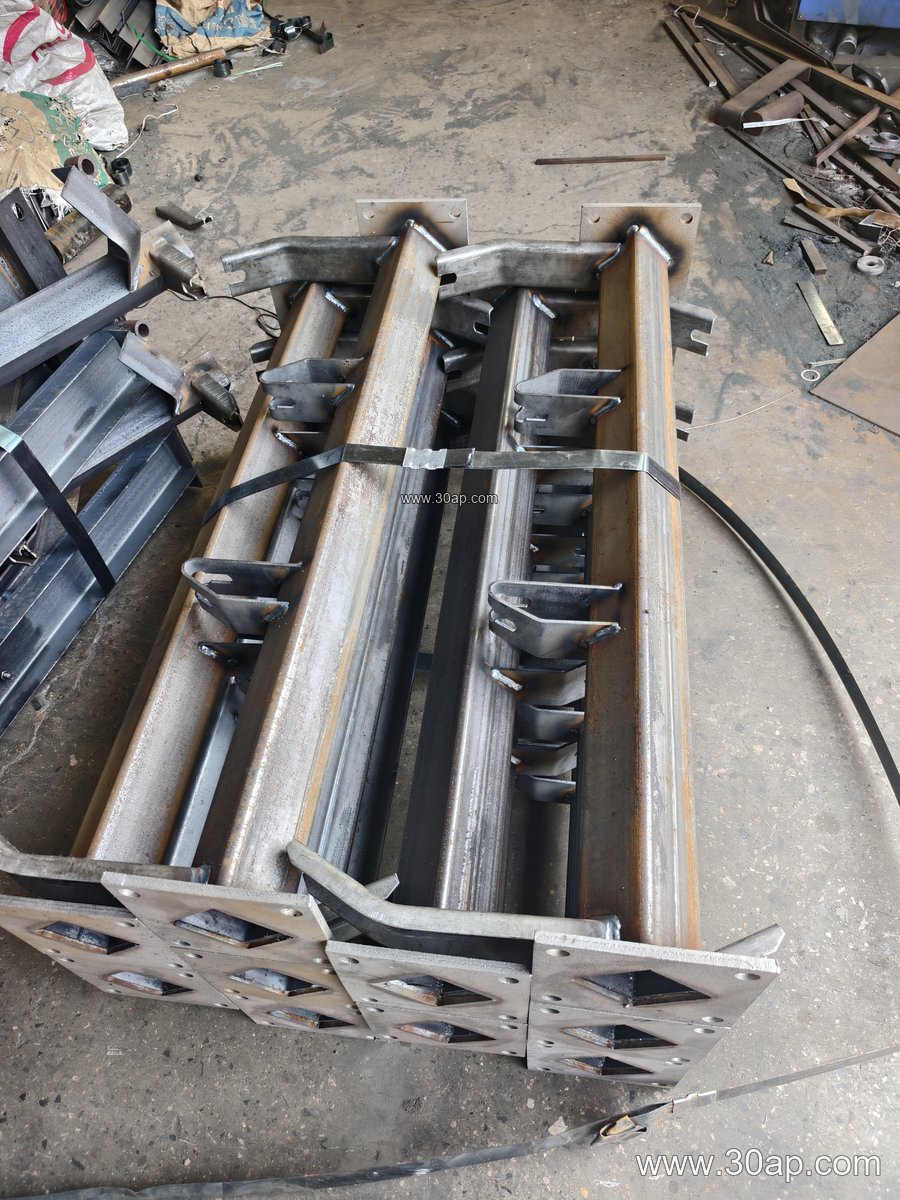
Fabrication details that belong in a written quotation include:
- Base material and plate or section thickness
- Welding quality and any stress relief
- Hole spacing and beam length, which follow belt width and trough angle
- Galvanizing, painting, or other coating
- Tolerance on mounting centres
Quotations should state these as design values rather than fixed numbers, since hole pitch and beam length change with each frame size.
Frame Types and Where They Sit
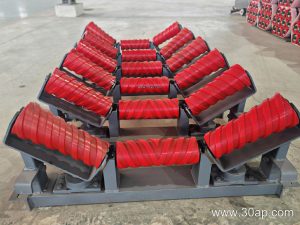
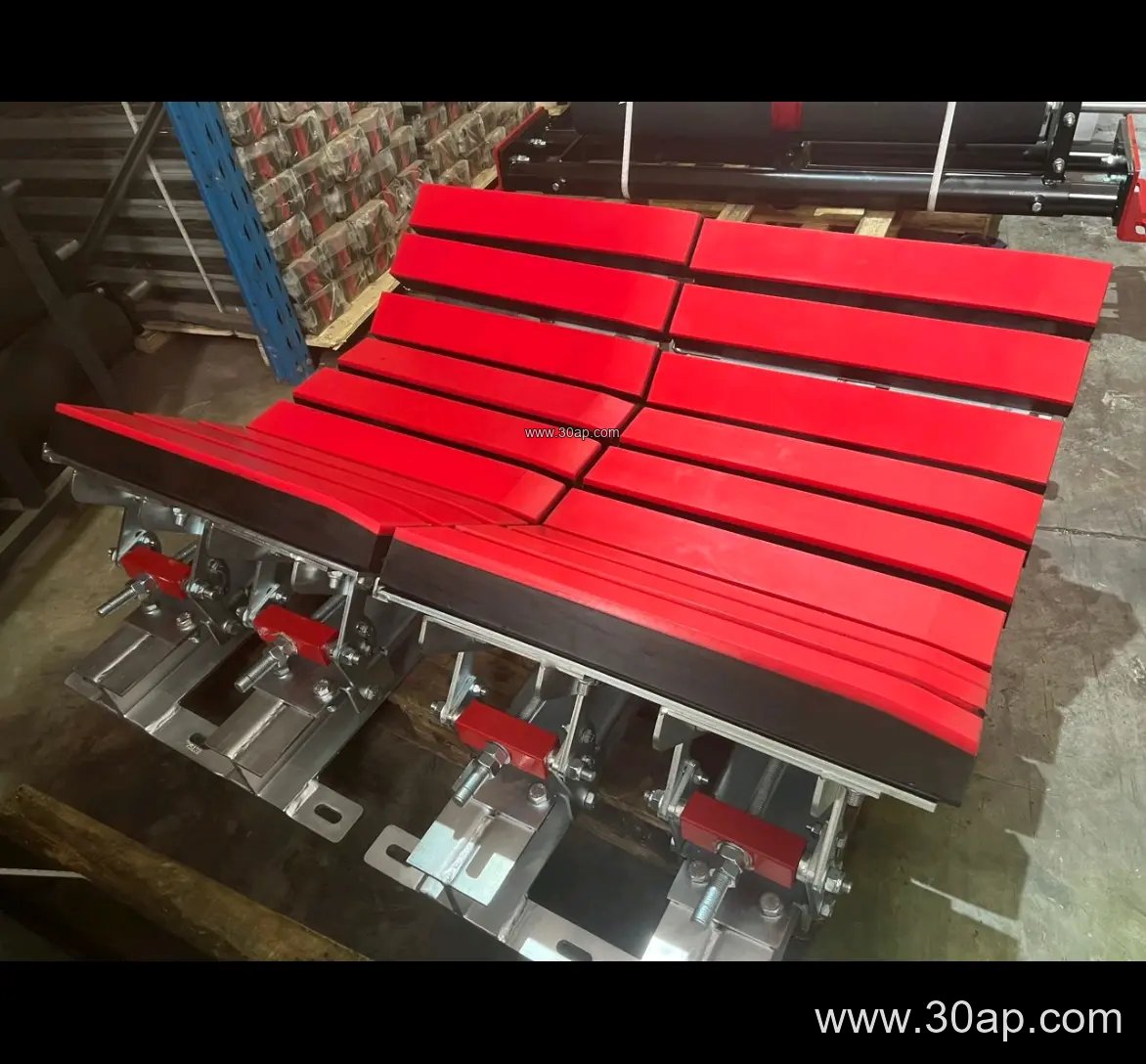
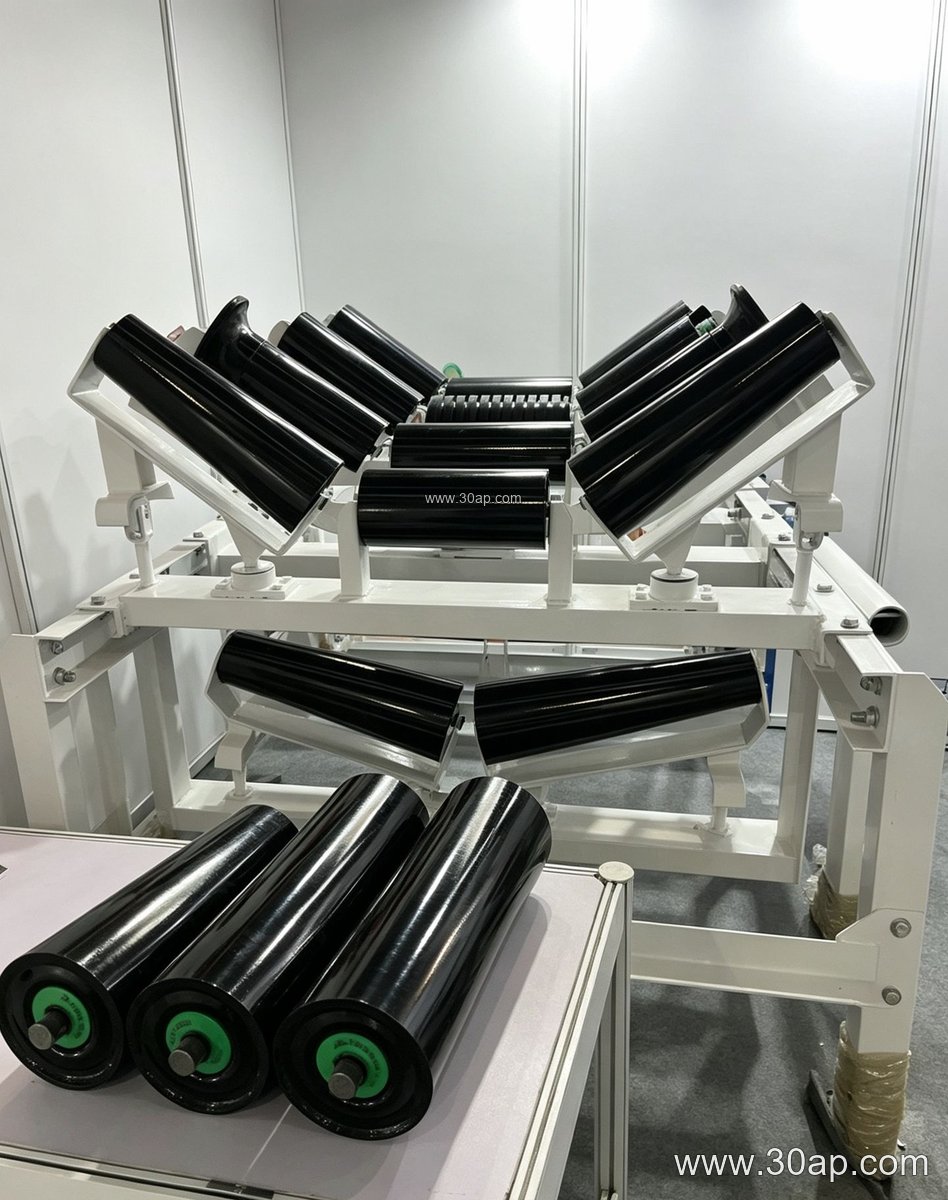
Troughing and carrying brackets support the loaded side of the belt. Return brackets and flat return frames carry the empty strand. Transition brackets ease the belt from flat to troughed profile near the pulleys, and impact brackets sit under loading points to absorb material drop.
Self-aligning and forward-leaning frames are used where belt tracking is difficult. A quotation may also cover adjustable brackets, which allow the trough angle to be set between common values such as 20, 30, 35, and 45 degrees. Forward-leaning frames usually sit at about 1.5 to 2 degrees of lead.
Matching Brackets to Belt Width and Roller Diameter
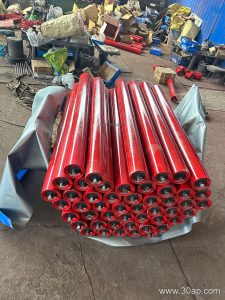
Frame size follows the belt. Typical widths run from B500 and B650 through B800, B1000, B1200, B1400, B1600, B1800, B2000, B2200, and wider. Roller diameters commonly quoted alongside these frames are Ø89, Ø108, Ø133, Ø159, and Ø194.
A single belt width can accept several trough angles and roller diameters depending on load and belt stiffness, so the quotation should be read as a design proposal, not a fixed rule. The table below shows the kind of reference combinations that appear in offers.
| Belt Width | Trough Angle | Roller Diameter | Typical Frame |
|---|---|---|---|
| B650 | 30 degrees | Ø89 | Troughing bracket |
| B800 | 35 degrees | Ø108 | Troughing or transition bracket |
| B1200 | 45 degrees | Ø133 | Heavy troughing bracket |
| B1400 | 35 degrees | Ø159 | Carrying bracket |
| B1800 | 30 degrees | Ø194 | Heavy carrying bracket |
These figures are reference data, not verified universal specifications or supply promises. Final values come from the conveyor design.
Where the Frames Are Used
Bracket quotations are requested across bulk handling sites. In a limestone quarry or a crushing and screening line, frames support the belt that carries blasted rock, often under an abrasion resistant conveyor belt. In a coal preparation plant or an underground coal mining conveyor, flame retardant and anti-static belting runs on troughing and return brackets that must fit restricted spaces.
The same frames appear in cement plants, power station coal yards, steel sintering plants, and port shiploading systems. On long overland lines, a steel cord conveyor belt or high strength EP conveyor belt may need heavier brackets and larger roller diameters than a short in-plant conveyor.
What to Check Before Accepting a Quotation
Read the offer against the conveyor layout drawing. Confirm the frame type, the belt width, the trough angle, the roller diameter, the mounting hole spacing, and the coating. Ask whether the bracket suits the idler roller in use and the conveyor pulley at the transition. For a quotation covering a whole line, request a schedule listing each position rather than a single lump sum. That way the maintenance team can order replacement frames later using the same reference.
Finally, check delivery and packing, since long crossbeams are easily bent in transit. A clear conveyor bracket quotation protects both the buyer and the fabricator.