What the Conveyor Belt Pulley Does on a Conveyor
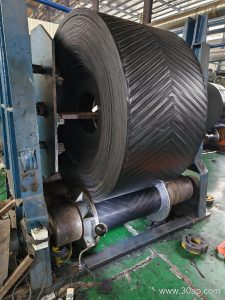
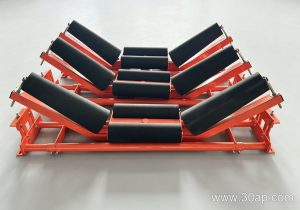
The conveyor belt pulley is the rotating drum that gives a belt conveyor its drive, its direction, and its tension. It is often simply called a conveyor pulley, and it works together with the conveyor belt, idler roller and conveyor bracket to keep material moving from one point to the next. In a quarry, a cement plant, or a power plant coal yard, the pulley is the component that transfers motor torque into belt motion and keeps the belt tracking within its structure. Drive, tail and bend pulleys are not interchangeable. Each position has its own duty, and confusing them is a common source of premature wear.
Core Structure
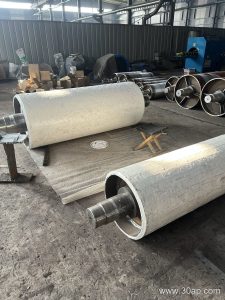
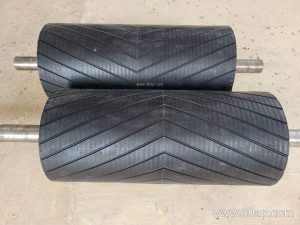
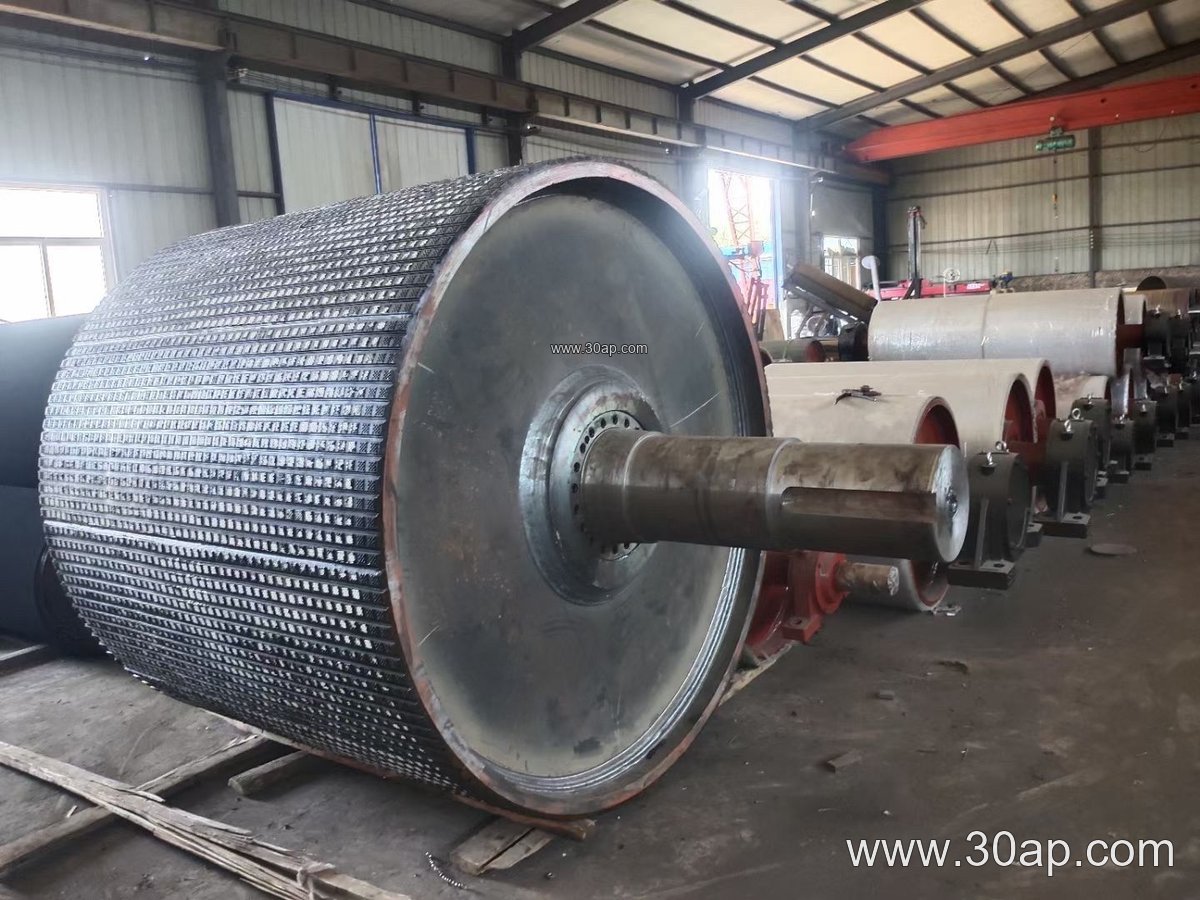
A typical pulley is built from a cylindrical shell, two end discs, a shaft, and a hub or locking assembly. The shell surface may stay plain or receive lagging. Common surface forms include plain finish, hot vulcanized rubber, cold bonded rubber, diamond grooved lagging, herringbone lagging, and ceramic lagging. Lagging thickness is often 8, 10, 12, 15 or 20 mm depending on grip and wear requirements. The shaft diameter is determined by torque and load, not by belt width alone, so shaft sizes such as Ø80, Ø100, Ø120 or Ø160 should be confirmed by the conveyor designer.
Drive, Tail and Bend Positions
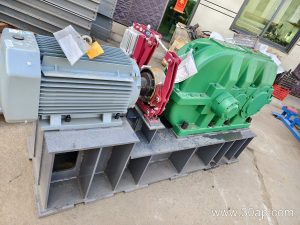
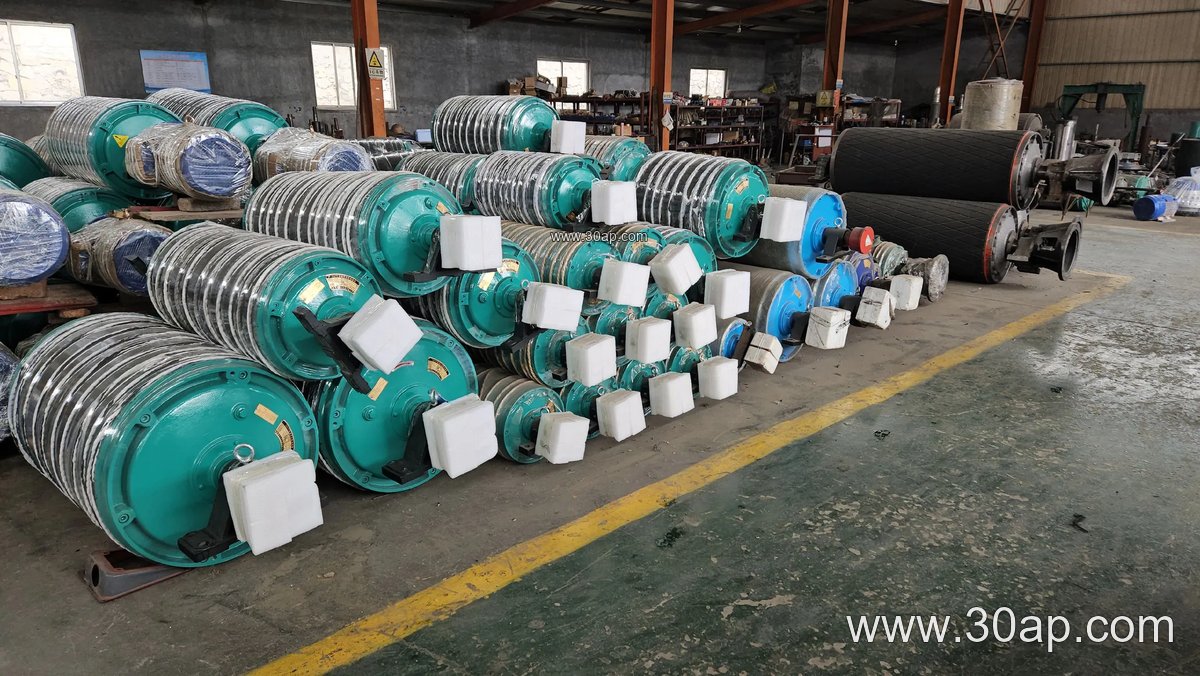
The drive pulley, also called the head pulley at the discharge end, transmits power and usually carries lagging to improve friction. The tail pulley at the loading end guides the belt return and often works with a tensioning device. A bend pulley changes belt direction without driving, and a take-up pulley maintains tension. Snub and press pulleys are used where wrap angle needs to be increased. An electric drum motor combines the motor and reducer inside the shell, which suits compact layouts. When comparing positions, remember that a bend pulley is not a substitute for a drive pulley, and a tail pulley cannot replace a drive unit.
Matching Pulley to Belt Width
Belt width and pulley face width are related but not identical. The pulley face is usually wider than the belt so the belt is supported across its full width. Reference examples include B400 with roughly 500 mm face, B650 with about 750 mm, B800 with about 950 mm, B1000 with about 1150 mm, B1200 with about 1400 mm, and B1400 with about 1600 mm. A B800 × Ø500 or B1200 × Ø1000 combination is common in medium-duty service, while a B1400 × Ø800 arrangement may appear in heavier aggregate lines. Diameters such as Ø200, Ø250, Ø315, Ø400, Ø500, Ø630, Ø800, Ø1000, Ø1250 and Ø1400 are selected by belt speed, wrap angle and tension. No single belt width is tied to one diameter.
| Belt width | Typical pulley face width | Example diameter range |
|---|---|---|
| B500 | about 600 mm | Ø250 to Ø400 |
| B650 | about 750 mm | Ø315 to Ø500 |
| B800 | about 950 mm | Ø400 to Ø630 |
| B1000 | about 1150 mm | Ø500 to Ø800 |
| B1200 | about 1400 mm | Ø630 to Ø1000 |
| B1400 | about 1600 mm | Ø800 to Ø1250 |
These are reference ranges, not fixed matches. Final sizing depends on belt tension, speed, and the load carried by the conveyor bracket and shaft.
Where It Is Used
In a limestone quarry or a sand and aggregate line, the pulley handles abrasive rock and dust, so abrasion resistant lagging helps. In a coal washing plant or underground coal mining conveyor, flame retardant and anti-static properties matter for the belt, and the pulley should be selected for dusty, damp conditions. In a cement plant, heat resistant conveyor belts may run near clinker, and the pulley bearings need suitable protection. Port bulk terminals and ship loading conveyors often use large diameter pulleys to reduce belt stress on long runs. A pipe conveyor belt or a corrugated sidewall belt may demand special pulley geometry, so the belt supplier and pulley maker should agree on dimensions early.
Buyer Checklist
- Confirm the position: drive, tail, bend, take-up, snub or press. Each has a different duty.
- State belt width, belt type and belt tension so the pulley face and shaft can be sized correctly.
- Choose lagging by condition: diamond or herringbone for grip, ceramic for high abrasion, plain for light duty.
- Check shaft diameter against torque and load rather than copying a value from belt width.
- Confirm bearing type, sealing and lubrication access for the site environment.
- Ask for dynamic balance and runout data when belt speed is high.
A well matched conveyor belt pulley reduces belt slip, extends lagging life, and protects the idler roller and frame from unnecessary vibration. Whether the line moves ore, clinker, coal or grain, the pulley should be treated as an engineered part of the conveyor, not a generic drum.