What a Conveyor Carrying Bracket Does on a Belt Conveyor
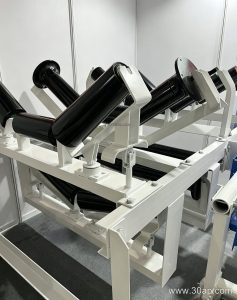
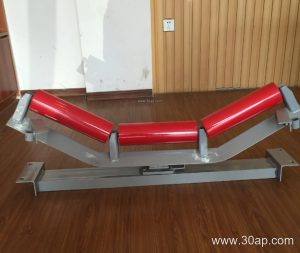
A conveyor carrying bracket is the structural support that holds the troughing idlers in place along the load-bearing side of a belt conveyor. In everyday plant language it is often called a carrying idler bracket, troughing bracket, or simply a conveyor bracket. Its job is straightforward but important: it fixes the idler rollers at the correct angle and spacing so the conveyor belt forms a stable trough and keeps bulk material centered during transport. On a quarry conveyor belt or a cement plant conveyor belt, a weak or misaligned bracket quickly shows up as belt wander, spillage, and uneven roller wear.
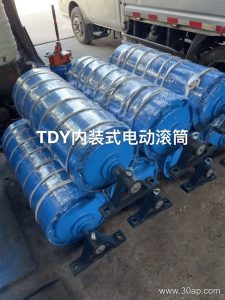
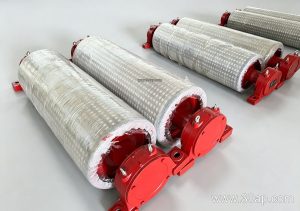
The bracket belongs to the carrying side of the conveyor. Drive pulleys, tail pulleys, and bend pulleys sit at the ends of the run and are separate components with their own support frames. They are not interchangeable with a carrying bracket, and a bracket should never be selected as a substitute for a conveyor pulley.
How the Bracket Is Built
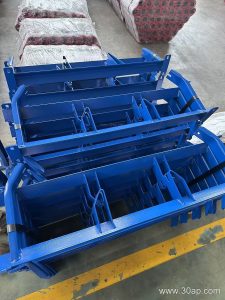
Most carrying brackets are fabricated from angle steel, channel steel, or folded steel plate. The frame includes mounting holes for the idler shaft ends and a crossbeam that sets the trough angle. Typical trough angles are 20, 30, 35, and 45 degrees, and adjustable brackets allow the angle to be changed across that range during installation or later fine-tuning. Forward-leaning brackets, common at roughly 1.5 to 2 degrees, are used to help keep the belt tracking. Surface treatment depends on the environment, and dusty or wet conditions usually call for a coating that resists corrosion.
- Mounting holes sized to the idler shaft and frame
- Crossbeam length matched to belt width and trough angle
- Welded or bolted joints, often with reinforcement plates
- Optional adjustment slots for trough angle changes
Installation hole spacing and crossbeam length vary with belt width, trough angle, and frame design. They should be confirmed against the conveyor drawing rather than assumed from belt width alone.
Common Configurations and Where They Fit
Carrying brackets appear in several forms. Fixed troughing brackets hold a set trough angle and suit steady, well-aligned conveyors. Adjustable brackets let maintenance teams correct the trough profile without replacing the frame. Transition brackets are placed near the tail or head to guide the belt from flat to troughed. Impact brackets with cushioning are used under loading points where ore or rock drops onto the belt. Self-aligning and forward-leaning designs help control belt tracking on long runs.
Below are typical reference combinations, not fixed rules. A given belt width can accept more than one trough angle or roller diameter depending on the conveyor design.
| Belt Width | Typical Trough Angle | Common Idler Diameter |
|---|---|---|
| B650 | 30 degrees | Ø89 mm |
| B800 | 35 degrees | Ø108 mm |
| B1000 | 35 degrees | Ø133 mm |
| B1200 | 45 degrees | Ø133 mm |
| B1400 | 45 degrees | Ø159 mm |
| B1600 to B2000 | 35 to 45 degrees | Ø159 to Ø194 mm |
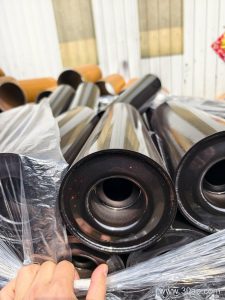
The matching carrying idler bracket must align with the idler roller shaft and with the conveyor frame. When the belt is a heavy-duty mining conveyor belt or a steel cord conveyor belt carrying iron ore, the bracket and roller set should be sized for the load, not only for the belt width. Lighter belts such as an EP conveyor belt or NN conveyor belt on an aggregate conveyor belt line may use a lighter frame, but the mounting dimensions still need to match.
Applications Across Bulk Handling Industries
Carrying brackets are found wherever a belt conveyor moves bulk material. In a coal mining conveyor belt system or a power plant coal yard, flame retardant conveyor belt grades are common, and the bracket frame must tolerate dust and moisture. In a stone crushing line, a crusher conveyor belt and rock conveyor belt work with impact brackets at transfer points. Cement plants, steel plants, port ship loading systems, and fertilizer or grain silos all rely on troughing brackets to keep the belt profile stable.
For more on matching components, see conveyor bracket guidance and conveyor idler selection notes. Belt choice also matters: a heat resistant conveyor belt in a sinter plant or an oil resistant conveyor belt in a recycling line changes the operating temperature and chemical exposure the bracket frame will see.
What Buyers Should Check Before Ordering
Buyers should confirm belt width, trough angle, idler roller diameter, and mounting hole spacing before ordering. Ask whether the bracket is fixed or adjustable, and check the frame material and coating for the site conditions. Verify that the bracket matches the existing conveyor frame and the idler shaft, and confirm whether transition or impact brackets are needed near loading points. Parameter values such as B800, 35 degrees, and Ø108 are common references, but final dimensions should follow the conveyor design drawing and the supplier’s confirmed data.