What an Ore Conveyor Idler Does
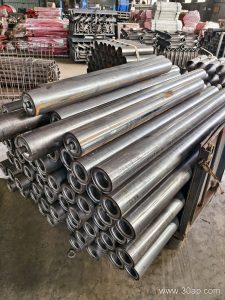
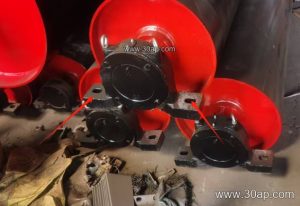
An ore conveyor idler is the rotating support that carries the conveyor belt and its load along the length of a bulk handling conveyor. In hard rock mining, quarrying, and mineral processing, the idler must cope with sharp lump ore, high dust levels, and continuous operation. The idler roller itself is usually a steel tube fitted with bearings and sealed at both ends, mounted in a conveyor bracket or frame. While the drive, tail, and bend pulleys transmit power and change belt direction, the ore conveyor idler simply supports the belt and helps maintain its trough shape.
Construction and Common Configurations
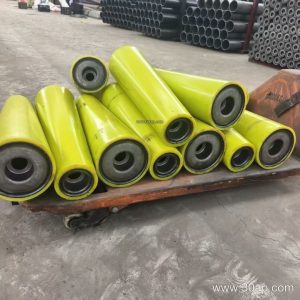
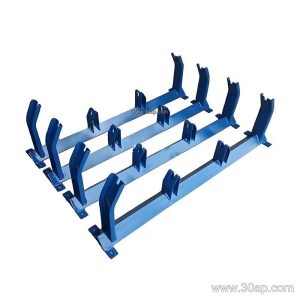
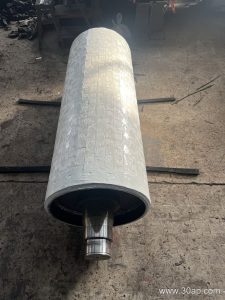
A typical ore conveyor idler uses a steel shell, often with a rubber or ceramic lagging for abrasive service, and deep-groove ball bearings chosen to suit the load and speed. Sealing is critical in ore handling because fine dust and moisture shorten bearing life. Common roller diameters include Ø89, Ø108, Ø127, Ø133, Ø159, and Ø178 mm, with larger diameters often used on wide, heavy-duty conveyors. Bearing sizes such as 6205, 6305, 6306, and 6308 appear across many idler designs, but the bearing is selected by load rating and shaft design, not by roller diameter alone.
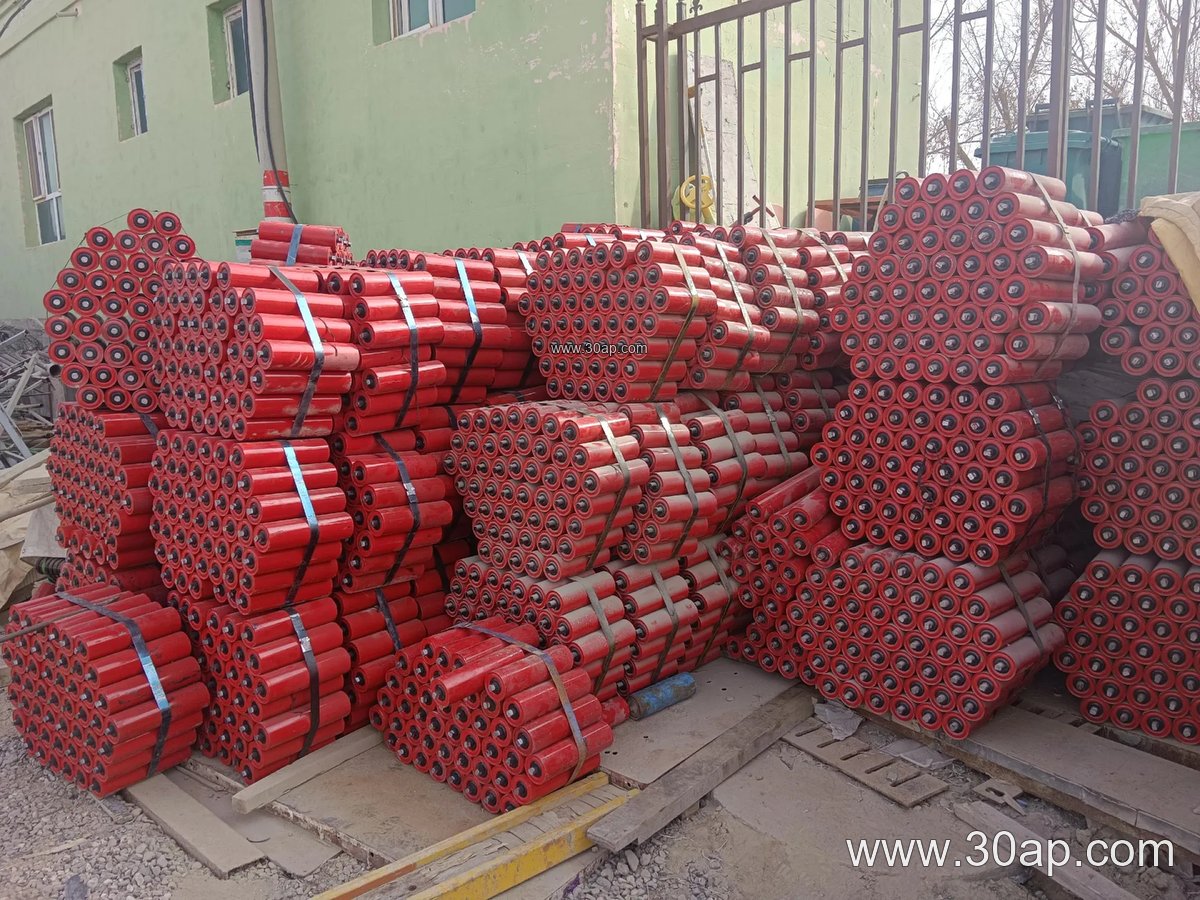
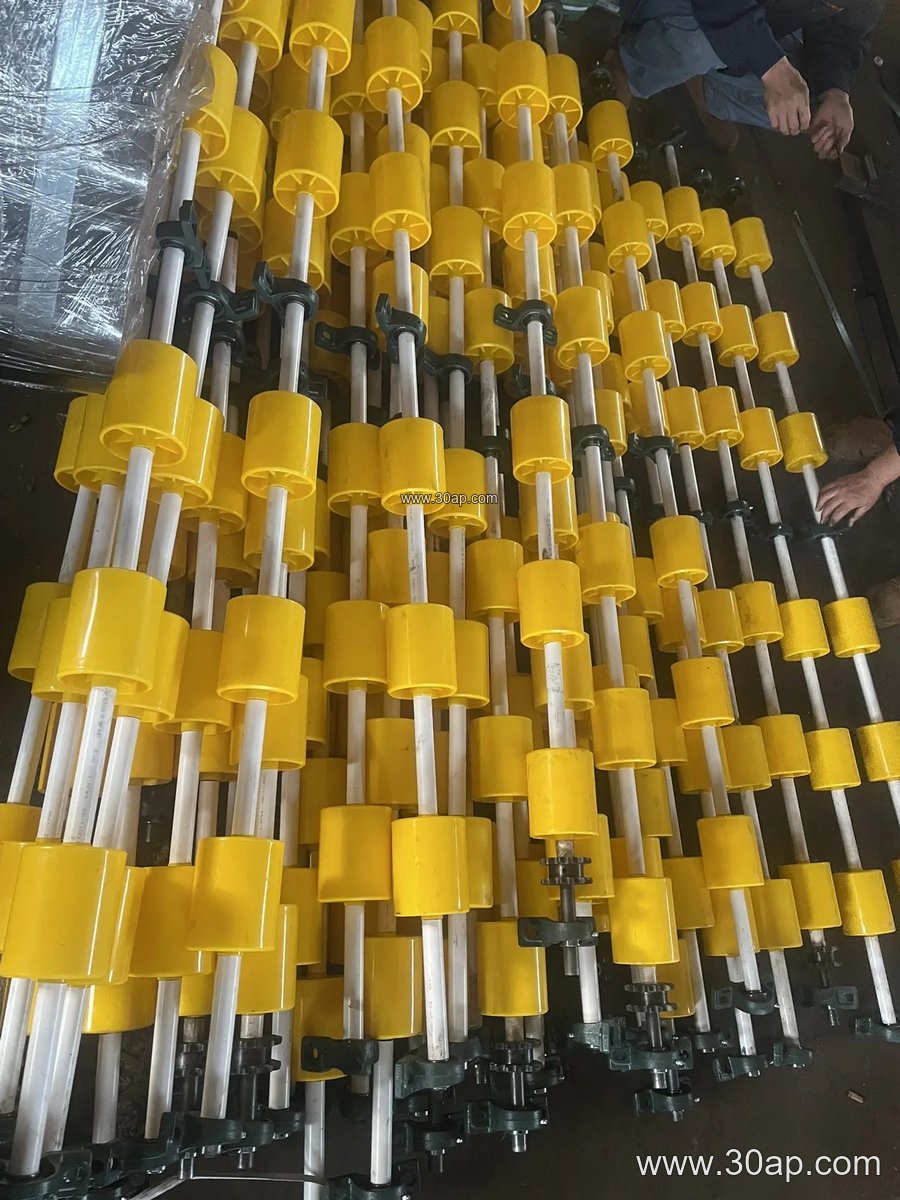
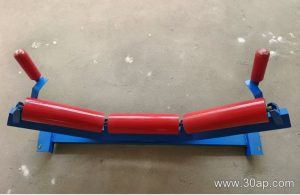
Troughing idler sets are usually made as two-roll or three-roll assemblies. The trough angle affects how well the belt contains the ore load. Common trough angles are 20, 30, 35, and 45 degrees, with 35 degrees widely used in mining and quarry conveyors. Roll length depends on belt width, trough angle, and roll configuration. For example, a three-roll troughing set on a 1000 mm belt often uses rolls around 380 mm long, while a 1400 mm belt may use rolls near 530 mm. These are typical examples only; side rolls and center rolls can differ, and the final dimensions are set by the conveyor designer.
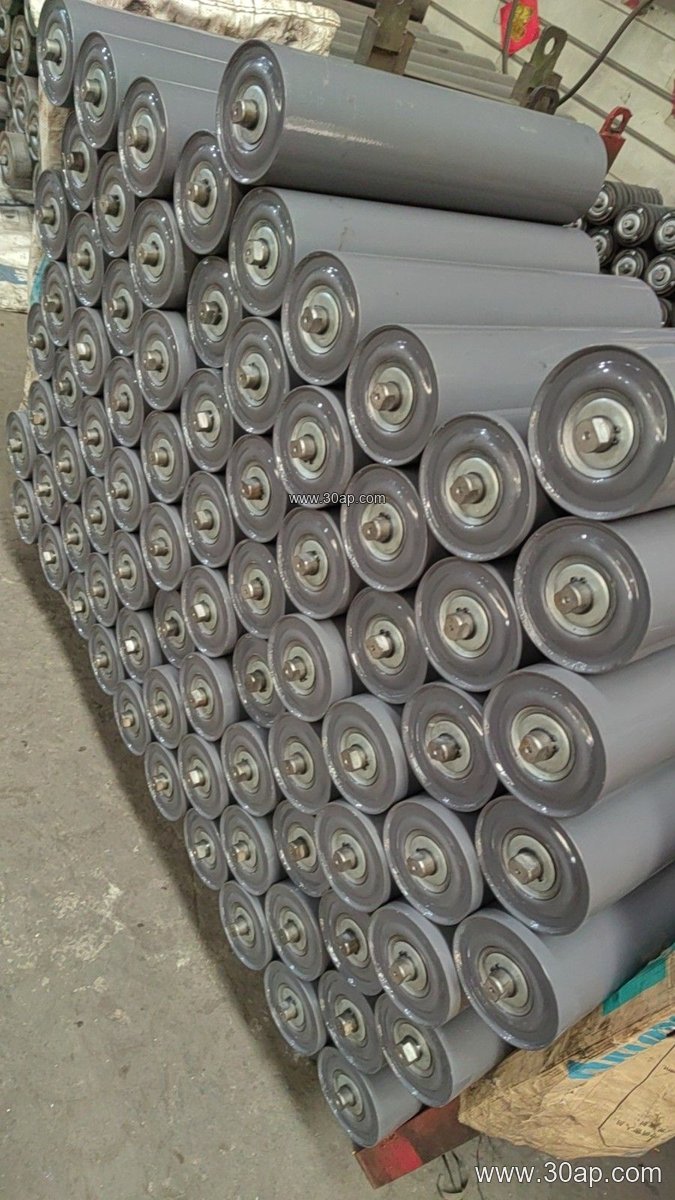
Idler Types Used in Ore Handling
- Troughing idlers support the loaded belt and form the trough that keeps ore centered.
- Impact idlers with rubber rings are placed at transfer points where ore drops onto the belt.
- Return idlers, including flat and V-return types, support the empty belt on its return run.
- Training idlers help keep the belt aligned, especially on long conveyors with variable loading.
- Spiral idlers can reduce material buildup on the return side in sticky or dusty conditions.
Surface options include plain steel, nylon, ceramic, and rubber rings. Rubber-ring impact idlers are common under crusher discharge and at belt loading points, where ore lumps create repeated shock loads.
Where Ore Conveyor Idlers Are Used
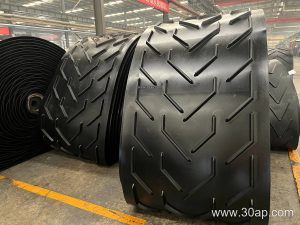
These idlers appear in iron ore mines, copper concentrators, limestone quarries, coal preparation plants, cement plants, and power station coal handling systems. In a crushing and screening circuit, impact idlers are often installed beneath the crusher conveyor belt to absorb lump impact, while troughing idlers carry the screened ore to stockpiles or transfer towers. In a coal washing plant, flame retardant and anti-static conveyor belts may be required, and the idler seals should resist fine coal dust and wash-down moisture. The ore conveyor idler works alongside the conveyor pulley, conveyor bracket, and belt to keep the system running smoothly.
Buyer Checklist for Ore Conveyor Idlers
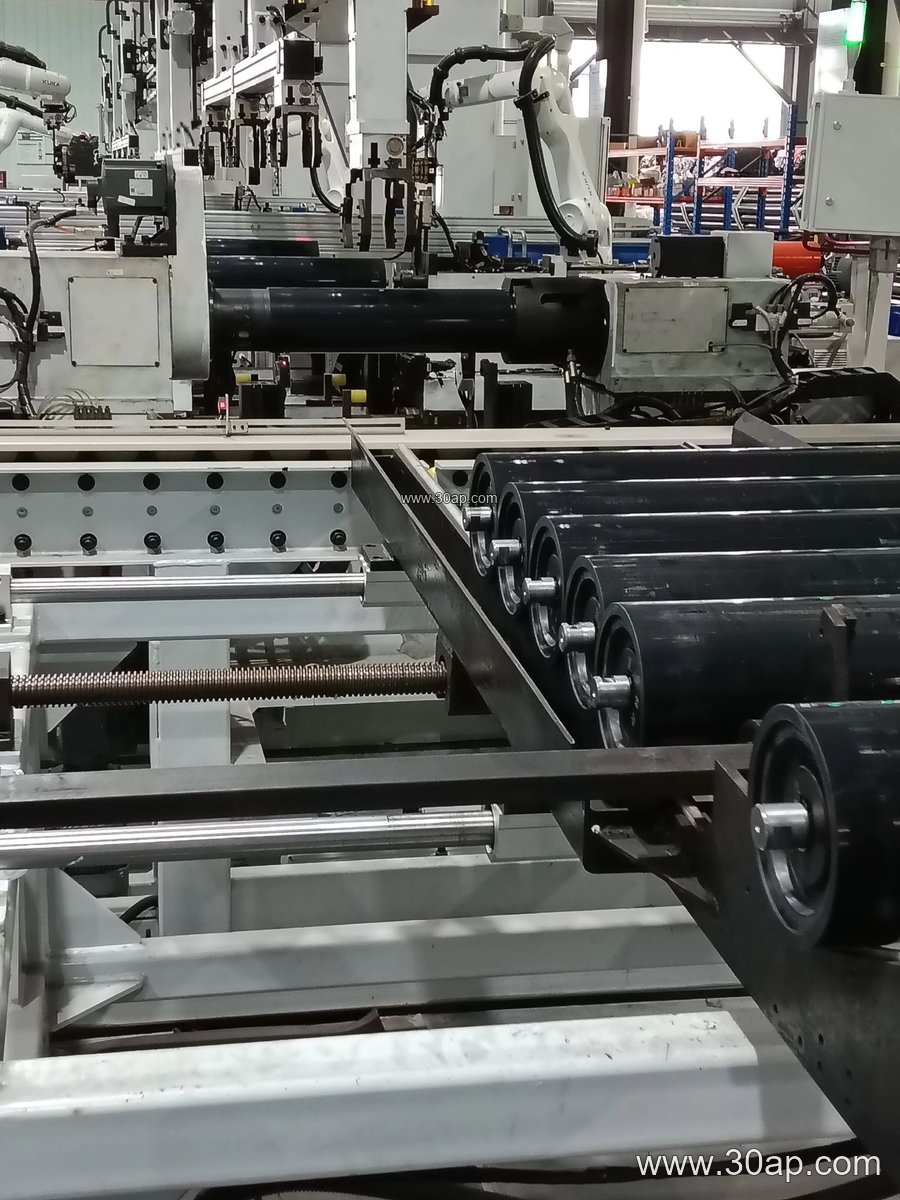
Buyers should match the idler to the belt width, belt speed, load weight, and material characteristics. Key questions include the required roll diameter and bearing size, the trough angle, the roll length, and whether the application needs impact resistance or extra sealing. For abrasive ore, a high abrasion resistant conveyor belt may be paired with idlers that have good dust protection. In cold climates, cold resistant conveyor belt grades may be used, and the idler bearings should be suitable for low-temperature startup. It is also worth confirming the mounting dimensions and bracket type so the idler set fits the existing conveyor frame.
Maintenance planning matters as much as initial selection. Idlers that seize or run rough can damage the belt and increase power draw. Spare idler rollers and brackets should be kept for critical conveyors, and inspection should focus on bearing noise, seal condition, and shell wear. A well-chosen ore conveyor idler, matched to the belt and the duty, helps extend conveyor belt life and reduce unplanned downtime in mining, quarry, cement, and power plant operations.