What a Mining Belt Conveyor Pulley Does
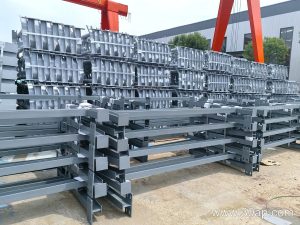
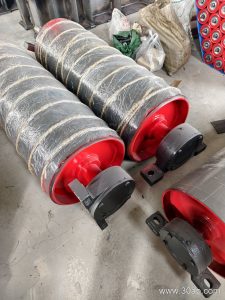
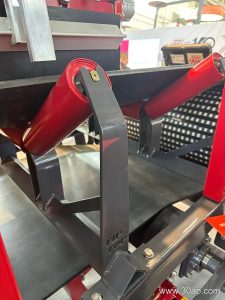
A mining belt conveyor pulley is the rotating drum that carries and redirects the conveyor belt at key points along a bulk material handling system. It transmits drive torque, maintains belt tension, and guides the belt through loading, carrying, and return zones. In hard-rock mines, coal preparation plants, and aggregate operations, this component works together with the conveyor belt, idler roller, and conveyor bracket to keep material moving reliably.
While drive pulleys, tail pulleys, and bend pulleys all belong to the same product family, they are not interchangeable. A drive pulley (also called a head pulley) delivers power to the belt, a tail pulley returns the belt at the loading end, and a bend pulley changes belt direction without driving it. Each subtype has its own design priorities, and specifying the wrong one can shorten belt life or reduce conveying efficiency.
Construction and Surface Options
The drum body is typically fabricated from rolled steel plate or seamless tube, with welded end discs and a shaft that runs through the assembly. Common shaft diameters include Ø50, Ø60, Ø70, Ø80, Ø90, Ø100, Ø120, Ø140, Ø160, Ø180, and Ø200 mm, though the final size is determined by torque and load rather than belt width alone. Bearing housings, locking assemblies, and a conveyor bracket complete the mounting arrangement.
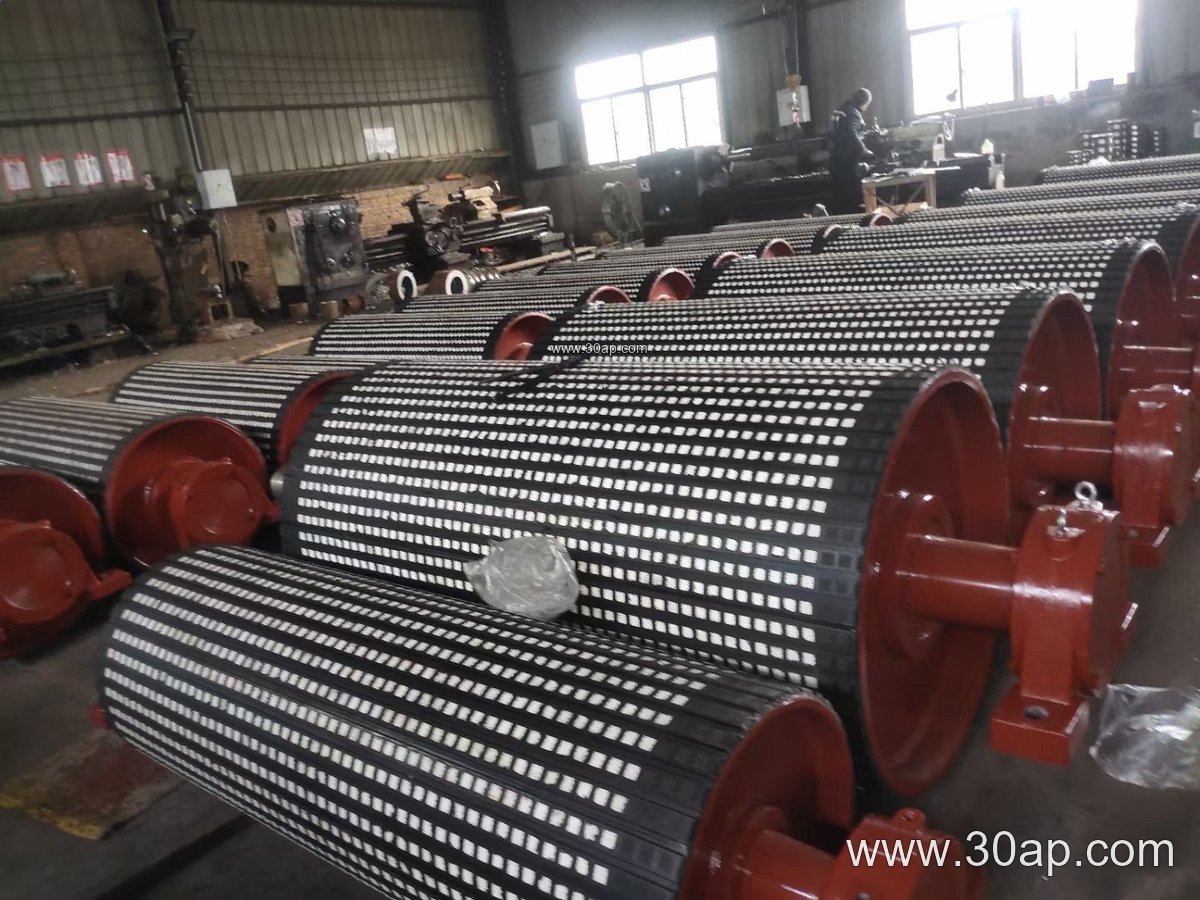
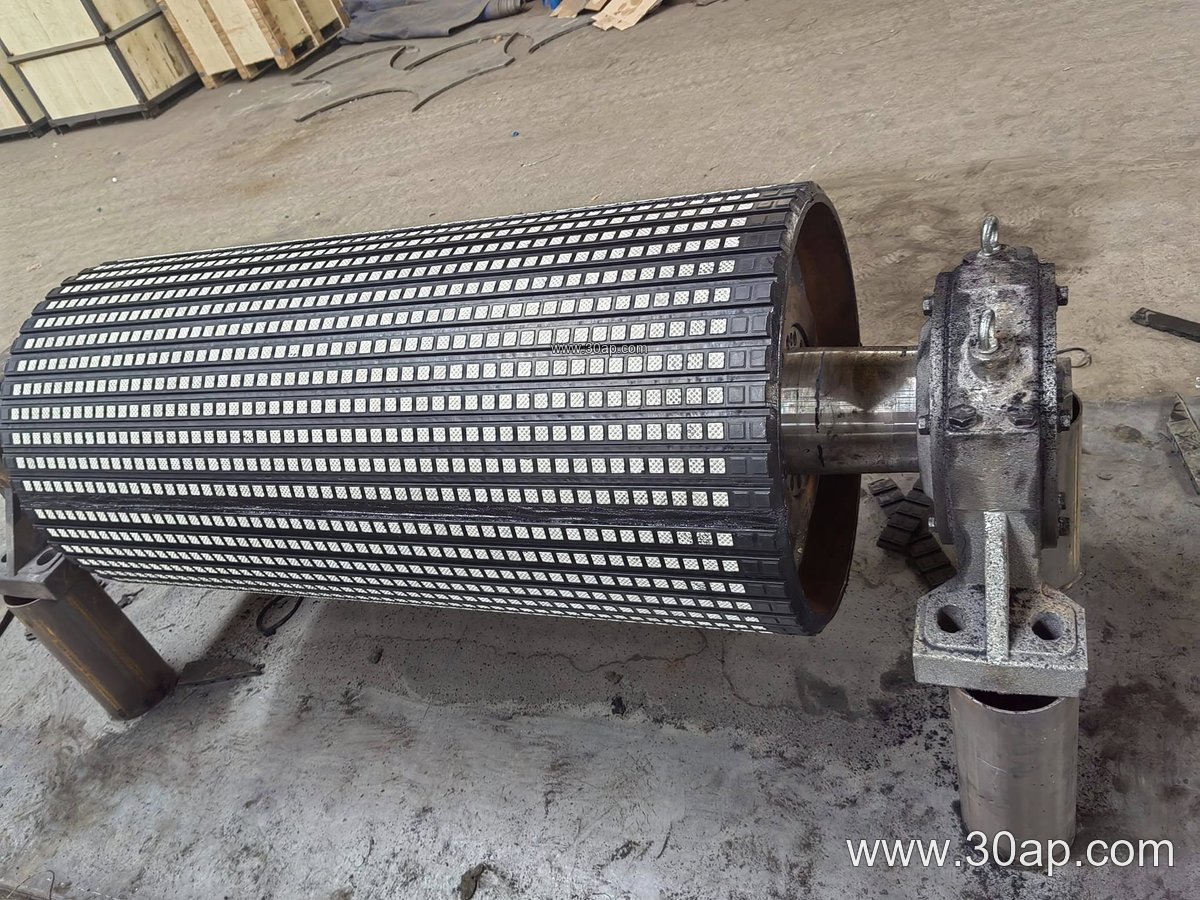
Surface treatment matters as much as the drum body. Plain (smooth) surfaces suit some light-duty bend positions, while rubber lagging improves grip and protects the shell. Common lagging forms include cast rubber, cold-bonded rubber, hot-vulcanized rubber, diamond pattern, herringbone pattern, ceramic lagging, and flat rubber sheet. Lagging thickness is often 8, 10, 12, 15, or 20 mm depending on the duty. For a drive pulley in a coal mining conveyor system, diamond or ceramic lagging is frequently chosen to reduce slip under wet conditions.
Where It Is Used
These pulleys appear throughout a mine’s conveyor network. At a copper or iron ore mine, a heavy-duty mining conveyor pulley may sit at the discharge end of a primary crushing circuit, handling coarse rock on a steel cord conveyor belt. In a coal preparation plant, flame retardant conveyor belts and anti-static belts run over pulleys designed for dusty, potentially explosive atmospheres. Aggregate quarries often use fabric core belts such as EP conveyor belt or NN conveyor belt grades, paired with pulleys that resist abrasive fines.
Other settings include cement plant clinker lines, power plant coal handling, port bulk terminals, and tunnel spoil removal. Each location imposes its own demands on lagging, sealing, and bearing protection.
Matching Pulley Size to the Conveyor
Belt width and pulley diameter are related but not locked together. A B800 conveyor might use a Ø500 pulley, while a B1200 system could run a Ø1000 drum; the selection depends on belt tension, wrap angle, and shaft load. Shell width is normally slightly larger than belt width to keep the belt centered. Typical relationships are shown below for reference only.
| Belt Width | Typical Shell Width | Common Diameter Examples |
|---|---|---|
| B400 | ~500 mm | Ø200, Ø250, Ø315 |
| B500 | ~600 mm | Ø250, Ø315, Ø400 |
| B650 | ~750 mm | Ø315, Ø400, Ø500 |
| B800 | ~950 mm | Ø400, Ø500, Ø630 |
| B1000 | ~1150 mm | Ø500, Ø630, Ø800 |
| B1200 | ~1400 mm | Ø630, Ø800, Ø1000 |
| B1400 | ~1600 mm | Ø800, Ø1000, Ø1250 |
| B1600 | ~1800 mm | Ø1000, Ø1250, Ø1400 |
| B1800 | ~2000 mm | Ø1250, Ø1400, Ø1600 |
| B2000 | ~2200 mm | Ø1400, Ø1600, Ø1800 |
These figures are reference data, not verified universal specifications. A Ø630 drum can serve more than one belt width, and shaft diameter should always be calculated from actual torque and load.
Buyer Checklist
- Confirm the pulley position: drive, tail, bend, take-up, or snub, since each has different loading and lagging needs.
- State the belt type and duty, whether EP conveyor belt, NN conveyor belt, steel cord conveyor belt, or a heat resistant conveyor belt.
- Provide belt width, required diameter, shaft size, and bearing type so the supplier can verify fit.
- Specify lagging form and thickness where grip or wear protection matters.
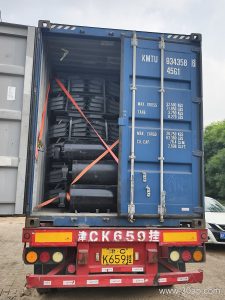
- Ask about balancing, inspection records, and packaging for transport to remote mine sites.
At sites such as a limestone quarry or a sintering plant, keeping spare lagging and checking pulley alignment during shutdowns helps avoid unplanned stoppages. For more information on matching pulleys with conveyor belt and idler roller selections, visit our resource pages.