What a Large Drive Pulley Does on a Conveyor
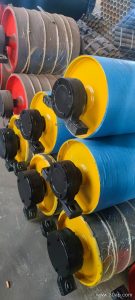
A large drive pulley is the powered drum at the head of a conveyor that grips the belt and pulls the entire load. In heavy-duty circuits—an iron ore stockyard, a limestone quarry, a cement clinker line—it is usually the largest and most heavily loaded drum on the machine. Its job is simple to state and hard to execute: transmit torque without slip, keep the belt centered, and survive years of abrasive dust and shock loading. Unlike a tail pulley, which mainly redirects the returning belt, or a bend pulley that only changes direction, the drive drum carries the full tangential force of the conveyor. That is why it gets more mass, more bearings, and more attention during selection.
Construction and Surface Options
The core is normally a welded steel shell with dished or flat end plates, machined hubs, and a shaft sized by torque rather than by belt width alone. Common diameters for large units run from Ø800 and Ø1000 up to Ø1250, Ø1400, Ø1600, and beyond on very long systems. Shell width usually exceeds the belt width so the belt has room to track; a B1200 belt, for example, often runs on a shell of roughly 1400 mm, while a B1400 belt may sit on a 1600 mm face. These are typical references, not fixed rules—final geometry follows the conveyor design.
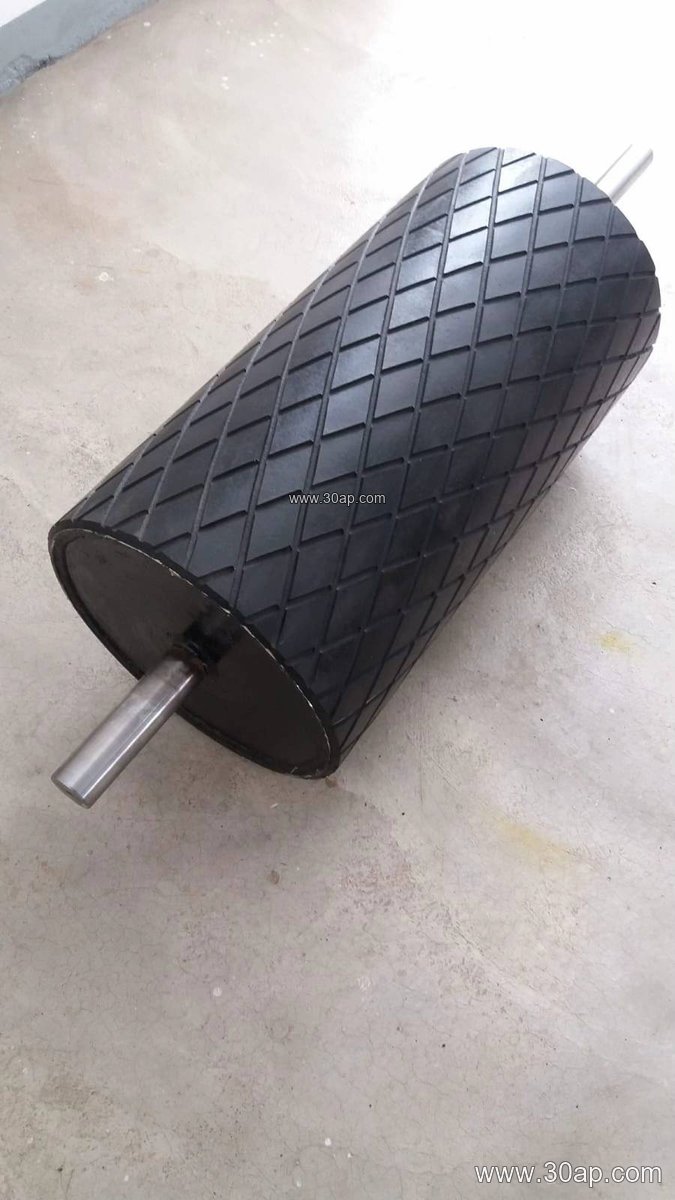
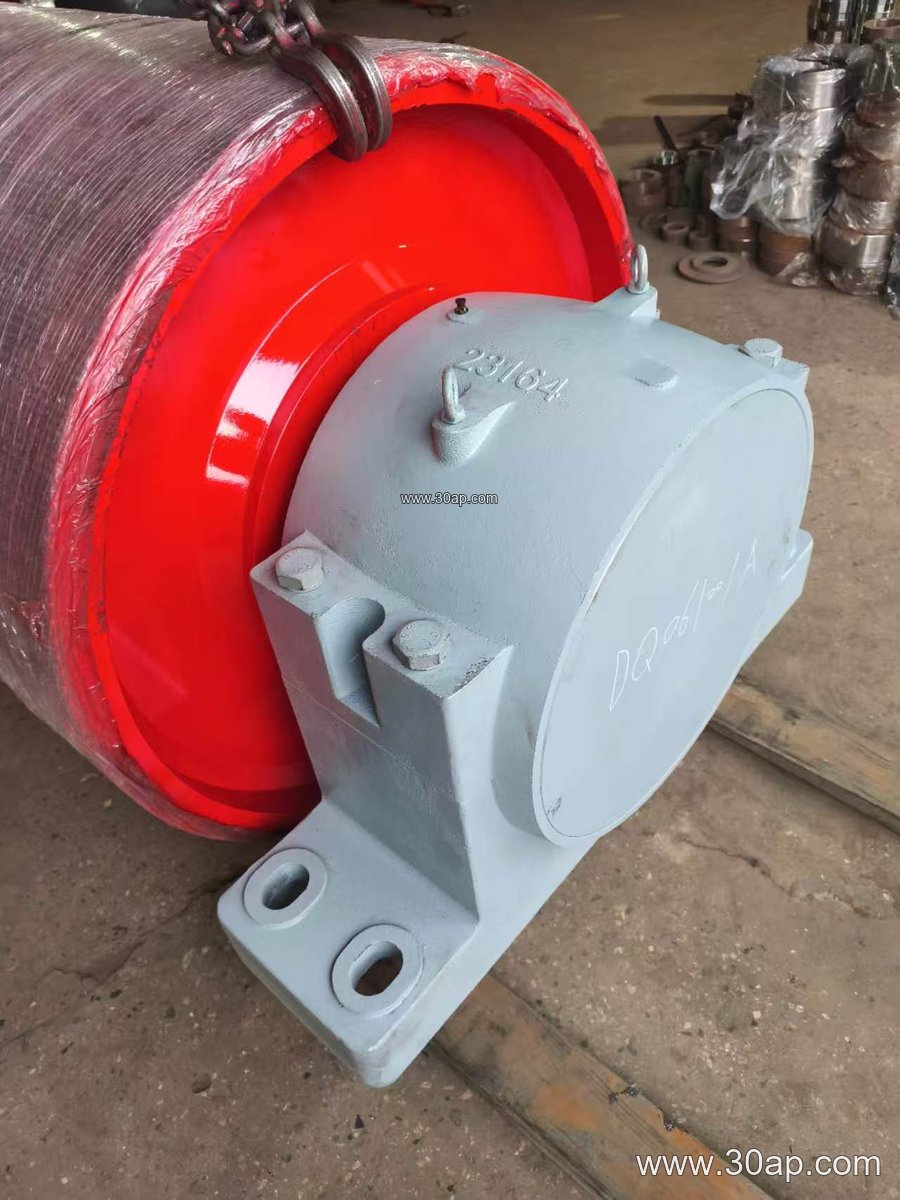
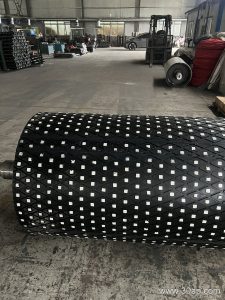
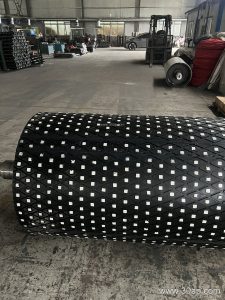
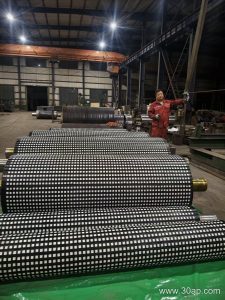
Surface treatment decides how much grip the drum can deliver. Plain machined shells suit light loads and clean conditions. Rubber lagging—applied cold or hot-vulcanized, sometimes in diamond or herringbone pattern—raises friction and sheds water and fines. Ceramic lagging is chosen where slip risk is high, such as a wet coal handling circuit or an ore conveyor with steep incline. Lagging thickness commonly falls between 8 mm and 20 mm depending on duty. Shaft diameters on large drums often range from Ø120 to Ø200, again determined by calculated torque and bearing load, never by a simple width-to-shaft lookup.
Matching the Drum to the Belt and the Duty
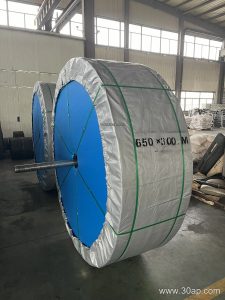
The drive pulley and the conveyor belt work as a pair. A heavy-duty mining conveyor belt with a steel cord carcass, such as an ST1600 or ST2000, can tolerate high tension and allows a relatively smaller drum diameter; a multi-ply fabric core belt like an EP400 or NN300 usually needs a larger diameter to keep carcass stress within limits. Buyers should share the belt specification, the calculated belt tension, the wrap angle, and the starting torque with the drum supplier. A high-abrasion resistant conveyor belt running in a crusher discharge area may also call for ceramic lagging and generous shell thickness, while a flame retardant conveyor belt in an underground coal mining application must be paired with components that respect the same safety philosophy.
- Confirm belt type and carcass: EP, NN, steel cord, or solid woven PVG.
- Provide maximum operating tension and starting torque.
- State ambient conditions: wet, dusty, oily, hot, or cold.
- Specify wrap angle and whether a snub or pressure pulley is used.
Where Large Drive Pulleys Are Installed
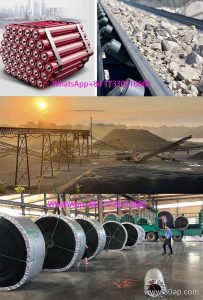
These drums appear at the discharge end of overland conveyors in copper and gold mining operations, at the head of ship loading systems in bulk ports, and on the main haulage belts of power plant coal yards. In a sand and aggregate plant, a large drive pulley may sit after the primary crusher, handling sharp rock with an abrasion resistant conveyor belt and a heavy rubber lagging. In cement plants, heat resistant conveyor belt grades carry clinker to the cooler, and the head drum must tolerate both temperature and grit. The same hardware family shows up in fertilizer granulation lines and grain silos, where a food grade or oil resistant belt may run alongside a smooth-faced drum.
Buyer Checklist Before Ordering
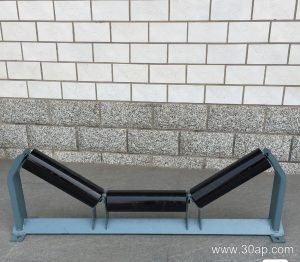
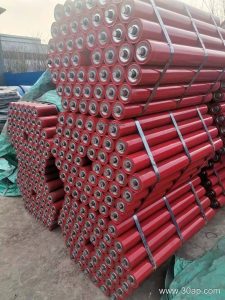
Ask for the shaft material and its calculated diameter, the bearing type and housing, the lagging bond method, and the balancing grade. Check that the shell face width matches the actual belt width with adequate margin, and confirm the pulley is designed for the real wrap angle rather than a nominal one. Consider the conveyor bracket and bearing pedestal interface early—retrofits are far costlier than a correct first order. A spare idler roller or two is cheap insurance, but a spare drive drum is a capital item, so specify it once and specify it well. Whether the circuit runs an EP conveyor belt at 1000 mm width or a steel cord belt at 1800 mm, the large drive pulley should be sized from torque, tension, and environment, not from a single dimension on a data sheet.