What an Intermediate Bend Pulley Does
An intermediate bend pulley is a direction-changing idler in a belt conveyor. Positioned between the head and tail, it redirects the conveyor belt to maintain proper wrap on the drive pulley or to route the belt around obstructions. Unlike the drive pulley that transmits power or the tail pulley that tensions and tracks the belt, this intermediate bend pulley serves purely as a routing component. In quarry and aggregate lines, it helps navigate tight layouts without adding unnecessary length to the conveyor structure. For reliable performance, pair it with quality conveyor pulleys and idler rollers from trusted suppliers.
Construction and Key Features
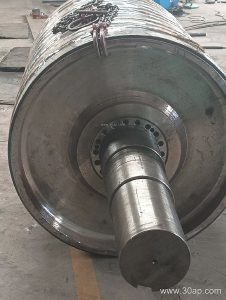
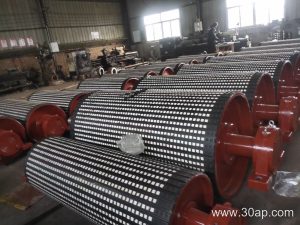
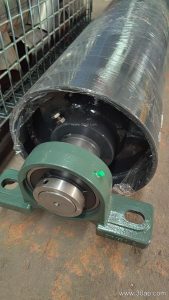
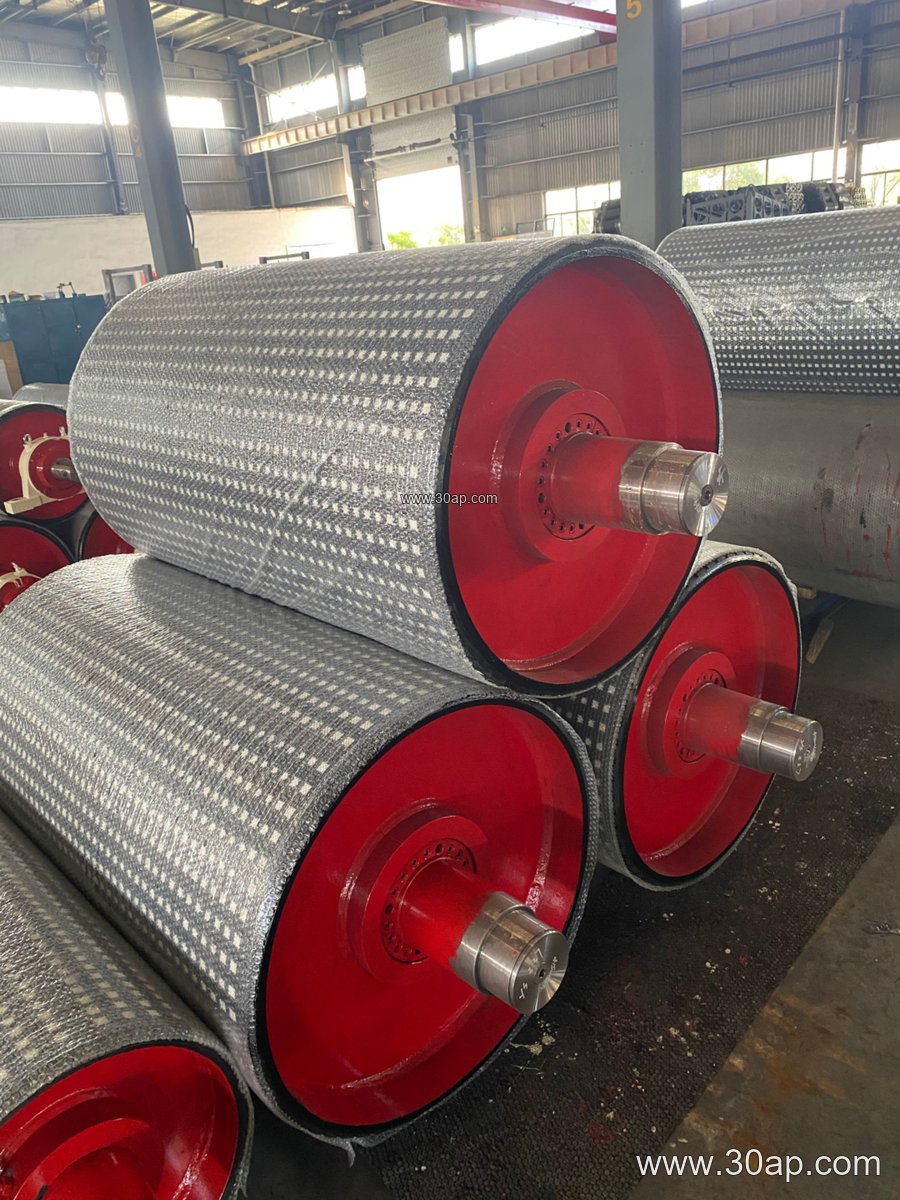
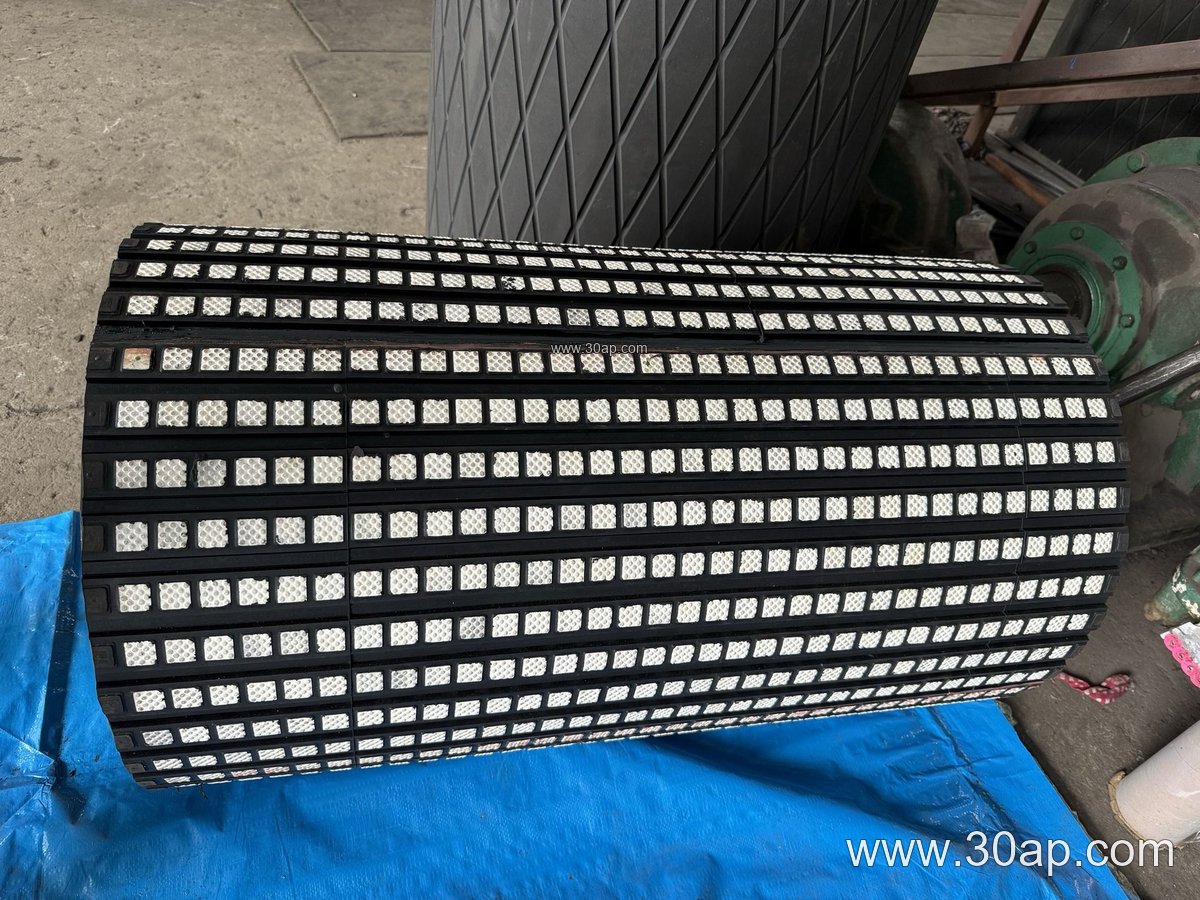
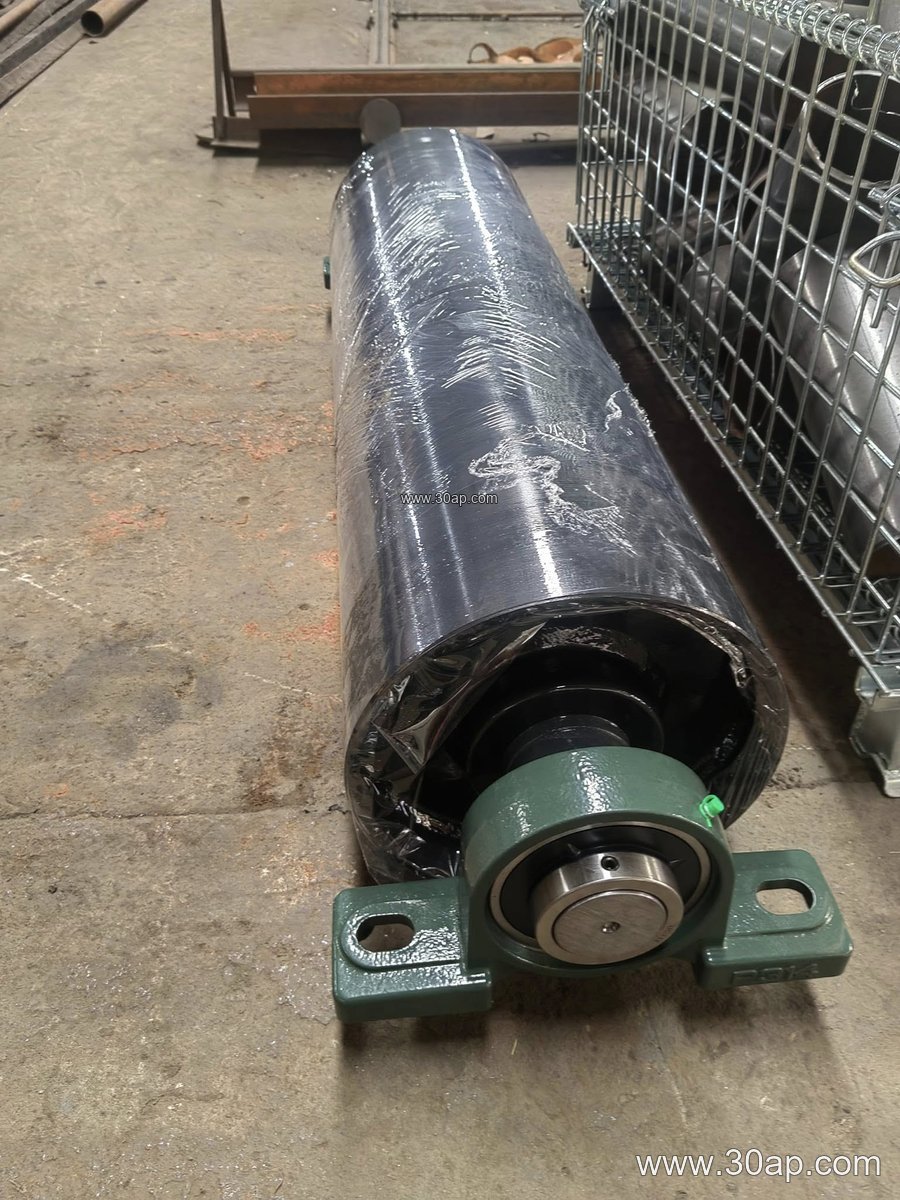
These pulleys are built with a sturdy steel shell, welded end discs, and a through shaft or stub shaft design. The shell surface may be plain, or it can be rubber-lagged to improve belt traction and reduce slip. Lagging options include cold-bonded rubber, hot-vulcanized rubber, diamond pattern, or ceramic lagging, with thicknesses typically ranging from 8 mm to 20 mm. Bearings are housed in sealed plummer blocks or flanged bearing units, and the shaft diameter is determined by torque and load, not simply by belt width. Common shaft sizes include Ø50, Ø80, Ø120, and Ø160, among others. The pulley face width usually exceeds the belt width to ensure full support; for instance, a B800 belt often uses a pulley face around 950 mm.
Where It Fits in the Conveyor
Intermediate bend pulleys appear in a variety of bulk material handling setups. In underground coal mining, they route the belt around curves and away from structural columns. In cement plants, they help navigate clinker cooler discharge lines. Power plant coal handling systems use them to maintain belt wrap on drive pulleys when space is limited. Port bulk terminals also employ these pulleys to transition belts between different conveyor sections. They are equally at home in sand and gravel operations, crushing and screening plants, and fertilizer handling facilities. Regardless of the site, the pulley must be compatible with the conveyor belt type, whether it is an EP conveyor belt, a steel cord belt, or a heat resistant belt.
Selection and Sizing Guidelines
When specifying an intermediate bend pulley, consider the belt width, the required diameter for belt stiffness, and the shaft load. Larger diameters reduce bending stress on the belt, especially with thick or heavy-duty belts. Common diameter ranges include Ø250, Ø400, Ø500, Ø630, and Ø800, but the final choice depends on the belt’s minimum pulley diameter recommendation. The table below shows typical combinations, but these are examples only and not fixed rules.
| Belt Width | Example Pulley Diameter | Example Face Width |
|---|---|---|
| B500 | Ø315 | 600 mm |
| B800 | Ø500 | 950 mm |
| B1200 | Ø1000 | 1400 mm |
| B1400 | Ø800 | 1600 mm |
Note that a given belt width can accommodate several pulley diameters; the correct match is determined by the conveyor design, belt tension, and space constraints. Always confirm shaft diameter based on actual torque and radial loads, not just belt width. For high-abrasion environments, consider lagging to extend pulley life. Also verify that the pulley bracket and bearing supports align with the conveyor frame.
Maintenance and Buying Tips
Regular inspection of the intermediate bend pulley includes checking lagging wear, bearing temperature, and shaft alignment. Misalignment can cause belt tracking issues and premature belt edge damage. When replacing a pulley, ensure the new unit matches the original mounting dimensions and load capacity. Buyers should request detailed drawings showing shaft size, keyway, bearing type, and lagging specification. If the conveyor uses a fabric core conveyor belt or a multi-ply fabric core belt, a slightly larger pulley diameter may be beneficial to reduce flex fatigue. For flame retardant conveyor belts in underground coal mining, choose pulleys with anti-static lagging if required.
For more information on conveyor pulleys and related components, visit our site at www.example.com/conveyor-pulley or www.example.com/bend-pulley. Our range includes idler rollers, conveyor brackets, and pulleys for various belt widths and industries.