What a Trough Idler Bracket Set Does on a Conveyor
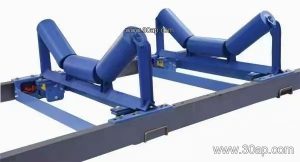
A trough idler bracket set is the support frame that holds the carrying idlers in a troughed profile under the conveyor belt. Instead of letting the belt run flat, the set positions three or more idler rollers so the belt forms a shallow trough that keeps bulk material centred during transport. In a quarry, a cement plant or a coal handling system, this seemingly simple steel assembly determines how well the belt tracks, how much material spills at the edges, and how evenly the load is distributed across the idler roller bearings.
The same assembly is also called a troughing idler frame or troughing bracket set, and buyers should treat these as accurate equivalents for the same product. It is not a drive pulley, a tail pulley or a bend pulley; those are separate components at the ends and corners of the conveyor. The bracket set is the intermediate support that repeats along the carrying side of the conveyor structure.
Construction and Common Configurations
Most sets are fabricated from angle steel, channel steel or folded steel plate, then drilled and welded to match the chosen idler spacing and trough angle. A typical set includes a base beam, two inclined side arms and mounting slots or holes for the idler shafts. The design may be fixed or adjustable, and the adjustable version lets maintenance crews fine-tune the trough angle within a working range rather than replacing the whole frame.
Common reference values used in specification discussions include:
| Parameter | Typical reference values |
|---|---|
| Belt width | B500, B650, B800, B1000, B1200, B1400, B1600, B1800, B2000 |
| Trough angle | 20, 30, 35, 45 degrees; adjustable frames can move between these |
| Idler diameter | Ø89, Ø108, Ø133, Ø159, Ø194 |
| Material | Angle steel, channel steel, folded steel plate |
Mounting hole spacing and crossbeam length change with belt width and trough angle, so they are determined by design rather than by a single fixed number. A B800 frame at 35 degrees with Ø108 idlers is a common combination in secondary crushing circuits, while a B1200 set at 45 degrees with Ø133 rollers often appears on higher-capacity main lines. These are examples, not mandatory pairings; a B650 conveyor can use 30 degrees with Ø89 idlers, and wider belts may use different angles depending on material characteristics.
Where the Bracket Set Fits in the Plant
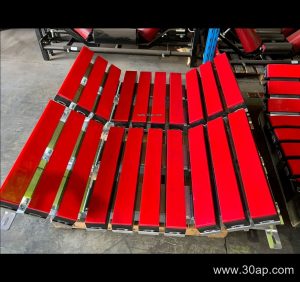
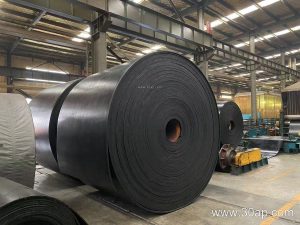
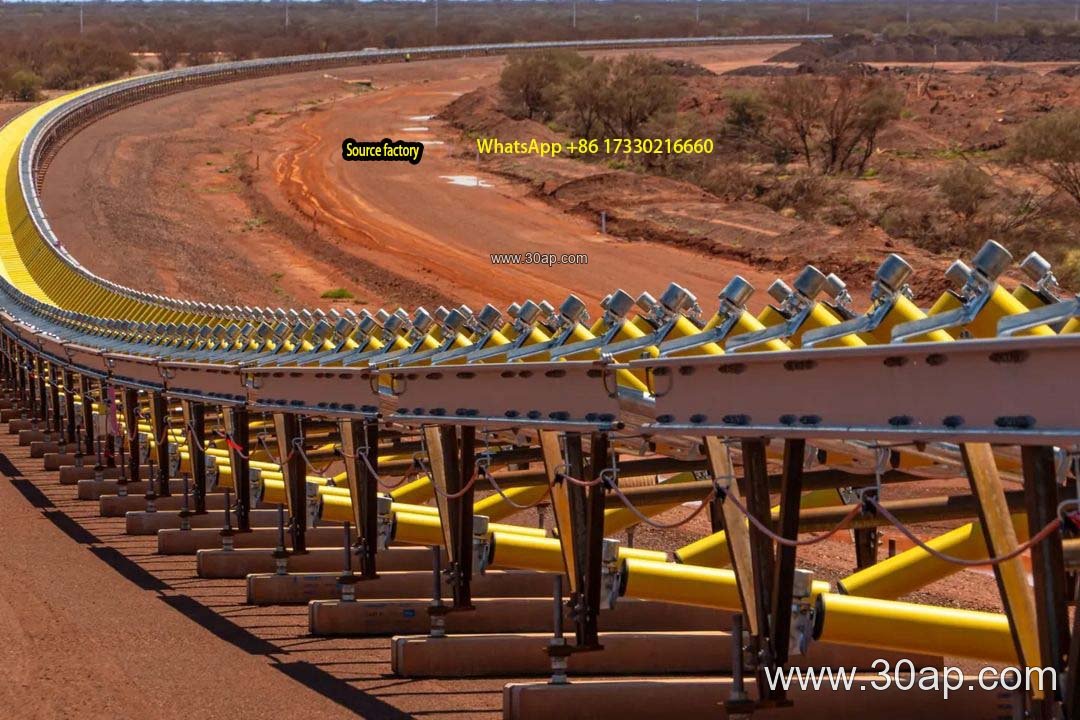
In a limestone mine or stone crushing line, the trough idler bracket set carries the conveyor belt through transfer points and long inclined runs. In a coal washing plant or power station coal yard, flame retardant conveyor belt and anti-static conveyor belt are often specified, and the bracket set must align with the idler frame spacing so the belt does not pinch or mis-track. Cement plants handling clinker and raw meal rely on abrasion resistant conveyor belt, and the troughing frames here face fine dust that can settle around the mounting slots.
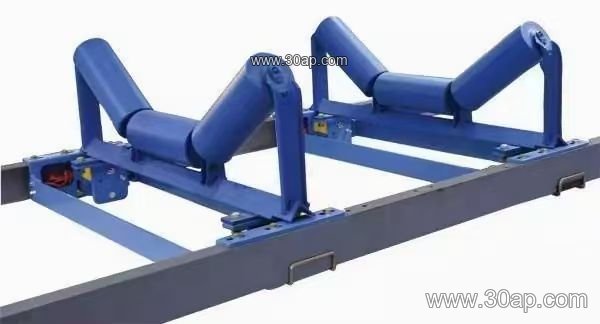
The set works together with the idler roller, the conveyor pulley at each end, and the conveyor bracket that ties the whole structure to the stringer. A transition bracket near the head or tail may use a different trough angle than the standard carrying frames, which is why the bracket set should be selected as part of the whole conveyor layout rather than in isolation.
Selection and Maintenance Notes for Buyers
When specifying a trough idler bracket set, confirm the belt width, the intended trough angle, the idler diameter and the shaft fixing method. Check that the frame material and coating suit the environment: a washdown area, a dusty coal yard and an outdoor quarry all place different demands on the steel. For heavy-duty mining conveyor belt lines, thicker frames and reinforced welds are usually preferred, while lighter aggregate conveyor belt installations may use standard folded plate frames.
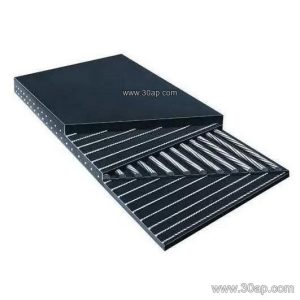
During operation, inspect the bracket set for loose bolts, bent side arms and corrosion at the mounting holes. A misaligned frame can cause the belt to run off-centre, wear the idler roller edges and reduce the service life of an otherwise healthy EP conveyor belt or steel cord conveyor belt. Replacing a damaged bracket set early is usually simpler than correcting the belt damage that follows.
For project planning, buyers can review frame options together with the conveyor belt, idler roller and conveyor pulley selections so that the trough profile, belt width and support spacing stay consistent from the quarry face to the stockpile.