What a Corrugated Sidewall Conveyor Belt Is
A corrugated sidewall conveyor belt is a heavy-duty conveyor belt built with raised, wave-shaped rubber walls along both edges and, usually, horizontal cleats between them. This design lets one belt lift bulk material at a steep angle instead of relying on a long, gentle incline. In a quarry, cement plant, or coal mining operation, that can mean a shorter conveyor route, less civil work, and fewer transfer points. The product is also called a skirted conveyor belt with corrugated sidewalls, and both names describe the same construction. Sidewalls and cleats are vulcanized to the base belt, so the assembly behaves as one unit on the conveyor.
How the Belt Is Built
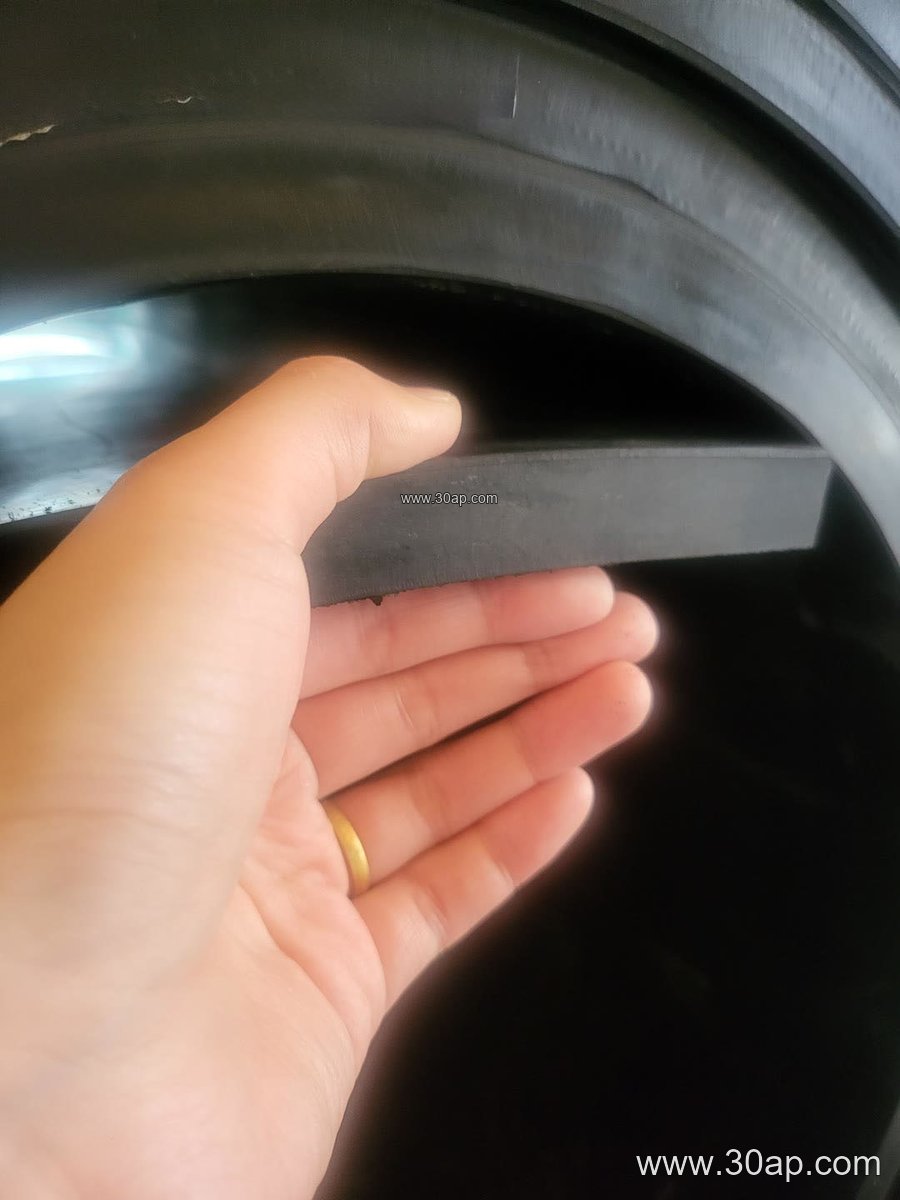
The base belt carries the tension and provides the running surface. It is commonly an EP conveyor belt or an NN conveyor belt with two to six fabric plies, while long, high-capacity routes may use a steel cord conveyor belt. The sidewalls are molded in a corrugated profile, typically 50 mm to 300 mm high depending on the duty, and the cleats may be straight, angled, or shaped to suit the material. Cover rubber is selected for the cargo and the environment.
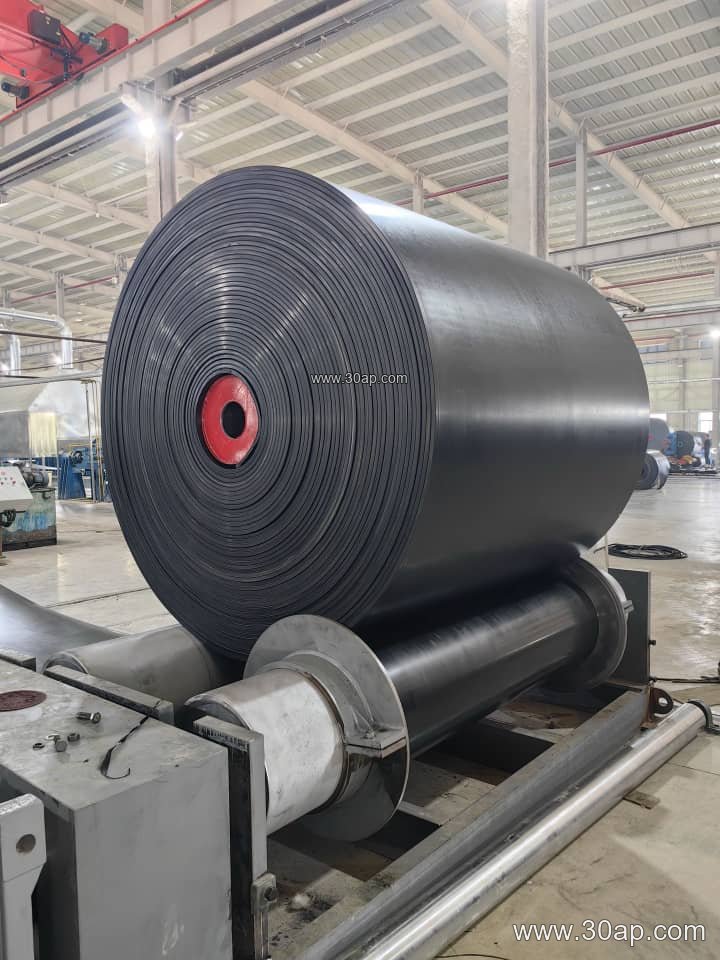
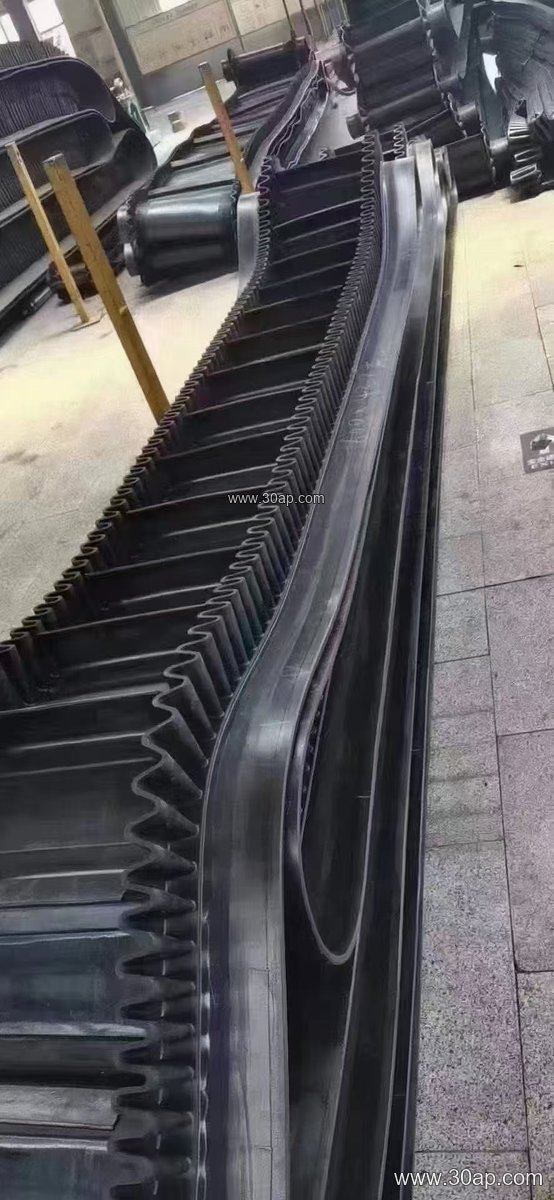
- Sidewall height and cleat pitch are matched to capacity and incline angle.
- Cover grades may be abrasion resistant, heat resistant, oil resistant, flame retardant, or anti-static.
- Cold resistant and acid resistant covers are available for special climates and chemical exposure.
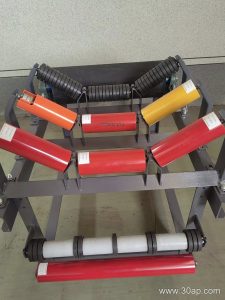
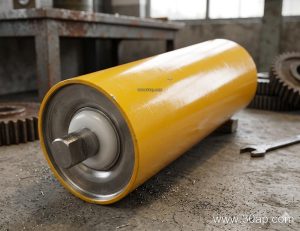
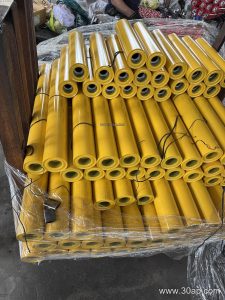
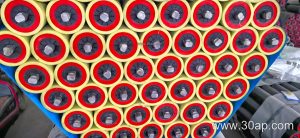
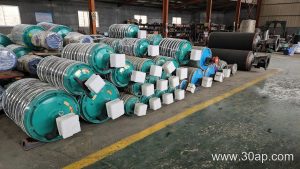
The belt runs on a flat carrying side, so troughing idler rollers are not used in the loaded section. Instead, the belt is supported by flat idlers or plates, and the sidewalls pass between special guide rollers. Drive, tail, and bend pulleys each have a distinct role and are not interchangeable; the bend pulley in particular helps control belt path and tension around the curve.
Where It Fits in the Plant
Steep-angle conveying suits bulk material conveyor belt systems in mining, coal preparation, cement and clinker lines, power plants, sand and gravel yards, ports, and recycling plants. A typical arrangement lifts material from a crusher discharge to a stockpile, or carries it out of an underground mining conveyor belt drift where space is tight. The belt can handle ore, coal, limestone, aggregate, fertilizer, and similar lumpy or granular loads. For very dusty or fine materials, the sidewalls and cleats reduce spillage compared with an open incline belt. Where a fully enclosed path is needed, a pipe conveyor belt is a different solution, while a chevron conveyor belt is a simpler option for moderate slopes without raised edges.
Specifications Buyers Usually Review
Most technical discussions start with belt width, sidewall height, cleat height and pitch, carcass type, and cover thickness. The table below shows common reference values; final figures are set by the conveyor design and should be confirmed with the manufacturer.
| Parameter | Common Reference Range |
|---|---|
| Belt width | B500, B650, B800, B1000, B1200, B1400, B1600, B1800, B2000 |
| Carcass type | EP fabric, NN fabric, steel cord |
| Strength grade | EP200 to EP2000; ST1000 to ST3150 for steel cord |
| Number of plies | 2 to 6 (fabric core) |
| Cover thickness | 3+1.5, 4+2, 5+2, 6+2, 8+3 mm |
| Sidewall height | Typically 50 mm to 300 mm, by design |
Widths such as 800mm, 1000mm, and 1200mm are frequent in plant upgrades, while 1400mm and 1600mm appear on higher-capacity lines. A wider belt does not dictate one pulley diameter; pulley sizing follows tension, shaft load, and the conveyor layout. This is why a belt width alone cannot be used to fix a shaft diameter.
Selection and Maintenance Notes
Choosing the right belt means matching the carcass to the duty. A heavy-duty mining conveyor belt with an abrasion resistant cover suits sharp rock, while a heat resistant conveyor belt is needed near clinker or sinter. In coal service, a flame retardant conveyor belt or fire resistant conveyor belt is often specified, and an anti-static cover helps where dust ignition is a concern. Check that the cleat pattern releases the material cleanly and that the sidewall height leaves enough freeboard.
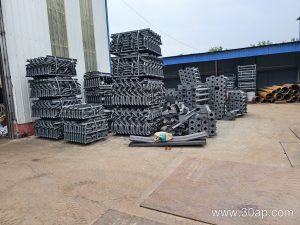
During operation, inspect sidewall-to-base bonds, cleat wear, and cover gouges. Keep guide rollers and the bend pulley aligned, and check conveyor brackets for looseness. Avoid over-tensioning, which stresses the sidewall root. Spare parts such as idler roller assemblies and conveyor pulley lagging should be ordered to the same duty class. A properly matched corrugated sidewall belt can run for years in demanding mineral and aggregate service.