What a Conveyor Pulley Assembly Does
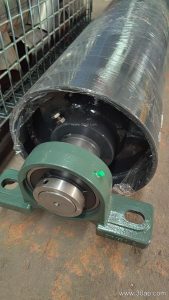
A conveyor pulley assembly is the rotating package that turns a belt conveyor at its head, tail, or intermediate bend points. It combines the pulley shell, shaft, hubs, bearing housings, and locking elements into one unit that transfers motion and tension to the conveyor belt. In a quarry, a wash plant, or a cement clinker line, these assemblies are often the difference between steady output and repeated downtime. The assembly is more than a drum; it is a matched mechanical set that must fit the frame, the belt width, and the duty cycle.
For anyone specifying a conveyor pulley for a belt conveyor, the assembly approach matters because the shaft, bearings, and lagging are selected together. A drive pulley assembly at the head end carries the highest torque, while a tail pulley assembly mainly guides and tensions the returning belt.
How the Assembly Is Built
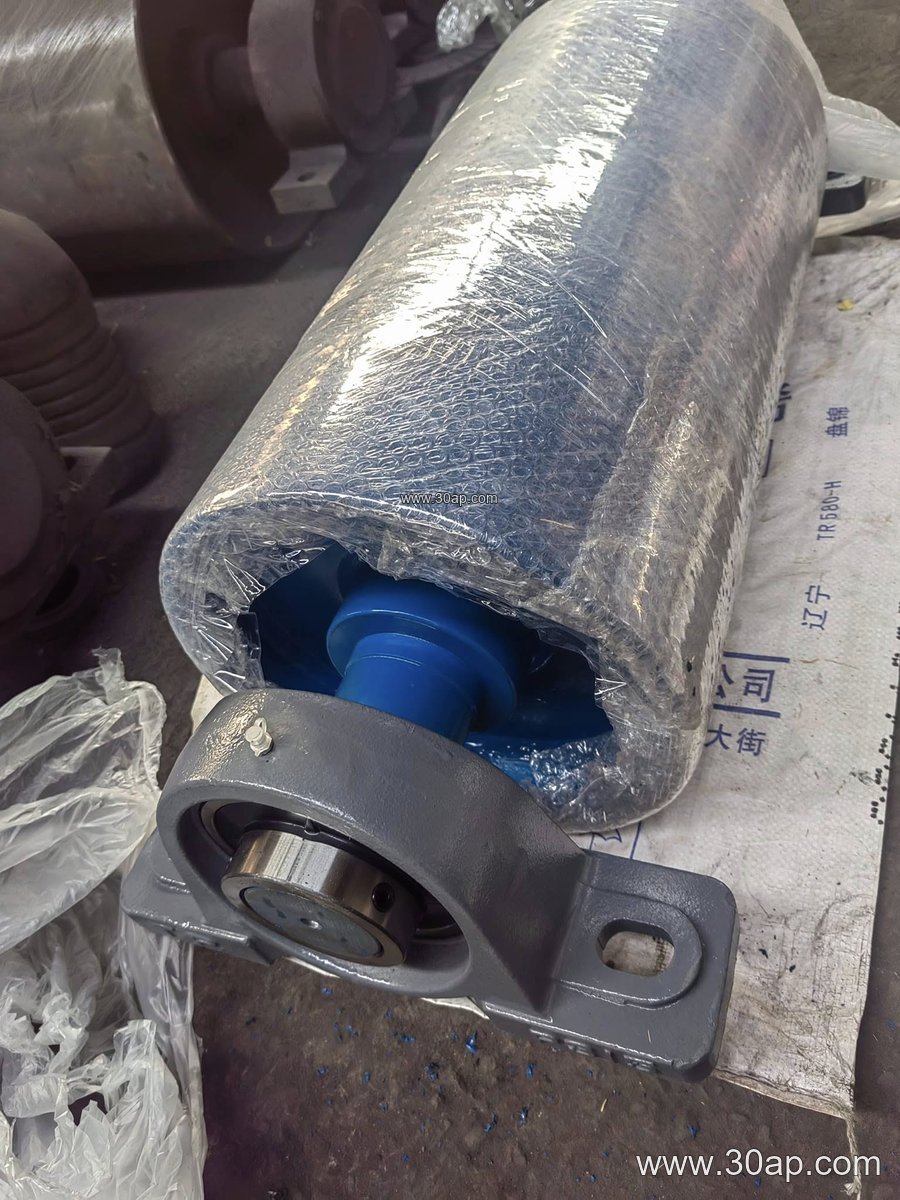
Most assemblies share a common structure: a rolled or machined shell, a through shaft, welded or shrink-fitted hubs, and bearing blocks mounted on a conveyor bracket at each side. The shell may be plain, lagged with rubber, or fitted with ceramic tiles. Common surface forms include plain, hot-vulcanized rubber, cold-bonded rubber, diamond lagging, herringbone lagging, and ceramic lagging. Lagging thickness is often 8, 10, 12, 15, or 20 mm, chosen for grip and wear rather than appearance.
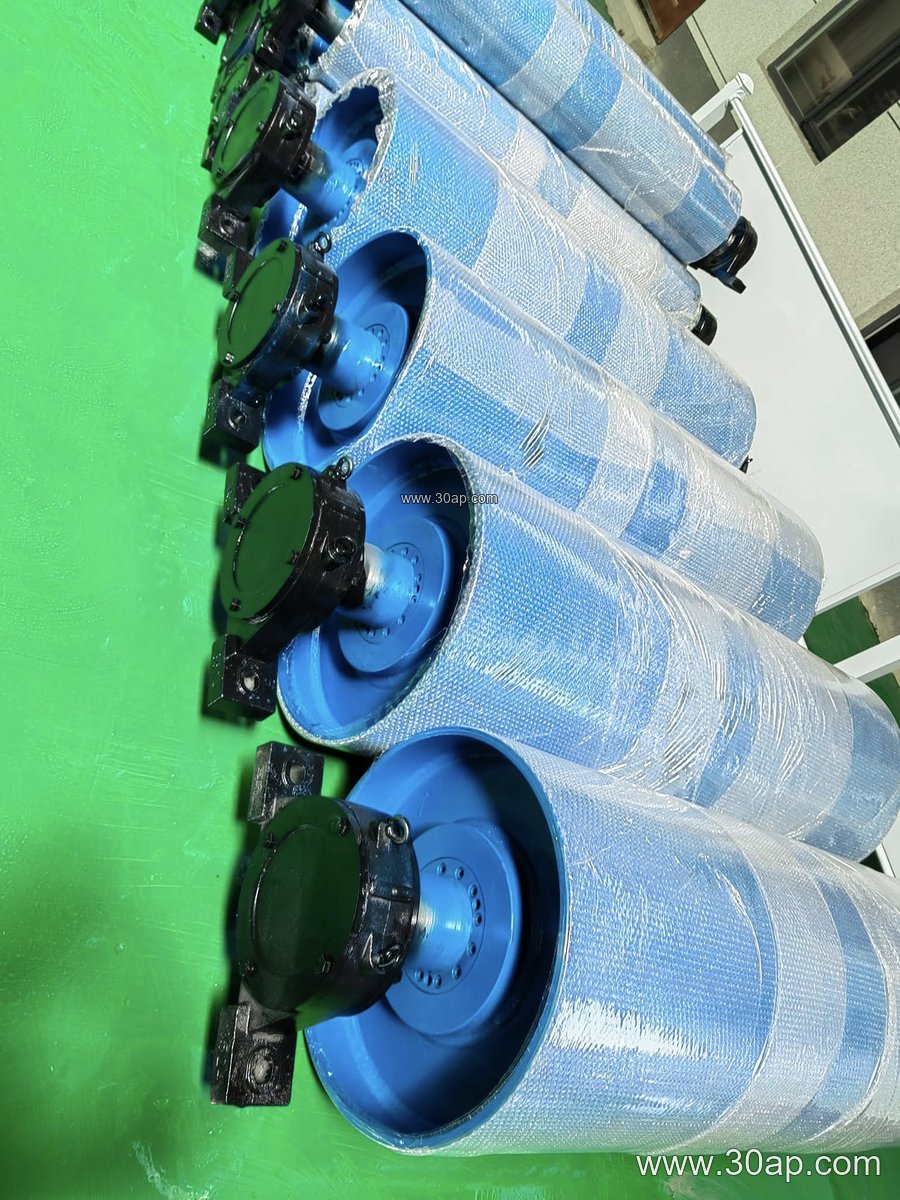
Bearing selection follows the load and the shaft diameter. Shaft sizes commonly run from Ø50 to Ø200, but the final value is set by torque, belt tension, and bearing life targets, not by belt width alone. A B1200 × Ø1000 drive assembly and a B800 × Ø500 tail assembly may look similar in a drawing, yet their internals differ substantially.
Where These Assemblies Are Used
In a coal preparation plant, a flame retardant conveyor belt may run over a drive pulley assembly with diamond lagging for wet conditions. In an iron ore terminal, a steel cord conveyor belt often pairs with a heavy shell and ceramic lagging to resist abrasion. Aggregate lines and sand and gravel plants use tail and bend assemblies to keep a quarry conveyor belt tracking through transfer points. Power plant coal handling and fertilizer granulation plants also rely on these assemblies, often with a heat resistant conveyor belt or an oil resistant conveyor belt where conditions demand it.
Underground mining conveyors add flame retardant and anti-static requirements, while food and grain applications may call for a food grade conveyor belt and clean, well-sealed bearing housings. The assembly must suit the environment, not just the tonnage.
Common Reference Sizes
The table below shows typical reference combinations. These are examples, not fixed rules; a given belt width can work with more than one pulley diameter.
| Belt width | Typical pulley face width | Example diameter | Typical shaft range |
|---|---|---|---|
| B400 | about 500 mm | Ø200–Ø315 | Ø50–Ø80 |
| B650 | about 750 mm | Ø315–Ø500 | Ø60–Ø100 |
| B800 | about 950 mm | Ø400–Ø630 | Ø70–Ø120 |
| B1000 | about 1150 mm | Ø500–Ø800 | Ø80–Ø140 |
| B1200 | about 1400 mm | Ø630–Ø1000 | Ø90–Ø160 |
| B1400 | about 1600 mm | Ø800–Ø1250 | Ø100–Ø180 |
| B1800 | about 2000 mm | Ø1000–Ø1600 | Ø120–Ø200 |
Face width is usually slightly wider than the belt to allow tracking tolerance. Diameter affects wrap angle and belt life; larger pulleys reduce bending stress in the belt carcass.
What Buyers Should Check
- Confirm the assembly position: drive, tail, bend, take-up, or snub. Drive and tail pulleys are not interchangeable, and a bend pulley serves a different role again.
- Match lagging to the material and moisture. Abrasion resistant conveyor belt users often prefer ceramic or thick rubber lagging; oily cargo may need an oil resistant conveyor belt and a smooth or grooved surface.
- Verify shaft diameter from torque and tension calculations, not from a belt-width chart alone.
- Check bearing housing fit, sealing, and lubrication access before installation.
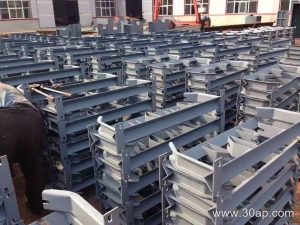
- Confirm the conveyor bracket and frame dimensions so the assembly drops into place without field modification.
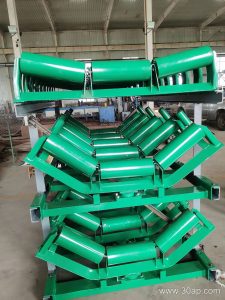
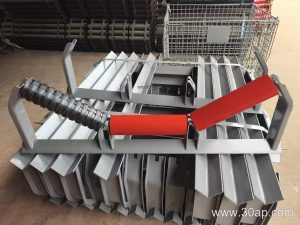
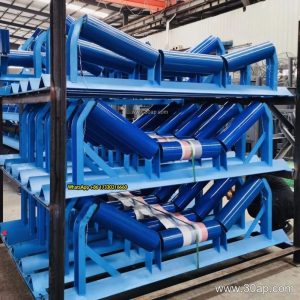
For a complete conveyor line, the pulley assembly works alongside the idler roller, the conveyor bracket, and the belt itself. A well-matched assembly reduces belt wander, extends splice life, and keeps a mining conveyor belt or a bulk material conveyor belt running through long shifts. Buyers who treat the pulley as part of a system, rather than a single part, usually get longer service from every component.