What a Conveyor Support Bracket Does
A conveyor support bracket is the structural interface between the idler roller and the conveyor frame. It holds the idler at the correct height, angle and spacing so the conveyor belt runs smoothly under load. In a quarry, a limestone mine or a cement plant, a weak or misaligned bracket shows up quickly as belt wander, spillage and premature roller wear. The bracket itself is simple, but its geometry decides how well the whole carrying side behaves.
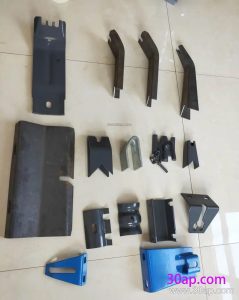
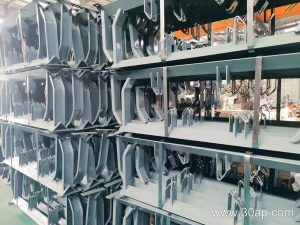
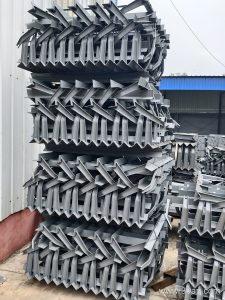
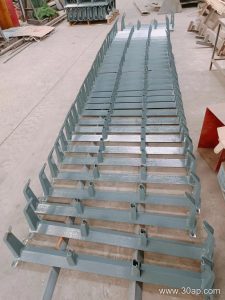
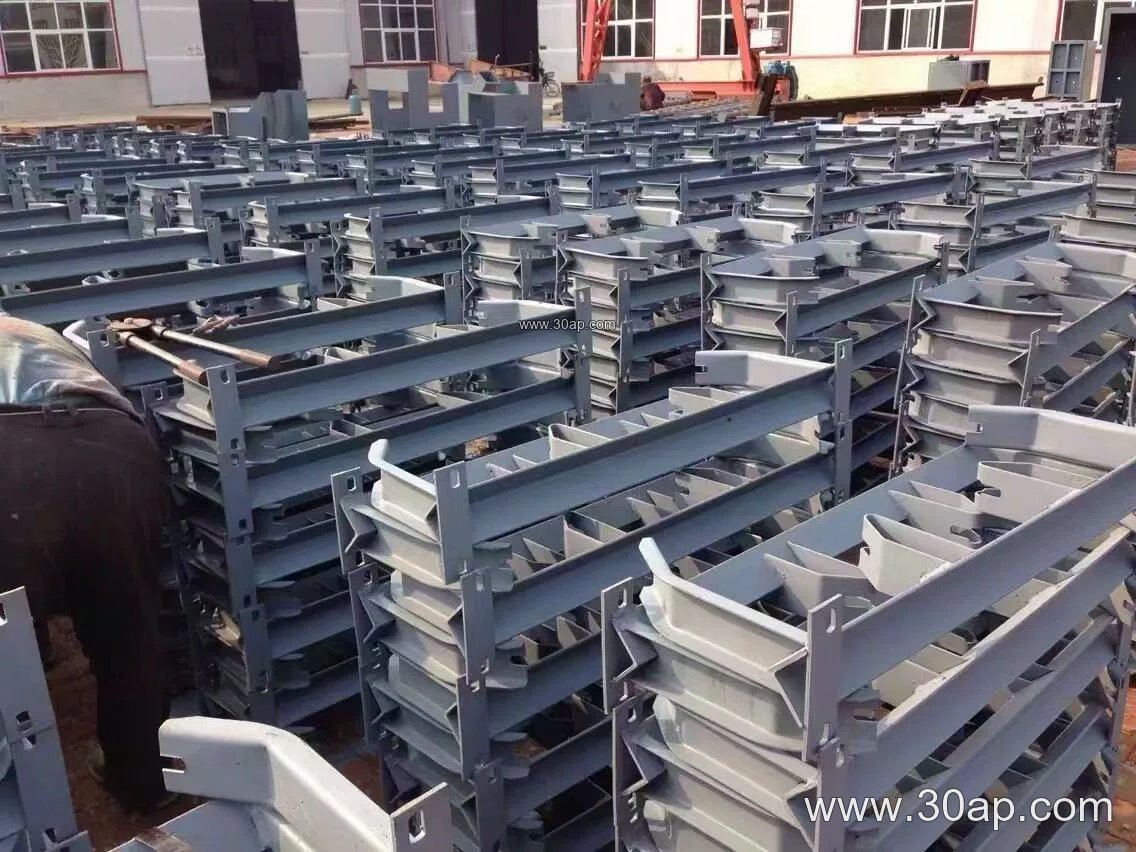
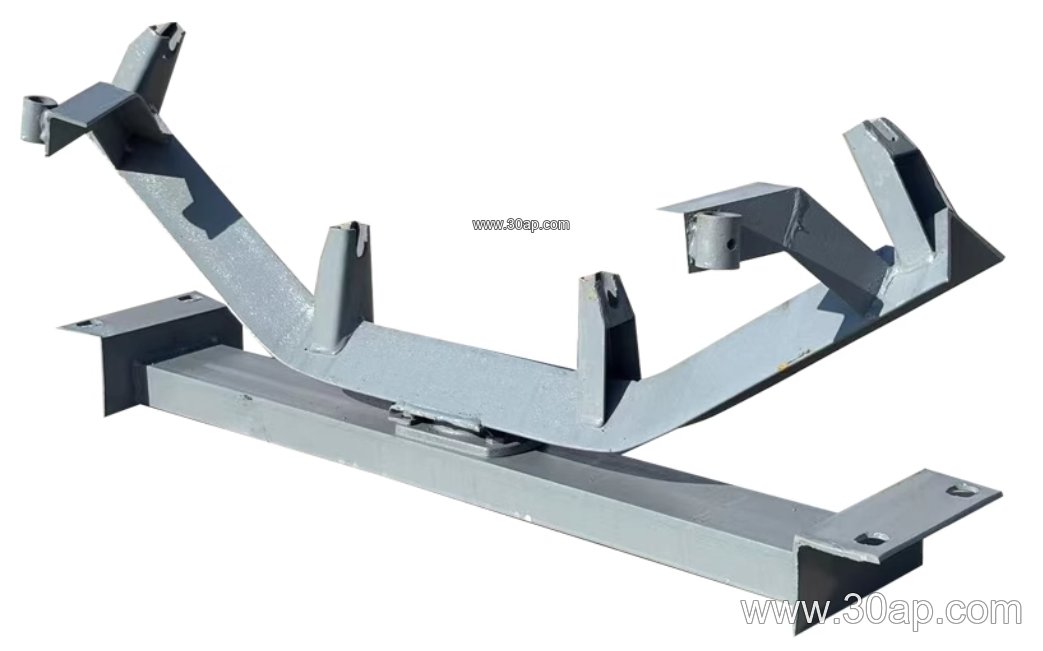
Most brackets are fabricated from angle steel, channel steel or folded steel plate. Holes are punched or drilled to match the idler shaft ends, and the crossbeam length follows the belt width and trough angle. Because the bracket is a wear-and-load path, the steel thickness and weld quality matter as much as the dimensions.
Common Bracket Positions on a Conveyor
The same basic component appears in several positions, and each position has its own name because the function differs.
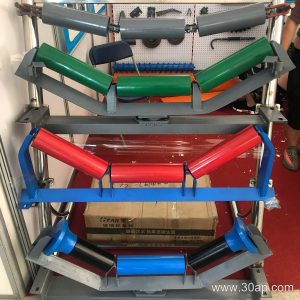
- Trough bracket or upper trough bracket: carries the three-roller trough set on the loaded side.
- Transition bracket: supports the idlers where the belt changes from flat at the pulley to troughed in the run.
- Return bracket or flat return bracket: holds the return idlers under the belt.
- V-return bracket: positions two rollers in a V to help center the return belt.
- Impact bracket: a reinforced bracket behind impact idlers at a transfer point.
- Self-aligning bracket: mounts training idlers that correct belt drift.
- Suspended bracket: hangs the idler set from a wire rope or chain structure.
- Adjustable bracket: allows the trough angle to be changed on site.
These are not interchangeable. A return bracket cannot replace a trough bracket, and a transition bracket is not a substitute for a standard carrying bracket. Drive pulleys, tail pulleys and bend pulleys are also separate items and are never swapped for one another.
Trough Angle and Roller Diameter
Trough angle is usually chosen from 20, 30, 35 or 45 degrees. A 35 degree trough is common on bulk material lines, while 45 degrees suits high-capacity loading and 20 degrees is gentler on some fragile or easily wedged materials. Adjustable brackets let maintenance teams move between these angles without replacing the frame.
Roller diameter is matched to belt width and load, not fixed by it. Typical combinations seen in design work include B800 with 35 degrees and Ø108, B1200 with 45 degrees and Ø133, or B650 with 30 degrees and Ø89. Common belt widths range from B500 to B2200. A wider belt does not force a single trough angle, and one belt width can work with more than one roller diameter. Hole spacing and crossbeam length are determined by belt width, trough angle and frame design.
| Belt Width | Typical Trough Angle | Typical Roller Diameter |
|---|---|---|
| B500 | 20–30 degrees | Ø89 |
| B650 | 30 degrees | Ø89 |
| B800 | 35 degrees | Ø108 |
| B1000 | 35–45 degrees | Ø108–Ø133 |
| B1200 | 35–45 degrees | Ø133 |
| B1400 | 35–45 degrees | Ø133–Ø159 |
| B1600 | 35–45 degrees | Ø159 |
| B1800 | 35–45 degrees | Ø159–Ø194 |
| B2000–B2200 | 35–45 degrees | Ø194 |
Treat these as reference examples, not fixed pairings. Final values come from the conveyor design.
Where the Bracket Fits in a Real Installation
In a coal handling system at a power plant, trough brackets run along the entire carrying side, while V-return brackets keep the return strand centered under the structure. At a stone crushing line, impact brackets sit directly below the chute so the belt and idlers survive falling rock. A self-aligning bracket is often added near the tail to correct drift before it becomes edge damage.
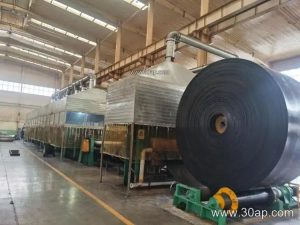
The bracket must work with the belt it carries. A heavy-duty EP conveyor belt or steel cord conveyor belt on an iron ore line transfers load through the idlers into the bracket, so flexing and bolt loosening deserve regular checks. On a heat resistant conveyor belt or flame retardant conveyor belt installation, bracket alignment still controls tracking, even though the belt compound handles temperature or fire risk. In a sand and gravel yard, an abrasion resistant conveyor belt paired with well-set brackets reduces edge wear caused by misalignment.
Buyer Checklist
- Confirm belt width, trough angle and roller diameter before ordering.
- State the mounting position: trough, transition, return, impact or self-aligning.
- Specify material and finish, such as angle steel, channel steel or folded plate.
- Check hole spacing and crossbeam length against the existing frame.
- Ask whether an adjustable version is needed for future angle changes.
- Match bracket load rating to the belt and material being conveyed.
A well-chosen bracket keeps idlers square, belts centered and maintenance intervals predictable. For a broader view of frames, idlers and belts, see conveyor bracket guidance and compare options with conveyor idler and conveyor pulley selections before finalizing the layout.