What Defines a Large Conveyor Pulley
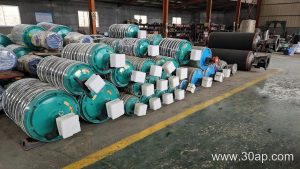
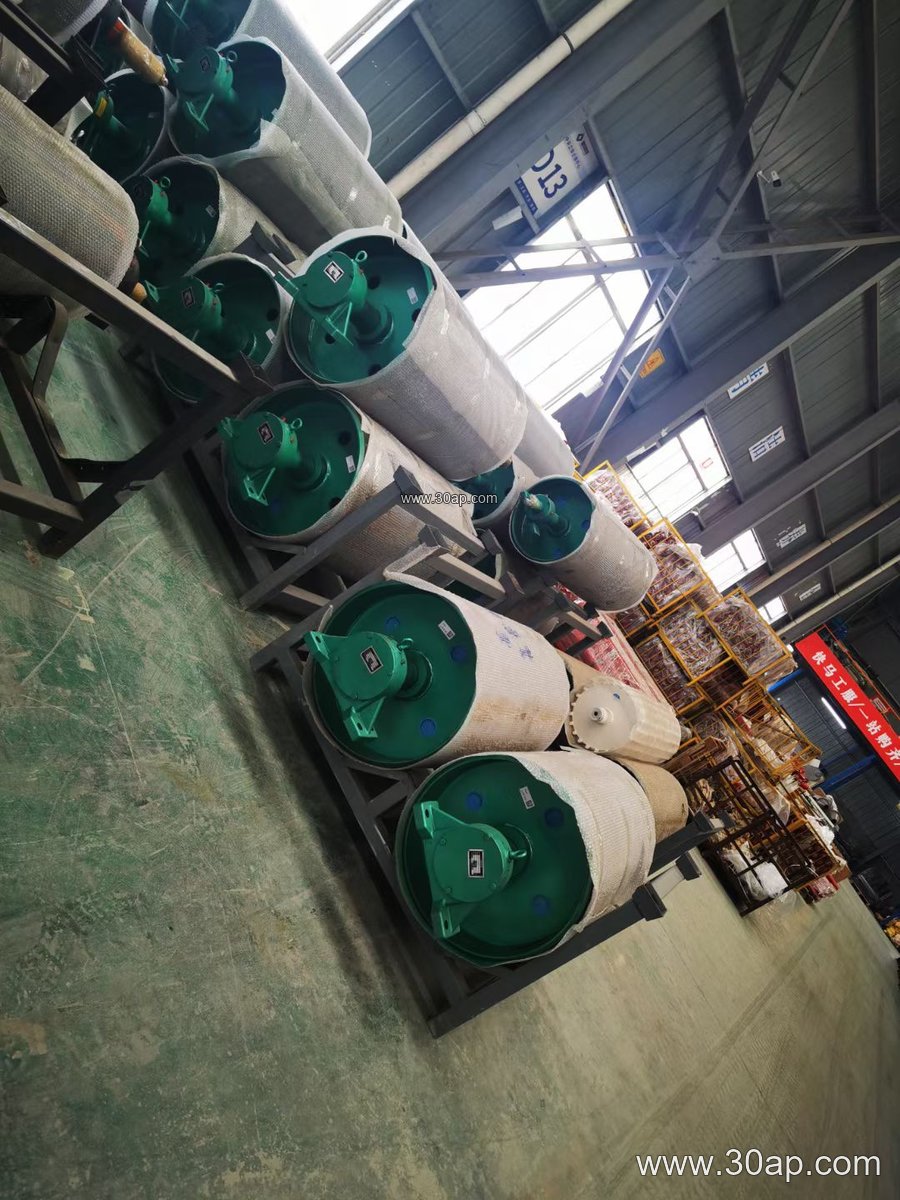
A large conveyor pulley is the robust, often heavily engineered drum that drives, tensions, or redirects the belt in high-capacity bulk handling systems. In a quarry, a limestone mine, or a coal washing plant, these pulleys are the quiet workhorses that keep material moving. The term “large” generally refers to units with drum diameters from Ø800 mm upward and face widths that accommodate belts from B1400 to B2400, though smaller diameters can still be considered large when they carry heavy loads or thick shafts.
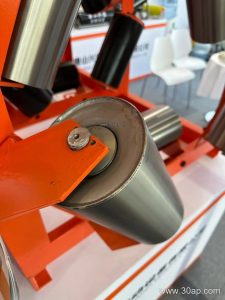
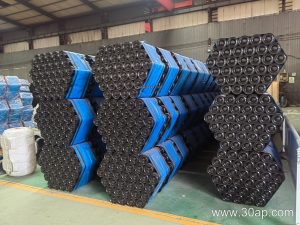
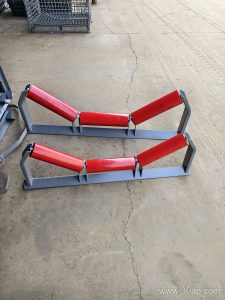
Unlike the smaller idler roller that simply supports the belt, a large conveyor pulley transmits torque, maintains belt tension, or changes the belt’s path. It is a distinct component with its own design, surface treatment, and mounting requirements.
Construction and Key Components
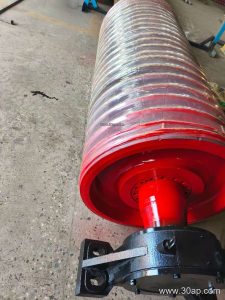
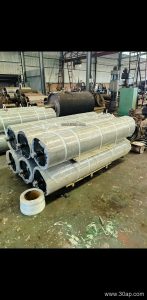
The typical large pulley consists of a cylindrical shell, two or more end discs, a shaft, and a hub connection. The shell is usually rolled from steel plate and machined to ensure concentricity. The shaft is sized by torque and bending load, not by belt width alone; common shaft diameters for large units range from Ø120 mm to Ø200 mm, but these are reference values, not rules.
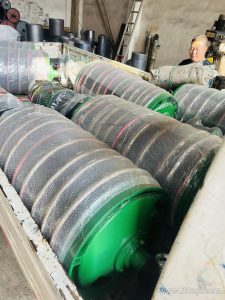
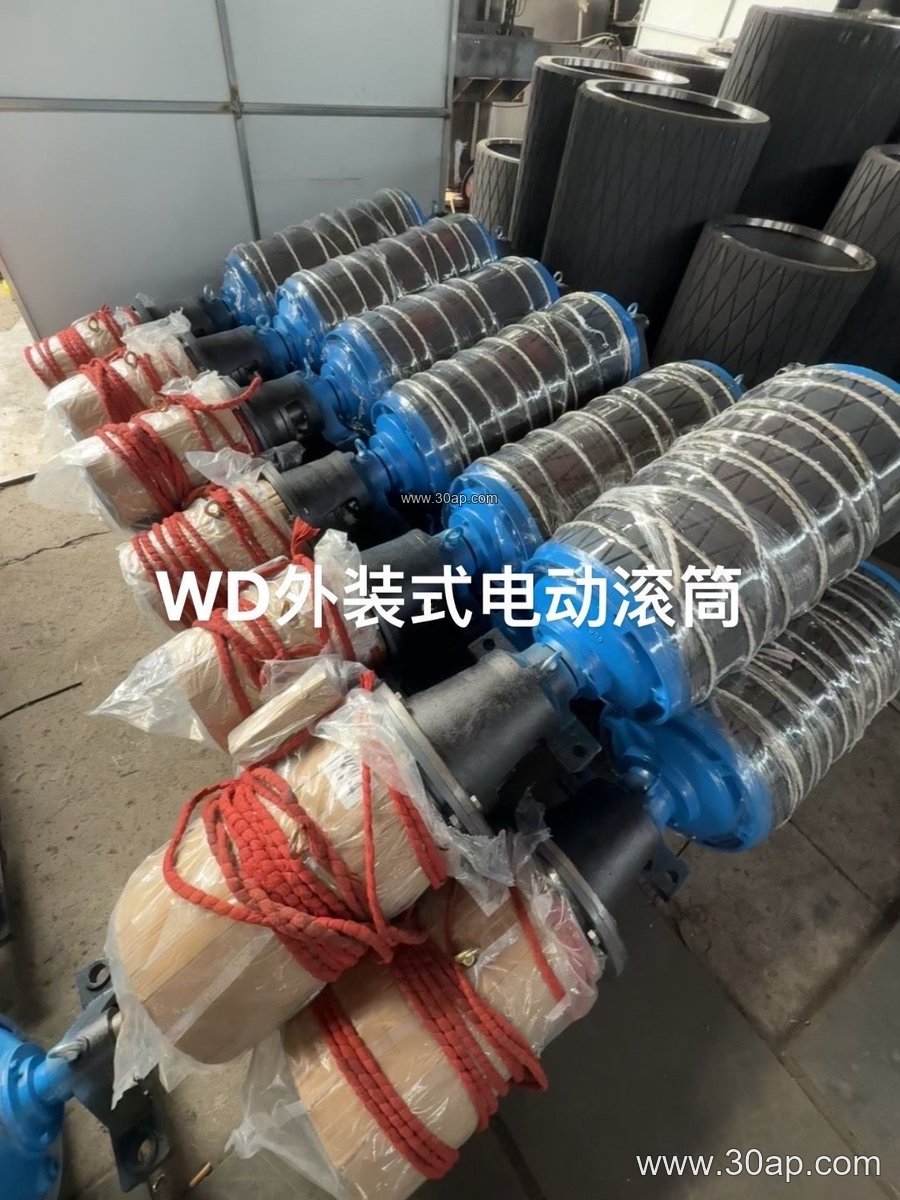
Surface preparation is critical. A plain finish may suit a tail or bend position where traction is not needed. For drive pulleys, lagging is applied in the form of cast rubber, cold-bonded rubber, hot-vulcanized rubber, diamond pattern, herringbone, or ceramic lagging. Lagging thickness commonly falls between 8 mm and 20 mm, and the choice depends on the material being conveyed and the required grip.
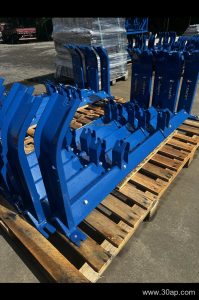
Bearing housings and conveyor brackets are matched to the shaft and the structural frame. The pulley face width is normally slightly wider than the belt it carries—for example, a B1200 belt might run on a pulley with roughly 1400 mm face width, and a B1800 belt on a pulley around 2000 mm. These are typical proportions, not fixed pairings.
Drive, Tail, and Bend Pulleys Are Not Interchangeable
A drive pulley (also called a head pulley or unloading pulley) is the powered drum that pulls the belt. It requires high friction, so lagging is almost always specified. A tail pulley sits at the loading end and may be smooth or lagged depending on the application. A bend pulley changes the belt direction without driving or tensioning; it usually has a plain surface and a smaller diameter than the drive pulley.
These subtypes are not interchangeable. You cannot substitute a bend pulley for a drive pulley simply because the dimensions look similar—the drive unit must handle the full torque and have the correct lagging, while the bend pulley is designed for guidance only. A take-up or tension pulley is another distinct type, used to maintain belt slack.
Where Large Conveyor Pulleys Are Used
In a sand and aggregate plant, a large conveyor pulley on the primary crusher discharge handles coarse rock and constant shock loads. In a cement plant’s clinker line, heat-resistant lagging may be needed if the pulley sits close to hot material. At a power plant coal yard, flame-retardant and anti-static properties of the belt are critical, and the pulley lagging must resist coal dust buildup. Iron ore and copper ore operations often specify heavy-duty pulleys with thick shafts and abrasion-resistant lagging.
Other common locations include port bulk terminals, steel plant sinter lines, and underground coal mining conveyors where space is tight but reliability is essential. In these settings, the pulley works alongside the conveyor belt, idler roller, and conveyor bracket to form a complete system.
Specifications and Size Combinations
Large pulleys are commonly ordered by belt width and pulley diameter. The table below shows typical combinations; a given belt width can pair with more than one diameter depending on load and speed.
- B800 × Ø500 — light to medium duty
- B1000 × Ø630 — aggregate and cement
- B1200 × Ø800 — quarry and coal
- B1400 × Ø1000 — heavy mining
- B1600 × Ø1250 — large port or plant
- B1800 × Ø1400 — high capacity ore
- B2000 × Ø1600 — very wide belts
- B2400 × Ø1800 — extra-wide bulk systems
These are reference examples, not universal specifications. Shaft diameter is determined by torque and load calculations, so a B1200 pulley might use a Ø140 mm shaft in one design and a Ø160 mm shaft in another. Face width is usually sized to exceed the belt width by a margin—B1400 often gets about 1600 mm face, B2000 about 2200 mm—but the final figure comes from the conveyor designer.
For the belt itself, common specifications include EP Conveyor Belt, Steel Cord Conveyor Belt, and Flame Retardant Conveyor Belt. On a large pulley, the belt’s flexibility and thickness must match the pulley diameter; a very stiff belt on a small-diameter pulley can cause ply separation.
Buyer Checklist for Large Conveyor Pulleys
- Confirm the pulley’s role: drive, tail, bend, take-up, or snub. Each has different lagging and shaft requirements.
- Provide belt width, belt type, and maximum tension so the supplier can size the shell and shaft correctly.
- Specify lagging type and thickness—8 mm, 10 mm, 12 mm, 15 mm, or 20 mm—based on material abrasiveness and required friction.
- Check the shaft diameter and bearing size against the conveyor bracket and structural frame.
- For hazardous areas such as underground coal mining, ensure the belt and lagging are flame retardant and anti-static.
- Ask for the pulley’s balancing grade and runout tolerance, especially for high-speed or wide-belt applications.
- Review maintenance access: large pulleys are heavy, so lifting points and removal space matter.
A well-matched large conveyor pulley reduces belt wear and downtime. Whether the application is a quarry, a cement plant, or a port terminal, the key is to treat the pulley as an engineered component, not a generic drum. For related conveyor equipment, you can also review options for conveyor belt, idler roller, and conveyor pulley at your plant’s specification stage.