What a Belt Conveyor Idler Does on the Line
A belt conveyor idler is the rotating roller assembly that supports the conveyor belt along its carrying and return runs. It carries the weight of the material, keeps the belt in a stable trough shape, and reduces friction so the drive system does not have to fight the belt itself. In a quarry, cement plant, or power plant coal yard, a single conveyor may use dozens or hundreds of idlers, and their condition directly affects belt life and energy draw. The idler roller turns on its shaft while the shaft stays fixed in the conveyor bracket. For related equipment sourcing, sites often review options at https://www.example.com/conveyor-idler alongside belt and pulley choices.
How the Roller Is Built
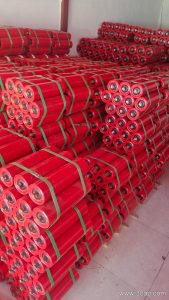
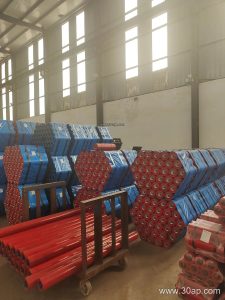
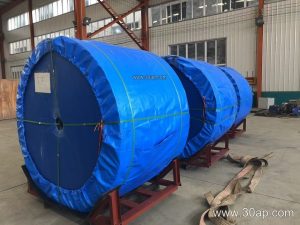
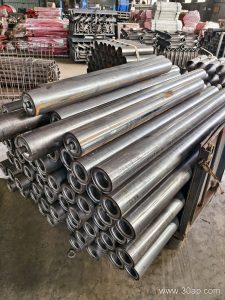
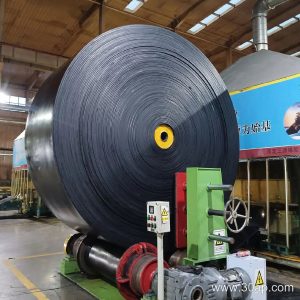
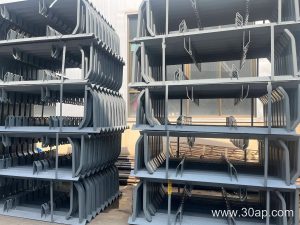
Most belt conveyor idlers share a simple structure. A steel tube forms the roller shell, with bearing housings pressed into each end. Seals protect the bearings from dust and moisture, and the shaft passes through the assembly to sit in the frame. Roller surfaces vary by duty: plain steel for general service, nylon for lighter and quieter running, ceramic for abrasive fines, and rubber rings for impact zones. Bearing sizes usually follow the load and speed, with common examples including 6204, 6205, 6305, 6306, 6308 and 6310. A larger bearing is not automatically better; it must match the shaft, housing, and load profile. The idler is only one part of the system, and it works with the conveyor belt, conveyor pulley, and conveyor bracket as a matched set.
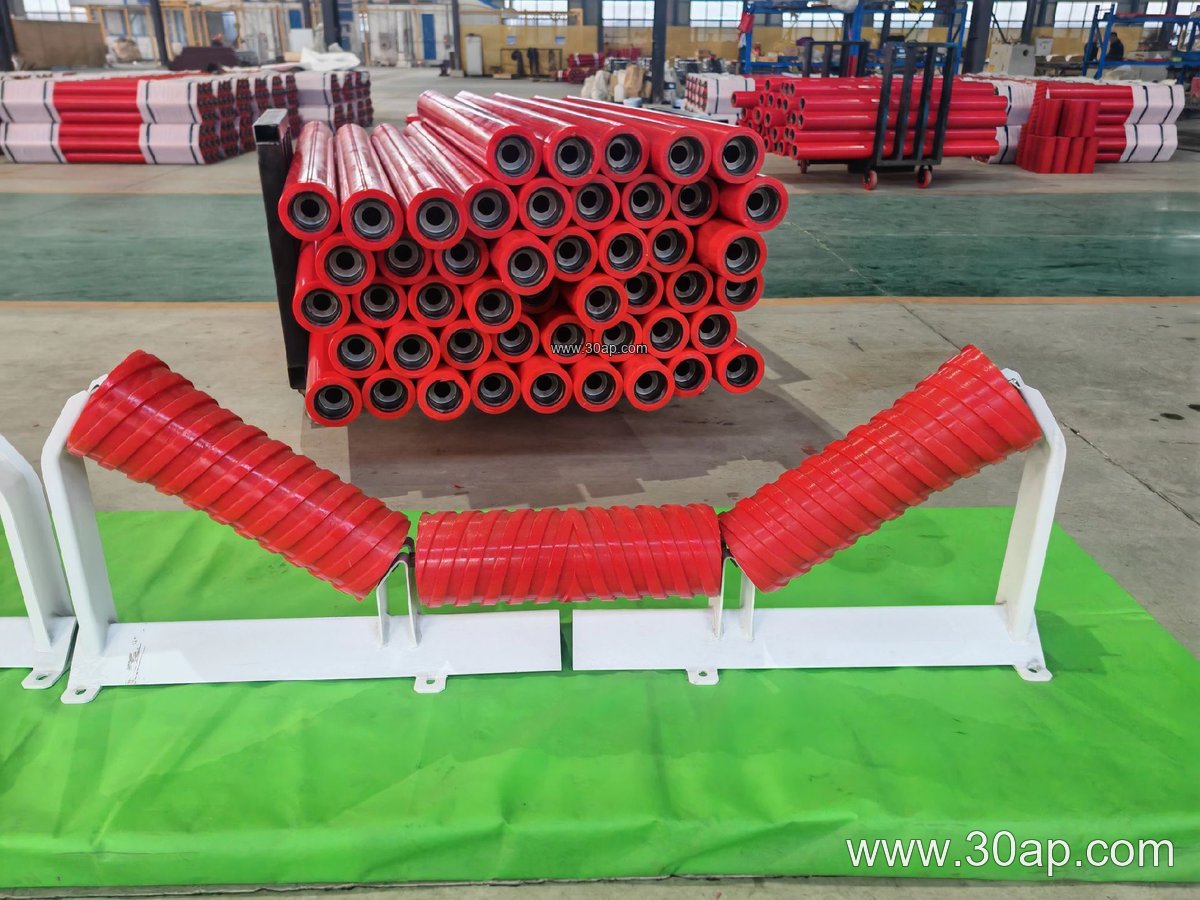
Common Idler Types and Where They Sit
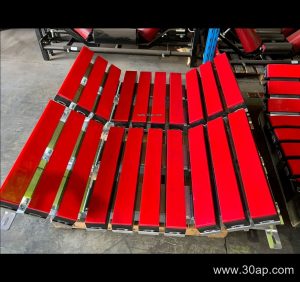
The carrying side usually uses three-roll troughing sets, with two side rolls angled upward. Trough angles of 20, 30, 35, and 45 degrees are common, and the choice affects how deeply the belt is cupped and how bulk material stays centered. A transition idler sits near the tail or head to ease the belt from flat to troughed. On the return side, flat return idlers or V-return rollers support the empty belt. Impact idlers with rubber rings are placed under loading points where ore or aggregate drops onto the belt. Self-aligning idlers, including friction and taper types, help correct belt drift, and spiral idlers can reduce material buildup on the return run.
| Idler group | Typical position | Common roll diameter |
|---|---|---|
| Troughing idler, three-roll | Carrying run | Ø89, Ø102, Ø108, Ø127, Ø133 |
| Impact idler with rubber rings | Load point | Ø102, Ø108, Ø127, Ø133 |
| Flat return idler | Return run | Ø89, Ø102, Ø108, Ø127 |
| V-return idler | Return run, belt training | Ø89, Ø102, Ø108, Ø133 |
| Self-aligning idler | Drift correction zones | Ø89, Ø108, Ø133, Ø159 |
Matching Roll Diameter and Belt Width
Belt width and roll diameter are related through the frame design, belt speed, and load, not by a single fixed rule. A narrow B500 or B650 belt may use smaller rolls, while B1200, B1400, or B1800 belts in a heavy-duty mining conveyor generally call for larger shafts and bearings. Roll length also changes with belt width and trough angle. For a three-roll troughing set, common roll lengths are roughly 200 mm for B500, 250 mm for B650, 315 mm for B800, 380 mm for B1000, 465 mm for B1200, 530 mm for B1400, 600 mm for B1600, and 670 mm for B1800. These are reference examples only; side rolls and center rolls can differ, and the final length is set by the conveyor design.
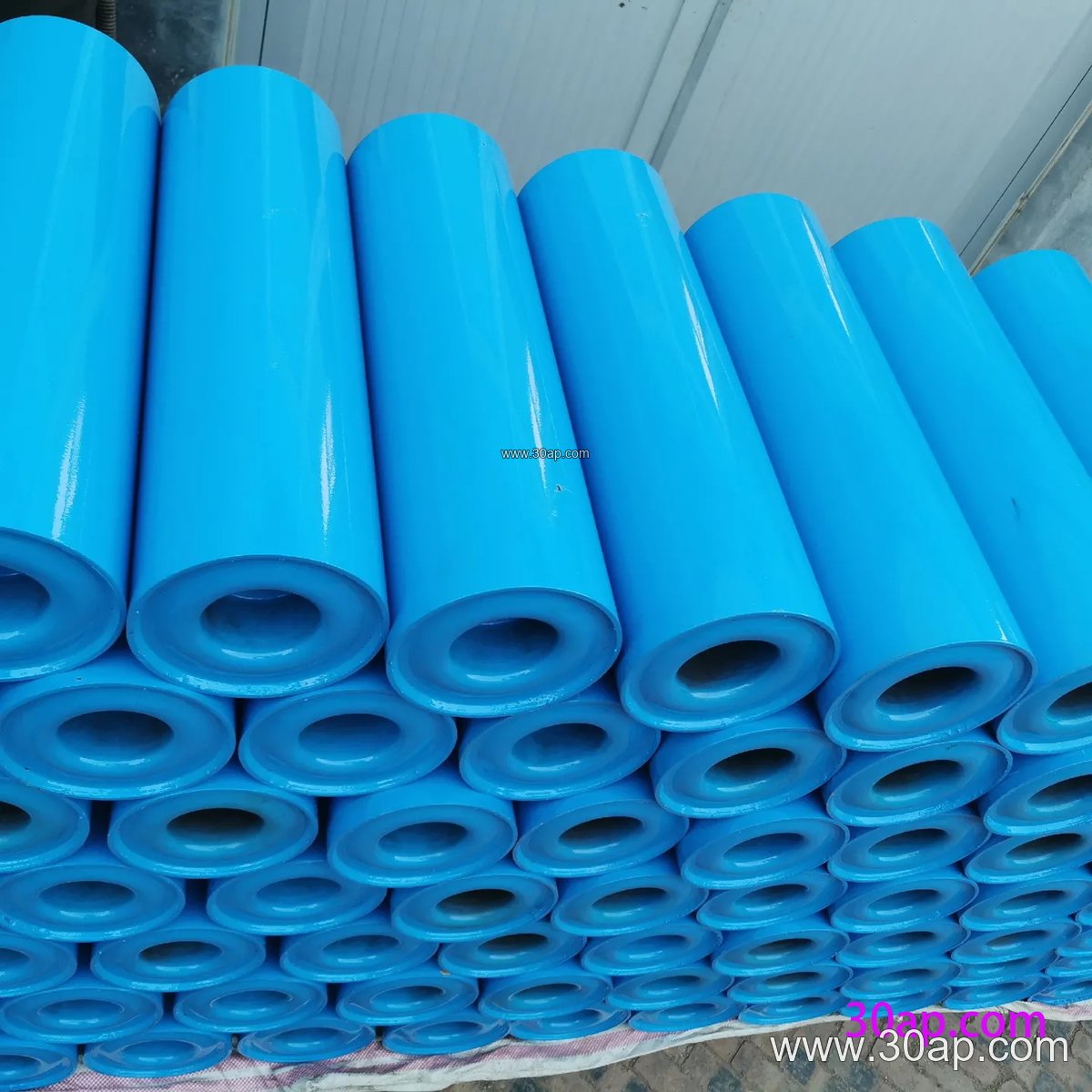
Applications Across Bulk Handling Industries
Belt conveyor idlers appear wherever bulk material moves continuously. In a limestone mine or aggregate crushing line, troughing and impact idlers handle sharp rock and uneven feed. In a coal washing plant, sealed idlers resist fine coal dust and moisture, and flame retardant conveyor belt grades are often specified nearby. Cement plants use idlers under clinker and raw meal belts, where heat and abrasion both matter. Port ship loaders and stockyard conveyors rely on long idler strings for stable belt tracking. In each case, the idler must suit the belt type, whether that is an EP conveyor belt, a steel cord conveyor belt, or a heat resistant conveyor belt.
What Buyers Should Check Before Ordering
- Confirm the belt width, trough angle, and idler group arrangement, since these drive roll length and frame dimensions.
- State the roll diameter and shaft end type so the idler fits the existing conveyor bracket.
- Describe the environment: dust, moisture, heat, oil, or fine abrasive material. This affects seal choice and roller surface.
- Check bearing size against the actual load and speed rather than assuming a standard fit.
- Ask about seal design and lubrication, because bearing protection is often the difference between long service and frequent replacement.
- Plan spare idlers for load points and transition zones, where wear is usually faster.
Good idler selection is not about picking the largest roller. It is about matching the roller, bearing, seal, and frame to the belt and the material. A well-matched belt conveyor idler keeps the belt running straight, protects the conveyor belt from edge damage, and reduces downtime in mines, cement works, power stations, and port terminals alike.