What a 1600mm Conveyor Belt Is
A 1600mm conveyor belt is a wide belting product with a nominal width of 1,600 millimeters, used where a single conveyor must move large volumes of bulk material without excessive spillage or surging. It is often treated as a wide belt class: narrower than the extra-wide 1,800mm and 2,000mm sizes, but clearly above the 1,200mm and 1,400mm belts common on medium-duty lines. In quarries, coal preparation plants, cement works, power stations and port loading systems, this width is frequently paired with heavy frames and large conveyor pulleys to keep a high-tonnage stream moving smoothly.
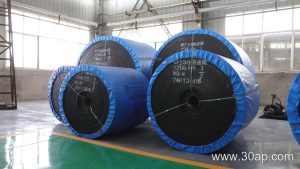
The belt itself is a composite product. A carcass carries the tension, while rubber or PVC covers protect the carcass from abrasion, moisture, heat or oil. Buyers should think of the 1600mm belt as a system component, not a commodity strip, because its behavior depends on the pulley diameters, idler roller spacing, loading conditions and splice quality around it.
Construction and Common Belt Types
Most 1600mm belts are built from either fabric plies or steel cords. Fabric constructions include EP conveyor belt (polyester warp, nylon weft) and NN conveyor belt (nylon warp and weft). A multi-ply fabric core conveyor belt is common where flexibility and moderate tension ratings matter, while a steel cord conveyor belt is chosen for long center distances and high tension. The main families differ in how they stretch, trough and resist impact:
- EP conveyor belts in grades such as EP400, EP630, EP800 and EP1000 are widely used for general bulk handling.
- NN belts offer good elasticity and impact absorption on crusher and screen feeds.
- Steel cord belts in ST1250, ST1600 or ST2000 classes suit mainline haulage in mining.
- PVC and PVG belts, including PVG800S, are common in underground coal mining where flame resistance is required.
Cover compounds are selected by duty. An abrasion resistant conveyor belt handles sharp rock and ore; a heat resistant conveyor belt serves clinker and sinter; an oil resistant conveyor belt suits recycled material and certain mineral feeds; and a flame retardant conveyor belt or anti-static conveyor belt is specified where fire and static risk exist. Chevron and corrugated sidewall designs help on inclines, while a pipe conveyor belt encloses the load on curved routes.
Typical Service Conditions
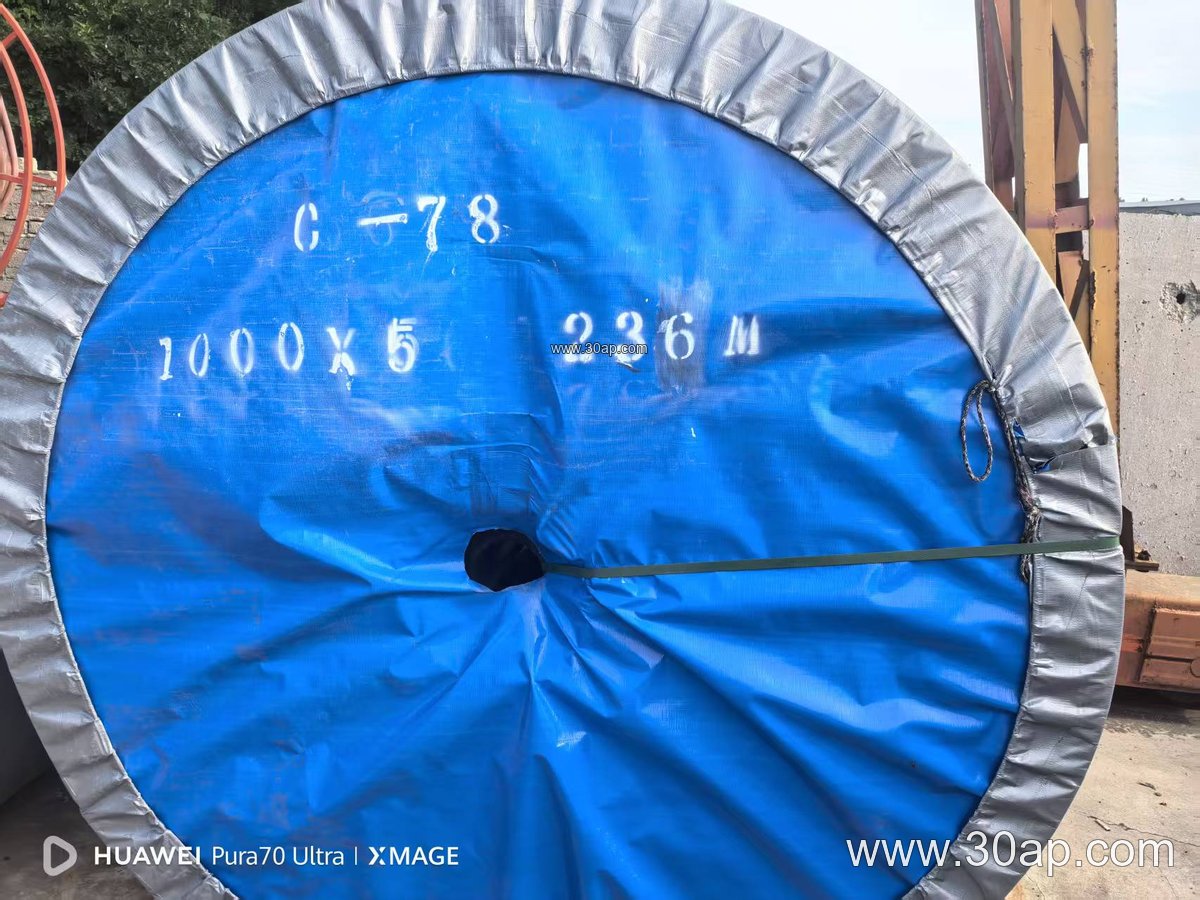
At 1,600mm width, the belt is usually part of a high-capacity circuit. In an iron ore or copper ore terminal, it may run on a long overland conveyor with steel cord reinforcement. In a cement plant, a fabric core belt feeds limestone from the crusher to the raw mill. In a coal mining conveyor line, flame retardant grades are normal, and a 1600mm belt may carry ROM coal from the shaft area to the preparation plant. Sand and gravel operations use wide belts under stockpiles and along ship loading booms.
Because the belt is wide, cross-sectional load distribution matters. Troughing angles, idler roller alignment and skirt rubber contact all influence whether the belt tracks centrally. A poorly loaded 1600mm belt can drift even when the carcass is sound, so chute design and belt training should be reviewed together.
Specification Points for Buyers
Width alone does not define a belt. The table below shows the kind of information a supplier usually needs. Values are indicative and should be confirmed by design calculation for each conveyor.
| Parameter | Common range or example | Notes |
|---|---|---|
| Nominal width | 1600 mm (B1600) | Confirm actual finished width and tolerance |
| Carcass type | EP, NN, steel cord, PVC/PVG | Match to tension and fire requirements |
| Strength grade | EP400 to EP1250; ST1250 to ST2000 | Selected by calculated belt tension |
| Number of plies | 2 to 6 for fabric cores | Higher ply count is not automatically better |
| Top cover thickness | 4 mm, 5 mm, 6 mm, 8 mm | Increase for sharp, abrasive rock |
| Bottom cover thickness | 1.5 mm, 2 mm, 3 mm | Consider pulley contact and return side wear |
| Cover grade | Abrasion, heat, oil, flame retardant | Can be combined where needed |
| Splice type | Vulcanized or mechanical | Steel cord belts normally need vulcanized splices |
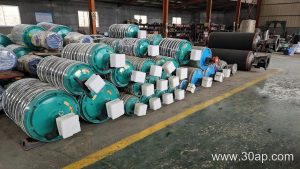
Do not assume a fixed shaft diameter or pulley size from belt width. Drive pulleys, tail pulleys and bend pulleys are separate components with their own diameter and face width requirements, and they are not interchangeable. A 1600mm belt may run on different pulley diameters depending on tension, wrap angle and carcass flexibility. The same applies to conveyor brackets and frame dimensions, which follow the conveyor design rather than the belt alone.
Installation and Maintenance Notes
Wide belts need careful handling during installation to avoid edge damage and ply separation. Store rolls on a clean, dry surface, support them along their length, and avoid dragging the belt over sharp edges. During splicing, check squareness across the full 1,600mm width; a skewed splice is a common cause of tracking problems. After startup, inspect the idler roller set for free rotation and check that skirt rubber does not press too hard on the cover.
Routine checks should include cover wear, edge condition, splice integrity and material buildup on return rollers. For a heavy-duty mining conveyor belt, small cover cuts can grow quickly in abrasive ore service, so early repair is cheaper than replacement. Keep records of belt tension and pulley condition; a worn conveyor pulley can damage a new belt within weeks.
For more guidance on matching belt width, carcass grade and conveyor components, visit beltpulleycom.com and review the conveyor belt and conveyor pulley pages before finalizing a specification. A 1600mm belt is a capable workhorse when its carcass, covers and supporting hardware are selected as one system.