What a Welded Pulley Is
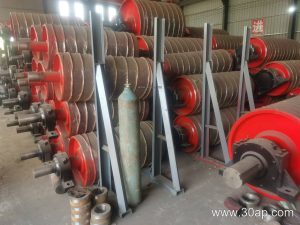
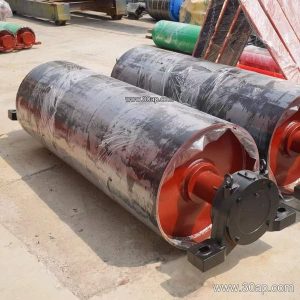
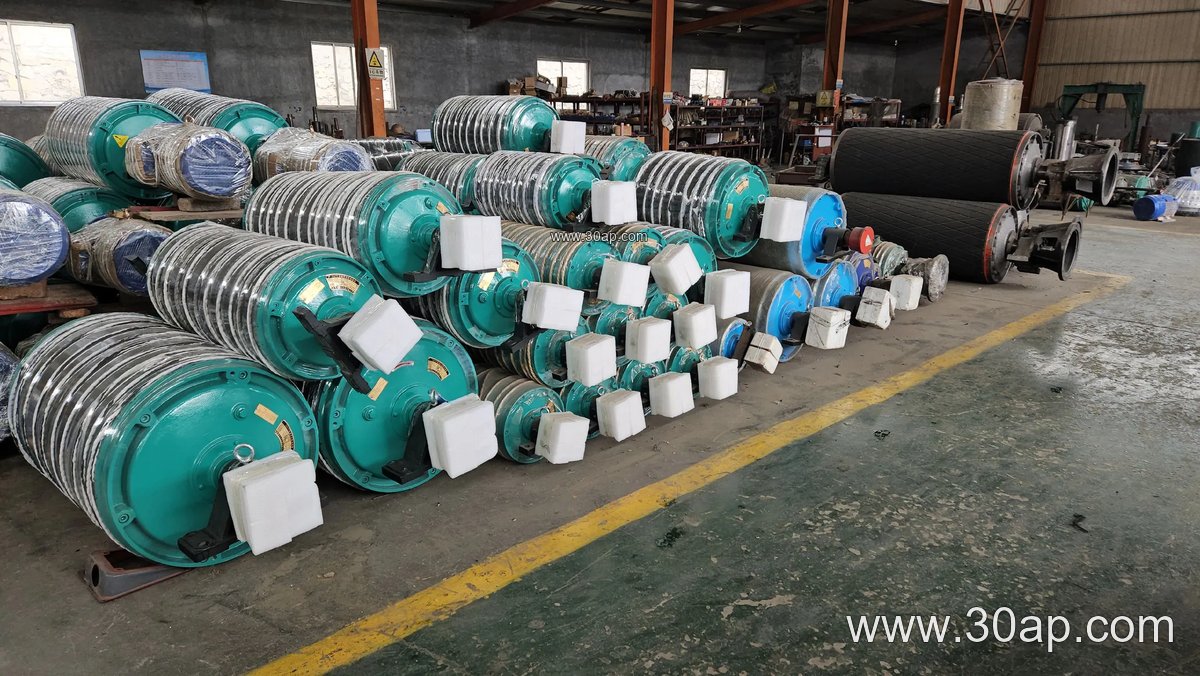
A welded pulley is a conveyor pulley whose shell, end discs and hub assembly are joined by welding rather than by casting or bolting. In bulk handling lines it is often simply called a welded conveyor pulley, and it serves as one of the main rotating components that carry and guide the conveyor belt. Because the structure is fabricated from steel plate and tube, the builder can adjust shell thickness, hub length and shaft size to match the duty, which makes this design common in quarry, cement and power plant conveyors.
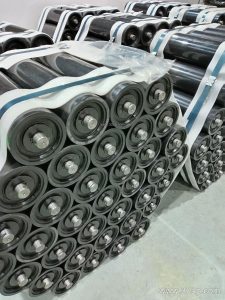
The pulley is not a standalone machine. It works together with the conveyor belt, idler rollers and conveyor brackets, and its geometry must suit the belt width and the load it carries.
How the Welded Structure Is Built
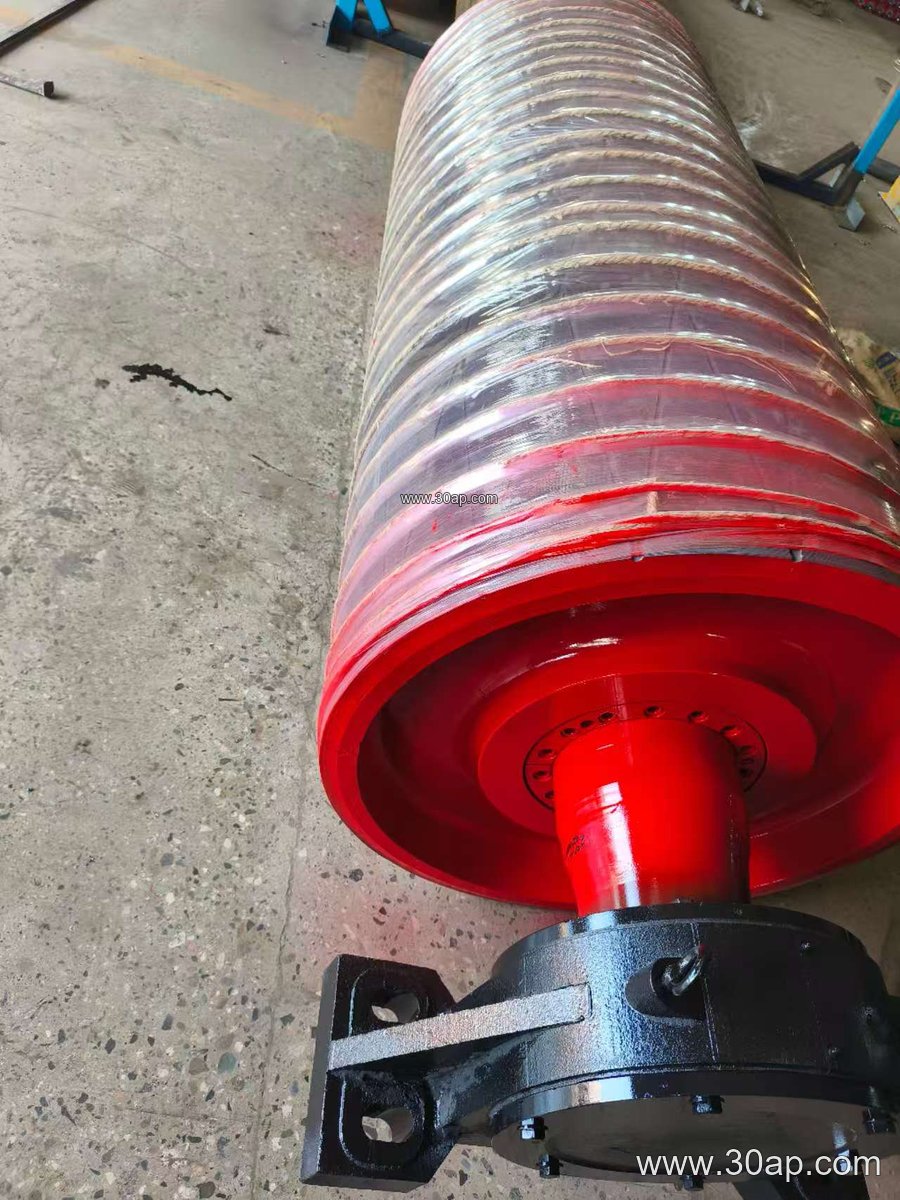
Production usually starts with a rolled steel shell, two end discs and a central hub. The shaft is fitted through the hub and the discs are welded to the shell, then the assembly is machined so the face runs true. Key points in fabrication include weld quality, concentricity and balance, because an out-of-round shell will shorten belt life and increase vibration.
- Shell from rolled steel plate, thickness chosen by load
- End discs welded to shell and hub
- Shaft secured by welding, keying or shrink fit depending on design
- Machined face and finished shaft ends for bearing fit
- Optional lagging applied after welding and balancing
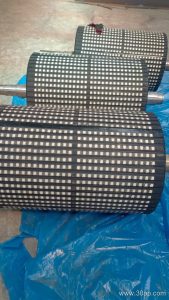
After welding, the surface may stay plain or receive rubber lagging in the form of cold-bonded rubber, hot-vulcanized rubber, diamond grooving, herringbone grooving or ceramic tiles. Common lagging thickness is 8, 10, 12, 15 or 20 mm, selected by grip requirement and material conditions.
Where It Fits in the Conveyor
The same welded body can be configured as a drive pulley, a tail pulley or a bend pulley, and these roles are not interchangeable. A drive pulley transmits torque to the belt and usually carries lagging for traction; a tail pulley supports the belt at the loading end; a bend pulley changes belt direction or adds wrap angle. In a limestone mine or a coal washing plant, the drive unit is normally at the head, while bend and take-up positions sit along the return run.
Typical service environments include aggregate lines, crusher discharge conveyors, cement clinker transport and coal handling in power stations. In these places the pulley may run under abrasive dust, so an abrasion resistant conveyor belt and well-sealed bearings matter as much as the pulley itself.
Common Dimensions and Configurations
Sizes are set by design, not by a fixed rule. The table below shows reference values that appear in normal engineering discussion; the final combination depends on belt tension, shaft torque and the conveyor layout.
| Item | Common reference values |
|---|---|
| Belt width B | B400, B500, B650, B800, B1000, B1200, B1400, B1600, B1800, B2000 |
| Pulley diameter | Ø200, Ø250, Ø315, Ø400, Ø500, Ø630, Ø800, Ø1000, Ø1250, Ø1400 |
| Face width | Usually wider than the belt, for example about 500 mm for B400, about 950 mm for B800, about 1400 mm for B1200 |
| Shaft diameter | Ø50, Ø60, Ø70, Ø80, Ø90, Ø100, Ø120, Ø140, Ø160, Ø180, Ø200 |
| Lagging | Plain, cast rubber, cold-bonded rubber, hot-vulcanized rubber, diamond, herringbone, ceramic |
An example designation such as B800 × Ø500 or B1200 × Ø1000 describes one possible pairing, not a universal match. Shaft size follows torque and bearing load; it should never be guessed from belt width alone.
Matching the Pulley to the Belt and the Job
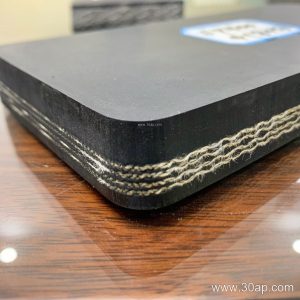
The belt family influences pulley choice. A heavy-duty mining conveyor belt or a steel cord conveyor belt carries high tension and needs a robust shell and shaft, while a fabric core conveyor belt on a shorter run may use a lighter build. In coal mines, a flame retardant conveyor belt is often specified, and the pulley lagging should be selected with the same fire and static considerations in mind. For hot clinker, a heat resistant conveyor belt pairs with lagging that tolerates temperature; for oily scrap or recycled material, an oil resistant conveyor belt reduces swelling and slip.
Where the belt is steeply inclined, a chevron conveyor belt or a corrugated sidewall conveyor belt may be used, and the pulley face must clear the cleat height. In pipe conveyor systems the pulley arrangement is different, so the welded pulley should be specified against the actual belt profile.
Buyer Checklist
- Confirm the position: drive, tail or bend, since each has a different duty.
- State belt width, belt type and maximum working tension.
- Give the required diameter and face width, and check that the face clears the belt and structure.
- Specify lagging type and thickness if traction or wear protection is needed.
- Provide shaft diameter, keyway and bearing arrangement, or let the maker calculate from torque.
- Ask for dynamic balance and runout checks on larger sizes.
- Confirm welding inspection and surface finish expectations in writing.
Regular inspection of lagging wear, weld condition and bearing temperature keeps a welded pulley in service longer. For a full line, pair it with correctly sized idler rollers, sturdy conveyor brackets and a belt suited to the material, and the conveyor will run with less downtime in the quarry, the cement plant or the coal yard.