What a Carrying Idler Set Does
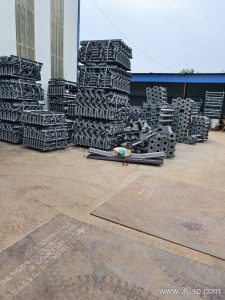
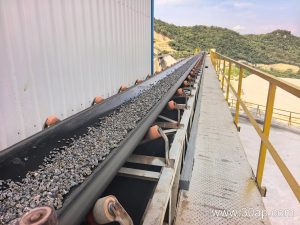
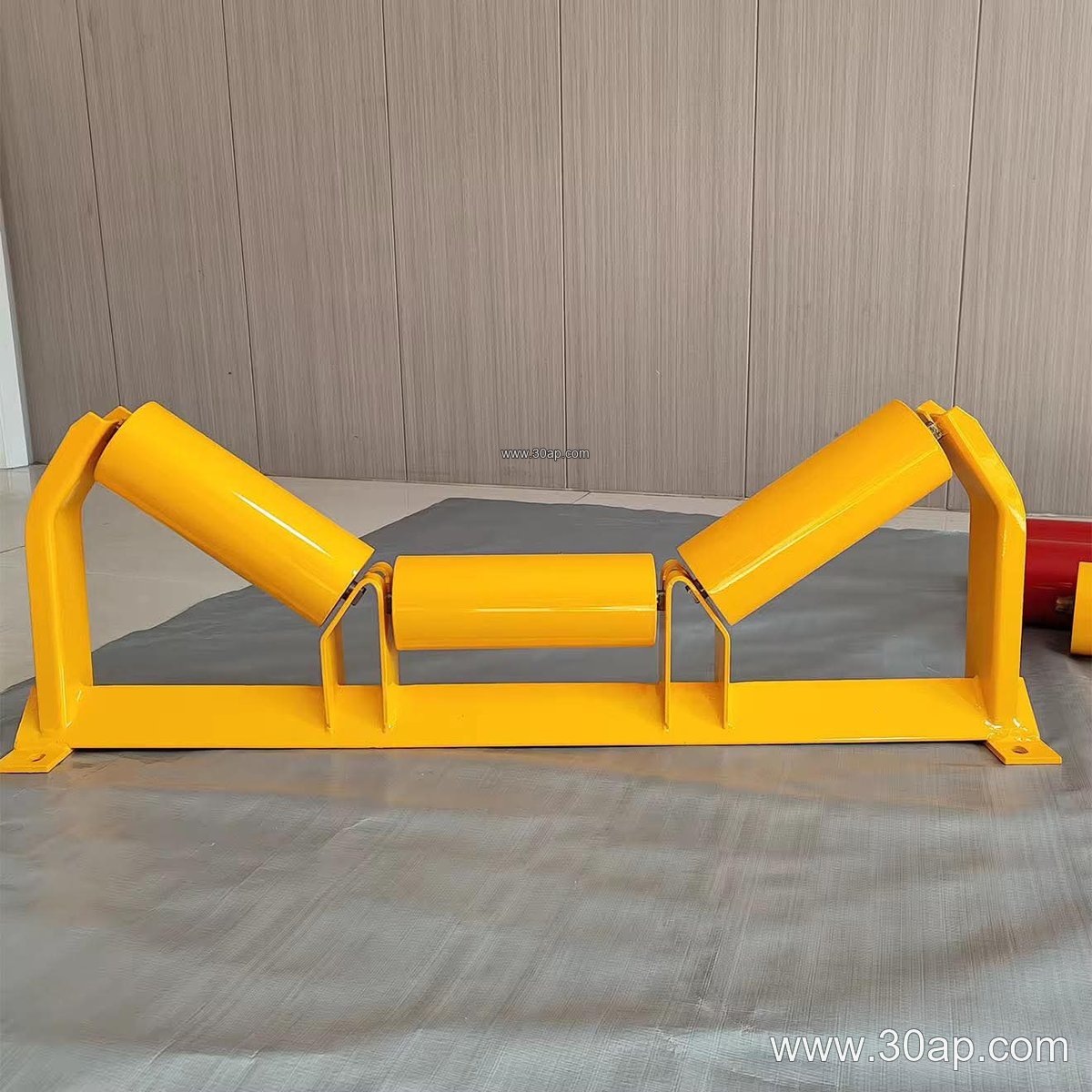
A carrying idler set is the group of rollers mounted on the load side of a belt conveyor, the part that supports the conveyor belt and the material riding on it between the tail pulley and the drive pulley. In everyday plant language the same assembly is called a troughing idler set, and the two names describe the same product. The set usually consists of two or three rollers held in a frame, with the side rollers angled upward so the belt forms a trough that keeps bulk material centered.
Because the assembly carries the full weight of the belt and its cargo, it is the most heavily loaded idler group on most installations. On a quarry conveyor belt moving crushed stone, or a coal mining conveyor belt feeding a wash plant, the carrying idlers run continuously under load and set the pace for belt life and power draw.
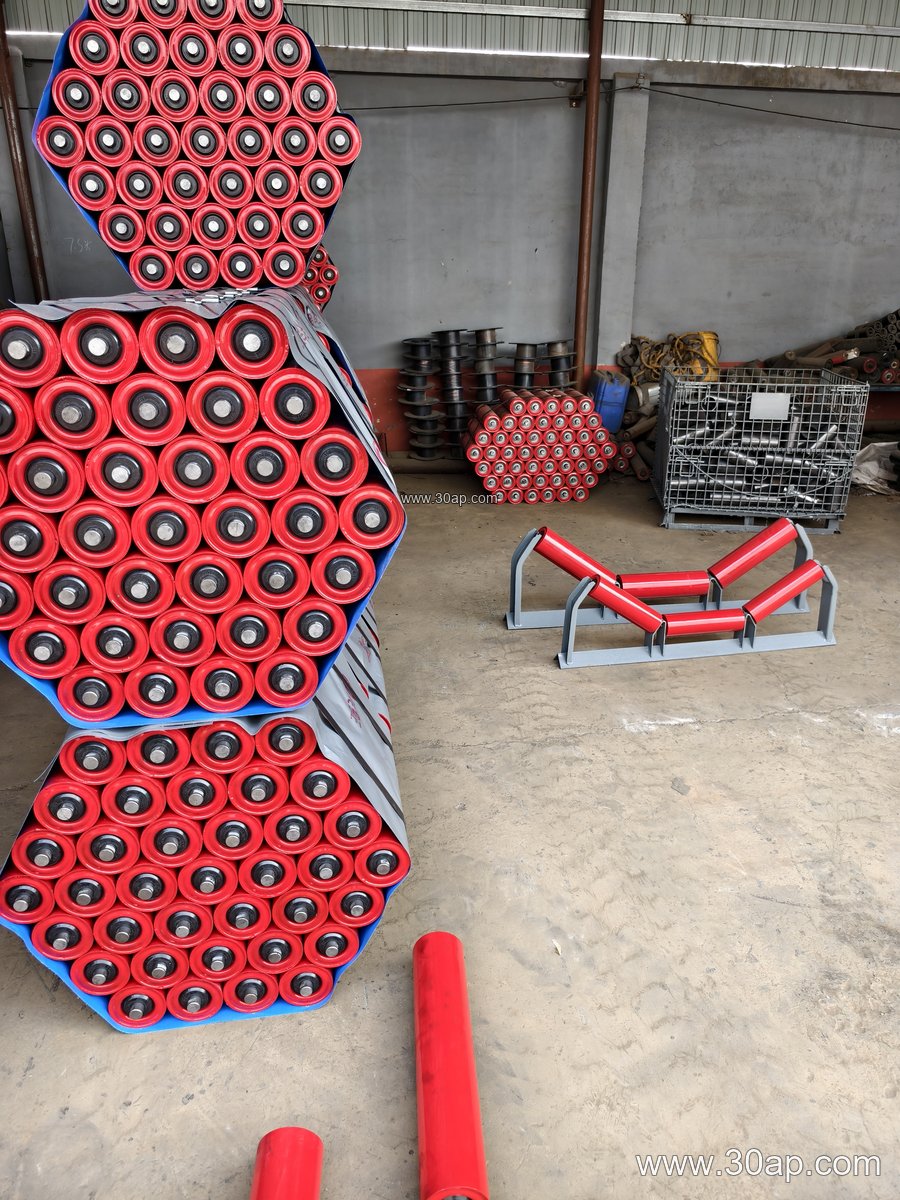
How the Set Is Built
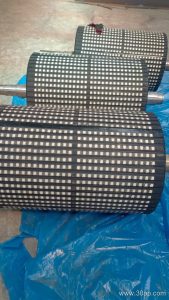
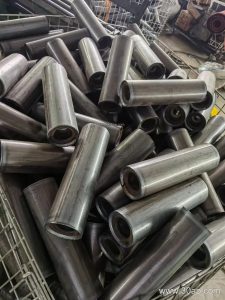
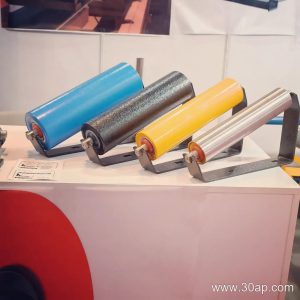
Each roller in the set is a steel tube fitted with bearings at both ends, sealed against dust and moisture, and pressed onto a through shaft. The frame holds the rollers at a fixed trough angle and bolts to the conveyor bracket on the stringer. Roller shells are commonly plain steel, but nylon, ceramic and rubber-ring versions appear where abrasion, build-up or impact is a concern. Bearing sizes such as 6204, 6205, 6305, 6306, 6308 and 6310 are common across the range; the correct bearing follows the roller diameter and load rating rather than the belt width alone.
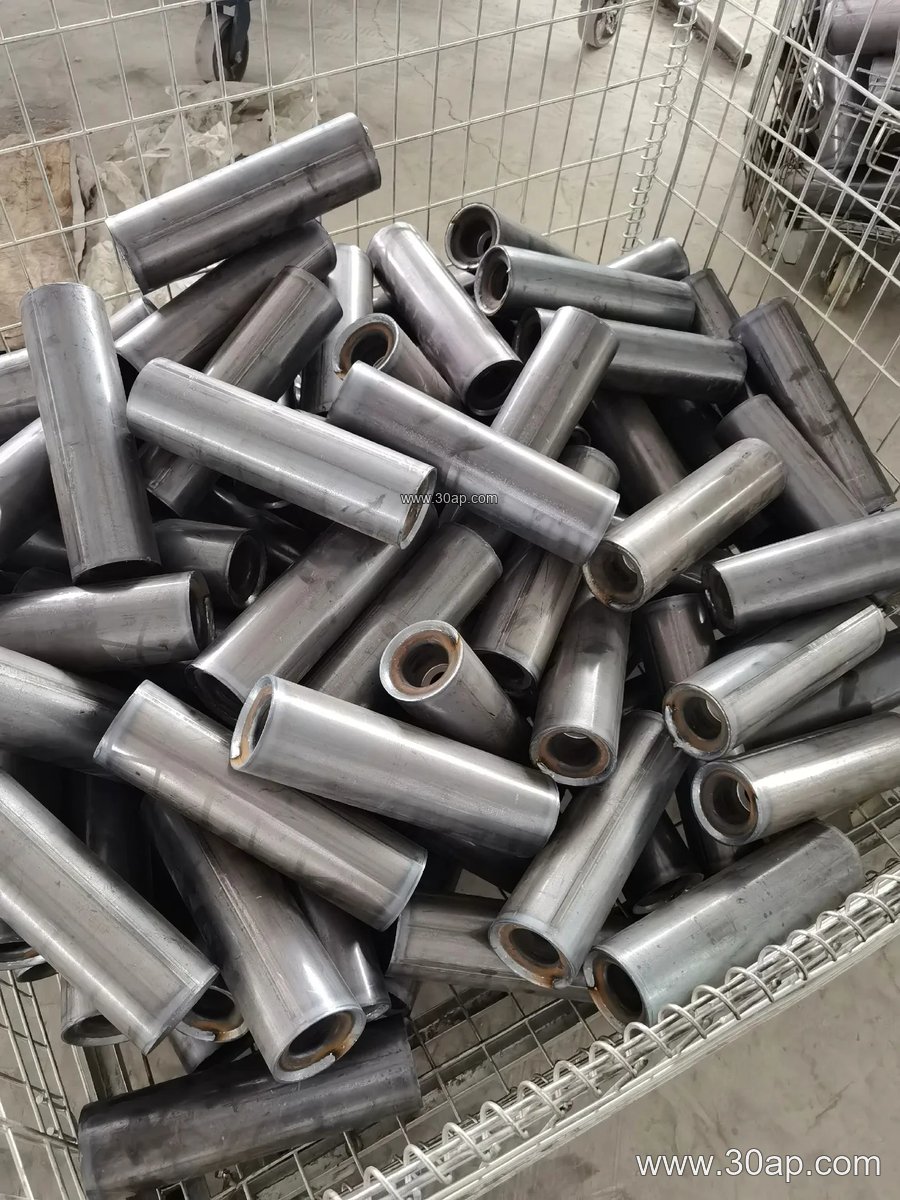
- Roller diameter options commonly include Ø63, Ø76, Ø89, Ø102, Ø108, Ø127, Ø133, Ø159, Ø178, Ø194 and Ø219 mm.
- Trough angles are usually 20, 30, 35 or 45 degrees, chosen to suit material flow.
- Frame and roller lengths follow belt width, trough angle and the number of rollers in the set.
Matching the Set to Belt Width
Belt width is the starting point for selection, but it is not the only number. A three-roller troughing set for B800 belt often uses rollers around 315 mm long, while B1000 may call for roughly 380 mm and B1200 for about 465 mm. These are typical examples only; side rollers and center rollers can differ, and the final length is set by design. Wider belts such as B1800 or B2000 need larger frames and heavier rollers, and the shaft diameter must be calculated from the actual load, not guessed from belt width.
| Belt width | Typical center roller length (three-roll set) | Common trough angle |
|---|---|---|
| B500 | about 200 mm | 20–35 degrees |
| B650 | about 250 mm | 20–35 degrees |
| B800 | about 315 mm | 30–35 degrees |
| B1000 | about 380 mm | 30–35 degrees |
| B1200 | about 465 mm | 30–35 degrees |
| B1400 | about 530 mm | 35–45 degrees |
| B1600 | about 600 mm | 35–45 degrees |
| B1800 | about 670 mm | 35–45 degrees |
Values are reference data for planning discussions and should be confirmed against the conveyor drawing. A belt does not have a single fixed pulley or roller size, and one belt width can work with several roller diameters depending on speed, load and spacing.
Where Carrying Idlers Are Used
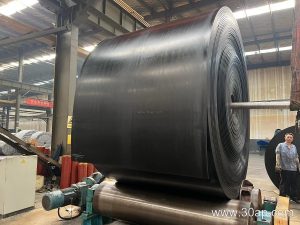
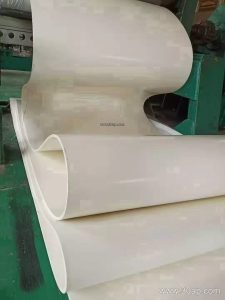
These sets appear wherever bulk material travels on a troughed belt. In a limestone mine or aggregate line they support crusher conveyor belts handling rock and gravel. In a cement plant they carry clinker and raw meal, and in a power plant they sit under the coal conveyor belt feeding the bunkers. Port terminals use them on ship loading conveyors, and tunneling projects rely on them for muck removal. The material being moved often dictates the belt specification, so a carrying idler set may run beneath an EP conveyor belt, a steel cord conveyor belt, or a flame retardant conveyor belt in underground service.
Selection and Maintenance Notes
Buyers should check roller diameter, shell material, bearing size, frame dimensions and mounting hole spacing against the existing conveyor bracket before ordering. Spacing between sets is a design decision based on belt sag and material weight; loaded strands usually need closer spacing than the return side. For dusty or wet conditions, sealed bearings and smooth roller surfaces reduce build-up and belt tracking problems. During operation, listen for squealing bearings, watch for a belt that wanders off center, and replace rollers that stop turning before they wear through the belt cover.
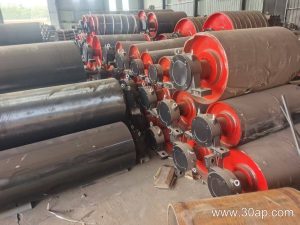
For related conveyor components, see the range at www.zmconveyor.com/carrying-idler-set and compare options for conveyor belt, idler roller and conveyor pulley assemblies. A correctly matched carrying idler set keeps the belt running straight, protects the belt cover, and holds down energy costs across long conveying distances.